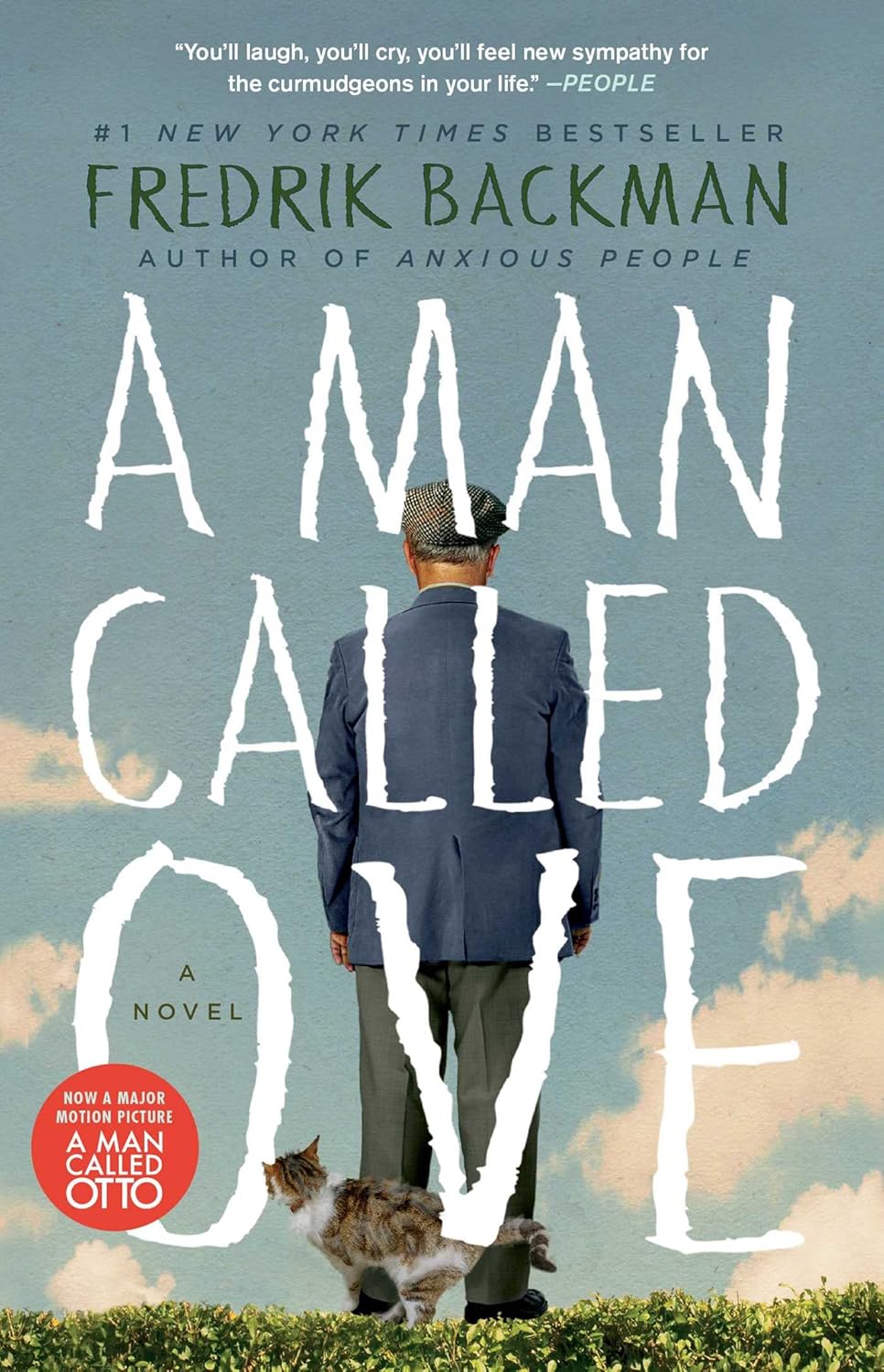
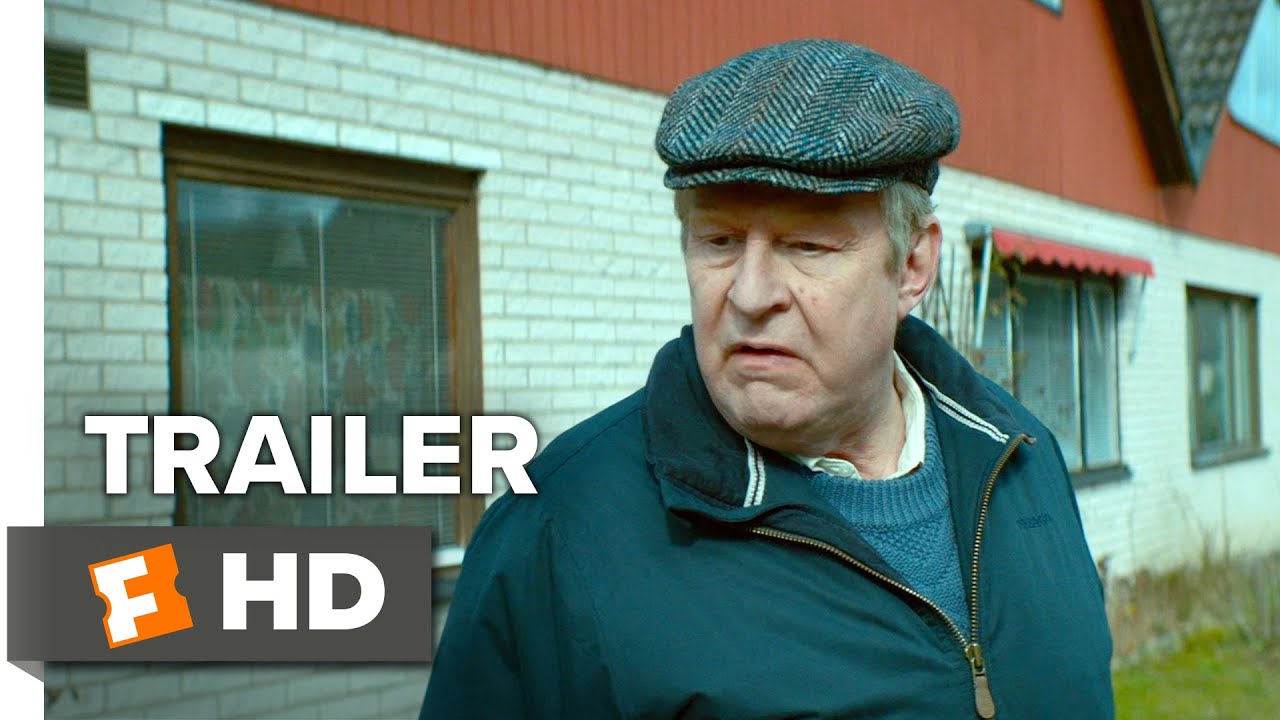
The Story in Brief
Fredrik Backman's 2012 debut novel introduces Ove, a 59-year-old widower whose rigid routines and neighborhood patrols mask profound grief over losing his wife Sonja six months earlier. When pregnant Iranian immigrant Parvaneh and her family move in next door—backing their trailer into Ove's mailbox on day one—his suicide plans are repeatedly interrupted by their needs: driving lessons for Parvaneh, confrontations with predatory real estate agents trying to institutionalize his old friend Rune, and rescuing a cat no one else wants.
Director Hannes Holm's 2015 Swedish adaptation, starring Rolf Lassgård as Ove and Bahar Pars as Parvaneh, earned two Academy Award nominations and became Sweden's entry for Best Foreign Language Film. The film preserves Backman's structure of present-day crises intercut with flashbacks showing young Ove (Filip Berg) meeting Sonja on a train, building their life together, and losing her to cancer.
The novel spent 76 weeks on the New York Times bestseller list and launched Backman's career as an international phenomenon. Its portrait of a man learning to live again through forced community resonated across cultures, though the book's specifically Swedish details—the Saab versus Volvo rivalry, the particular bureaucracy Ove battles—give it a cultural specificity the film captures visually but can't quite match in depth.
Cast & Characters
| Character | In the Book | In the Film |
|---|---|---|
| Ove Rolf Lassgård |
A 59-year-old widower whose internal monologue reveals caustic wit and deep loneliness beneath his rule-enforcing exterior. | Lassgård captures Ove's physical stiffness and explosive temper perfectly, though without access to his running mental commentary on idiots and incompetents. |
| Parvaneh Bahar Pars |
A persistent Iranian immigrant who refuses to be intimidated by Ove's gruffness and gradually becomes the daughter he never had. | Pars brings warmth and determination to the role, though the film condenses her backstory and the gradual evolution of her friendship with Ove. |
| Sonja Ida Engvoll |
Ove's late wife, a teacher whose optimism and love transformed his life; her presence permeates every page through Ove's memories. | Engvoll appears in flashbacks that capture Sonja's radiance but compress decades of marriage into brief, poignant montages. |
| Rune Börje Lundberg |
Ove's former best friend, now suffering from Alzheimer's, whose wife Anita fights to keep him out of a nursing home; their feud over Saab versus Volvo spans decades. | The film simplifies Rune's role to a subplot about elder care, losing much of the novel's exploration of how a car brand rivalry destroyed a friendship. |
| Jimmy Simon Edenroth |
The overweight young man Ove teaches to drive, revealing Ove's capacity for patience when he sees genuine effort. | Edenroth's Jimmy provides comic relief, though the film reduces his character development to a few driving lesson scenes. |
Key Differences
Ove's Childhood and Father Shape His Entire Worldview in the Book
Backman devotes extensive chapters to Ove's childhood with his railway worker father, who taught him that tools should be maintained, promises kept, and work done properly. After his father dies in a train accident when Ove is sixteen, the boy is cheated out of his inheritance by his father's boss. These experiences forge Ove's black-and-white morality and distrust of authority.
The film compresses this backstory into a few brief flashbacks. We see young Ove losing his father and being wronged, but the formative details—his father teaching him to fix a car engine, the specific betrayal by the boss, the years Ove spent working to buy back his father's house—are reduced to visual shorthand. The novel makes clear that Ove's rigidity isn't mere stubbornness; it's a survival mechanism built from loss and betrayal.
The Saab Versus Volvo Feud Gets Philosophical Weight in Print
In Backman's novel, Ove and Rune's friendship disintegrates over their car brand loyalty in ways that reveal class identity and masculine pride. Ove drives a Saab because his father did; Rune switches to Volvo and is promoted to a white-collar position. Their decades-long cold war involves elaborate pranks, property line disputes, and a complete severing of communication—all over automobiles that represent diverging life paths.
Holm's film mentions the Saab-Volvo rivalry but treats it as quirky background color rather than the central metaphor for male friendship and class resentment that Backman intended. The movie focuses instead on Ove's present-day battle to keep Rune out of institutional care, which is emotionally effective but loses the novel's examination of how small differences calcify into unbridgeable divides between men who can't articulate feelings.
Sonja's Accident and Miscarriage Receive Deeper Treatment on the Page
The novel details the bus accident in Spain that leaves Sonja in a wheelchair and causes her miscarriage—the defining tragedy of their marriage. Backman shows Ove's rage at the bus company's indifference, his months spent learning to retrofit their home for wheelchair access, and Sonja's quiet grief over the child they'll never have. The accident explains why Ove views bureaucracy as evil and why he builds ramps with such precision.
The film depicts the accident in a single flashback sequence that conveys the event but not its lasting psychological impact. We see Sonja in a wheelchair and understand Ove's devotion, but the movie doesn't explore how the loss of their unborn child haunts both of them, or how Ove's guilt over not protecting her fuels his later suicide attempts. The compression makes their love story touching but less devastating.
Parvaneh's Driving Lessons Reveal Ove's Teaching Philosophy in the Novel
Backman uses Parvaneh's driving instruction as a vehicle (literally) for showing Ove's hidden capacity for patience and his belief that competence matters more than credentials. The lessons span weeks, with Ove explaining not just how to drive but why understanding a car's mechanics makes you a better driver. His insistence that Parvaneh learn to change a tire and check the oil becomes a metaphor for self-reliance.
The film includes the driving lessons but reduces them to a montage of comic near-misses and Ove's shouted instructions. Lassgård's exasperated expressions are funny, but we lose the novel's insight that Ove is actually a gifted teacher when students show genuine effort—a callback to Sonja's career as an educator and a hint at the father he might have been.
The Cat Becomes a Symbol of Ove's Transformation in Backman's Hands
The stray cat that Ove reluctantly adopts appears throughout the novel as a mirror for Ove himself—unwanted, stubborn, and gradually domesticated by kindness. Backman gives the cat personality and uses Ove's evolving relationship with it to mark his emotional thawing. By the end, Ove's concern for the cat's welfare after his death becomes one of the reasons he chooses to keep living.
Holm's film includes the cat but treats it as a cute accessory rather than a symbolic parallel. The animal appears in several scenes but doesn't carry the same metaphorical weight. The movie's Ove accepts the cat quickly, whereas the novel's Ove spends chapters insisting he doesn't want it while secretly ensuring it's fed and warm—a pattern that mirrors his resistance to Parvaneh's friendship.
Should You Read First?
Read Backman's novel before watching Holm's film. The book's access to Ove's caustic internal monologue—his running commentary on "idiots" who can't back up a trailer or follow parking regulations—provides the humor and pathos that make his transformation credible. Without hearing Ove's thoughts, his actions can seem merely grumpy rather than revealing a man whose rigidity masks unbearable grief. The novel also gives Sonja a fuller presence through extended flashbacks that show why Ove's love for her justifies his six-month campaign to join her in death.
The film works as a faithful adaptation that captures the story's emotional arc, but it necessarily simplifies the neighborhood dynamics and Ove's backstory. Watching first won't ruin the book—Backman's prose and deeper character work will still resonate—but reading first allows you to appreciate how Lassgård's performance translates Ove's interior life into physical acting. You'll recognize the specific moments the film preserves and understand what the compressed timeline sacrifices.
Frequently Asked Questions
Backman's novel earns its emotional devastation through patient accumulation of detail—every flashback, every grumpy interaction, every failed suicide attempt builds toward an ending that feels inevitable and earned. Holm's film captures the warmth and humor but can't replicate the book's interiority. Read it for Ove's caustic inner voice; watch it for Lassgård's face doing the work that prose does on the page.