The Story in Brief
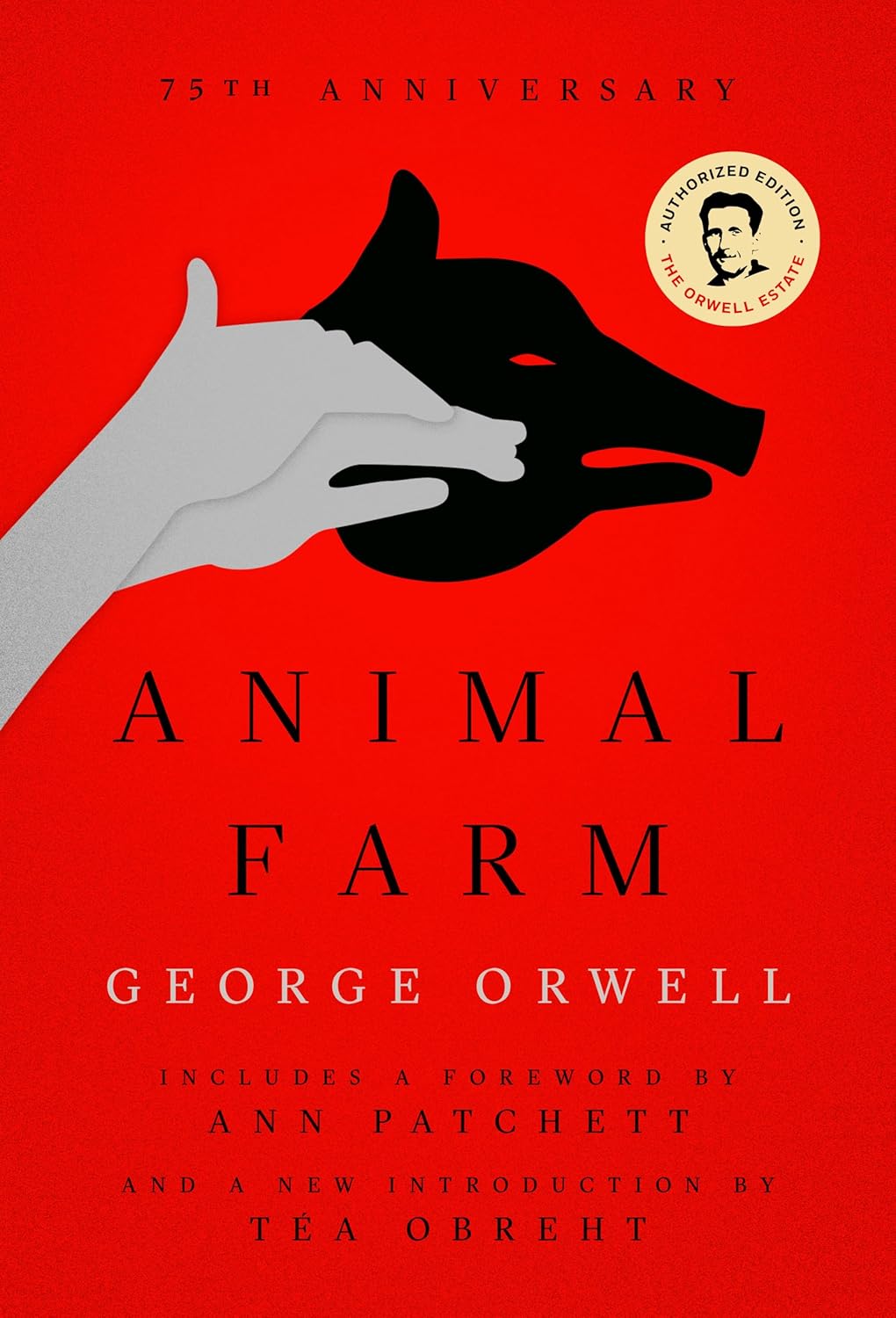
The animals of Manor Farm overthrow their drunken owner, Mr. Jones, and establish a republic governed by seven commandments — the most important being "All animals are equal." The pigs, led by the visionary Snowball and the ruthless Napoleon, assume leadership. After Napoleon drives Snowball into exile with his pack of trained dogs, he consolidates power, rewrites history through his propagandist Squealer, and transforms the farm into a dictatorship indistinguishable from the human tyranny the animals escaped.
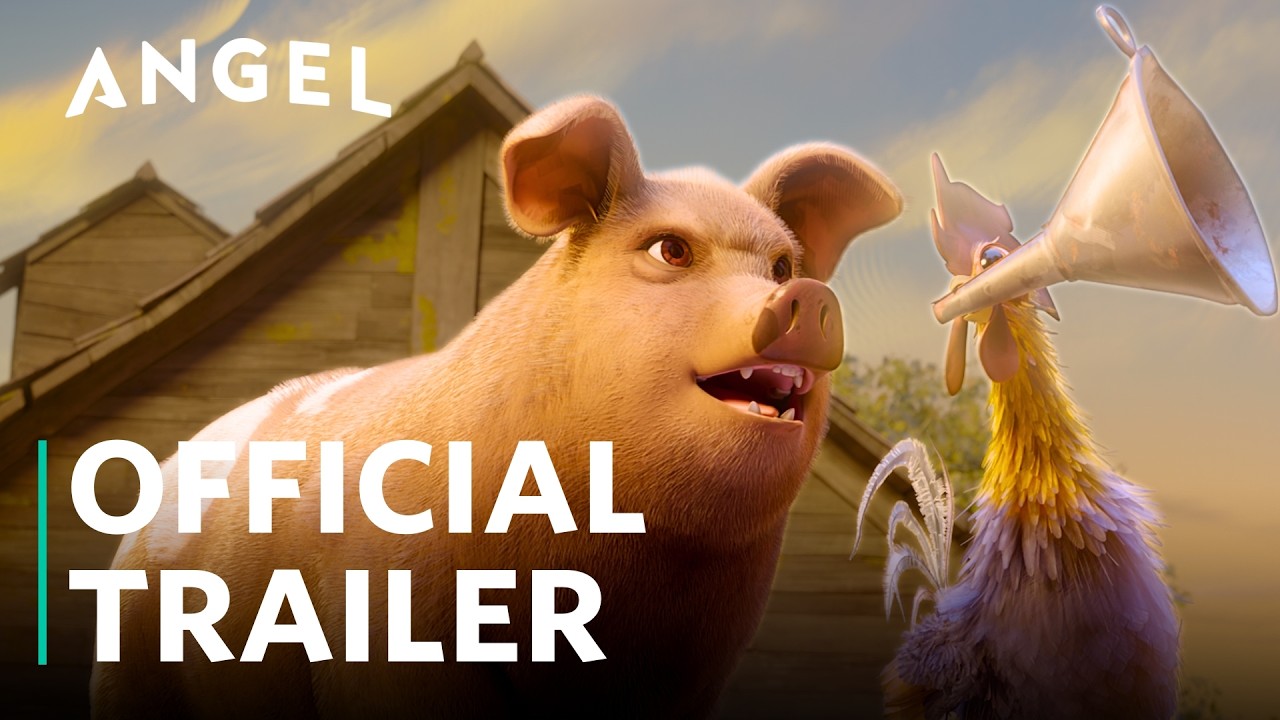
George Orwell published the novella in August 1945, after it was rejected by multiple publishers who feared offending the Soviet Union, then a wartime ally. It became an immediate bestseller and remains one of the most assigned books in English-language education. Andy Serkis's 2025 Netflix adaptation — his first fully animated feature as director — uses motion-capture technology and a voice cast chosen to evoke contemporary political figures without direct caricature. The film premiered at Sundance to respectful reviews that praised its craft while acknowledging the impossibility of improving on Orwell's eighty-page original.
The novella has never been out of print and has sold more than twenty million copies worldwide. It is taught as both literature and history, a fable that doubles as one of the twentieth century's most efficient critiques of totalitarianism.
| Character | In the Book | In the The Movie |
|---|---|---|
| Napoleon Voice cast undisclosed |
A Berkshire boar who uses violence and propaganda to seize absolute power; Orwell's stand-in for Stalin. | Voiced with cold, measured authority; the animation emphasizes his physical dominance and the fear he inspires in the other animals. |
| Snowball Voice cast undisclosed |
The idealistic pig who designs the windmill and is driven into exile; represents Trotsky. | Given more screen time before his expulsion, with scenes that emphasize his genuine belief in the revolution's promise. |
| Squealer Voice cast undisclosed |
Napoleon's propagandist, who convinces the animals their memories are faulty and conditions are improving. | The film's most chilling performance; his oily persuasiveness is made audible in ways prose cannot achieve. |
| Boxer Voice cast undisclosed |
The loyal carthorse whose mottos are "I will work harder" and "Napoleon is always right"; works himself to death. | The emotional center of the adaptation; his voice performance makes his decency and betrayal devastatingly clear. |
| Benjamin Voice cast undisclosed |
The cynical donkey who sees through the pigs' lies but refuses to act; the novella's most ambiguous figure. | Functions as a quasi-narrator in the film, his pessimism given more explicit voice-over commentary. |
Key Differences
The Allegory's Target
Orwell's novella is a point-by-point allegory of the Russian Revolution and Stalin's rise — Napoleon is Stalin, Snowball is Trotsky, the windmill is the Five-Year Plan, the Battle of the Cowshed is the Civil War. Every detail maps onto Soviet history with surgical precision.
Serkis's adaptation softens the historical specificity to make the allegory applicable to contemporary authoritarianism broadly. The film gestures toward populist demagoguery, media manipulation, and the erosion of democratic norms without anchoring itself to 1917. This makes the film feel relevant to 2025 but costs it the bite that comes from Orwell's refusal to be vague.
The novella's power lies in its double function — it works as a fable and as a historical document. The film chooses the former at the expense of the latter.
Orwell's Prose Economy
The novella dispatches entire political eras in single paragraphs. Orwell describes the purges — Napoleon's execution of animals who confess to conspiring with Snowball — in fewer than three pages. The prose is ruthlessly efficient, which is the point.
The film expands the story to feature length, which means scenes Orwell handled in a sentence become extended sequences. The windmill's construction, the animals' debates, and Squealer's propaganda speeches are given room to breathe. Some of this expansion works — Boxer's final journey to the knacker is more affecting when you watch it unfold. Some of it reveals why Orwell kept things brief.
Animation requires duration. Orwell's prose requires compression. The two are not always compatible.
Squealer's Propaganda
Squealer is the novella's most chilling creation — the pig who convinces the other animals that their memories are wrong, that Snowball was always a traitor, that the commandments never said what they remember. Orwell shows how language is weaponized to rewrite reality.
The film gives Squealer more screen time and makes his manipulation more explicit. We see him coaching the sheep to bleat "Four legs good, two legs better" and watch him alter the commandments on the barn wall. The voice performance leans into his oily persuasiveness.
But the film's explicitness is less frightening than Orwell's restraint. In the novella, Squealer's lies work because they are delivered matter-of-factly. The film's version is menacing, but menace is easier to resist than the quiet rewriting of truth.
Boxer's Fate
The carthorse who works himself to death in loyal service to Napoleon is the novella's emotional center. When he collapses and is sold to the knacker, Orwell delivers the betrayal in two pages. Benjamin reads the side of the van aloud — "Horse Slaughterer" — and the animals realize too late what has happened.
The film extends this sequence, showing Boxer's confusion as he is loaded into the van, the other animals' desperate chase, and Benjamin's anguished realization. The voice performance makes Boxer's decency audible in a way prose cannot. His final "I will work harder" is devastating.
Both versions earn the tragedy. The film's version benefits from the medium — animation allows us to see Boxer's exhaustion and betrayal in real time. This is one of the rare expansions that justifies itself.
The Ending
Both versions end with the animals looking through the farmhouse window, unable to distinguish the pigs from the humans. Orwell's final sentence — "The creatures outside looked from pig to man, and from man to pig, and from pig to man again; but already it was impossible to say which was which" — is one of literature's most perfectly placed conclusions.
The film reaches the same destination with appropriate gravity. The animation shows the pigs walking upright, wearing clothes, and playing cards with the neighboring farmers. The visual transformation is effective, though it cannot improve on Orwell's prose.
The film adds a brief coda — Benjamin walking away from the farmhouse, his cynicism confirmed — that the novella does not need. Orwell ends on the image. Serkis adds a grace note that softens the blow.
Yes, and there is no excuse not to. The novella takes two to three hours to read — shorter than the film's runtime. Orwell's prose is the experience; the allegory lives in the compression of his sentences, the precision of his word choice, and the way he builds a political history in fewer than thirty thousand words. The film is an illustration of the novella, not a replacement for it.
Read the book first and the film becomes a visual companion — a chance to see Boxer's exhaustion, hear Squealer's lies, and watch the commandments change on the barn wall. Watch the film first and you will miss the economy that makes the novella essential. At eighty pages, this is the easiest read-first recommendation on this site.
Should You Read First?
Yes, and there is no excuse not to. The novella takes two to three hours to read — shorter than the film's runtime. Orwell's prose is the experience; the allegory lives in the compression of his sentences, the precision of his word choice, and the way he builds a political history in fewer than thirty thousand words. The film is an illustration of the novella, not a replacement for it.
Read the book first and the film becomes a visual companion — a chance to see Boxer's exhaustion, hear Squealer's lies, and watch the commandments change on the barn wall. Watch the film first and you will miss the economy that makes the novella essential. At eighty pages, this is the easiest read-first recommendation on this site.
Orwell wrote one of the essential political texts of the twentieth century in the form of a children's fable. Serkis made a sincere, visually accomplished adaptation that updates the allegory for a new moment. The novella is irreplaceable. The film is a worthwhile companion. Read the book — it takes an evening and lasts a lifetime.