The Story in Brief
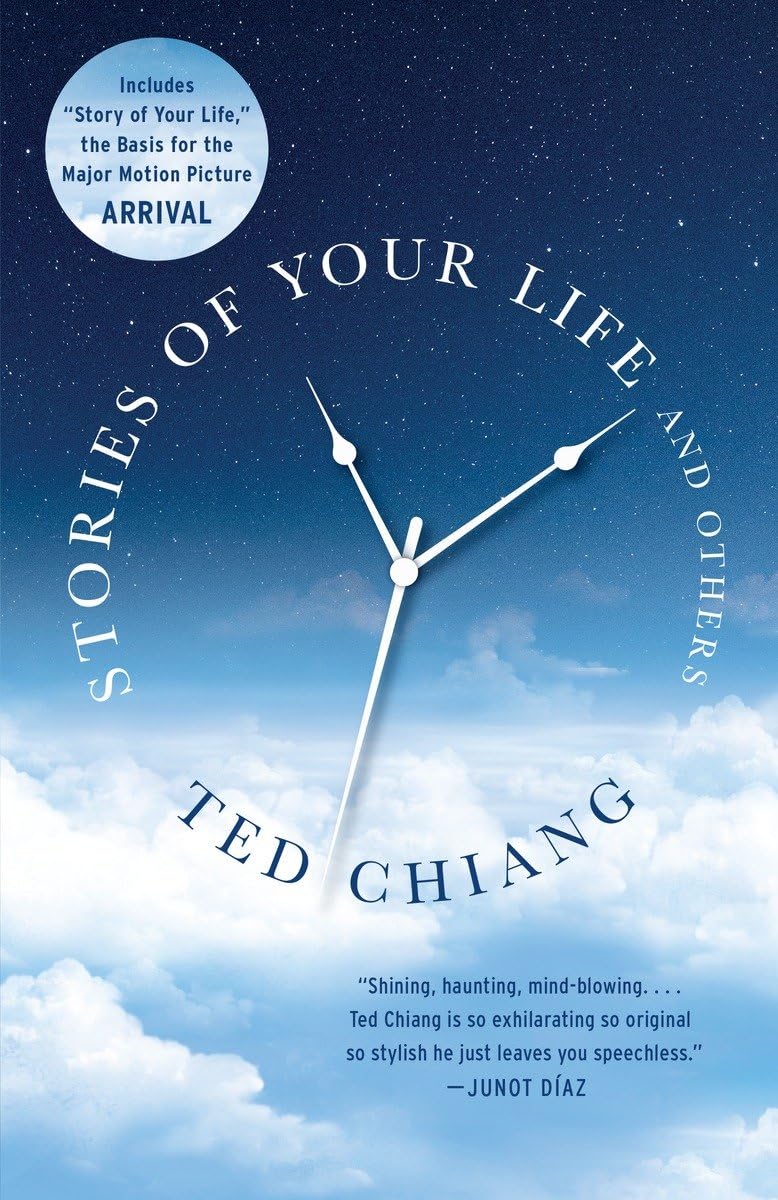
Ted Chiang's "Story of Your Life" is a 1998 novella about Dr. Louise Banks, a linguist tasked with deciphering an alien language to prevent global conflict. The story's central conceit—that learning the aliens' non-linear language fundamentally rewires human cognition and perception of time—serves as both hard science fiction premise and meditation on free will, sacrifice, and the price of knowledge.
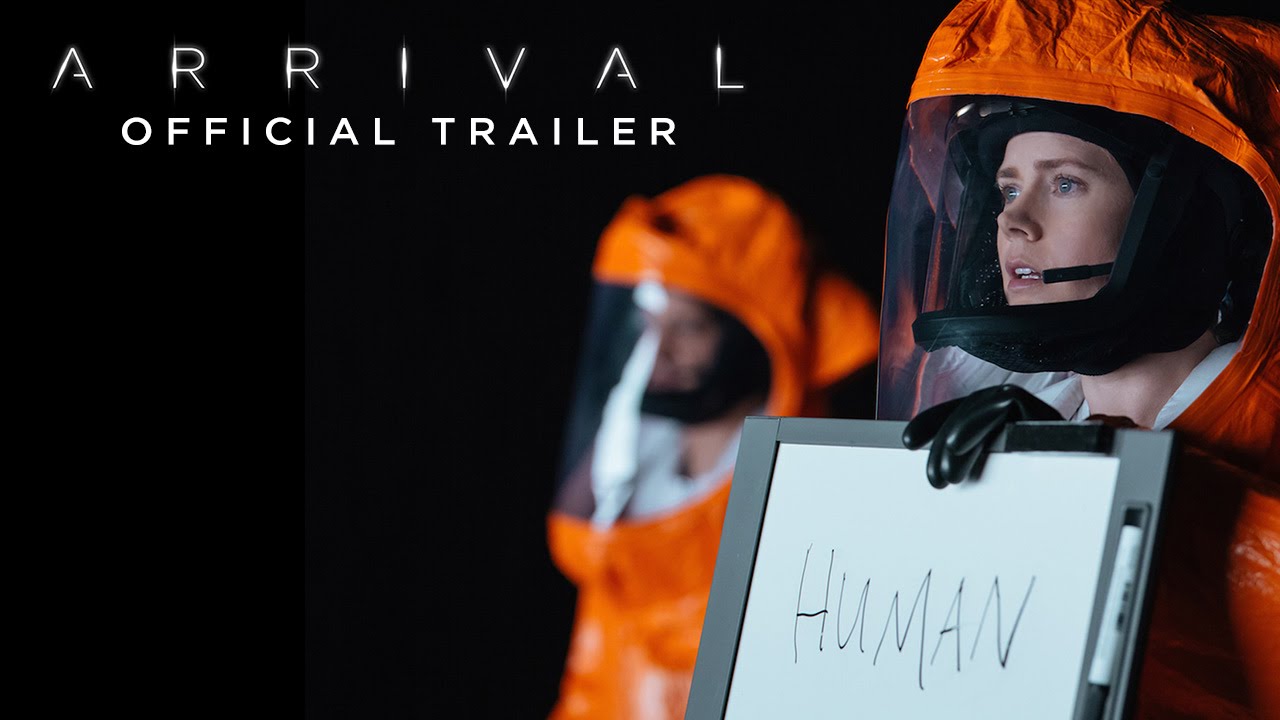
Denis Villeneuve's 2016 film adaptation, Arrival, expands Chiang's intimate intellectual puzzle into an epic visual experience. While the novella unfolds almost entirely within Louise's mind, the film adds military tension, a romance subplot, and geopolitical stakes that transform the story into something simultaneously more accessible and more emotionally devastating.
This comparison matters because it represents a rare case where a filmmaker didn't just adapt source material—he fundamentally recontextualized it. Chiang's story is about language and consciousness; Villeneuve's film is about love, loss, and the courage to choose suffering. Both work. But they work in entirely different registers.
| Character | In the Book | In the The Film |
|---|---|---|
| Dr. Louise Banks Amy Adams |
Louise is a detached, brilliant linguist operating almost entirely in her own mind. Chiang presents her consciousness as the story's true landscape—her thoughts on language, time, and meaning dominate the narrative. She is solitary, intellectually voracious, and experiences the alien contact as a profound philosophical transformation rather than an emotional one. | Adams portrays Louise as emotionally vulnerable beneath her professional composure. Villeneuve adds a tragic backstory involving her daughter, making her linguistic breakthrough inseparable from maternal grief. The film's Louise is haunted, conflicted, and ultimately choosing to embrace a predetermined future for love—a deeply human motivation absent from Chiang's original. |
| Ian Donnelly Jeremy Renner |
Ian appears primarily as a sounding board for Louise's linguistic theories. He is competent, curious, and serves mainly as a vehicle for Chiang to externalize Louise's internal monologue. Their relationship is collegial and intellectually intimate but lacks romantic or emotional weight. | Renner's Ian becomes Louise's emotional anchor and romantic interest. The film develops their relationship as a parallel love story—they fall in love while learning the alien language, creating dramatic irony when Louise realizes their future together is predetermined and finite. This subplot doesn't exist in the novella. |
| Colonel Weber Forest Whitaker |
Weber is barely present in Chiang's novella. Military authority exists only as background context for why Louise has been brought to the landing site. His character has no arc and minimal dialogue. | Whitaker's Weber becomes a central figure representing institutional pressure and geopolitical paranoia. The film uses him to create external conflict—the military wants weapons, not understanding—which forces Louise into a position of moral agency. This entire dramatic tension is Villeneuve's invention. |
| The Heptapods Visual effects |
Chiang's aliens are described functionally but remain somewhat abstract. The novella focuses on their language—non-linear, simultaneous, visual—rather than their appearance or behavior. They are a vehicle for exploring linguistic relativity, not characters with agency or personality. | Villeneuve renders the Heptapods as genuinely alien—massive, graceful, almost organic in their geometry. The film gives them presence and intentionality. Their visual design becomes inseparable from the story's meaning; their language is literally written in light and curves. They are characters, not just plot devices. |
| Hannah Banks (Louise's daughter) Abigail Pniowsky / Julia Scarlett Dan |
Hannah does not exist in Chiang's novella. Louise has no children; her sacrifice is purely intellectual and philosophical. | Hannah is central to Villeneuve's emotional architecture. Scenes of Louise with her daughter frame the entire narrative, creating a heartbreaking temporal loop. Hannah's existence is both the consequence and the motivation for Louise's choice to learn the alien language, making the story about maternal love rather than pure intellectual curiosity. |
Key Differences
The novella is a thought experiment; the film is a tragedy
Chiang's "Story of Your Life" operates as a philosophical puzzle box. Louise learns the alien language, her perception of time becomes non-linear, and she experiences her entire life simultaneously. The ending is intellectually stunning but emotionally neutral—she accepts her predetermined future with the calm of someone who has transcended linear causality. There is no conflict, only revelation.
Villeneuve's Arrival weaponizes the same premise into heartbreak. By adding Hannah and the romance with Ian, the film transforms linguistic relativity into a story about choosing to live a predetermined life knowing it will end in loss. Louise's acceptance becomes an act of courage rather than philosophical resignation. The film asks: would you live your entire life, knowing how it ends, if it meant experiencing love?
Villeneuve adds geopolitical conflict that Chiang deliberately avoids
The novella mentions that Louise's work might prevent war, but this is background context. Chiang is uninterested in military thriller mechanics. The story unfolds in Louise's consciousness; external plot is irrelevant. The aliens' purpose, the threat of global conflict, the military's demands—these are all subordinate to the central question: how does language shape thought?
The film makes geopolitical tension its primary dramatic engine. Villeneuve stages scenes of military standoffs, Chinese generals threatening nuclear war, and Louise racing against time to prevent catastrophe. This creates conventional narrative stakes that the novella deliberately rejects. The film is more conventionally thrilling, but it also dilutes Chiang's focus on pure intellectual transformation. Where the novella asks "What does it mean to think non-linearly?" the film asks "Can one woman prevent World War III?"
The novella privileges Louise's interiority; the film privileges visual spectacle
Chiang's story is almost entirely Louise's internal monologue. We experience the alien contact through her consciousness, her linguistic analysis, her philosophical reflections. The aliens themselves are barely described; the focus is on how their language rewires human cognition. The novella is a masterpiece of intellectual science fiction precisely because it trusts the reader's imagination and intellect.
Villeneuve's film is a visual symphony. The Heptapods are rendered as stunning, otherworldly creatures. Their language appears as three-dimensional calligraphy. The film uses sound design, cinematography, and production design to create an immersive sensory experience. This is not a weakness—it's a different artistic choice. The film makes the alien contact visceral and immediate in ways prose cannot. But it necessarily sacrifices Chiang's focus on pure thought for the power of images.
Chiang's ending is acceptance; Villeneuve's is sacrifice
In the novella, Louise learns the alien language and experiences her life non-linearly. She sees her future—including her daughter's birth and death—and accepts it with equanimity. There is no dramatic choice; she simply understands that linear causality is an illusion. Her acceptance is almost Zen, a transcendence of human limitation. The ending is profound but emotionally distant.
Villeneuve's ending is a choice. Louise knows her future with Ian will be brief and painful. She knows her daughter will die young. She chooses to live it anyway. She calls Ian and says his name—a simple human gesture that carries the weight of predetermined love and loss. The film's ending is more conventionally tragic and emotionally devastating. It asks Louise (and the audience) to embrace suffering as the price of love. Chiang's Louise transcends suffering; Villeneuve's Louise walks toward it with open eyes.
The novella is about language; the film is about love
Chiang's "Story of Your Life" is fundamentally a story about how language structures reality. The alien language is non-linear, simultaneous, visual—and learning it literally changes how Louise's brain processes time and causality. The story's power comes from exploring linguistic relativity as a form of cognitive transformation. Love, family, and personal relationships are secondary to this central intellectual premise.
Villeneuve's Arrival uses the same linguistic premise but subordinates it to a love story. The alien language is still central, but it becomes a vehicle for exploring how Louise can choose to love and be loved despite knowing the future. The film's emotional core is not linguistic theory but maternal and romantic love. Where Chiang asks "What is language?" Villeneuve asks "What is worth loving?" Both are profound questions, but they point in entirely different directions.
Should You Read First?
Read the novella first if you want to experience Chiang's pure intellectual vision undiluted. "Story of Your Life" is brief—you can finish it in an hour—and it will deepen your appreciation for what Villeneuve chose to add and what he chose to change. The novella's focus on linguistic philosophy and consciousness will make the film's emotional additions feel earned rather than imposed.
That said, if you're watching the film first, you won't be spoiled for the novella's intellectual pleasures. Villeneuve's additions don't undermine Chiang's central ideas; they contextualize them differently. The novella will still feel like a revelation after the film. Either order works, but reading first gives you the gift of experiencing Chiang's original vision before Villeneuve's reinterpretation.
Arrival is a masterpiece of adaptation that honors Chiang's science while breaking your heart in ways the novella deliberately avoids. Villeneuve doesn't betray the source material—he expands it, adding emotional and geopolitical dimensions that transform an intellectual puzzle into a tragedy about love and sacrifice. The novella is purer, more philosophically rigorous, and more focused on the mechanics of linguistic relativity. The film is more moving, more visually stunning, and more fundamentally human. Both are essential, but they are different works of art using the same premise. The novella asks what it means to think non-linearly; the film asks what it means to love despite knowing the future. Neither question is more important than the other.