The Story in Brief
Daphne Bridgerton, the eldest daughter of the prominent Bridgerton family and the season's most eligible debutante, enters a fake courtship with Simon Bassett, the Duke of Hastings — a man who has sworn never to marry or produce an heir as revenge against his abusive father. Their arrangement is mutually beneficial: Daphne gains suitors jealous of the Duke's attention, and Simon deflects marriage-minded mothers. The pretense becomes genuine attraction, complicated by Simon's secret vow and Daphne's determination to have children.
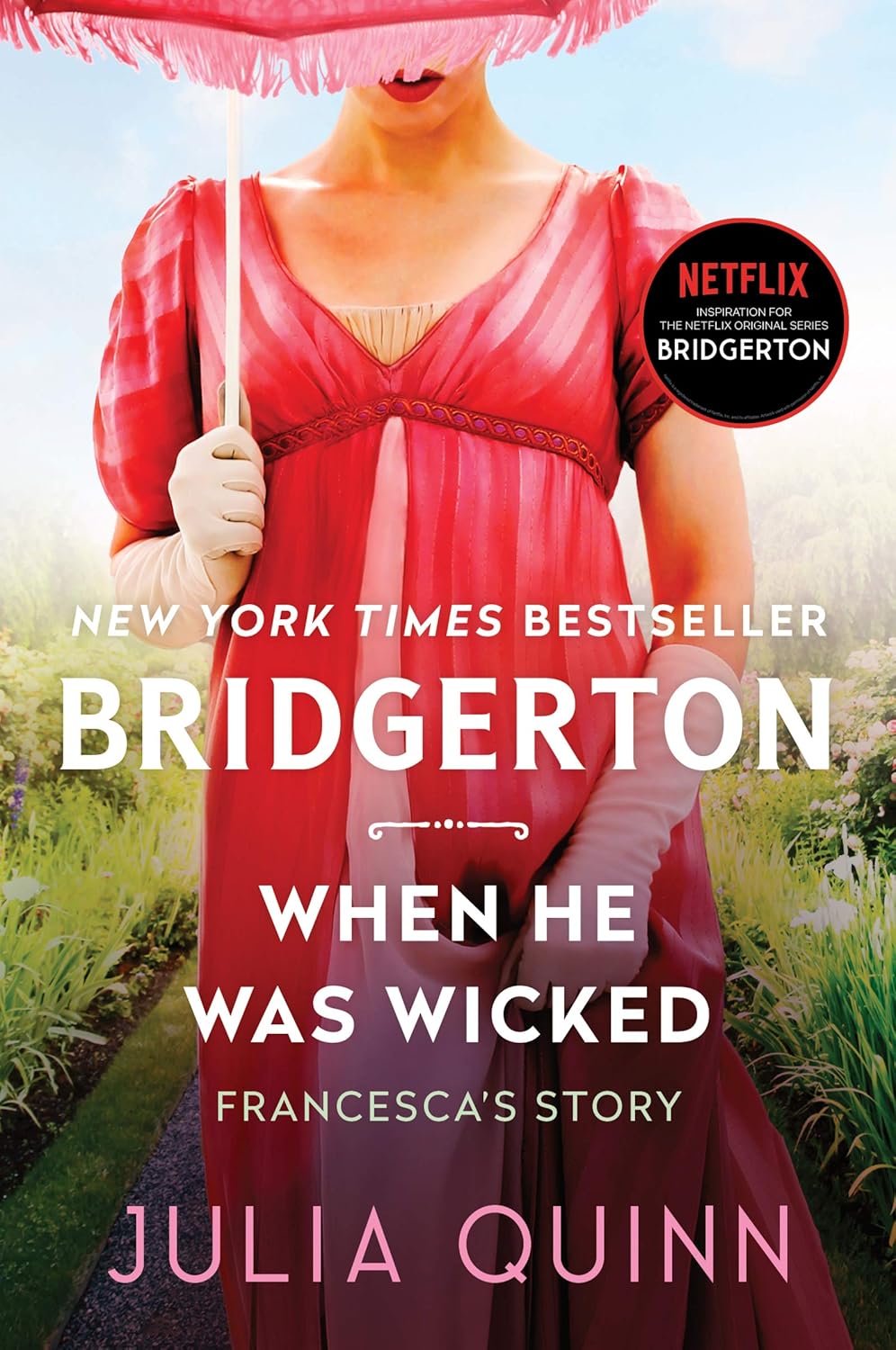
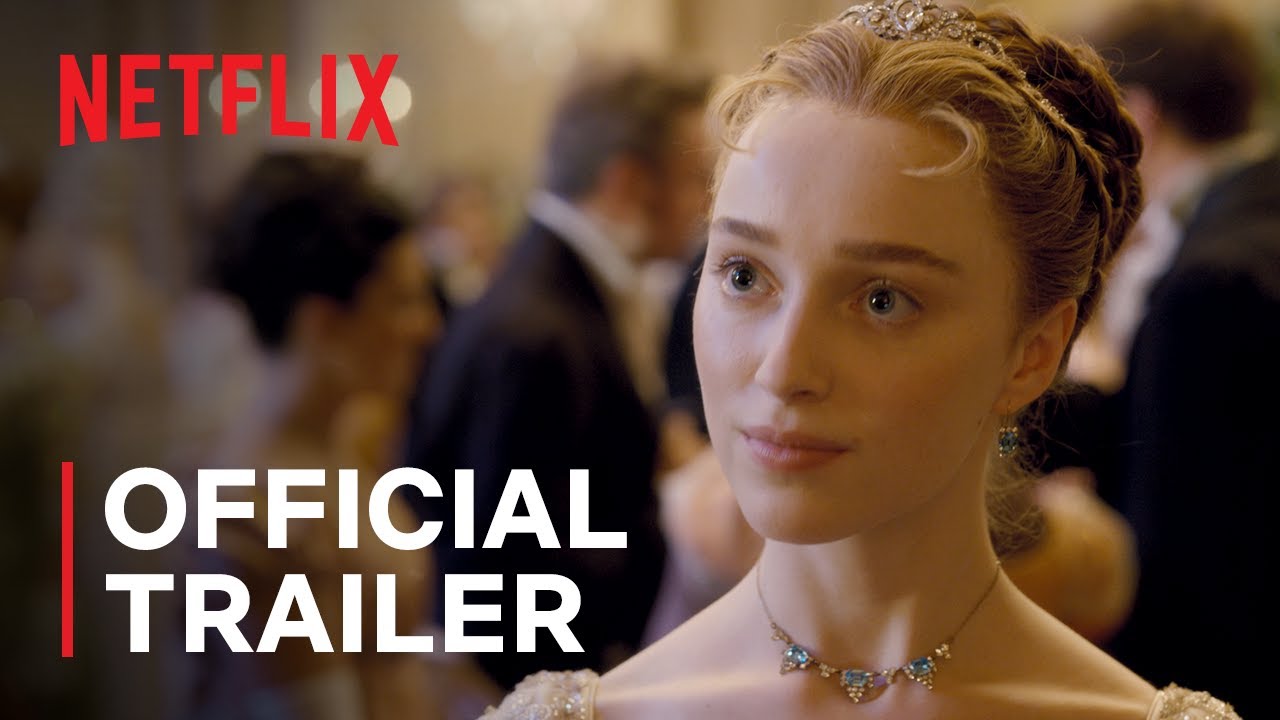
Julia Quinn published The Duke and I in 2000 as the first in what would become an eight-book series, each following a different Bridgerton sibling through the marriage market of Regency London. Shonda Rhimes's Netflix adaptation arrived in December 2020 with Chris Van Dusen as showrunner, Phoebe Dynevor as Daphne, and Regé-Jean Page as Simon. It became Netflix's most-watched series at the time, with 82 million households streaming it in the first month.
The series is both a faithful structural adaptation and a radical reimagining — it keeps Quinn's central romance intact while transforming the world into an alternate-history Regency where racial integration has occurred at the highest levels of society, string quartets play Ariana Grande, and Lady Whistledown's gossip column becomes the season's central mystery. It's a phenomenon that made Regency romance mainstream again.
| Character | In the Book | In the The Series |
|---|---|---|
| Daphne Bridgerton Phoebe Dynevor |
Quinn's Daphne is witty, determined, and more sexually assertive than period romance typically allowed in 2000. | Dynevor plays her as more naive initially, with a clearer arc from innocence to agency across the season. |
| Simon Bassett Regé-Jean Page |
The Duke is tortured by his vow but remains emotionally guarded throughout most of the novel. | Page brings vulnerability and charisma in equal measure, making Simon's trauma more visible and his eventual surrender more earned. |
| Lady Whistledown Julie Andrews (voice) |
A framing device whose identity is revealed early and who recedes as the romance takes over. | The season's central mystery and narrative spine, with Andrews's voiceover giving the show its distinctive tone. |
| Anthony Bridgerton Jonathan Bailey |
Daphne's protective older brother with limited page time in the first novel. | Expanded into a full character with his own romantic subplot, setting up his role as Season 2's protagonist. |
| Penelope Featherington Nicola Coughlan |
A minor character in the first book, more prominent in later novels. | Given substantial screen time and emotional depth from the start, with her secret identity as Whistledown revealed in the season finale. |
| Queen Charlotte Golda Rosheuvel |
Does not appear in Quinn's first novel. | A major character who presides over the season and drives much of the social intrigue, later receiving her own prequel series. |
Key Differences
The alternate-history Regency world
Quinn's novels are set in a recognizable Regency England with period-accurate social constraints — the marriage market, the rules of propriety, the limits placed on women's choices — played straight as romantic tension.
Rhimes's series imagines an alternate Regency in which racial integration has occurred at the highest levels of society following a love match between King George III and Queen Charlotte. The color palette is saturated jewel tones rather than period pastels, the music is string quartet covers of Taylor Swift and Billie Eilish, and the casting is deliberately diverse without explanation or apology.
This is a deliberate aesthetic and political choice, not a historical error, and it gives the series an energy and accessibility the novels don't have. It also makes them substantially different objects — Quinn wrote traditional Regency romance, while Rhimes created a fantasy version of the period that prioritizes pleasure over accuracy.
Lady Whistledown's expanded role
The series makes Lady Whistledown's identity the season's central mystery, and it's the adaptation's best invention.
In Quinn's novel, Whistledown exists as a framing device — her scandal sheets open chapters and comment on the action, but her identity is revealed relatively early in the series and she recedes as a narrative presence once the romance takes over. The Netflix adaptation, voiced by Julie Andrews with perfect archness, makes Whistledown a sustained mystery running across all eight episodes, building to a reveal that functions as a genuine plot climax.
The decision to unmask Penelope Featherington as Whistledown in the season finale gives the show a second emotional arc beyond the central romance and sets up future seasons in ways Quinn's novels don't require. It improves on the source by giving the social-commentary dimension of the story a character to inhabit and a secret to protect.
Simon's childhood trauma gets more space
The novel gives Simon's vow — never to give his cruel father the heir he wanted — relatively compact treatment as backstory.
The series expands it significantly, devoting substantial screen time to Simon's childhood stammer, his father's rejection and emotional abuse, and the moment Simon swears over his father's deathbed never to produce an heir. These flashbacks, intercut throughout the season, ground Simon's commitment to childlessness in genuine psychological trauma rather than principled stubbornness.
Regé-Jean Page makes this expansion work — his performance carries the weight of that childhood wound in ways that make Simon's eventual surrender to love and fatherhood feel earned rather than convenient. The series trusts the audience to sit with his pain longer than the novel does.
The consent issue is handled differently
Quinn's novel contains a scene that has generated significant critical discussion and discomfort — a consummation scene after Daphne discovers Simon has been withdrawing to prevent pregnancy, in which the power dynamics are genuinely troubling by contemporary standards.
The series includes an equivalent moment but handles it differently, redistributing agency and framing in ways that make the resolution less troubling and the overall relationship more straightforwardly romantic. The show also gives Daphne more sexual education earlier, so her discovery of Simon's deception doesn't hinge on her ignorance in quite the same way.
Readers approaching the book after the series should be aware this dimension exists and is more contentious in the source material. It's the novel's most debated element and the one place where the adaptation's changes feel like corrections rather than expansions.
The ensemble cast is fully developed
Quinn's first novel is tightly focused on Daphne and Simon, with other Bridgerton siblings appearing as supporting players.
The series expands every other Bridgerton sibling into a fuller presence — Anthony's storyline with opera singer Siena Rosso is developed well beyond what the first book requires, setting up what the second season will deliver. Benedict's art school subplot, Colin's naivete with Marina Thompson, and Eloise's friendship with Penelope all get substantial screen time.
This works as television structure and makes the world feel richer and more inhabited, though it dilutes the central romance's focus in ways the novel avoids. The book is a tighter, more concentrated love story; the series is a fuller portrait of an entire social world.
This is one of the more genuinely open questions on this site. The series is such a complete reimagining — in tone, aesthetic, and cultural imagination — that reading first and watching second feels less like watching an adaptation than watching a creative response to source material. The core romance beats are the same, but the experience of each is distinct enough that spoilers matter less than usual.
Read first if you want Quinn's sharper, more contained romance novel with its focus squarely on Daphne and Simon's emotional negotiation. Watch first if you want the spectacle, the ensemble, the alternate-history world, and the Lady Whistledown mystery, then read to see what the series changed and what it invented. Either order is satisfying; they're different enough to function independently while still being recognizably the same story.
Julia Quinn's Bridgerton novels are each standalone romances, but they're best read in publication order to watch the family evolve. Each book focuses on a different sibling finding love during the London social season:
Quinn has also published several Bridgerton prequels and companion novels, including The Bridgertons: Happily Ever After (2013), a collection of second epilogues for each sibling. The Netflix series adapts the novels in order, with Season 1 covering Daphne's story and Season 2 covering Anthony's.
Should You Read First?
This is one of the more genuinely open questions on this site. The series is such a complete reimagining — in tone, aesthetic, and cultural imagination — that reading first and watching second feels less like watching an adaptation than watching a creative response to source material. The core romance beats are the same, but the experience of each is distinct enough that spoilers matter less than usual.
Read first if you want Quinn's sharper, more contained romance novel with its focus squarely on Daphne and Simon's emotional negotiation. Watch first if you want the spectacle, the ensemble, the alternate-history world, and the Lady Whistledown mystery, then read to see what the series changed and what it invented. Either order is satisfying; they're different enough to function independently while still being recognizably the same story.
Quinn's novel is a smart, witty Regency romance with a central conflict that still generates argument and a tighter focus on its central couple. Rhimes's series is lavish, joyful, and confident — it adds Lady Whistledown as a sustained narrative engine, expands the ensemble into a full world, and reimagines the Regency with a boldness Quinn never attempted. The book is the more formally precise experience; the series is the more fun one. Book wins on craft and concentration; series wins on spectacle and pleasure. Worth having both, because they're doing different things beautifully.