The Story in Brief
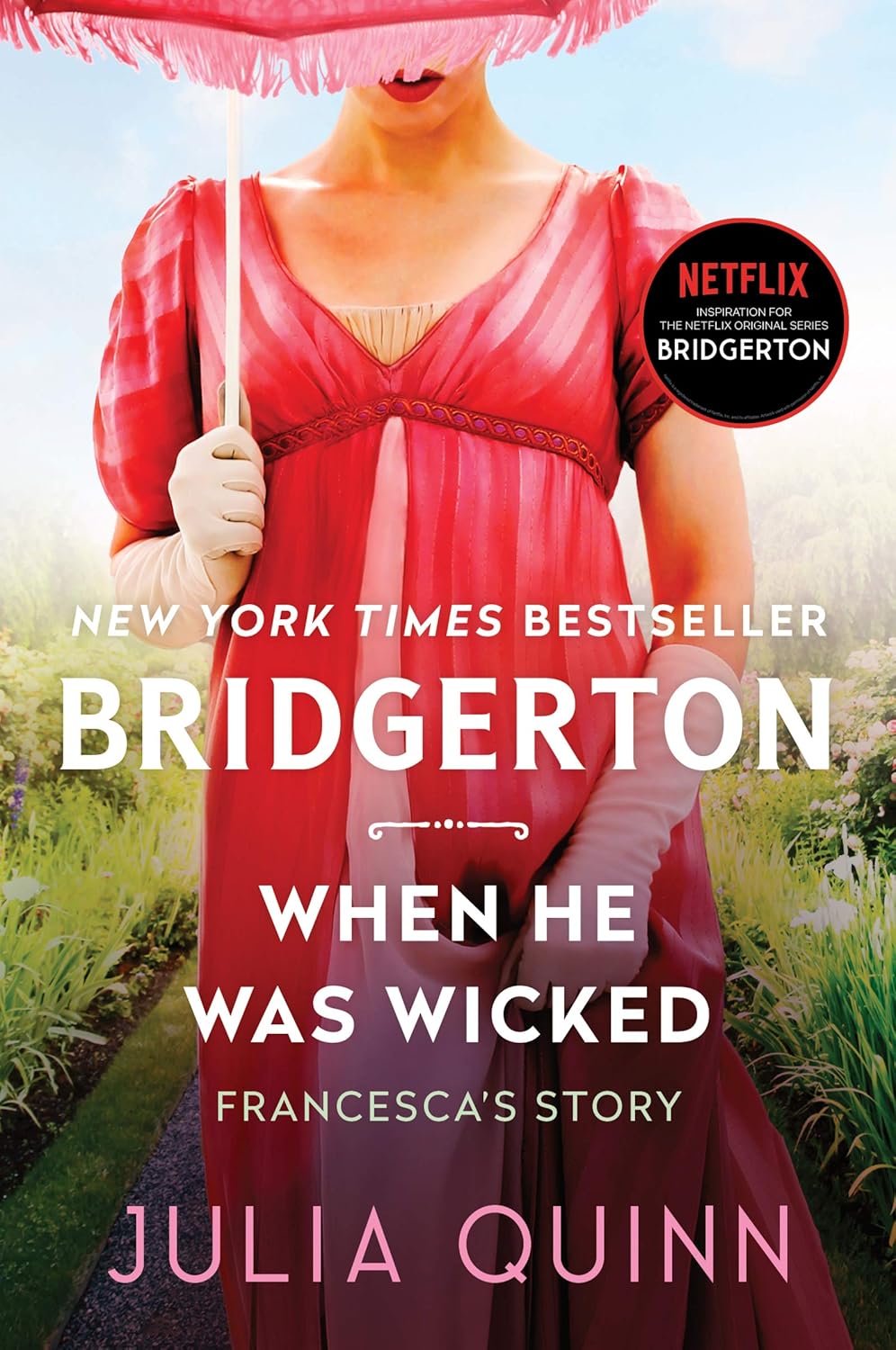
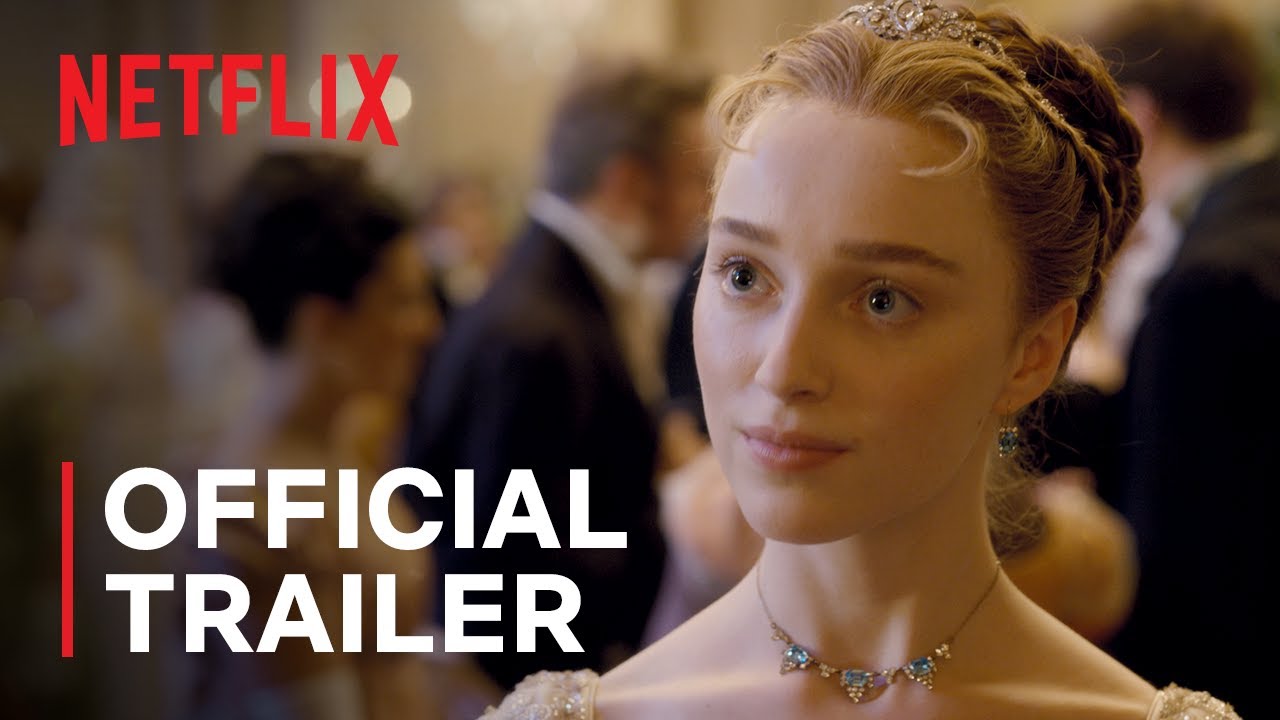
Daphne Bridgerton, the jewel of the London season, enters a marriage-of-convenience arrangement with Simon Bassett, the Duke of Hastings — a man who has sworn never to produce an heir. Their fake courtship becomes real attraction, and the arrangement unravels into genuine feeling complicated by a secret Simon refuses to share. Julia Quinn published The Duke and I in 2000 as the first in an eight-book series, each following a different Bridgerton sibling. Shonda Rhimes's Netflix adaptation, arriving in 2020 with the full weight of the streaming era behind it, became one of the most-watched series in Netflix history. It is a faithful adaptation in structure and a transformation in tone, scale, and cultural imagination.
Key Differences
The anachronistic world
Quinn's novels are set in a recognisable Regency England with period-accurate social constraints — the marriage market, the rules of propriety, the limits placed on women's choices — played straight as romantic tension. Rhimes's series imagines an alternate Regency in which racial integration has occurred at the highest levels of society, the colour palette is saturated and the music is string quartet covers of contemporary pop. This is a deliberate aesthetic and political choice, not a historical error, and it gives the series an energy the novels don't have. It also makes them substantially different objects.
Lady Whistledown
Quinn's gossip columnist exists in the novels as a framing device — her pamphlets open chapters and comment on the action, but her identity is revealed relatively early and she recedes as a narrative presence. The series, voiced by Julie Andrews, makes Whistledown a sustained mystery running across the entire first season, building to a reveal that functions as a genuine plot climax. This is the adaptation's best invention, and it improves on the source by giving the social-commentary dimension of the story a character to inhabit.
Simon's backstory
The novel gives Simon's vow — never to give his cruel father the heir he wanted — relatively compact treatment. The series expands it significantly, devoting substantial screen time to Simon's childhood stammer and his father's rejection, which grounds his commitment to childlessness in genuine psychological trauma rather than principled stubbornness. Regé-Jean Page makes this expansion work; the backstory earns its space.
The central controversy
Quinn's novel contains a scene that has generated significant critical discussion — a consummation scene in which the power dynamics are genuinely uncomfortable by contemporary standards. The series handles the equivalent moment differently, redistributing agency in ways that make the resolution less troubling and the overall relationship more straightforwardly romantic. Readers approaching the book after the series should be aware this dimension exists; it is the novel's most debated element.
The ensemble
Quinn's first novel is tightly focused on Daphne and Simon. The series expands every other Bridgerton sibling into a fuller presence — Anthony's storyline in particular is developed well beyond what the first book requires, setting up what the second season will deliver. This works as television structure and makes the world feel richer, though it dilutes the central romance's focus in ways the novel avoids.
Should You Read First?
This is one of the more genuinely open questions on this site. The series is such a complete reimagining that reading first and watching second feels less like watching an adaptation than watching a creative response to source material. Read first if you want Quinn's sharper, more contained romance novel. Watch first if you want the spectacle and then read to see what the series changed. Either order is satisfying; they are different enough to function independently.
Quinn's novel is a smart, witty Regency romance with a central conflict that still generates argument. Rhimes's series is lavish, joyful, and confident — it adds Lady Whistledown as a sustained narrative engine and reimagines the world with a boldness Quinn never attempted. The book is the more formally precise experience; the series is the more fun one. Book wins on craft; series wins on pleasure. Worth having both.