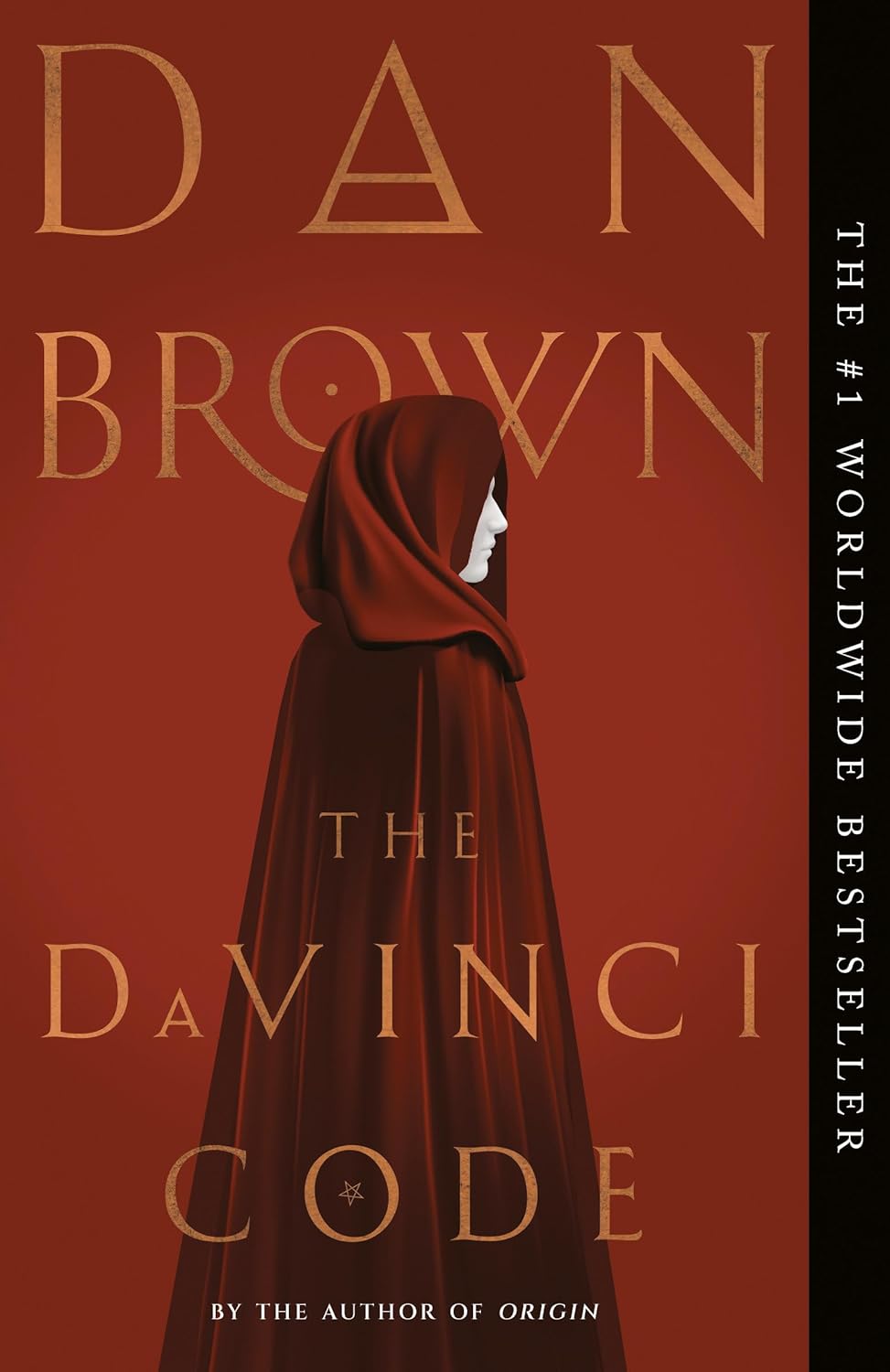
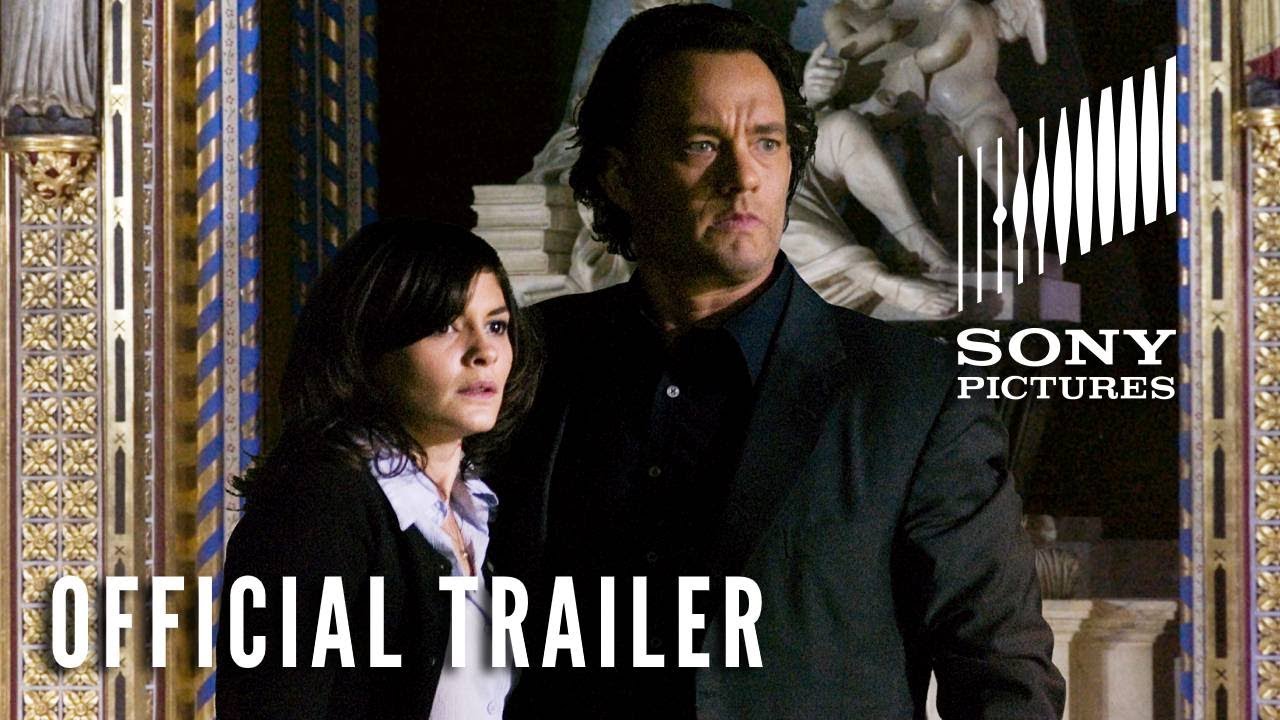
The Story in Brief
Harvard symbologist Robert Langdon is summoned to the Louvre after curator Jacques Saunière is found murdered, his body arranged in the pose of Leonardo da Vinci's Vitruvian Man. Saunière's granddaughter, cryptologist Sophie Neveu, joins Langdon as they decode clues hidden in da Vinci's paintings that point toward the Holy Grail — not a cup, but a secret about Mary Magdalene and the bloodline of Christ. Pursued by French police captain Bezu Fache and albino monk Silas, they seek help from British Grail historian Sir Leigh Teabing, who reveals the conspiracy involving Opus Dei and the Catholic Church.
Dan Brown's novel became a cultural phenomenon, selling over eighty million copies and sparking debates about religion, history, and art. Ron Howard's 2006 adaptation, produced by Brian Grazer and starring Tom Hanks, Audrey Tautou, and Ian McKellen, grossed over $760 million worldwide despite mixed reviews. Critics praised the production design and locations but found the film ponderous and less thrilling than the source material.
The film premiered at the Cannes Film Festival to a famously lukewarm reception, with some critics calling it "grim" and "plodding." Yet it succeeded commercially, launching a franchise that continued with Angels & Demons and Inferno, cementing Hanks as the cinematic face of Robert Langdon despite ongoing debates about the casting.
| Character | In the Book | In the The Movie |
|---|---|---|
| Robert Langdon Tom Hanks |
An academically confident symbologist with a self-aware charm and physical capability, described as resembling Harrison Ford. | Hanks plays him warmer and more everyman, losing the character's intellectual swagger and specific academic vanity. |
| Sophie Neveu Audrey Tautou |
A French cryptologist estranged from her grandfather, driven and intelligent, with a traumatic childhood memory involving a ritual. | Tautou brings quiet intensity but has limited chemistry with Hanks; the romantic tension from the book is nearly absent. |
| Sir Leigh Teabing Ian McKellen |
A wealthy, eccentric Grail historian with polio, obsessed with exposing the Church's secrets, ultimately revealed as the villain. | McKellen is theatrical and delightful, the film's most entertaining performance, adding wit and energy the rest of the cast lacks. |
| Silas Paul Bettany |
An albino Opus Dei monk who practices self-flagellation, a tragic figure manipulated by the Teacher. | Bettany is physically committed and menacing, though the film softens some of the character's more extreme religious fervor. |
| Captain Bezu Fache Jean Reno |
A devout Catholic police captain convinced Langdon is the murderer, relentless in his pursuit. | Reno brings gravitas but the character's arc is truncated, losing the book's extended cat-and-mouse tension. |
Key Differences
The puzzle-solving mechanism collapses on screen
Brown's novel works as an interactive experience — each chapter ends on a cliffhanger, each code invites the reader to solve it alongside Langdon. The cryptex puzzles, anagrams, and symbolic clues create a sense of active participation.
Howard's film presents the same puzzles but solves them almost immediately, giving the audience no time to engage. The Fibonacci sequence, the backwards writing in the Mona Lisa glass, the apple reference — all are decoded within seconds of appearing on screen. What felt like discovery in the book becomes passive observation in the film.
Tom Hanks is too likeable for Langdon
Hanks is one of cinema's most naturally warm actors, which makes him wrong for Robert Langdon. Brown's character has a specific quality — academically vain, physically confident, slightly amused by his own expertise. He's described as resembling Harrison Ford and wears a Mickey Mouse watch as a deliberate quirk.
Hanks softens all of this into generic decency. He's earnest where Langdon should be self-aware, humble where Langdon should be assured. The casting makes commercial sense but aesthetic compromise. You believe Hanks would help you; you don't believe he'd lecture you about symbology with barely concealed pleasure.
Exposition becomes a visual problem
Brown deploys historical and religious exposition through dialogue and Langdon's interior monologue in a way that feels like revelation. The reader learns about the Council of Nicaea, the sacred feminine, and the Priory of Sion as Langdon explains them to Sophie, which creates a teaching dynamic that works on the page.
On screen, this becomes people standing in rooms explaining things to each other. Howard uses flashback sequences — sepia-toned visions of the Last Supper, the Knights Templar, Mary Magdalene — to illustrate the lectures. These help, but they can't solve the fundamental problem: the film must show characters delivering information the audience needs, which always feels more awkward than reading it.
The film's pacing drags where the book races
Brown's novel takes about eight hours to read but feels like three because of its relentless chapter structure — 105 chapters, most under five pages, each ending on a hook. The book creates artificial urgency through structure even when the plot doesn't demand it.
Howard's film runs 149 minutes and feels longer. The screen imposes real time in a way the page doesn't. A scene in the Louvre that takes two pages to read takes five minutes to watch. The chase through Paris, thrilling in the book's compressed telling, becomes a standard car pursuit. The film is faithful to the plot but can't replicate the book's manufactured momentum.
Ian McKellen saves the third act
As Sir Leigh Teabing, McKellen is the film's great pleasure. He's theatrical, enthusiastic, clearly enjoying himself, and he brings energy the rest of the cast lacks. His lecture about the sacred feminine at Château Villette is the film's best scene — McKellen makes exposition entertaining through sheer performance charisma.
When Teabing is revealed as the Teacher, the villain behind the conspiracy, McKellen shifts from charming to desperate without losing the character's intellectual vanity. It's the one casting decision that improves on most readers' imagination of the character, and it nearly rescues the film's final act from its own seriousness.
Yes — the novel delivers a page-turning experience that the film cannot replicate. Brown's structure is designed to make you read "just one more chapter" until you've finished the book in two sittings. That compulsive quality is the book's primary achievement, and it doesn't survive translation to screen. Read it first and the film becomes a guided tour of locations you've already visited in your imagination — the Louvre, Westminster Abbey, Rosslyn Chapel. You'll recognize the scenes and appreciate the production design.
Watch the film first and you'll get the plot without the propulsive experience that made the book a phenomenon. You'll also spoil the mystery — who the Teacher is, what the Grail actually represents, how Sophie connects to the bloodline — without earning those revelations through the puzzle-solving process. The book is the superior version of this story, and experiencing it first preserves what makes it work.
Should You Read First?
Yes — the novel delivers a page-turning experience that the film cannot replicate. Brown's structure is designed to make you read "just one more chapter" until you've finished the book in two sittings. That compulsive quality is the book's primary achievement, and it doesn't survive translation to screen. Read it first and the film becomes a guided tour of locations you've already visited in your imagination — the Louvre, Westminster Abbey, Rosslyn Chapel. You'll recognize the scenes and appreciate the production design.
Watch the film first and you'll get the plot without the propulsive experience that made the book a phenomenon. You'll also spoil the mystery — who the Teacher is, what the Grail actually represents, how Sophie connects to the bloodline — without earning those revelations through the puzzle-solving process. The book is the superior version of this story, and experiencing it first preserves what makes it work.
Brown wrote the perfect thriller mechanism — impossible to put down, impossible to defend literarily, and entirely effective at what it does. Howard made a handsome, competent film that loses the mechanism. Read the book for the experience. See the film if you want to see the locations. They are different pleasures, and only one of them justifies the cultural phenomenon.