The Story in Brief
Daisy Jones is a wild, gifted singer-songwriter finding her voice in 1970s Los Angeles. The Six are a Pittsburgh band who have made it to the second tier of rock and are hungry for more. Their collision produces one of the greatest albums never recorded — Aurora — and then, at the peak of their fame, at a concert in Chicago in 1979, Daisy Jones & The Six walk offstage and never perform together again.
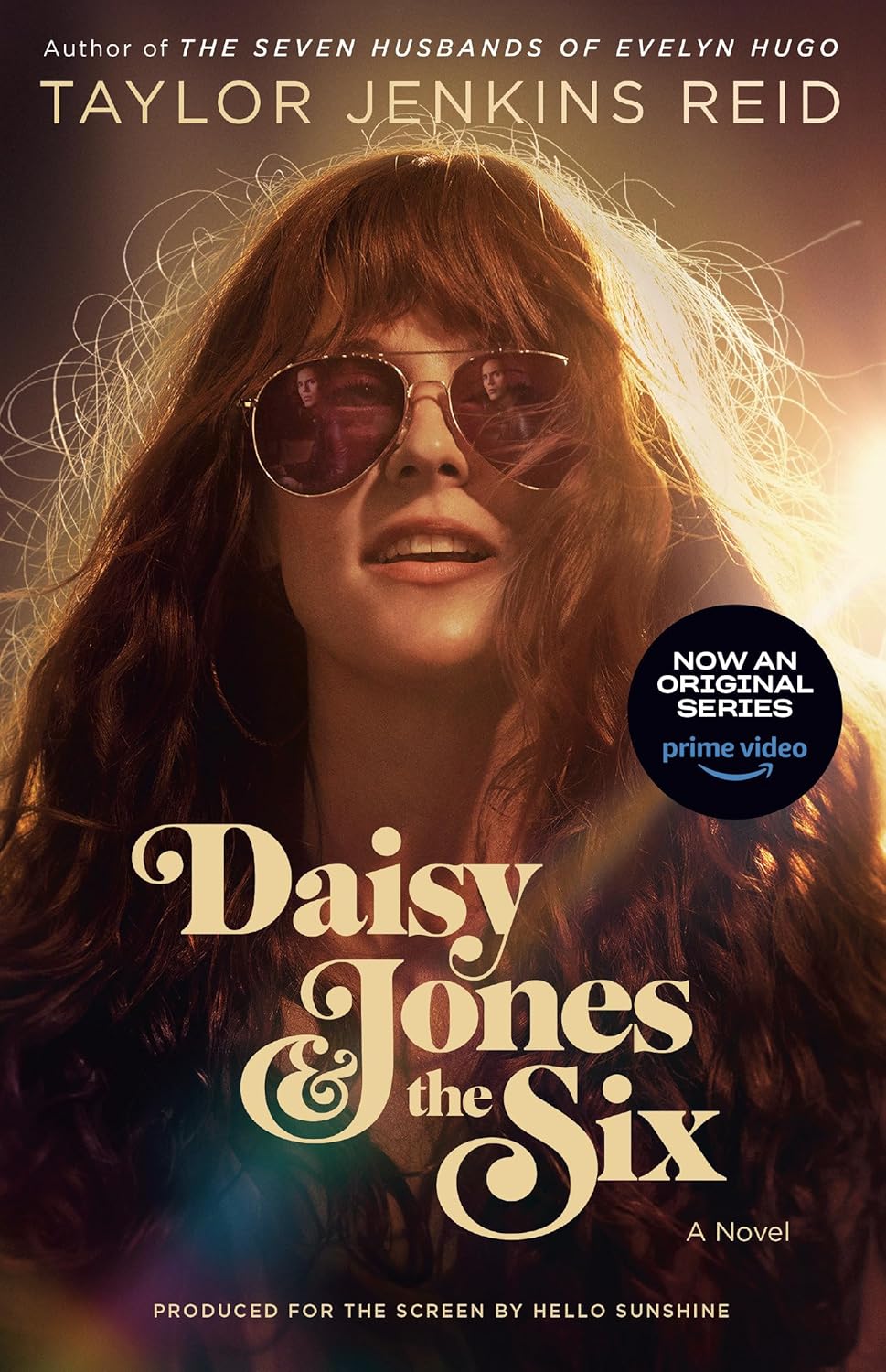
Taylor Jenkins Reid's 2019 novel is structured entirely as an oral history — interviews conducted decades later with every surviving band member, manager, and intimate, assembled as if by a documentarian. Will Graham's 2023 Amazon Prime series stars Riley Keough as Daisy and Sam Claflin as Billy Dunne, the band's frontman and primary songwriter. The ten-episode adaptation was developed by Scott Neustadter and Michael H. Weber, with Reese Witherspoon's production company Hello Sunshine shepherding the project from page to screen.
The series premiered to strong reviews and became one of Amazon's most-watched releases of 2023, with particular praise for Keough's performance and the decision to record Aurora as an actual album. The book spent months on bestseller lists and cemented Reid's reputation as a master of high-concept commercial fiction with literary ambition.
| Character | In the Book | In the The Series |
|---|---|---|
| Daisy Jones Riley Keough |
A voice among many in the oral history, her interview answers reveal her charisma and self-destruction through what she chooses to say and omit. | Keough embodies the rock star magnetism and vulnerability, singing live and carrying the emotional weight of the series on screen. |
| Billy Dunne Sam Claflin |
His interview testimony is carefully managed, revealing his ego and self-righteousness through the gaps in his memory and the contradictions with others' accounts. | Claflin plays him as more sympathetic and self-aware, a recovering addict trying to hold his marriage and band together while drawn to Daisy. |
| Camila Dunne Camila Morrone |
Billy's wife, whose interview perspective provides the moral center and reveals the cost of Billy's ambition and attraction to Daisy. | Morrone gives her more agency and screen time, making her a full character rather than the wronged wife archetype. |
| Graham Dunne Will Harrison |
Billy's younger brother and lead guitarist, his quiet observations in the interviews reveal dynamics the louder voices miss. | His romance with Karen is given more development, though his role as observer is necessarily diminished. |
| Karen Sirko Suki Waterhouse |
The keyboardist whose interview testimony about choosing her career over motherhood is one of the novel's most powerful threads. | Waterhouse captures her cool professionalism, and the series dramatizes her abortion decision with care and specificity. |
| Eddie Roundtree Josh Whitehouse |
The bassist whose barely concealed resentment of Billy and unrequited feelings for Camila emerge through bitter interview answers. | His jealousy and ambition are more overtly dramatized, losing some of the subtlety of the book's format. |
Key Differences
The oral history format is abandoned for conventional drama
Reid's entire novel is presented as interview transcripts — no narration, no scene-setting prose, just competing voices remembering the same events differently. The genius of this is what it implies: every account is partial, every memory is self-serving in small ways, and the reader assembles the truth from the gaps between what different people say. Billy remembers a moment one way; Daisy remembers it differently; someone else doesn't remember it at all.
The series necessarily converts this into conventional dramatized scenes, which are more immediately accessible and fundamentally less interesting. The opening episode includes brief interview framing with older versions of the characters, but this device is quickly abandoned. What remains is a well-crafted period drama that loses the novel's central formal achievement — the book's form is its meaning.
Riley Keough makes Daisy a fully realized rock star
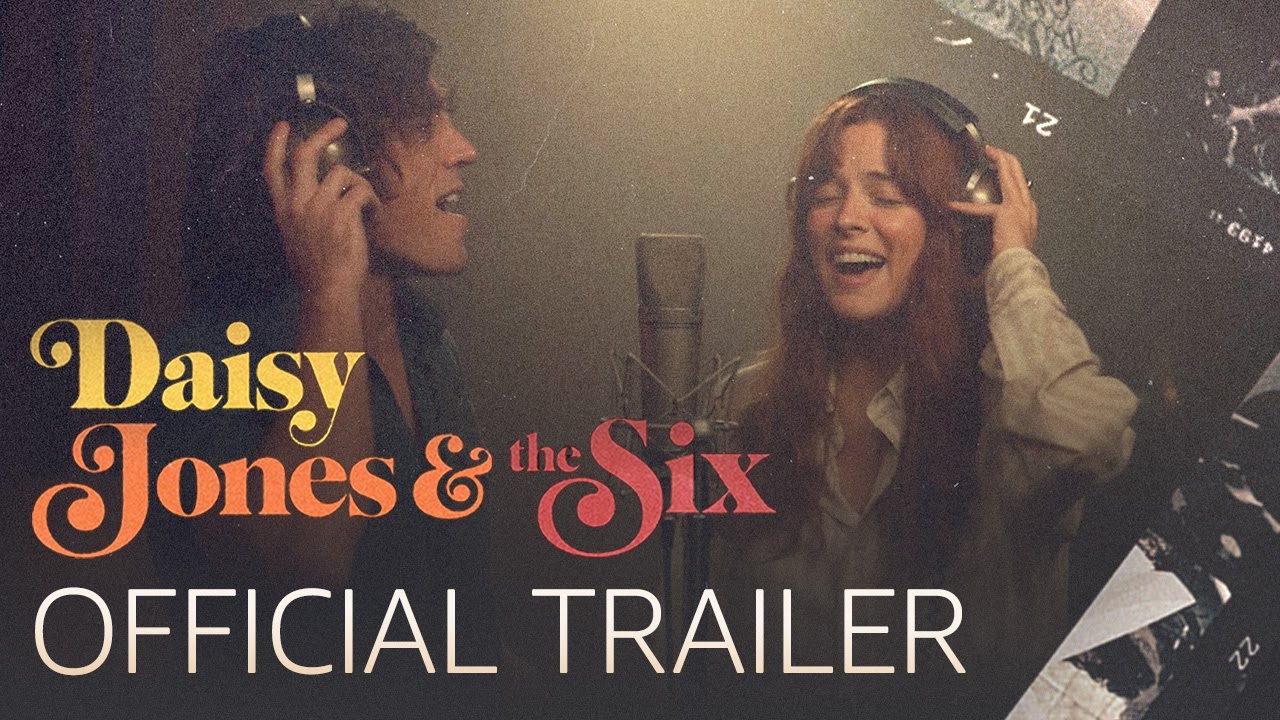
Keough is extraordinary — she has the rock star charisma the role demands and a specific quality of self-destruction that feels authentic rather than performed. She also actually sings, which matters enormously and which the production commits to fully. Her voice has the rasp and emotional rawness that makes Daisy's talent credible, and her chemistry with Claflin crackles in every scene they share.
As a screen Daisy, she is about as good as the role could be cast. What she cannot do is exist in the white space between interview answers, where the novel's Daisy is most fully alive — in the contradictions between what she says happened and what others remember, in the decades of distance between the events and the telling.
The music exists as actual recorded songs
The series made the bold decision to commission and record Aurora as an actual album — the songs exist and are performed on screen by the cast. This is the adaptation's most significant creative choice and arguably its best. The novel describes songs; the series plays them. Hearing "Look at Us Now (Honeycomb)" and "Regret Me" as actual pieces of music adds a dimension the book cannot have.
The album was produced by Blake Mills and features contributions from Phoebe Bridgers and Jackson Browne. It charted on Billboard and was nominated for multiple awards. This is the one area where the series genuinely surpasses its source — Reid could only tell us the songs were great; the series proves it.
Billy Dunne becomes more sympathetic on screen
Sam Claflin plays Billy with a convincing mixture of talent, ego, and the specific kind of self-righteousness that makes him both compelling and exhausting. The novel's Billy is more opaque — his interview answers are more carefully managed, his self-awareness more intermittent — in ways that make him a more complex figure on the page. You have to work to understand him because he's working to control his own narrative.
The series gives him a more sympathetic arc, emphasizing his sobriety struggle and his genuine love for Camila. This makes him more immediately likable but less interesting. The book's Billy is harder to pin down, and that ambiguity is part of Reid's point about memory and self-mythology.
The ensemble is compressed to focus on Daisy and Billy
One of the novel's pleasures is the full ensemble of peripheral voices — the other Six members, the manager Teddy Price, the record producer, the photographer — each with their own perspective and their own version of events. The series necessarily focuses its camera time on Daisy and Billy, which compresses the ensemble considerably.
Readers of the novel will miss Eddie's barely concealed resentment, Graham's quiet observation, Warren's genial obliviousness. These characters exist in the series but are flattened into supporting roles. Teddy Price, played by Tom Wright, loses much of his wry commentary. The photographer who documents the band is reduced to a few scenes. The oral history format gave everyone equal narrative weight; the series has to choose its protagonists.
Yes — emphatically. The oral history format is the experience, and once you've seen the series the book's formal device loses some of its surprise. Read first to encounter the novel as it was designed to be encountered: as a puzzle assembled from unreliable voices, where the truth emerges from contradictions and omissions. The final revelation about what happened in Chicago lands with devastating force precisely because you've spent 300 pages assembling it from fragments.
Then watch the series for Riley Keough and the music, which are both worth your time. The series is a handsome, well-performed adaptation that understands the emotional core of Reid's story even as it abandons the formal innovation. But the book's structure is irreplaceable — it's not just how the story is told, it's what the story means.
Should You Read First?
Yes — emphatically. The oral history format is the experience, and once you've seen the series the book's formal device loses some of its surprise. Read first to encounter the novel as it was designed to be encountered: as a puzzle assembled from unreliable voices, where the truth emerges from contradictions and omissions. The final revelation about what happened in Chicago lands with devastating force precisely because you've spent 300 pages assembling it from fragments.
Then watch the series for Riley Keough and the music, which are both worth your time. The series is a handsome, well-performed adaptation that understands the emotional core of Reid's story even as it abandons the formal innovation. But the book's structure is irreplaceable — it's not just how the story is told, it's what the story means.
Reid's oral history format is her finest formal achievement — a novel that makes you feel like an archaeologist piecing together a lost era from contradictory testimony. The series is handsome, well-performed, and genuinely committed to its music, but it converts the book's ingenious structure into conventional drama. The actual Aurora album is the adaptation's trump card; the novel's form is the book's. Read first, then watch Keough prove Daisy Jones could have been real.