
The Story in Brief
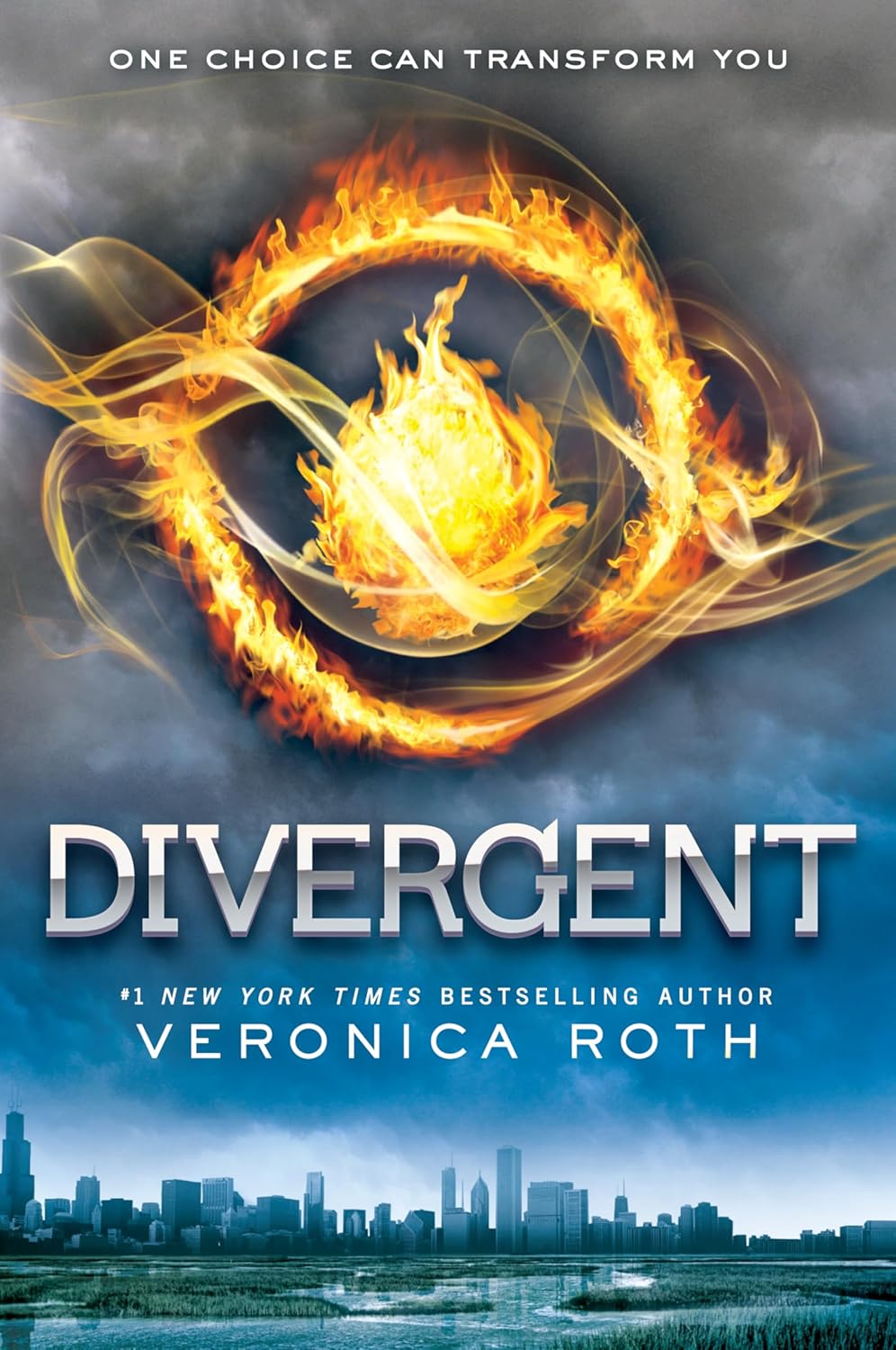
In a future Chicago divided into five factions based on personality — Dauntless (the brave), Erudite (the intelligent), Abnegation (the selfless), Amity (the peaceful), and Candor (the honest) — sixteen-year-old Beatrice "Tris" Prior discovers she is Divergent: she belongs to no single faction and cannot be controlled. She leaves her Abnegation family to join Dauntless, where she trains under the watchful eye of Four (Tobias Eaton), falls in love, and uncovers a conspiracy led by Erudite leader Jeanine Matthews to overthrow Abnegation and eliminate all Divergents.
Veronica Roth's debut novel, published in 2011 when she was twenty-two, sold over thirty-five million copies and launched a trilogy that became one of the defining YA dystopian franchises of the early 2010s. Neil Burger's 2014 adaptation starred Shailene Woodley fresh off The Spectacular Now and The Fault in Our Stars, alongside Theo James, Kate Winslet, and Ashley Judd. The film earned $288 million worldwide and spawned two sequels, though the series stalled before its conclusion.
The franchise arrived at the tail end of the YA dystopian boom sparked by The Hunger Games, and while it never achieved that series' cultural dominance, Roth's novel distinguished itself through Tris's morally complex first-person narration and a faction system that functioned as a critique of identity-based sorting.
| Character | In the Book | In the The Movie |
|---|---|---|
| Beatrice "Tris" Prior Shailene Woodley |
A morally conflicted narrator who questions her choices and the system constantly, making her less immediately heroic but more psychologically complex. | Woodley plays her with intelligence and physical commitment, but the film makes Tris more immediately sympathetic and heroic than the novel's version. |
| Tobias "Four" Eaton Theo James |
Tris's instructor and love interest, a Divergent hiding in plain sight with his own fear landscape and complicated relationship with his abusive father, Marcus. | James brings brooding intensity and chemistry with Woodley, though the film compresses his backstory and fear simulations. |
| Jeanine Matthews Kate Winslet |
The Erudite leader orchestrating the conspiracy against Abnegation and Divergents, driven by a belief in intellectual superiority and control. | Winslet plays her with cold precision, elevating a villain role that could have been one-dimensional in lesser hands. |
| Christina Zoë Kravitz |
Tris's closest friend during Dauntless initiation, a Candor transfer who provides emotional support and moral grounding. | Kravitz captures Christina's loyalty and humor, though her role is somewhat reduced in the film's compressed timeline. |
| Peter Hayes Miles Teller |
A cruel Dauntless initiate who torments Tris and attempts to kill her during training, representing the faction's toxic competitiveness. | Teller plays him as a sneering antagonist, though the film softens some of his most violent actions from the book. |
Key Differences
Tris's First-Person Narration and Moral Ambivalence
The novel's greatest strength is Tris's voice — Roth writes in first person, giving her protagonist a moral seriousness and self-doubt that elevates the book above standard YA action fare. Tris questions herself, her choices, and the system she operates within throughout the novel. She is occasionally selfish, makes mistakes, and struggles with guilt over leaving her family. This ambivalence is what makes the character compelling.
The film loses much of this interiority. Woodley communicates intelligence and determination through her performance, but the screenplay by Evan Daugherty and Vanessa Taylor makes Tris more immediately heroic and sympathetic. The film's Tris is braver, more confident, and less conflicted than the novel's version. This makes her easier to root for but less psychologically complex.
The Dauntless Initiation Sequence
The Dauntless training arc — the physical challenges, the brutal social hierarchy, the fear simulations — covers roughly half of the novel's length and is its most visceral section. Roth builds pressure gradually: Tris is ranked, threatened, and nearly killed by Peter. The accumulation of danger makes her situation feel genuinely precarious.
Burger compresses this into a montage-driven training sequence that hits the major plot points but loses the psychological weight. The knife-throwing scene with Four is present, as is the fear landscape simulation, but the film moves through them quickly to reach the Erudite conspiracy. The result is competent but less immersive — you understand that Tris is in danger, but you don't feel it accumulating the way the novel makes you feel it.
The Faction System and Its Critique
Roth's faction system is the novel's central world-building concept, and she establishes it with enough internal logic to make Tris's choices feel genuinely consequential. The system is also a critique: sorting people by a single dominant trait is reductive and dangerous. Divergents threaten the system because they can't be categorized, and the novel explores what happens when a society values conformity over complexity.
The film establishes the factions efficiently for non-readers — the aptitude test, the Choosing Ceremony, and the faction manifestos are all clearly presented. But the critique is less sharp. The film treats the factions more as world-building flavor than as a thematic concern. The implications of identity-based sorting are clearer in the novel, where Tris's internal conflict about belonging is foregrounded.
Shailene Woodley's Performance
Woodley is the film's significant achievement. She plays Tris with an intelligence, vulnerability, and physical commitment that elevates the material. Her performance in the fear landscape sequences — particularly the scene where she confronts her fear of intimacy with Four — is more emotionally honest than the script deserves. Woodley makes the adaptation worth watching even when the screenplay compresses or simplifies the novel's ideas.
The supporting cast is strong as well. Theo James brings brooding intensity to Four, Kate Winslet plays Jeanine Matthews with cold precision, and Miles Teller is effectively loathsome as Peter. But Woodley is the reason the film works at all — she makes you believe in Tris even when the script doesn't give her the interiority the novel provides.
The Series Trajectory and Incomplete Ending
The Divergent film series ultimately stalled. The second film, Insurgent (2015), performed well enough to justify a third, but Allegiant (2016) underperformed at the box office. The planned fourth film, Ascendant, was never released theatrically. The complete story exists only in Veronica Roth's trilogy of novels, which conclude with a controversial but definitive ending.
This matters for anyone considering the films. If you start the series with Burger's Divergent, you will not get narrative closure unless you turn to the books. The novels resolve their story fully, including Tris's fate in the final book, Allegiant. The films leave you stranded halfway through.
Yes. Tris's first-person voice and moral complexity are what distinguish Divergent from its competitors in the YA dystopian genre. The novel is not perfect — the faction system strains credibility at times, and the romance with Four occasionally overwhelms the plot — but Roth's willingness to let Tris be flawed and conflicted gives the book a seriousness that the film can only partially convey. The Dauntless training sequence is more immersive in the novel, and the faction system's critique is clearer.
The film is a competent adaptation that is better than its reputation suggests, largely because of Shailene Woodley's performance. But it compresses the character development and world-building that make the book more than standard genre fare. Read first to get the fuller version of Tris and the world she inhabits, then watch Woodley do what she can with a compressed version. And if you want the complete story, finish it in the books — the films didn't get there.
Should You Read First?
Yes. Tris's first-person voice and moral complexity are what distinguish Divergent from its competitors in the YA dystopian genre. The novel is not perfect — the faction system strains credibility at times, and the romance with Four occasionally overwhelms the plot — but Roth's willingness to let Tris be flawed and conflicted gives the book a seriousness that the film can only partially convey. The Dauntless training sequence is more immersive in the novel, and the faction system's critique is clearer.
The film is a competent adaptation that is better than its reputation suggests, largely because of Shailene Woodley's performance. But it compresses the character development and world-building that make the book more than standard genre fare. Read first to get the fuller version of Tris and the world she inhabits, then watch Woodley do what she can with a compressed version. And if you want the complete story, finish it in the books — the films didn't get there.
Roth wrote a YA dystopian novel with more moral seriousness than the genre usually delivers. Burger made a competent, well-cast adaptation that loses the seriousness in pursuit of pace. Woodley is excellent. The novel is better. If you start the film series, finish the story in the books — the films didn't get there.