The Story in Brief
Jonathan Harker, a young English solicitor, travels to Transylvania to assist Count Dracula with a London property purchase. What begins as a business transaction becomes a nightmare when Jonathan realizes he is a prisoner in the Count's castle. He escapes, barely, while Dracula sails to England aboard the Demeter, arriving in Whitby as a storm of wolves and madness.
In England, Dracula begins feeding on Lucy Westenra, friend to Jonathan's fiancée Mina Murray. Dr. John Seward, who runs an asylum next to Dracula's purchased estate, calls in his former teacher Abraham Van Helsing when Lucy's condition baffles him. Despite their efforts, Lucy dies and becomes one of the undead. The group—Van Helsing, Seward, Lucy's suitors Arthur Holmwood and Quincey Morris, plus Jonathan and Mina—hunt Dracula across London and back to Transylvania, where they destroy him just before sunset.
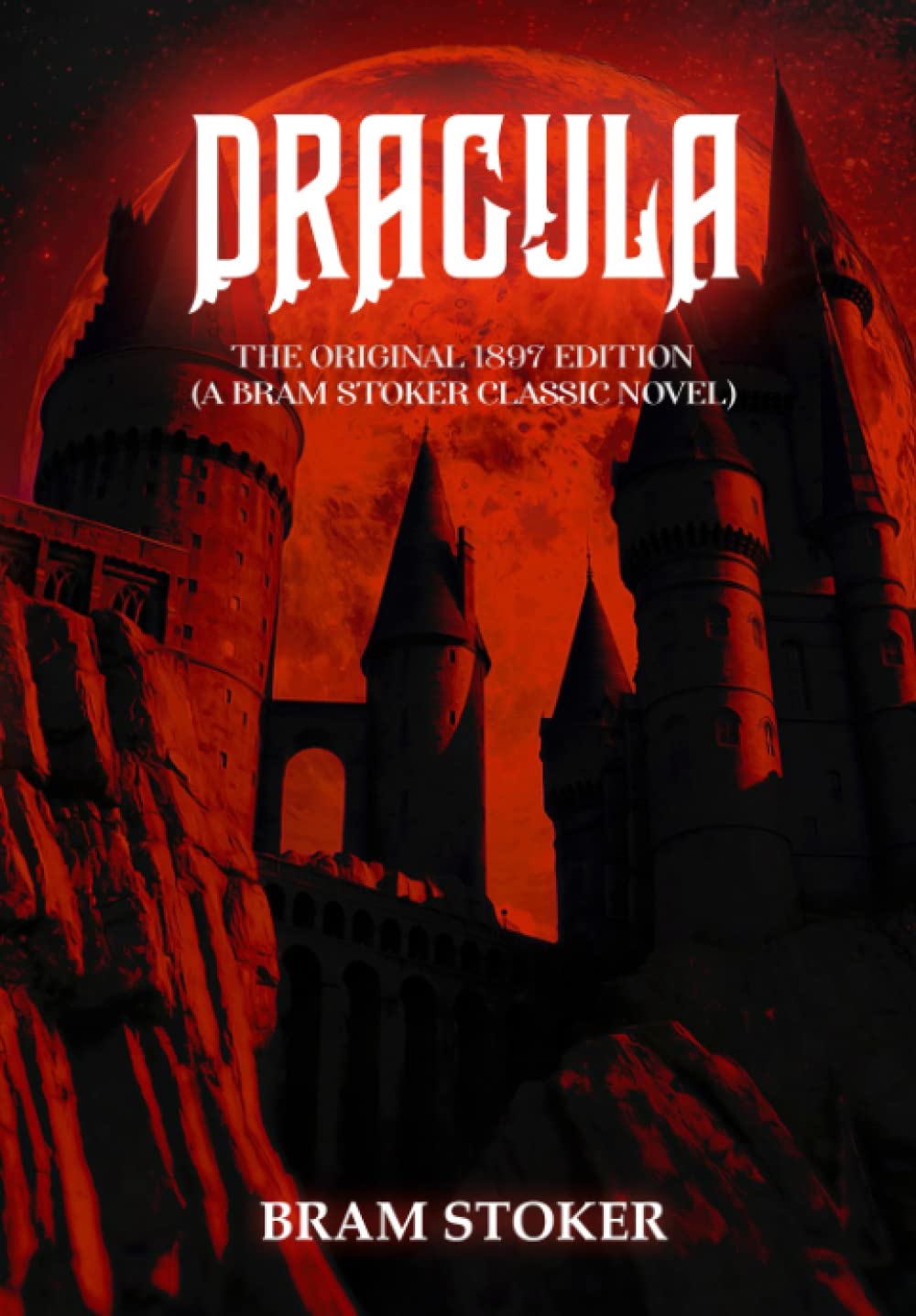
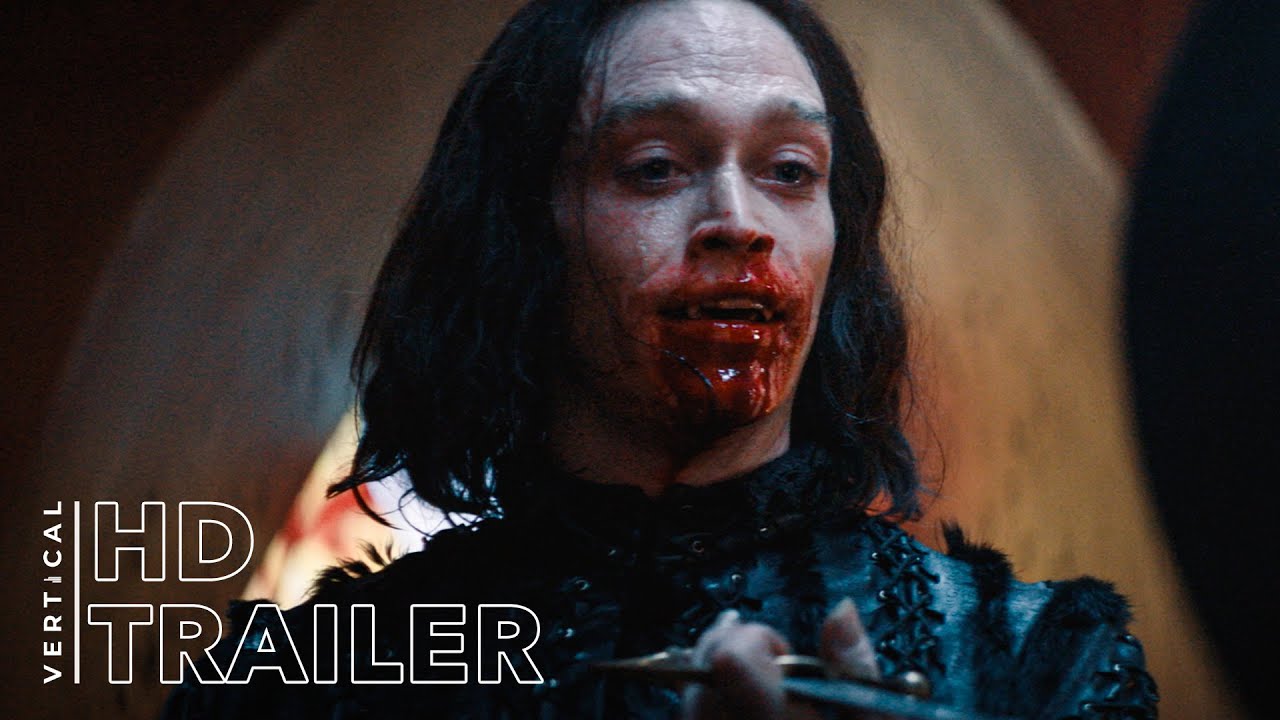
Bram Stoker's 1897 novel invented the modern vampire and remains one of the most formally inventive works in Gothic literature—told entirely through assembled documents. Francis Ford Coppola's 1992 film, which won three Academy Awards for costume design, makeup, and sound editing, added a romantic subplot and cast Gary Oldman as a tragic, operatic Count. The film was a commercial success and has become the most visually referenced Dracula adaptation, though its romantic interpretation remains divisive among Stoker purists.
| Character | In the Book | In the The Movie |
|---|---|---|
| Count Dracula Gary Oldman |
A predatory, ancient creature who appears infrequently and is described through terrified accounts—white mustache, hairy palms, breath like a charnel house. | A tragic romantic figure seeking his reincarnated love, presented directly and frequently, transforming from ancient monster to rejuvenated nobleman. |
| Mina Murray/Harker Winona Ryder |
Intelligent, resourceful, and brave—she types up the group's research, uses her psychic connection to Dracula to track him, and remains morally uncorrupted despite his attack. | Presented as the reincarnation of Dracula's medieval bride Elisabeta, torn between duty to Jonathan and attraction to Dracula—a romantic conflict absent from Stoker. |
| Jonathan Harker Keanu Reeves |
An ordinary English solicitor whose diary entries from Castle Dracula are among the novel's most terrifying passages—his steady ordinariness makes the horror more effective. | Reeves's miscasting and inconsistent accent undermine Jonathan's role as reliable observer; the character becomes passive and overshadowed by Oldman's performance. |
| Abraham Van Helsing Anthony Hopkins |
A Dutch professor, methodical and scholarly, who brings knowledge of vampire lore and coordinates the hunt with quiet authority. | Hopkins plays him with theatrical exuberance bordering on camp—energetic, eccentric, occasionally self-parodic, but entertaining and more dynamic than Stoker's restrained original. |
| Lucy Westenra Sadie Frost |
Mina's friend, flirtatious and vivacious, who becomes Dracula's first English victim and must be destroyed after her transformation into a vampire. | Frost's Lucy is more overtly sexualized, particularly in the scenes of her vampiric transformation—Coppola emphasizes the erotic horror more explicitly than Stoker's Victorian restraint allowed. |
Key Differences
The epistolary format is abandoned for direct narrative
Stoker tells the entire novel through assembled documents—Jonathan's diary, Mina's journal, Dr. Seward's phonograph recordings, ship's logs, newspaper clippings, telegrams. No single character has the full picture; each account is partial and sometimes unreliable. The reader assembles the horror from fragments, and Dracula himself almost never appears directly on the page. His nature is reconstructed from the terrified reports of those who encountered him.
No film can replicate this accumulative indirection, but Coppola doesn't try. He presents Dracula directly and frequently—in the castle with Jonathan, in London pursuing Mina, transforming from ancient to young. This makes Oldman's performance spectacular but diminishes the Count's menace. The horror of the partially glimpsed becomes the spectacle of the fully displayed.
Dracula becomes a tragic romantic rather than a pure predator
Coppola's most significant and controversial change: the film opens with a prologue showing Dracula as Vlad the Impaler, whose bride Elisabeta kills herself after receiving false news of his death. Dracula renounces God, and centuries later believes Mina is Elisabeta reincarnated. This romantic framework—entirely Coppola's invention—fundamentally alters the story's moral architecture.
In Stoker's novel, Dracula is not in love with Mina. He attacks her as part of his campaign of revenge against the men hunting him, forcing her to drink his blood to create a psychic connection. There is no reincarnation, no tragic backstory, no romantic conflict. Stoker's Dracula is purely predatory—an ancient evil that consumes. The romantic framing makes Coppola's film more operatic and visually gorgeous but considerably less horrifying.
Gary Oldman's performance versus Stoker's absent monster
Oldman gives one of his most technically elaborate performances—the ancient Count with his white hair and red robes in the castle, the rejuvenated nobleman in blue-tinted glasses stalking London, the wolf-shadow that moves independently on the wall, the bat-creature with its membranous wings. He shifts accents, postures, and vocal registers across the film's runtime. It is a virtuoso display of actorly transformation.
But Stoker's Dracula works through absence. He appears in perhaps a dozen scenes across the novel's 400 pages. His power comes from implication—the drained bodies, the wolves that obey him, the madness he spreads, the fog that follows him. When he does appear, he is described through others' terrified perception: the white mustache, the hairy palms, the breath like a tomb. Oldman's interpretation makes Dracula romantic, tragic, and constantly present. Stoker's is more purely alien and therefore more frightening.
Keanu Reeves's miscasting and Anthony Hopkins's compensation
Reeves's performance as Jonathan Harker has been universally acknowledged as the film's weakest element. His American accent drifts in and out, his line readings lack conviction, and he cannot convey the quality of steady English ordinariness that makes Jonathan an effective observer of the extraordinary in Stoker's novel. The early Transylvania sequences, which should be terrifying, are undermined by Reeves's inability to register genuine fear.
Anthony Hopkins compensates with a Van Helsing who is theatrical, eccentric, and occasionally self-parodic in the most enjoyable way. Stoker's Van Helsing is methodical and scholarly; Hopkins plays him as energetic and slightly unhinged. The supporting cast—Richard E. Grant as Dr. Seward, Cary Elwes as Arthur Holmwood, Billy Campbell as Quincey Morris—is strong enough to carry the film around Reeves's limitations.
Coppola's practical visual effects versus Stoker's literary restraint
The film was shot entirely with in-camera practical effects—no digital manipulation. Coppola and cinematographer Michael Ballhaus used shadow puppets, forced perspective, in-camera superimpositions, and other optical techniques from early cinema. The shadow that moves independently of Oldman's body, the transformation sequences, the forced-perspective castle interiors—these are achievements of practical filmmaking that reward close attention.
Eiko Ishioka's costume design won an Academy Award and remains iconic—Dracula's red armor, his elaborate robes, the increasingly revealing costumes for the vampire brides. The visual inventiveness gives the film a handmade, theatrical quality that matches the Victorian Gothic setting better than digital effects would have. Stoker's novel, by contrast, works through literary restraint—the horror is in what is not described, in the gaps between documents, in the reader's imagination filling the spaces Stoker leaves empty.
Yes—read Stoker's novel first, specifically to experience the epistolary format and to encounter Dracula through the terrified, partial accounts of those who met him. The novel is stranger and more unsettling than any film version. The accumulation of documents creates a unique reading experience: you piece together the horror from fragments, and Dracula's nature emerges through indirection rather than direct presentation. The Count's infrequent appearances make him more alien and frightening than any actor can be when shown constantly on screen.
Watch Coppola's film afterward as a gorgeous, operatic reinterpretation that replaces the novel's restraint with spectacle and the novel's predator with a tragic lover. It is a different kind of work—visually inventive, emotionally operatic, and worth seeing for Oldman's performance and the practical effects. But the romantic framework fundamentally changes what Dracula is, and the film's beauty comes at the cost of the novel's deeper strangeness. Read first, then watch, and appreciate them as separate achievements.
Should You Read First?
Yes—read Stoker's novel first, specifically to experience the epistolary format and to encounter Dracula through the terrified, partial accounts of those who met him. The novel is stranger and more unsettling than any film version. The accumulation of documents creates a unique reading experience: you piece together the horror from fragments, and Dracula's nature emerges through indirection rather than direct presentation. The Count's infrequent appearances make him more alien and frightening than any actor can be when shown constantly on screen.
Watch Coppola's film afterward as a gorgeous, operatic reinterpretation that replaces the novel's restraint with spectacle and the novel's predator with a tragic lover. It is a different kind of work—visually inventive, emotionally operatic, and worth seeing for Oldman's performance and the practical effects. But the romantic framework fundamentally changes what Dracula is, and the film's beauty comes at the cost of the novel's deeper strangeness. Read first, then watch, and appreciate them as separate achievements.
Stoker wrote a novel of remarkable formal sophistication that creates horror through accumulation, indirection, and the terror of the partially glimpsed. Coppola made a gorgeous, operatic film that trades the novel's restraint for spectacle and the novel's predator for a tragic lover. The novel is stranger and more frightening—read it first. See the film for Oldman, who is magnificent even when the film is wrong about what Dracula is.