The Story in Brief
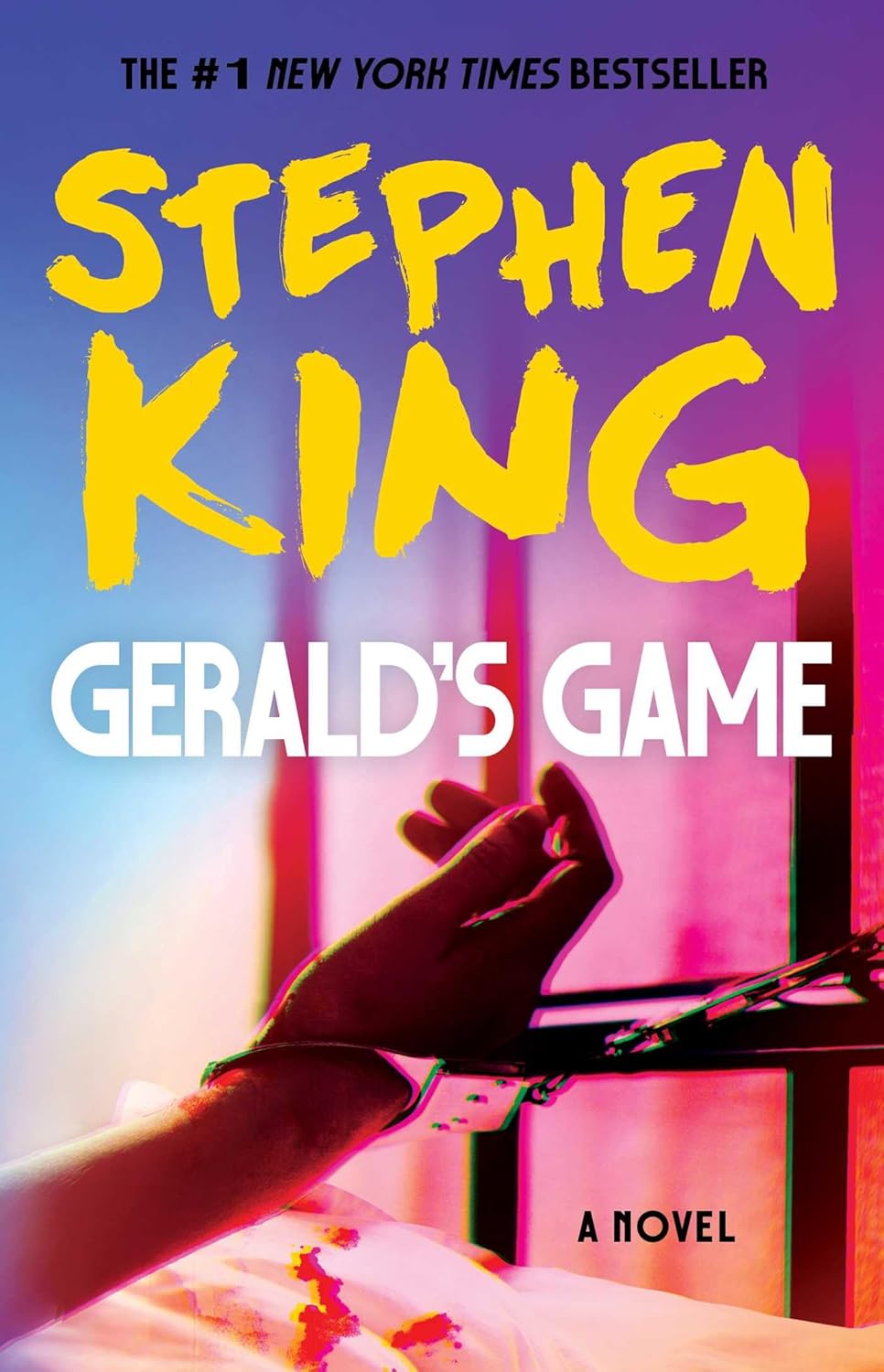
Jessie Burlingame is handcuffed to a bed in a remote lake house when her husband Gerald drops dead of a heart attack mid-fantasy. There is no one for miles. The dog is in the room. Night is coming. And Jessie — who has spent her life managing other people's needs at the cost of her own — is about to spend the next twenty-four hours alone with her thoughts in a way she has never been before. Stephen King's 1992 novel is almost entirely interior — the physical situation is established in the first pages, and what follows is Jessie's mind working through trauma, memory, and survival across a sleepless night. It was considered unfilmable for a quarter century. Mike Flanagan filmed it in 2017 and solved every problem.
Key Differences
The interior monologue problem
The novel is ninety percent internal — Jessie's dissociated voices, her memories surfacing under pressure, her arguments with herself about what she can and cannot endure. This is the kind of material that seems to require prose: sustained, unmediated access to a single consciousness across hours of physical paralysis. Flanagan's solution is to externalise Jessie's internal voices as physical presences in the room — versions of herself and Gerald that she can argue with on screen. It is an elegant, faithful solution that preserves the spirit of the novel's structure while making it filmable.
Carla Gugino
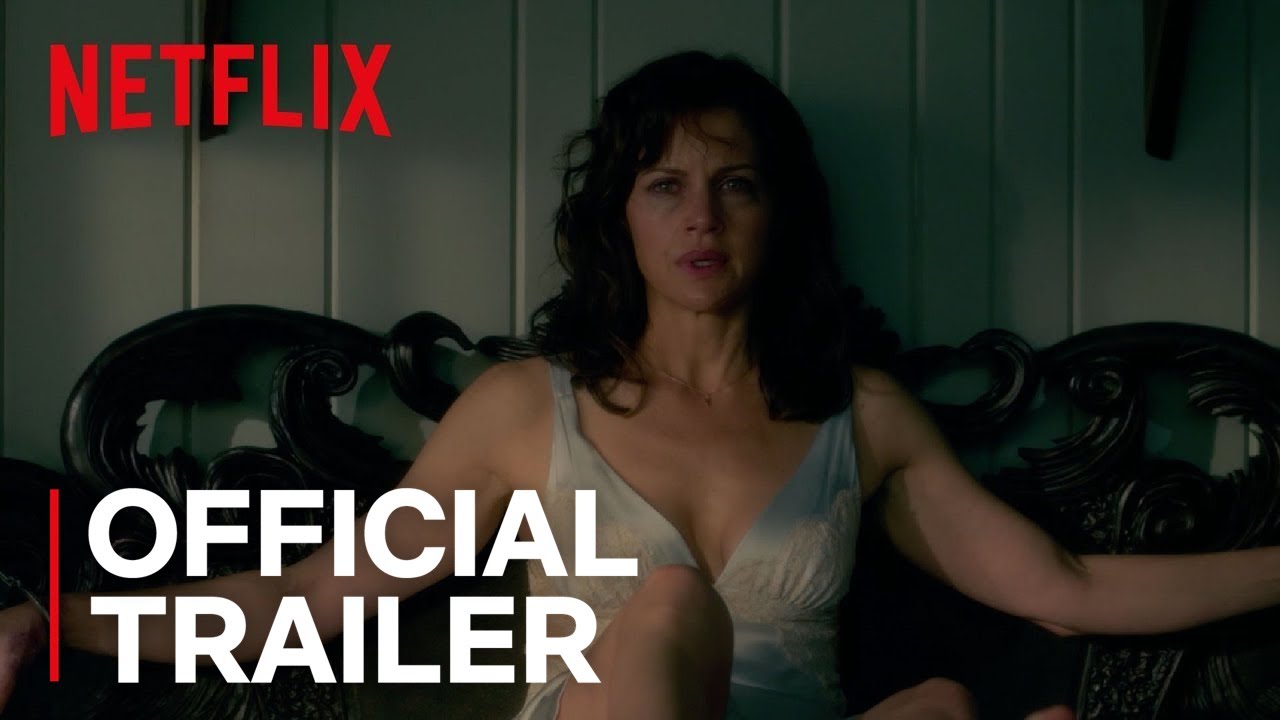
Gugino gives one of the finest performances in King adaptation history — a physically confined role that requires her to carry almost the entire film through facial expression, voice, and the increasingly exhausted commitment of a woman who has decided she is going to survive. She plays multiple versions of Jessie simultaneously — the frightened present-tense woman, the younger woman in memory, the voice of survival instinct — and makes each distinct. This is a performance that elevates its source, and it is the main reason to watch the film even after reading the book.
The childhood trauma
Both novel and film trace Jessie's current crisis to a specific childhood experience — a solar eclipse, her father, a moment that she has spent her adult life refusing to acknowledge. The film handles this material with the same directness as the book, and Flanagan does not flinch from what King wrote. The flashback sequences are among the film's most effective and most difficult, and they are essential to understanding why Jessie is who she is. Novel readers will find the film faithful to the book's most uncomfortable material.
The Moonlight Man
A figure Jessie begins to see in the darkness of the room — tall, dressed in black, carrying a bag — is one of the novel's most unsettling elements, hovering between supernatural threat and hallucinatory projection. The film renders him with effective restraint, keeping the ambiguity intact while making him visually present. The novel's version is perhaps more disturbing because his nature remains more genuinely uncertain; the film's version is more immediately frightening.
The epilogue
Both versions include an epilogue in which Jessie, having survived, confronts the experience in writing. The novel's epilogue is longer and gives more space to Jessie's reflection on what she has understood about her own life. The film's version is more compressed but delivers its emotional payload efficiently. Both endings honour what Jessie has been through; the novel's version sits with it longer.
Should You Read First?
Yes — the novel's interiority is the experience, and Jessie's internal archaeology is richer on the page than any externalised equivalent can be. But this is one of the closer calls among King adaptations: Flanagan has solved the unfilmable problem so elegantly and Gugino performs so completely that the film is essential viewing regardless. Read first; watch immediately after.
King's novel is a masterclass in confined psychological horror — one character, one room, one night, one lifetime of suppressed truth. Flanagan's film is a masterclass in adapting the apparently unfilmable: he found cinematic equivalents for everything the novel does in prose, and Gugino's performance makes the result one of the best King adaptations on screen. The book is richer in its psychological archaeology. The film is one of the great arguments for what adaptation can achieve. Both essential; book first.