The Story in Brief
Billionaire John Hammond has cloned dinosaurs from ancient DNA preserved in amber and built a theme park on Isla Nublar, off the coast of Costa Rica. Before opening to the public, he invites paleontologist Alan Grant, paleobotanist Ellie Sattler, and mathematician Ian Malcolm to endorse the park. When disgruntled programmer Dennis Nedry shuts down the security systems to steal embryos, the dinosaurs escape and the survivors — including Hammond's grandchildren Tim and Lex — must fight to reach the mainland.
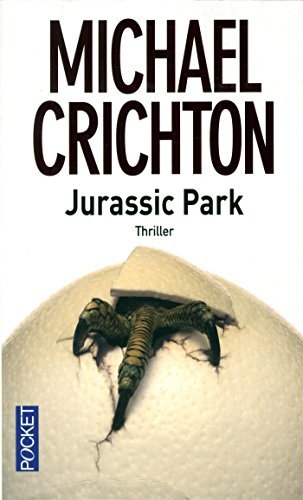
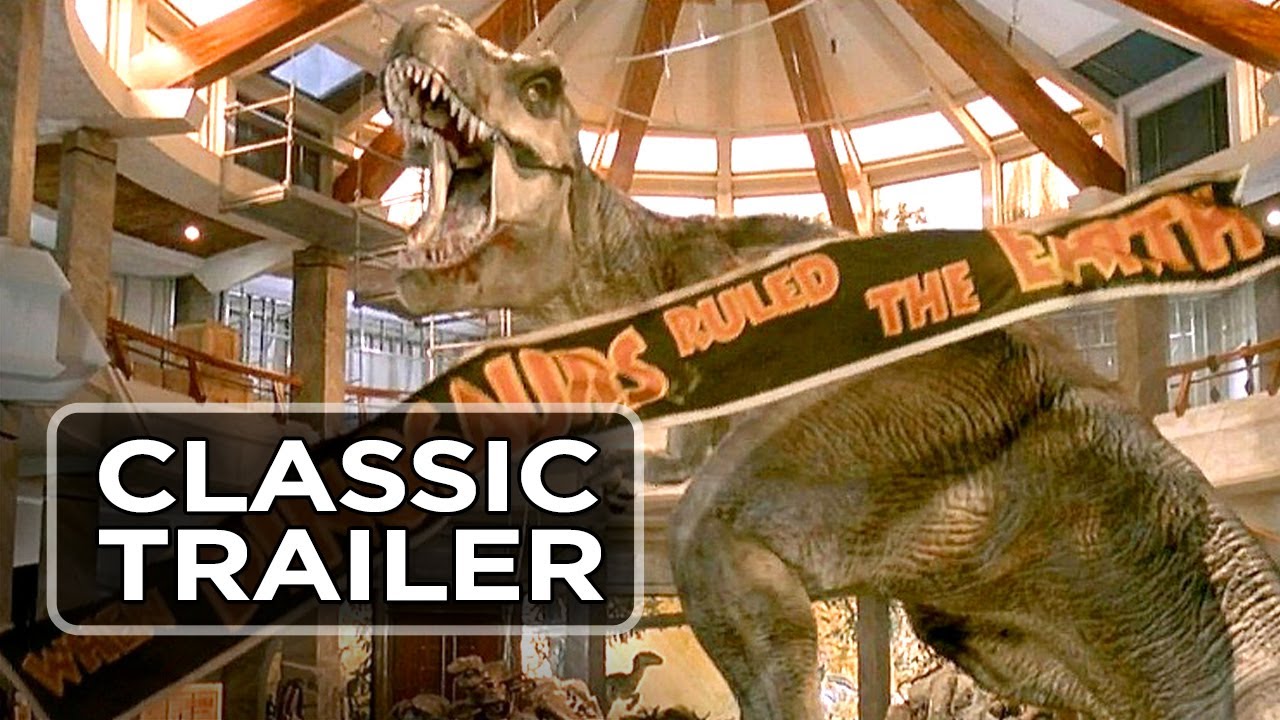
Michael Crichton's 1990 novel is a serious work of scientific speculation wrapped in a techno-thriller — darker, more intellectually rigorous, and considerably less sentimental than what Spielberg made of it. Steven Spielberg's 1993 film became one of the highest-grossing movies of all time, revolutionized visual effects with its combination of animatronics and CGI, and turned dinosaurs into a cultural phenomenon for a new generation.
The film earned three Academy Awards for technical achievement and remains one of the most thrilling cinema experiences of the 1990s, even as it softens Crichton's critique of corporate science into a more conventional adventure.
Cast & Characters
| Character | In the Book | In the Film |
|---|---|---|
| Dr. Alan Grant Sam Neill |
A paleontologist who dislikes children and gradually warms to Tim's dinosaur knowledge. | Neill plays him as gruff but fundamentally decent, with his arc toward fatherhood more pronounced and sentimental. |
| Dr. Ellie Sattler Laura Dern |
Grant's graduate student and romantic interest, competent but less central to the action. | Dern elevates her into the film's moral center, particularly in her confrontation with Hammond about responsibility. |
| Dr. Ian Malcolm Jeff Goldblum |
A chaos theorist who delivers extended lectures on complexity, unpredictability, and scientific arrogance. | Goldblum makes him a rock-star intellectual with memorable one-liners, but the film cuts most of his theoretical arguments. |
| John Hammond Richard Attenborough |
A ruthless entrepreneur whose arrogance and cost-cutting directly cause the disaster; dies ignominiously. | Attenborough plays him as a well-meaning dreamer whose vision exceeds his judgment — sympathetic rather than culpable. |
| Tim Murphy Joseph Mazzello |
The older grandchild at eleven, a dinosaur expert who helps solve technical problems. | Made younger and less capable, primarily there to be rescued rather than contribute intellectually. |
| Lex Murphy Ariana Richards |
The younger grandchild, a sports enthusiast with little relevance to the plot. | Made older and given Tim's computer skills, allowing her the film's key moment of rebooting the park systems. |
Key Differences
Hammond dies, and it matters
In Crichton's novel, John Hammond is killed by a pack of compys — the small, seemingly harmless dinosaurs he dismissed as irrelevant. It's a piece of thematic precision: the man who thought he could control nature dies because he underestimated it.
Spielberg's film lets Hammond survive and gives him a sentimental exit, gazing at the island as they escape. Richard Attenborough plays him as a misguided dreamer rather than the novel's genuinely culpable megalomaniac. The film wants you to feel sorry for Hammond. The book wants you to understand that he earned his fate.
Malcolm's chaos theory becomes decoration
Crichton gives Ian Malcolm extended passages on chaos theory, complexity, and the limits of human predictability — arguments that form the novel's intellectual spine and directly explain why the park was always doomed. Malcolm's lectures are genuinely interesting, not just thriller-novel filler.
Jeff Goldblum's performance is iconic, but the film reduces Malcolm's arguments to memorable one-liners: "Life finds a way." The philosophical weight disappears. Spielberg wants wonder and terror, not a seminar on nonlinear systems. The film's Malcolm is a rock star; the book's Malcolm is a prophet.
The film's dinosaurs are cinema magic
Spielberg's dinosaurs are one of cinema's great achievements. The initial appearance of the brachiosaurus — Grant and Sattler stepping out of the Jeep, John Williams' score swelling, the camera tilting up to reveal the impossible scale — is still breathtaking thirty years later. The T-rex attack in the rain, the kitchen raptors, the gallimimus stampede: these are images that no prose description can match.
Stan Winston's animatronics and ILM's CGI created creatures that feel real in a way that transcends technical accomplishment. This is the area where the film most clearly surpasses the source. Crichton's dinosaurs are described; Spielberg's dinosaurs exist.
The novel is substantially darker
Crichton's book is a horror novel. More characters die, more graphically, and with less narrative protection. Ed Regis, the park's PR man, is eaten while hiding from a T-rex. Dennis Nedry's death by dilophosaurus is described in gruesome detail. The compys swarm and kill in extended sequences that emphasize the wrongness of what Hammond has created.
Spielberg keeps the violence but softens it — the T-rex attack is terrifying but not graphic, and several characters who die in the book survive in the film. The movie wants to thrill you; the book wants to horrify you. Spielberg's film is rated PG-13 and became a family blockbuster. Crichton's novel is unambiguously adult.
The children's roles are reversed and diminished
In the novel, Tim is the older child at eleven, a dinosaur expert whose knowledge proves useful. Lex is younger and largely irrelevant to the plot. The film reverses their ages, makes Lex the computer expert, and gives her the crucial moment of rebooting the park systems — "It's a Unix system! I know this!"
But both children are less intellectually active in the film. The novel's Tim helps Grant understand dinosaur behavior and contributes to solving problems. The film's children are conventional thriller kids: endangered, rescued, occasionally brave, but not genuinely useful. Spielberg wants you to fear for them, not rely on them.
Should You Read First?
Yes — specifically to get Crichton's darker, more intellectually serious version before Spielberg's magnificent but somewhat defanged blockbuster replaces it in your imagination. The film's images are so powerful that they will overwrite the book's descriptions. Once you've seen the T-rex attack in the rain, you'll never picture it differently.
Reading first also lets you appreciate what Spielberg chose to cut and why. The novel's extended chaos theory lectures would have killed the film's pacing, but they're the reason the story matters beyond its thrills. If you watch first, you'll get one of cinema's great experiences. If you read first, you'll understand what that experience was originally arguing.
Spielberg made one of cinema's great experiences and Crichton wrote a better, darker book. The film's dinosaurs are irreplaceable; the novel's argument is irreplaceable. See the film for the spectacle and the wonder. Read the novel to understand what the spectacle was originally about — and why Hammond deserved to die.