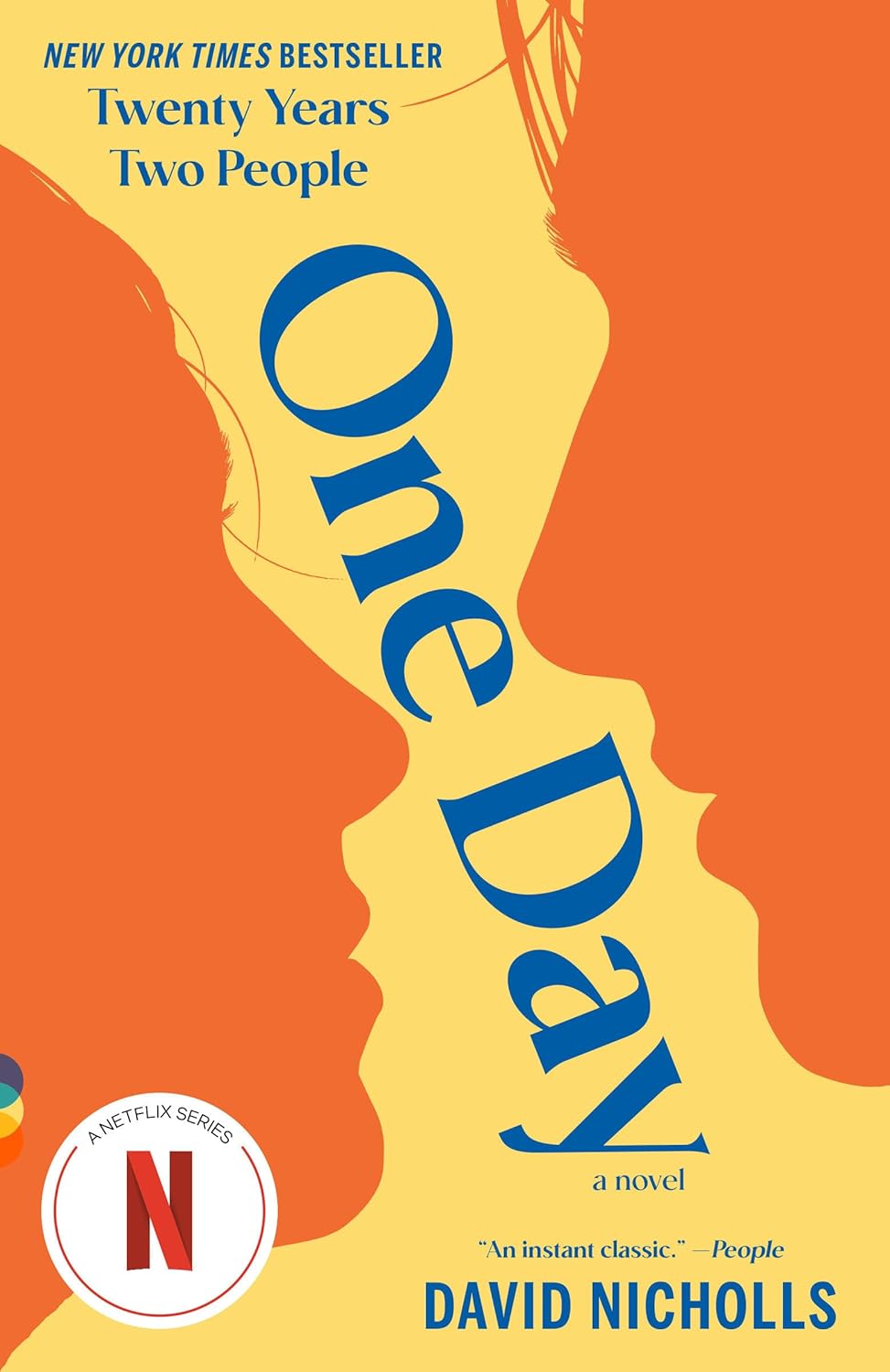

The Story in Brief
Emma Morley and Dexter Mayhew spend the night together after their Edinburgh graduation ceremony on July 15th, 1988 — and almost but not quite become a couple. David Nicholls's novel then checks in on them every year on that same date for the next two decades, watching them drift apart and toward each other as their lives diverge radically: Emma struggling through unglamorous jobs toward a life she actually wants, Dexter burning brightly and then burning out through television fame, drink, and a series of bad choices.
It is a novel about time, about the people we almost were with, and about what we owe the people who knew us before we became ourselves. Lone Scherfig's 2011 film, starring Anne Hathaway and Jim Sturgess, is a sincere adaptation of a novel whose formal genius is almost impossible to bring to screen. The film was a modest box office success but received mixed reviews, with particular criticism directed at Hathaway's accent.
The novel became a bestseller in the UK and was longlisted for the Man Booker Prize. It remains one of the defining British romantic novels of the 2000s, taught in schools and beloved for its honest portrayal of how people change — and don't — over time.
| Character | In the Book | In the The Movie |
|---|---|---|
| Emma Morley Anne Hathaway |
A working-class Yorkshire woman with sharp wit and literary ambitions, whose self-deprecation masks genuine intelligence and moral clarity. | Hathaway captures Emma's intelligence but struggles with the accent and regional specificity that define the character's class anxiety and Northern identity. |
| Dexter Mayhew Jim Sturgess |
A privileged, charming man who coasts on looks and confidence into television fame, then watches it all curdle through drink and self-pity. | Sturgess is appealing and earnest but too likeable to fully convince as the novel's version of Dexter at his worst — the ugliness is softened. |
| Ian Whitehead Rafe Spall |
Emma's well-meaning but tedious boyfriend, a failed comedian whose neediness and lack of ambition make him the wrong man at the wrong time. | Spall plays Ian as more sympathetic than the book allows, which undercuts Emma's reasons for leaving him. |
| Sylvie Cope Romola Garai |
Dexter's beautiful, wealthy wife whose marriage to him is doomed by his inability to stop thinking about Emma. | Garai is excellent in limited screen time, capturing Sylvie's awareness that she is not the person Dexter actually wants. |
Key Differences
The annual structure is the novel's irreplaceable engine
Nicholls's central formal device — one chapter per year, always July 15th — is the novel's engine and its emotional argument. Over twenty chapters you accumulate an understanding of Emma and Dexter that feels genuinely longitudinal: you notice what has changed, what hasn't, what each of them is not saying. The gaps between chapters do as much work as the chapters themselves.
The film compresses this into two hours of montage and selected scenes, which captures the shape of the story but cannot replicate the specific weight of watching a single day repeated across two decades. The structure is the meaning, and film cannot hold it. What the book does through accumulation, the film must do through compression — and something essential is lost.
Anne Hathaway is miscast as Emma Morley
Emma Morley is specifically, essentially, emphatically English — her class anxiety, her Yorkshire roots, her particular brand of self-deprecating Northern wit are load-bearing elements of who she is and why Dexter finds her both attractive and threatening. Hathaway's accent was widely criticised on the film's release and the criticism was fair: not because American actors can't do British accents, but because this particular accent, this particular regional identity, is too central to Emma to be approximated.
The Netflix series cast Ambika Mod, who is note-perfect. Mod understands that Emma's intelligence is expressed through deflection and irony, and that her Yorkshire background is not incidental but definitional. Hathaway works hard but is fighting the wrong battle.
Dexter's decline is softened on screen
The novel spends considerable time with Dexter at his worst — the television career curdling, the drinking, the specific self-pity of a handsome man who has coasted on charm and is now watching it expire. Nicholls is merciless about this in ways the film softens: Jim Sturgess is too appealing to fully convince as a man making himself genuinely difficult to love.
The book's Dexter earns his eventual redemption through a longer, uglier fall. The film's Dexter is sad and lost, but never quite repellent. That matters, because Emma's decision to finally be with him needs to feel like forgiveness, not inevitability.
Emma's interiority is flattened
The novel switches perspective between Emma and Dexter depending on the year, giving us access to both inner lives in turn. Emma's chapters are often funnier and sharper than Dexter's — her observations about her own ambitions and failures have a quality of honest self-examination that is among the best things in the book. She is witty, self-aware, and unsparing about her own compromises.
The film collapses this dual perspective into a more conventionally external view of both characters, and Emma's intelligence becomes something we're told about rather than something we experience. Hathaway does what she can, but without access to Emma's interior monologue, the character loses half her dimension.
The ending lands with less force
The novel's devastating turn arrives without warning and lands with full force precisely because Nicholls has spent four hundred pages making you believe in these two people. Emma's death in a bicycle accident on Holloway Road is shocking, unfair, and unbearable — exactly as sudden loss is in life. The final chapters, which show Dexter alone with his grief and then flash back to their first night together, are among the most emotionally precise passages in contemporary British fiction.
The film's equivalent moment works — it is hard for it not to — but it carries less weight because the preceding two hours have not built the same foundation of accumulated time. You are sad; in the book, you are bereft. The difference is not small.
Yes — emphatically. The novel is one of the best British romances of the 2000s and its formal structure is genuinely irreplaceable. The annual snapshots create a rhythm that mirrors how we actually experience long friendships and long loves: in bursts of intensity separated by silence, in patterns we only recognize in retrospect. Read first and the film becomes a flawed but affectionate companion piece, a reminder of what you loved about the book even as it fails to fully capture it.
If you want a screen version after the book, the 2024 Netflix series with Ambika Mod and Leo Woodall is considerably more successful than the 2011 film and worth your time. With fourteen episodes instead of two hours, it has the space to honor Nicholls's structure and the casting to make Emma feel like Emma. But read the book first. It will wreck you in the right way.
Should You Read First?
Yes — emphatically. The novel is one of the best British romances of the 2000s and its formal structure is genuinely irreplaceable. The annual snapshots create a rhythm that mirrors how we actually experience long friendships and long loves: in bursts of intensity separated by silence, in patterns we only recognize in retrospect. Read first and the film becomes a flawed but affectionate companion piece, a reminder of what you loved about the book even as it fails to fully capture it.
If you want a screen version after the book, the 2024 Netflix series with Ambika Mod and Leo Woodall is considerably more successful than the 2011 film and worth your time. With fourteen episodes instead of two hours, it has the space to honor Nicholls's structure and the casting to make Emma feel like Emma. But read the book first. It will wreck you in the right way.
Nicholls's novel accumulates two decades of feeling through a formal device that film simply cannot replicate in two hours. The book gives you Emma's voice, Dexter's self-deception, and the weight of time passing in ways that montage can only gesture toward. Scherfig's adaptation is earnest and well-intentioned but never solves the casting problem at its centre, and the compression that two hours requires strips the story of the accumulated weight it needs. Read the book. The film is a lesser version of something great.