The Story in Brief
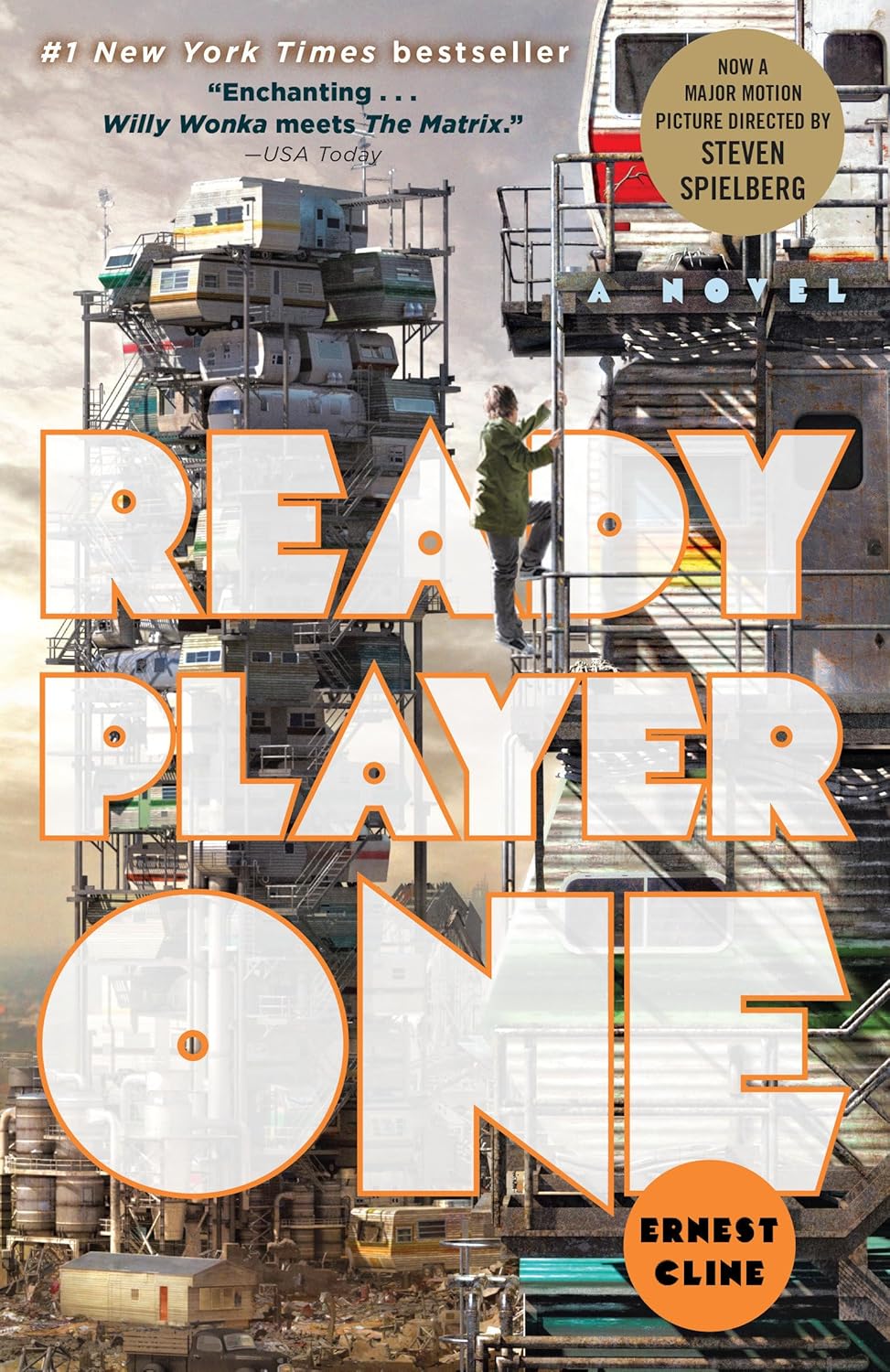
In 2045, most of humanity escapes a degraded real world into the OASIS — a vast virtual reality universe created by the eccentric James Halliday. When Halliday dies, he leaves behind an elaborate treasure hunt inside the OASIS, with his entire fortune and control of the platform as the prize. Wade Watts, a poor teenager from the stacks of Oklahoma City, becomes the first person to find the Copper Key, launching him into a competition against millions of "gunters" (egg hunters) and the sinister corporation IOI, led by Nolan Sorrento.
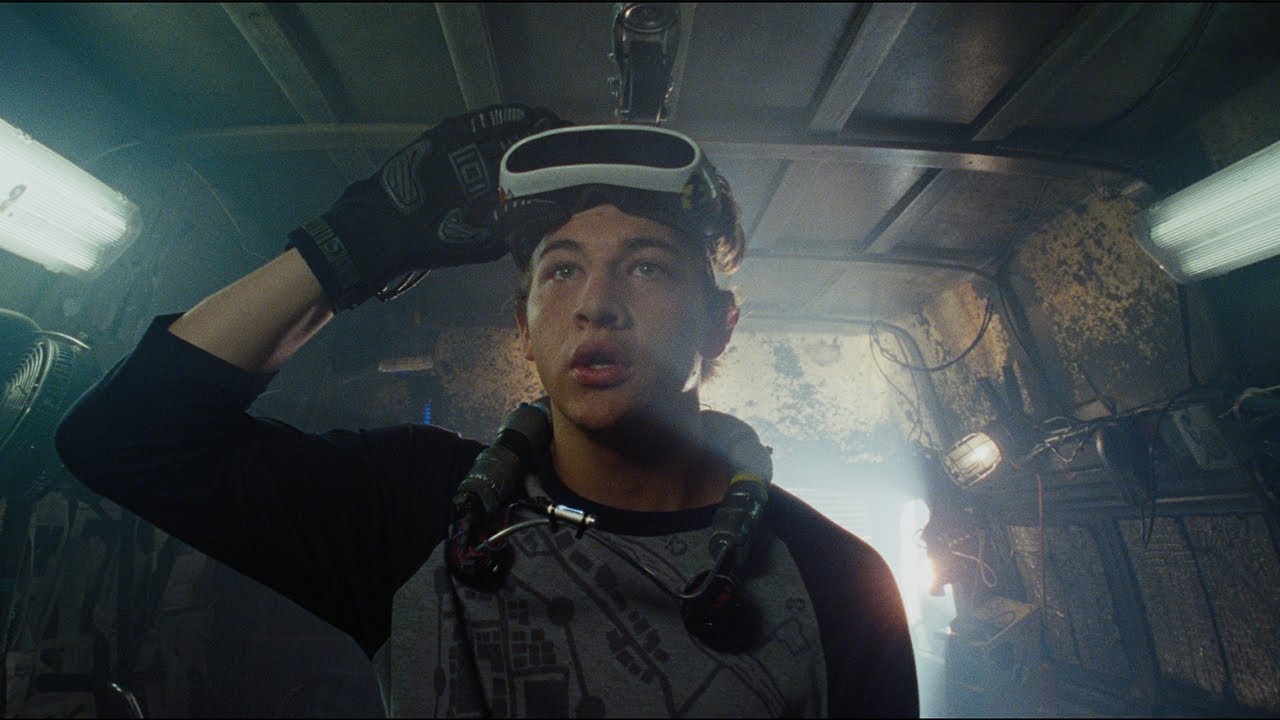
Ernest Cline's 2011 novel is a love letter to 1980s pop culture and video game history, requiring Wade to master obscure Atari games, recite entire films from memory, and decode references to Rush albums and Dungeons & Dragons modules. Steven Spielberg's 2018 film is a technical marvel that fundamentally rethinks what story it's telling — replacing Cline's hyper-specific trivia with broader pop culture spectacle and a more streamlined narrative. Tye Sheridan plays Wade with earnest determination, while Olivia Cooke's Art3mis (Samantha Cook in the real world) becomes his ally and love interest.
The film earned $582 million worldwide and showcased Spielberg's command of digital effects, but critics noted its ironic position as a corporate blockbuster warning against corporate control of virtual spaces. The novel became a bestseller and cultural touchstone for a generation raised on the same references Cline obsesses over.
Cast & Characters
| Character | In the Book | In the Film |
|---|---|---|
| Wade Watts / Parzival Tye Sheridan |
An overweight, socially awkward teenager who lives in his aunt's trailer and spends years studying Halliday's life with obsessive detail before finding the first key. | A more conventionally heroic protagonist who discovers the first key through intuition rather than years of research, with less emphasis on his physical appearance or social isolation. |
| Samantha Cook / Art3mis Olivia Cooke |
A blogger and gunter with a prominent birthmark she hides in the OASIS; her relationship with Wade develops slowly through extensive online communication before they meet. | A resistance fighter against IOI with a smaller facial birthmark; her romance with Wade is more immediate and conventional, with less exploration of virtual versus physical identity. |
| Helen Harris / Aech Lena Waithe |
Wade's best friend, whose avatar is a tall white male but who is revealed to be a Black lesbian woman — a major plot point about identity and online presentation. | The same reveal occurs but with less narrative weight; Aech functions more as comic relief and loyal sidekick than as a commentary on virtual identity. |
| Nolan Sorrento Ben Mendelsohn |
The head of IOI's Oology Division, a corporate villain with an army of indentured servants and vast resources dedicated to winning Halliday's contest. | Mendelsohn plays him as a smarmy, insecure executive — effective but less menacing than the novel's version, where IOI murders Wade's aunt and neighbors. |
| James Halliday / Anorak Mark Rylance |
The deceased creator of the OASIS, whose video will and obsession with 1980s pop culture drives the entire plot; his life story is the key to solving the hunt. | Rylance plays him as a fragile, socially awkward genius with regrets about his life choices; the film adds scenes of Halliday's memories that don't exist in the novel. |
Key Differences
The Three Keys Are Completely Different Challenges
Cline's Copper Key requires Wade to beat a perfect game of Joust on Planet Archaide. The Jade Key involves playing through an entire text adventure game and reciting Monty Python and the Holy Grail word-for-word. The Crystal Key demands mastery of the Atari 2600 game Adventure. Spielberg replaces all of this.
The film's first challenge is a race through Manhattan that no one has ever won because the solution is to drive backwards — a visual spectacle with no equivalent in the novel. The second challenge is the Shining sequence, where Wade and Art3mis must navigate the Overlook Hotel. The third involves a puzzle on Planet Doom. None of these appear in Cline's text.
The novel's challenges reward encyclopedic knowledge of 1980s gaming. The film's challenges reward cinematic problem-solving. Spielberg made the right choice for his medium, but it means the adaptation abandons what made Cline's novel distinctive to its core audience.
Spielberg References Spielberg, Creating a Strange Loop
The Shining sequence is a brilliant piece of filmmaking — Spielberg recreates Kubrick's sets and shots with meticulous care, then lets his characters interact with the film's most iconic moments. It's also completely invented for the movie.
But the film also references Back to the Future, E.T., and other Spielberg productions, which creates an odd self-referential quality. Cline's novel worships 1980s pop culture from the outside; Spielberg's film has its director nodding to his own work. The effect is occasionally uncomfortable — a film about corporate nostalgia exploitation made by one of the figures being nostalgically exploited.
Wade and Art3mis's Relationship Is Condensed and Simplified
The novel gives Wade and Art3mis months of online communication before they meet in person. Cline explores the gap between avatar and body, the complications of virtual intimacy, and Samantha's insecurity about her birthmark. Their relationship is a slow burn built on shared obsession with Halliday's hunt.
The film compresses this into a more conventional romance. They meet, they flirt, they kiss in the OASIS, they meet in person, they kiss again. Olivia Cooke is excellent — she gives Art3mis intelligence and determination — but the script doesn't give her the interiority Cline provides. The novel's Art3mis is a fully realized character with her own blog, her own theories, and her own reasons for hunting the egg beyond Wade's story.
The Real World Gets Far Less Attention
Cline spends significant time in the physical world — the stacks where Wade lives, the IOI headquarters where indentured servants work off debt, the safe houses where the gunters hide. The novel's argument is that the real world has become so degraded that the OASIS is a rational escape. We see poverty, corporate exploitation, and environmental collapse.
Spielberg's real world is a sketch. We see the stacks briefly. We see IOI's offices. But the film is far more interested in the OASIS, which is the right cinematic choice — the virtual world is where Spielberg can deploy his technical mastery. The trade-off is that the film loses the novel's critique of why people would choose virtual reality over physical existence.
IOI Is Less Sinister and More Bureaucratic
In the novel, IOI murders Wade's aunt Alice and several of his neighbors by blowing up his trailer stack. They enslave people through predatory debt. Sorrento is backed by an army of corporate resources and indentured "sixers" who work in identical cubicles. The threat is systemic and genuinely frightening.
Ben Mendelsohn's Sorrento is a corporate villain, but the film makes IOI less monstrous. There's no mass murder. The indentured servitude is mentioned but not shown in detail. The climax involves a large-scale battle in the OASIS rather than Wade infiltrating IOI's physical headquarters. Spielberg simplifies the villainy to keep the focus on the adventure rather than the dystopian critique.
Should You Read First?
Yes. The novel's specific pop culture architecture is its most distinctive quality, and Spielberg's film replaces most of it with different references and broader spectacle. If you read first, you'll understand what Cline built — a puzzle box designed for a very specific audience that shares his obsessions. You'll also get the character development and world-building the film compresses or omits.
Then watch Spielberg build something different from the same foundation. The film is a technical achievement and a more accessible story, but it's not really an adaptation of Cline's novel so much as a reimagining of its premise. Both are entertaining. The book is more itself.
Cline wrote a maximalist geek fantasy with an internal logic that rewards its target audience completely. Spielberg made a technically astonishing film that is less interested in Cline's specific obsessions and more interested in spectacle. The novel is more itself. The film is more a Spielberg film than a Cline adaptation. Both are entertaining. The book is better.