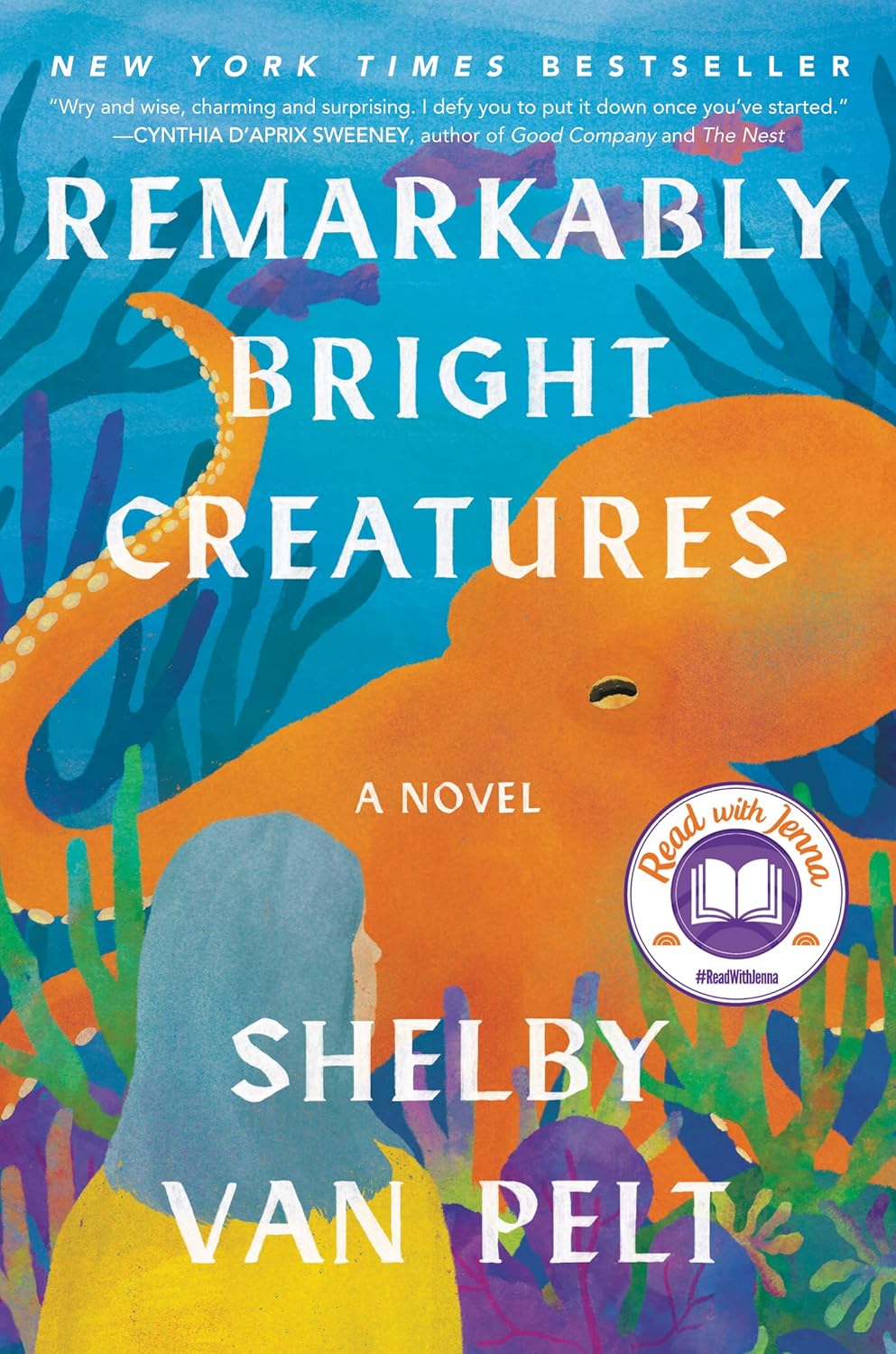
The Story in Brief
Tova Sullivan is a seventy-year-old widow who cleans the Sowell Bay Aquarium on the night shift in a small Washington coastal town. Her son Erik drowned thirty years ago under mysterious circumstances, and she has quietly stopped expecting much from the world. Marcellus is a giant Pacific octopus who lives in the aquarium, observes everything through the glass of his tank, and understands considerably more than the humans around him realize — including the truth about what happened to Erik.
Cameron Cassmore is a thirty-year-old drifter working at a Padres Cove grocery store, searching for the father he never knew. Van Pelt's debut alternates between Tova's chapters, Cameron's storyline, and Marcellus's first-person narration, weaving three seemingly separate threads into a single story about loneliness, connection, and the unlikely forms that family can take. The novel became one of the great word-of-mouth successes of 2022, spending months on bestseller lists.
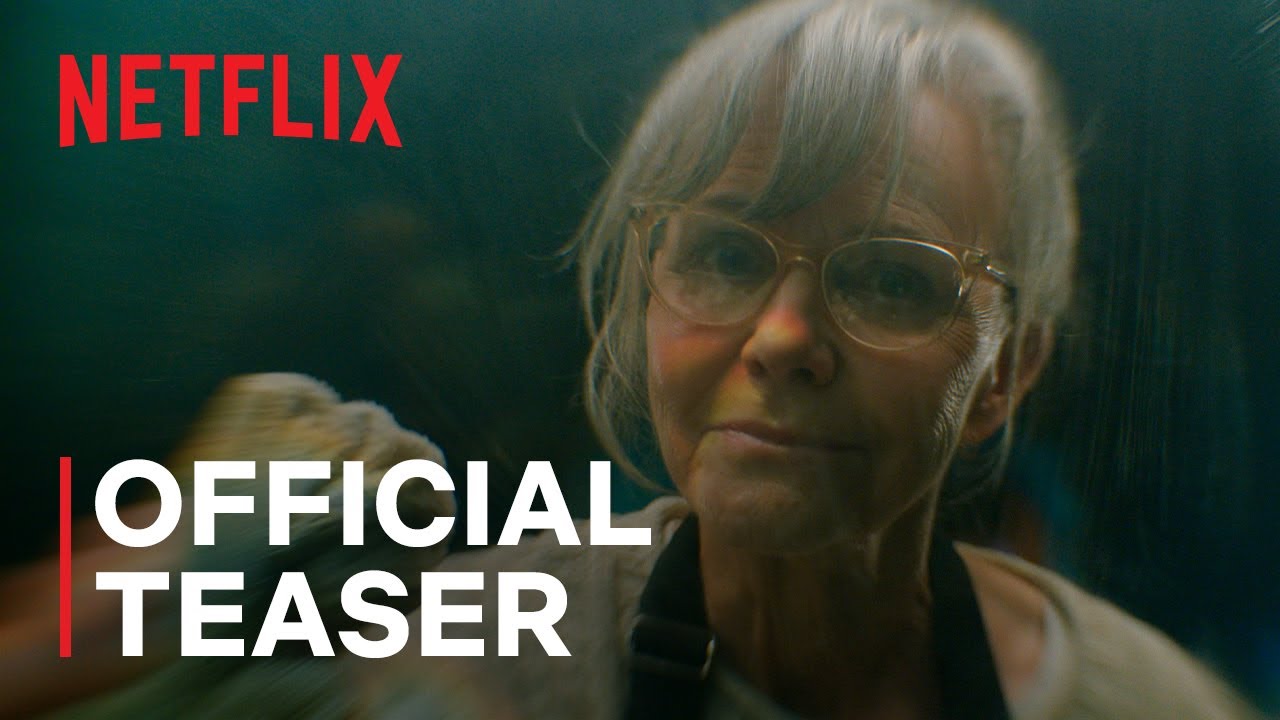
The Netflix adaptation, directed by Olivia Newman (Where the Crawdads Sing), stars Sally Field as Tova, Lewis Pullman as Cameron, and Colm Meaney as Ethan, the aquarium's owner. The film premiered at Sundance in January 2026 to warm reviews praising Field's performance, though critics noted the inevitable difficulty of translating Marcellus's perspective to screen.
Cast & Characters
| Character | In the Book | In the Film |
|---|---|---|
| Tova Sullivan Sally Field |
A seventy-year-old Swedish-American widow defined by Scandinavian restraint and decades of unprocessed grief over her son's drowning. | Field plays Tova with the same quiet dignity, though the film makes her grief more visibly present in early scenes to establish emotional stakes faster. |
| Marcellus CGI / voiceover |
A giant Pacific octopus with genuine intelligence, narrating alternating chapters in first person with precise, unsentimental observations about human behavior. | Rendered through CGI with occasional voiceover narration that preserves some of his perspective, though the alien quality of his thinking is necessarily softened. |
| Cameron Cassmore Lewis Pullman |
A thirty-year-old drifter with a history of bad decisions, searching for his biological father while working at a grocery store and living in a van. | Pullman brings more immediate likability to Cameron than the novel's early chapters allow, making his eventual connection to Tova feel slightly more engineered. |
| Ethan Mack Colm Meaney |
The aquarium's owner, a widower himself who develops a tentative friendship with Tova built on shared grief and unspoken understanding. | Meaney plays Ethan with warmth and restraint, though the film gives him slightly more screen time to develop the romance subplot earlier. |
| Avery Sophia Lillis |
Ethan's teenage granddaughter, a marine biology enthusiast who befriends Tova and serves as a bridge between the older generation and Marcellus's world. | Lillis brings energy to the role, though the film compresses Avery's subplot about her parents' divorce to streamline the runtime. |
Key Differences
Marcellus's chapters lose their alien precision on screen
The novel alternates between Tova's third-person chapters and Marcellus's first-person narration, and the octopus chapters are the book's great achievement. Van Pelt gives Marcellus an intelligence that is alien without being unrecognisable — he observes humans with precision, lacks sentimentality entirely, and thinks in terms of problems to solve rather than emotions to process. He describes Tova as "the night cleaner" for dozens of pages before learning her name, because names are human constructs he finds inefficient.
The film uses voiceover to preserve some of this perspective, but a narrating octopus risks anthropomorphism in ways the novel carefully avoids. The voiceover gives Marcellus more warmth and humor than the book does, making him feel like a quirky observer rather than a genuinely different form of consciousness. It works as cinema, but it's not the same creature.
The dual-storyline structure becomes more obviously engineered
Van Pelt's novel runs two parallel plots for most of its length — Tova's friendship with Marcellus and her slow reckoning with Erik's death, and Cameron's search for his biological father while working dead-end jobs in California. The two storylines converge in the final act when Cameron arrives in Sowell Bay, and the convergence reveals that Cameron is Erik's son, making him Tova's grandson. The novel earns this twist through careful foreshadowing that feels inevitable in retrospect.
The film handles the structure more conventionally, cutting between Tova and Cameron with increasing frequency as the runtime progresses. The convergence feels more mechanically plotted on screen, partly because visual storytelling makes the parallel editing feel like obvious setup. Newman tries to preserve the novel's restraint, but the medium works against her — we see Cameron's face too early, and Field's performance telegraphs Tova's recognition before the script does.
Tova's grief becomes more visibly expressed
Van Pelt writes Tova's widowhood and the loss of Erik with great restraint — the grief is present in everything she does without being directly stated. Tova cleans obsessively, maintains rigid routines, and avoids emotional conversations with a Scandinavian-American stoicism that the novel never critiques or asks her to overcome. Her friendship with Marcellus matters precisely because he doesn't require her to perform grief in socially acceptable ways.
Field's performance preserves much of this restraint, and her ability to convey decades of quiet sorrow in a single expression is exactly what this material needs. But the film adds several scenes of Tova alone at home, staring at photographs of Erik or touching his childhood belongings, that make the grief more visibly present. These scenes work on their own terms, but they shift Tova's character slightly toward conventional widowhood rather than the novel's more unusual emotional landscape.
The mystery of Erik's death gets more conventional thriller framing
In the novel, the truth about Erik's drowning emerges slowly through Marcellus's observations and Tova's reluctant memories. Erik died after falling from the aquarium pier during a high school party, and Marcellus — who was present in the water that night — eventually communicates this to Tova by arranging objects in his tank. The revelation is quiet, almost incidental, because the novel is more interested in Tova's process of acceptance than in the mystery itself.
The film gives the mystery more conventional structure, with earlier scenes of Tova researching the night of Erik's death and confronting former classmates. Newman adds a subplot involving the local sheriff (not present in the book) who reopens the case, which gives the story more external momentum but makes it feel less like a character study and more like a small-town mystery. Marcellus's role in revealing the truth becomes a climactic moment rather than a gradual understanding.
Cameron's backstory gets compressed and softened
The novel gives Cameron substantial page time to establish his history of bad decisions, failed relationships, and self-sabotage before he arrives in Sowell Bay. He's been fired from multiple jobs, abandoned by his girlfriend Aunt Jeanne (who raised him), and is living in a van when the story begins. Van Pelt makes him genuinely difficult in early chapters — aimless, self-pitying, occasionally cruel — which makes his eventual growth feel earned.
Pullman's Cameron is more immediately sympathetic, with the film compressing his backstory into a brief opening montage and a few lines of dialogue. The self-sabotage is mentioned but not dramatized, which makes Cameron feel more like a lovable loser than someone who has genuinely burned bridges. This makes the film more accessible, but it reduces the stakes of Cameron's arc — he has less distance to travel to become someone Tova could accept as family.
Should You Read First?
Yes — the novel is warm, funny, and quick, with none of the literary fiction pomposity that sometimes makes word-of-mouth phenomena feel like homework. Van Pelt's prose is clean and direct, and the book moves at a pace that makes it easy to finish in a weekend. Marcellus's perspective is the novel's great invention, and experiencing it on the page first means the film's version of him will feel like a translation rather than a replacement. The book's version of his intelligence — precise, alien, unsentimental — is something you can only get in prose.
The film is worth watching for Field's performance regardless, but the novel sets up expectations the adaptation can't quite meet. If you read first, you'll appreciate what Newman preserves (the emotional core, the restraint, the Pacific Northwest atmosphere) rather than mourning what gets lost. And if you're the kind of reader who cries at books about octopuses and grief — and Van Pelt's novel will test this — you'll want the full experience the page provides.
The novel is the richer experience — Marcellus's chapters are genuinely strange and moving in ways the film can't replicate, and Van Pelt's restraint with Tova's grief gives the book an emotional precision the adaptation softens. But Field's performance is worth the price of admission, and Newman's direction preserves the story's warmth without turning it into sentimentality. Read first, then watch Field prove why she's one of the great actresses of her generation.