The Story in Brief
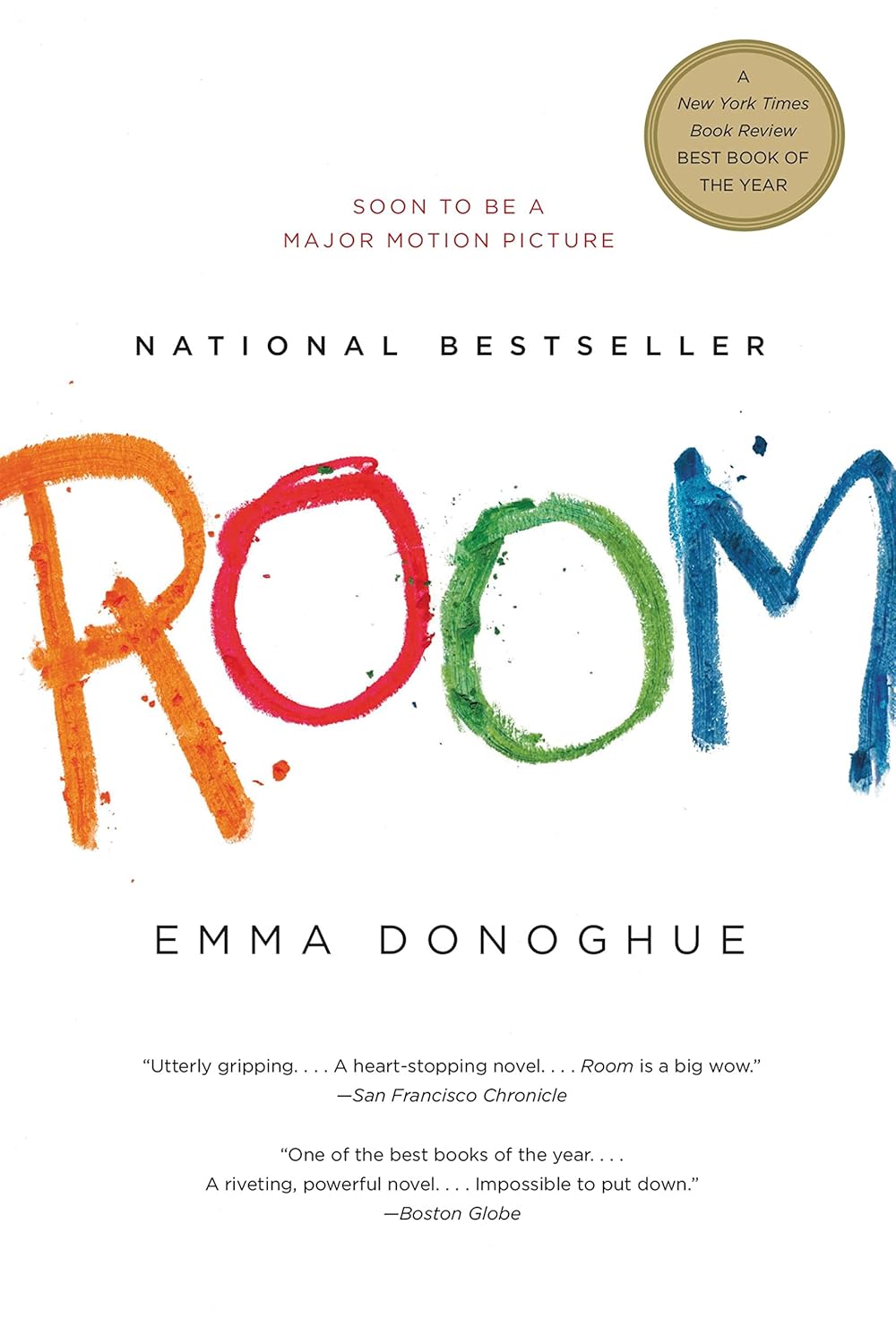
Jack is five years old and has never left Room — an eleven-by-eleven-foot garden shed where he was born and where his mother, held captive by a man he knows only as Old Nick, has raised him with fierce love and radical ingenuity. To Jack, Room is the entire world; everything on television is make-believe. To his mother, Joy (called Ma by Jack), it is a prison she has survived for seven years since her abduction at nineteen.
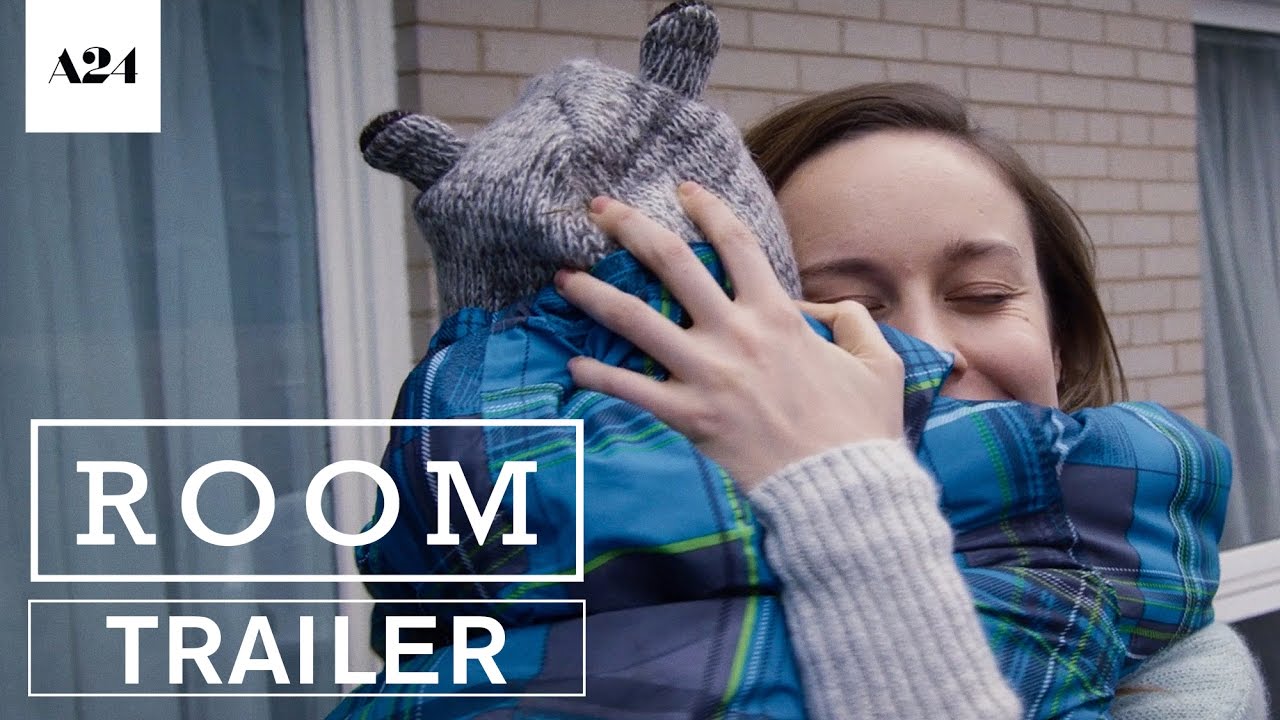
Emma Donoghue's 2010 novel is narrated entirely by Jack, a formal choice of tremendous risk and equal reward. Lenny Abrahamson's 2015 film, with a screenplay by Donoghue herself, stars Brie Larson as Ma and Jacob Tremblay as Jack in performances that earned Larson the Academy Award for Best Actress and made Tremblay one of the most celebrated child actors of the decade. The film was nominated for four Oscars including Best Picture.
Room became a cultural phenomenon — a bestseller that won the Rogers Writers' Trust Fiction Prize and was shortlisted for the Man Booker Prize, and a film that grossed over $35 million against a $6 million budget. It remains one of the most emotionally devastating and formally accomplished book-to-film adaptations of the 2010s.
| Character | In the Book | In the The Movie |
|---|---|---|
| Jack Jacob Tremblay |
The novel's narrator — a five-year-old whose limited vocabulary and concrete thinking create the book's entire architecture and emotional power. | Tremblay delivers one of the great child performances in cinema, capturing Jack's innocence and confusion without voiceover dominating the film. |
| Ma (Joy) Brie Larson |
Filtered entirely through Jack's perspective — her desperation, ingenuity, and eventual breakdown are understood incompletely by her son. | Larson's Oscar-winning performance gives Ma full interiority, especially in the post-escape collapse that the novel only hints at through Jack's eyes. |
| Old Nick Sean Bridgers |
A shadowy, barely-understood presence — Jack hides in the wardrobe during his visits and doesn't comprehend who or what he is. | Bridgers appears sparingly, mostly in dim light or from Jack's hiding place, maintaining the same deliberate distance the novel creates. |
| Grandma Nancy Joan Allen |
Nancy's mother, who struggles with guilt and grief over her daughter's lost years — seen through Jack's limited understanding of adult emotion. | Allen brings warmth and visible pain to the role, particularly in scenes where she tries to connect with Jack while processing her own trauma. |
| Leo Tom McCamus |
Nancy's partner, who Jack initially distrusts — the novel shows his patience and kindness through Jack's gradual acceptance. | McCamus plays Leo as quietly supportive, giving Jack space while offering steady, non-intrusive care during the adjustment period. |
Key Differences
Jack's Narration Is the Novel's Entire Architecture
The novel's entire structure rests on Jack's five-year-old voice — his limited vocabulary, his concrete thinking, his total lack of irony. Donoghue sustains this for over three hundred pages without condescension or cuteness, and the gap between what Jack understands and what the reader understands is where the novel's horror and tenderness both live.
Jacob Tremblay's performance in the film is one of the great child performances in cinema, but voiceover can only gesture at what full first-person narration delivers. The film uses occasional voiceover for Jack's thoughts, but it relies primarily on Tremblay's physical performance and facial expressions. The novel's Jack is a formal triumph; the film's Jack is a human one.
The Escape Sequence Plays Differently in Real Time
The film's escape is the single most gripping sequence adapted from any book on this site. Watching Jack rolled in a rug, tipped into a truck bed, tumbling onto pavement, and running toward a stranger on a suburban street is almost unbearable in real time. Abrahamson shoots it with handheld urgency, and Tremblay's terror is visceral.
The novel builds the same tension through Jack's limited understanding of what is happening — he doesn't fully grasp the danger, which makes it more frightening, not less. He describes the sensations (the rug's smell, the truck's vibration, the sky's overwhelming brightness) without comprehending the stakes. Two different kinds of dread, both effective, neither superior.
Ma's Breakdown Gets Full Interiority on Screen
Brie Larson won the Academy Award for Best Actress and earned every frame of it. The film gives Ma's collapse after escape — the media intrusion, the failed interview with the insensitive journalist, the suicide attempt — with devastating clarity. Larson's performance in the hospital scenes, where Ma can barely look at Jack, is almost unwatchable.
The novel filters all of this through Jack's incomplete comprehension, which creates a different and equally powerful effect: you watch a child trying to understand his mother's pain with the tools a five-year-old has available. He knows Ma is "gone" but doesn't understand depression or suicide. The book's version is more original; the film's version is more immediately heartbreaking.
The Outside World Gets Compressed in the Film
Jack's adjustment to the outside world — its scale, its noise, its social complexity — is the novel's richest material. Donoghue takes her time with his sensory overwhelm (the sun hurts, stairs are terrifying, other children are incomprehensible), his attachment difficulties, his gradual renegotiation of what is real versus what is TV.
The film compresses this section more than any other, moving toward resolution faster than the book does. We get key moments — Jack's first time outside, his fear of Grandma's dog, his confusion about why Ma is sad when they're finally free — but not the sustained exploration the novel provides. The novel's second half is as strong as its first; the film's second half is slightly less assured than its extraordinary first hour.
The Goodbye to Room Carries Different Weight
Both versions end with Jack saying goodbye to Room — a scene of unexpected emotional complexity, in which a child grieves the only home he has ever known even as he understands it was a prison. The film renders this visually with great restraint: Jack looks smaller in the space now, and he says goodbye to each object (Wardrobe, Table, Skylight) with quiet finality.
The novel earns it more fully because you have spent the entire book inside Jack's relationship with that space — his naming of its objects, his routines, his love for it. When he says goodbye on the page, you feel the loss of something that was genuinely his, however terrible its origins. The film's version is moving; the book's version is shattering.
This is the one case on this site where watching first is a defensible choice. The film is so good, and Donoghue's screenplay so faithful to her own novel's spirit, that either order works. That said, reading first gives you Jack's narration in full — and that narration is one of the more remarkable formal achievements in recent fiction. You get three hundred pages inside a five-year-old's consciousness, and Donoghue never breaks character.
Watch first if you want to be destroyed immediately by Larson and Tremblay's performances, then discover how the book does it differently through pure voice. Read first if you want the fuller, stranger, more formally audacious experience. Either way, you should experience both — this is not a case where one version makes the other redundant.
Should You Read First?
This is the one case on this site where watching first is a defensible choice. The film is so good, and Donoghue's screenplay so faithful to her own novel's spirit, that either order works. That said, reading first gives you Jack's narration in full — and that narration is one of the more remarkable formal achievements in recent fiction. You get three hundred pages inside a five-year-old's consciousness, and Donoghue never breaks character.
Watch first if you want to be destroyed immediately by Larson and Tremblay's performances, then discover how the book does it differently through pure voice. Read first if you want the fuller, stranger, more formally audacious experience. Either way, you should experience both — this is not a case where one version makes the other redundant.
Room is the rare adaptation where both versions are essential and neither fully supersedes the other. The novel's first-person narration is irreplaceable; the film's performances are unrepeatable. Larson and Tremblay do things on screen that the page cannot do, and Donoghue on the page does things the screen cannot replicate. If forced to choose, the novel edges ahead for its formal daring — but only just.