The Story in Brief
The Dashwood sisters—Elinor (sense) and Marianne (sensibility)—are left in reduced circumstances after their father's death and must navigate the marriage market of Regency England with only modest dowries. Elinor, the eldest, conceals her feelings for Edward Ferrars with painful discipline. Marianne performs her passion for the dashing John Willoughby with romantic abandon, then suffers a devastating betrayal when he abandons her for a wealthier woman.
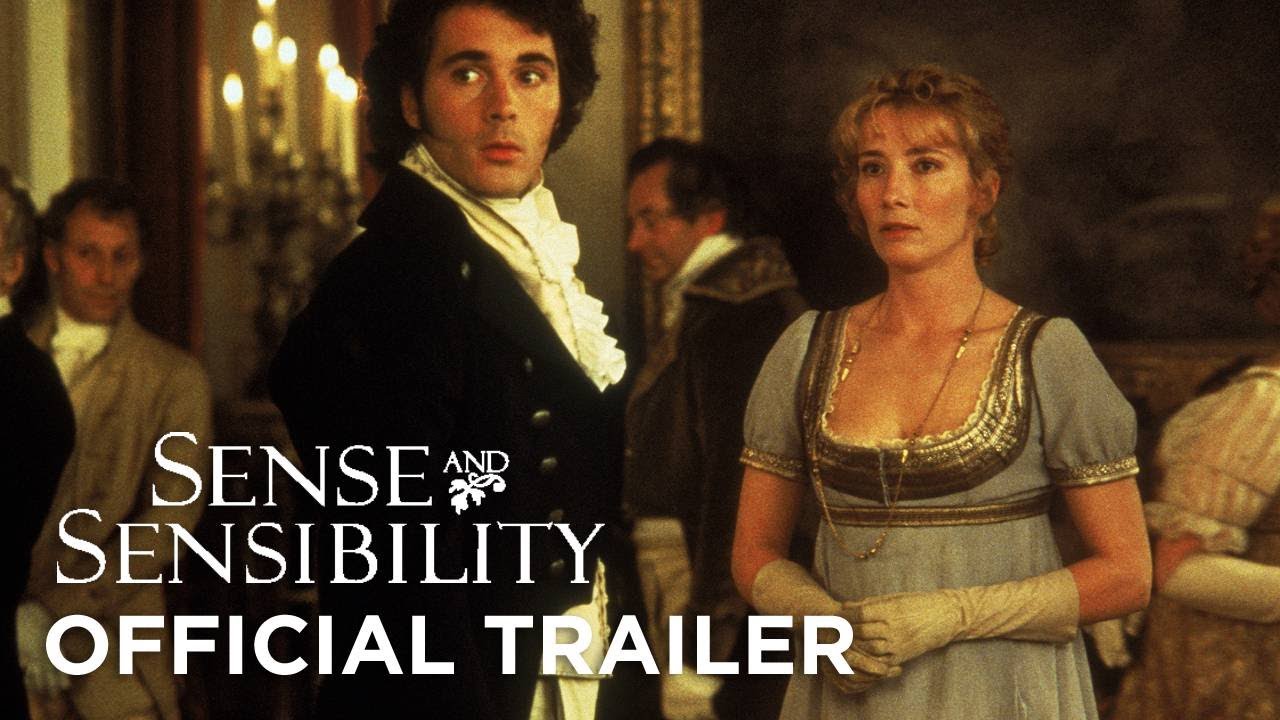
Jane Austen's first published novel is both a comedy of manners and a serious examination of the social constraints placed on women's emotional and economic lives. Ang Lee's 1995 film, adapted by Emma Thompson in a screenplay that took five years to write, earned seven Academy Award nominations and won Thompson the Oscar for Best Adapted Screenplay. The film grossed $135 million worldwide and introduced a new generation to Austen's work.
It remains one of the most accomplished literary adaptations of the 1990s and the definitive screen version of this particular novel.
| Character | In the Book | In the The Movie |
|---|---|---|
| Elinor Dashwood Emma Thompson |
Nineteen years old, the voice of reason and restraint, who suppresses her feelings for Edward Ferrars with such discipline that even her family doesn't know she's suffering. | Thompson was thirty-five during filming but conveys Elinor's emotional repression through small physical suppressions—a tightening of the jaw, a controlled breath—that make her eventual breakdown devastating. |
| Marianne Dashwood Kate Winslet |
Seventeen, passionate and performatively romantic, who believes in love at first sight and scorns prudence until Willoughby's betrayal forces her to reconsider everything. | Winslet was twenty and already a fully formed actress—her Marianne is genuinely moving in her naivety and her disillusionment, less affected than Austen's version but equally compelling. |
| Edward Ferrars Hugh Grant |
A diffident, honorable man trapped by a youthful engagement to Lucy Steele, who chooses duty over happiness until circumstances release him. | Grant plays Edward with his characteristic stammering charm, making him more overtly appealing than Austen's somewhat colorless hero. |
| Colonel Brandon Alan Rickman |
Thirty-five, quiet and melancholy, with a tragic past involving a lost love—a good man but not obviously romantic. | Rickman gives Brandon a brooding gravity that makes him far more romantically compelling than the novel's version, eliminating any ambivalence about whether he's right for Marianne. |
| John Willoughby Greg Wise |
Charming, handsome, and ultimately mercenary—he seduces Marianne then abandons her to marry an heiress. | Wise plays Willoughby as genuinely attractive and conflicted, making his betrayal more painful and his late-novel confession more ambiguous. |
Key Differences
Thompson Ages Up Elinor and Softens Austen's Irony
Emma Thompson was thirty-five when she played the nineteen-year-old Elinor, a casting choice that shifts the character's emotional register. Thompson's Elinor feels more world-weary, more consciously self-sacrificing, where Austen's is simply disciplined by temperament and training.
More significantly, Thompson's screenplay and Lee's direction are warmer toward the Dashwood sisters than Austen's narration. Austen maintains a precisely calibrated ironic distance from all her characters, including the sympathetic ones—she loves Elinor and Marianne but also sees their limitations clearly. The film loves them more openly and less critically.
This warmth is one of the film's great pleasures and a slight but meaningful departure from the source's cooler intelligence.
Alan Rickman Transforms Colonel Brandon Into a Romantic Hero
The film's Colonel Brandon is more obviously desirable than the novel's. Austen writes Brandon as a good, honorable man with a sad past, but she maintains a slight ambivalence about whether he is the right match for Marianne—he is sensible where she is passionate, mature where she is young.
Rickman plays Brandon with a melancholy glamour that makes the question redundant. His Brandon is quietly suffering, deeply feeling, and unmistakably romantic. When he carries the rain-soaked Marianne back to Barton Cottage, the film gives him a moment of heroism that the novel does not.
The result is that Marianne's eventual acceptance of Brandon feels less like compromise and more like recognition—a shift that makes the ending more conventionally satisfying but less morally complex.
The Screenplay Compresses Subplots and Secondary Characters
Thompson's adaptation necessarily compresses the novel's sprawling cast of secondary characters. The Middletons, the Palmers, and the Steele sisters all appear but with reduced screen time and simplified motivations.
Most significantly, Lucy Steele—the scheming woman secretly engaged to Edward—loses much of her calculated duplicity. In the novel, Lucy is a masterpiece of social manipulation, all false sweetness and strategic confidences. In the film, she's more straightforwardly unpleasant, which makes her less interesting.
The compression is necessary for a two-hour film, but it costs the story some of its social texture—Austen's novels are as much about the absurdity of the people surrounding the heroines as they are about the heroines themselves.
Elinor's Breakdown Is More Cathartic on Screen
When Elinor finally learns that Edward is free to marry her, she breaks down in tears—a moment of release after two hours of visible self-control. Thompson plays the scene with her whole body, gasping and sobbing in a way that feels both earned and devastating.
Austen writes the scene more quietly. Elinor cries, but the narration maintains its characteristic restraint: "Elinor could sit it no longer. She almost ran out of the room, and as soon as the door was closed, burst into tears of joy." The novel gives you access to Elinor's relief but doesn't perform it as fully as the film does.
Both versions are effective, but the film's version is more emotionally direct—it gives the audience the catharsis that Austen withholds.
The Film Adds Visual Romanticism to Austen's Domestic Interiors
Ang Lee and cinematographer Michael Coulter shoot the English countryside with a lushness that Austen's prose does not indulge. The film opens with sweeping shots of Norland Park, gives us Marianne running through fields, and frames the Dashwood cottage as picturesque rather than cramped.
Austen's novel is far more interested in drawing rooms than landscapes. Her descriptions are precise and socially diagnostic—she tells you the size of a room, the quality of the furniture, the number of servants, because these details reveal character and status. The novel's world is one of interiors, conversations, and small social humiliations.
The film's visual romanticism is beautiful and appropriate for cinema, but it shifts the story's emphasis slightly away from Austen's focus on the economic and social constraints that govern her characters' lives.
Yes—though this is one of the rare cases where seeing the film first does less damage than usual. Thompson's adaptation is so faithful to the novel's structure and spirit that it serves as a genuine gateway to Austen rather than a replacement for her. The film preserves most major scenes, much of the dialogue, and the essential arc of both sisters' stories.
That said, reading the novel first gives you access to Austen's ironic intelligence, her precise social observation, and her cooler, more morally complex view of her characters. The film is warmer and more emotionally direct; the novel is sharper and more formally controlled. Read the book for Austen. See the film for Thompson, Winslet, and Rickman. Both are worth your time.
Should You Read First?
Yes—though this is one of the rare cases where seeing the film first does less damage than usual. Thompson's adaptation is so faithful to the novel's structure and spirit that it serves as a genuine gateway to Austen rather than a replacement for her. The film preserves most major scenes, much of the dialogue, and the essential arc of both sisters' stories.
That said, reading the novel first gives you access to Austen's ironic intelligence, her precise social observation, and her cooler, more morally complex view of her characters. The film is warmer and more emotionally direct; the novel is sharper and more formally controlled. Read the book for Austen. See the film for Thompson, Winslet, and Rickman. Both are worth your time.
Austen wrote a novel of exquisite formal intelligence. Lee and Thompson made one of the great literary adaptations of the 1990s. The novel is better because Austen is better. The film is an exceptional companion. Read the book. See the film. Regard them as a pair.