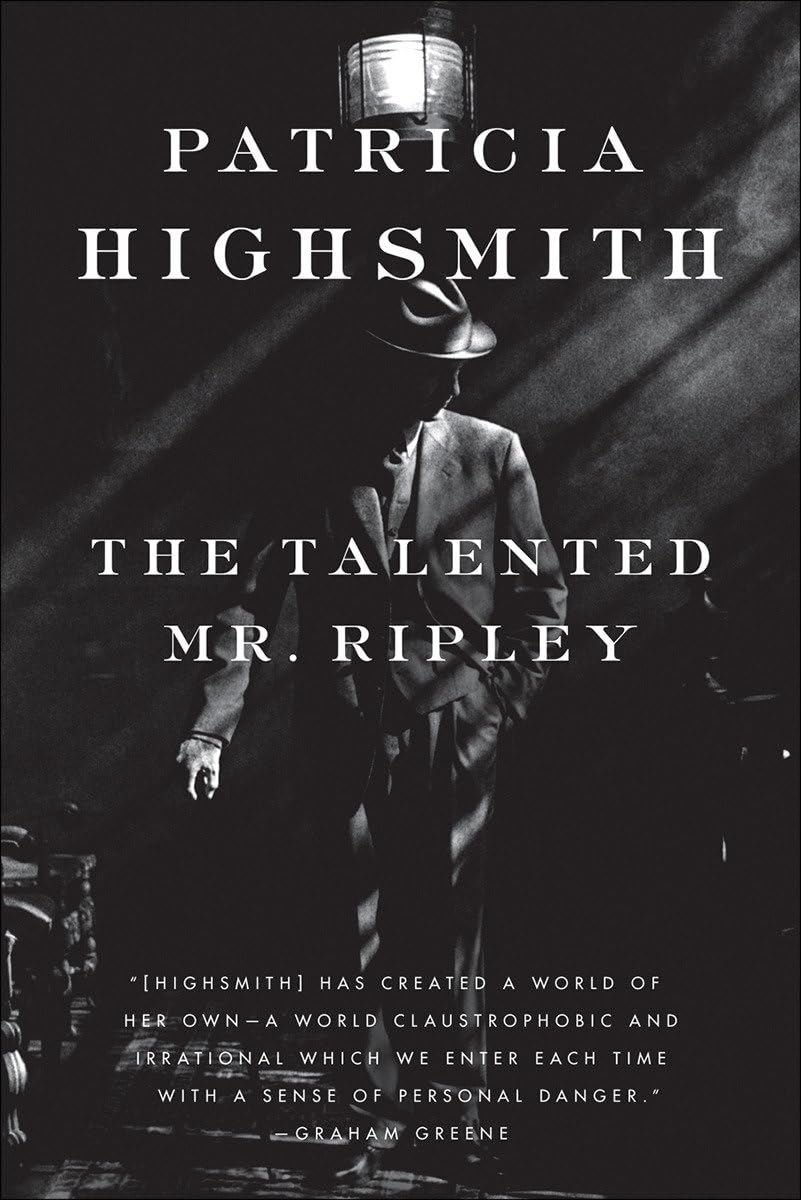

The Story in Brief
Tom Ripley, a small-time con artist living in New York, is hired by wealthy shipbuilder Herbert Greenleaf to travel to Italy and persuade his son Dickie to return home. Tom finds Dickie living a sun-soaked life in Mongibello with his girlfriend Marge Sherwood, and instead of completing his mission, Tom becomes obsessed with Dickie's wealth, ease, and careless charm. When Dickie tires of Tom's company, Tom murders him and assumes his identity, forging signatures and impersonating Dickie to access his bank accounts.
Patricia Highsmith published the novel in 1955, the first of five books featuring Tom Ripley. Anthony Minghella adapted it in 1999 with Matt Damon as Tom, Jude Law as Dickie, and Gwyneth Paltrow as Marge. The film earned five Academy Award nominations, including Best Adapted Screenplay and Best Supporting Actor for Law. Minghella's adaptation is visually sumptuous, shot on location in Rome, Venice, and various Italian coastal towns, and it became a critical and commercial success.
The novel established Highsmith as a master of psychological suspense and created one of literature's most memorable antiheroes. Tom Ripley would appear in four more novels, evolving from desperate impostor to wealthy, cultured criminal living in France.
| Character | In the Book | In the Film |
|---|---|---|
| Tom Ripley Matt Damon |
A cold, calculating sociopath who narrates his crimes with matter-of-fact detachment and feels no genuine remorse. | A visibly anxious, wounded outsider whose desire for Dickie is explicitly romantic and whose guilt is palpable. |
| Dickie Greenleaf Jude Law |
A moderately talented jazz enthusiast who is charming but also casually cruel and dismissive of Tom. | Impossibly glamorous and charismatic, played by Law at peak beauty, making Tom's obsession visually justified. |
| Marge Sherwood Gwyneth Paltrow |
Dickie's girlfriend who suspects Tom but lacks the evidence or authority to act on her suspicions. | More sympathetic and perceptive, her suspicions of Tom are given more weight and screen time. |
| Peter Smith-Kingsley Jack Davenport |
Does not exist in the novel. | An invented character who becomes Tom's friend and potential romantic interest, adding tragic weight to the ending. |
| Freddie Miles Philip Seymour Hoffman |
An obnoxious American friend of Dickie's who discovers Tom's deception and is murdered for it. | Hoffman plays him as loud and abrasive, making his murder feel almost justified within the film's moral logic. |
Key Differences
Tom Ripley's inner life is fundamentally altered
Highsmith writes the entire novel from inside Tom's perspective, and his consciousness is chillingly alien. He describes murdering Dickie with the same calm attention he gives to choosing a restaurant. He feels no remorse, only practical concern about being caught. His emotional life is shallow and transactional.
Minghella's film makes Tom visibly anxious, sweating through close calls, panicking when Freddie Miles arrives unexpectedly. Matt Damon plays Tom as wounded and desperate, a performance that invites sympathy. The film adds scenes of Tom alone, visibly distressed, which Highsmith would never have written. This makes Tom more conventionally understandable but strips away the novel's most disturbing quality: Tom's complete lack of conventional human feeling.
Tom's sexuality becomes explicit rather than ambiguous
The film foregrounds Tom's romantic and sexual desire for Dickie in ways the novel only implies. Minghella adds scenes of Tom watching Dickie undress, staring at him with obvious longing, and the script makes Tom's jealousy of Marge explicitly romantic. The film suggests Tom kills Dickie partly because he cannot have him.
Highsmith's novel is deliberately ambiguous about whether Tom wants to be Dickie or be with him. The obsession is about identity, class, and possession as much as attraction. Tom's sexuality is never clearly defined, which makes his psychology stranger and more unsettling. The film's decision to make Tom's desire explicit psychologizes him in conventional terms — unrequited love, jealousy, self-hatred — which reduces the novel's disturbing ambiguity.
Dickie Greenleaf is more likeable on screen
Jude Law plays Dickie as impossibly glamorous, charming, and magnetic. The film earns Tom's obsession visually — Law in 1999 was stunningly beautiful, and the camera loves him. Dickie's cruelty to Tom is softened, played more as thoughtless dismissal than deliberate meanness.
Highsmith's Dickie is less likeable. He is casually cruel, strings Marge along while sleeping with other women, and treats Tom with increasing contempt. The novel makes clear that Dickie is not worth Tom's obsession, which makes Tom's desire to become him even stranger. The film's more sympathetic Dickie makes Tom's actions feel more like the murder of someone genuinely admirable, which changes the moral texture of the story.
The Italian setting becomes a character in the film
Minghella shoots Italy with ravishing beauty — golden light on Roman piazzas, the blue water of the Amalfi Coast, the decaying grandeur of Venetian palazzos. The cinematography by John Seale makes every frame gorgeous. The beauty of the setting creates a moral counterpoint: Tom commits his crimes in paradise, which makes the violence more shocking.
Highsmith describes Italy functionally, as a place where Tom can reinvent himself and where American wealth goes further. The novel's Italy is hot, crowded, and full of opportunities for deception. The film's Italy is a dream world, which adds a layer of tragic beauty the novel never attempts. This works for the film but also makes it more conventionally romantic than Highsmith's cold-eyed original.
The ending diverges completely in tone and implication
Highsmith's novel ends with Tom escaping consequences and sailing to Greece with a new identity and Dickie's money. He has gotten away with murder and will continue to do so — the novel spawned four sequels in which Tom becomes wealthier, more cultured, and more confident. The ending is chilling because Tom wins.
Minghella invents a new ending in which Tom murders Peter Smith-Kingsley, a character who does not exist in the novel, to protect his secret. The film ends with Tom alone in a ship's cabin, having killed someone he genuinely cared for, trapped in his lies. It is grimmer and more tragic than Highsmith's ending, suggesting Tom will never escape his guilt. Readers of the Ripley series will find this ending a betrayal — Highsmith's Tom does escape, does thrive, and never feels the kind of remorse Minghella's ending implies.
Should You Read First?
Yes, because Highsmith's Tom Ripley is one of literature's great creations and the novel's cold genius is irreplaceable. The book is genuinely disturbing in ways the film cannot match — Highsmith writes a sociopath's consciousness with such precision that you begin to see the world through Tom's eyes, and it is a deeply unsettling experience. The novel never asks you to sympathize with Tom, only to understand how he thinks, and that understanding is chilling.
If you watch the film first, you will meet Matt Damon's wounded, anxious Tom and assume that is who the character is. Reading the novel afterward will reveal how much Minghella softened and psychologized the character. If you read first, you will appreciate the film as a fascinating exercise in adaptation — what happens when you take a genuinely alien consciousness and make it comprehensible for mainstream cinema. The film is beautiful and well-acted, but it is not Highsmith.
Highsmith wrote a sociopath's inner life with such precision that the novel remains genuinely unsettling seventy years later. Minghella made a gorgeous, intelligent film that softens the sociopath into something comprehensible and therefore lesser. The film's Italy is more beautiful, but the novel's Tom is more terrifying. Read the novel, see the film, prefer the novel.