
The Story in Brief
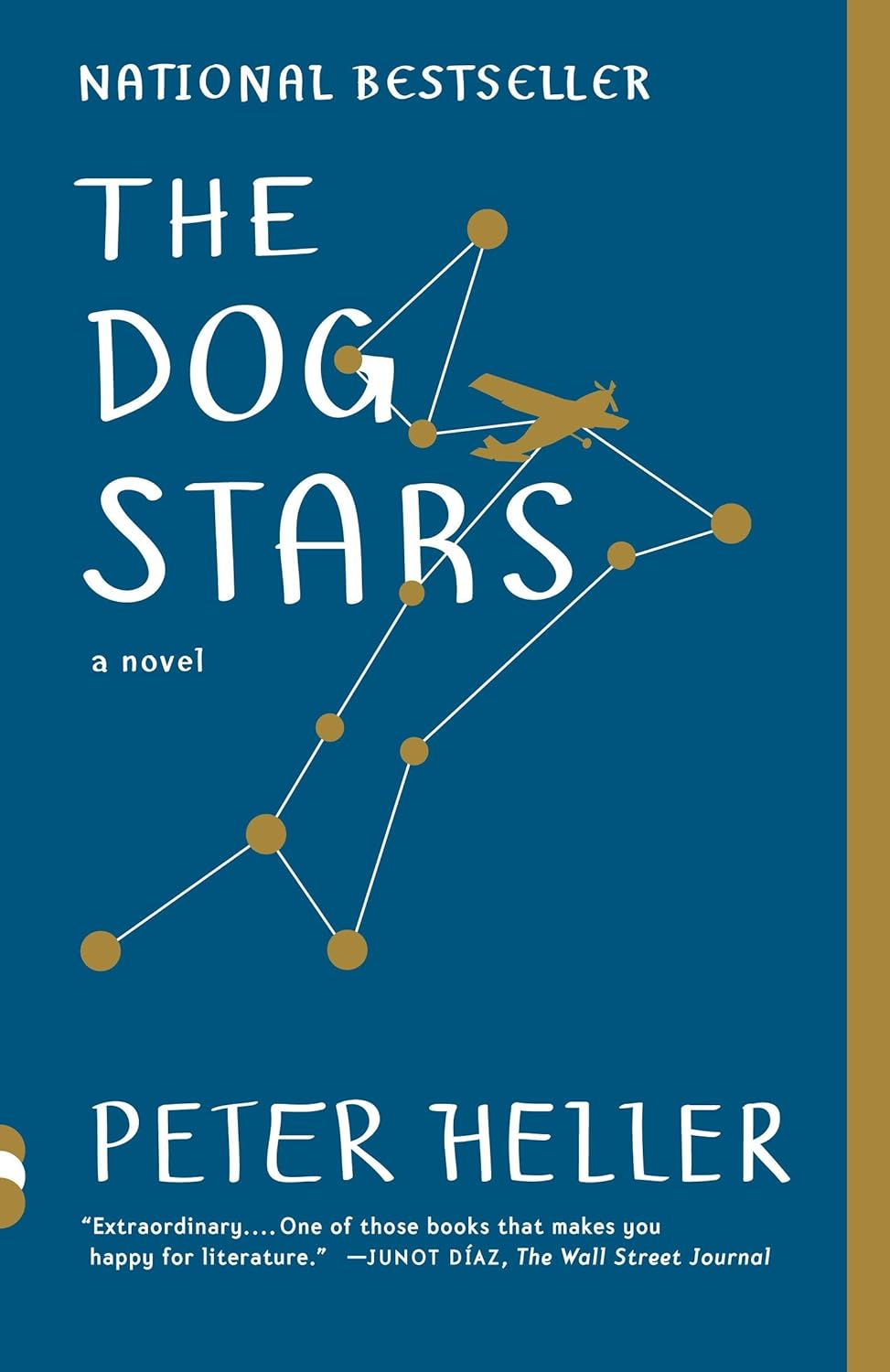
Nine years after a plague has decimated humanity, Jax—a former fighter pilot—lives in the Arizona desert with his aging dog Jasper and his reclusive partner Ty, flying salvage missions in a homemade aircraft. When Jax encounters a stranger from beyond the toxic zone, he's drawn into a dangerous journey that forces him to confront his isolation and the possibility of connection in a dead world. Heller's 2012 novel is a meditation on grief, solitude, and the fragile bonds that sustain us—less a conventional survival narrative than a philosophical reckoning with what remains when civilization collapses.
Ridley Scott's 2026 adaptation arrives at a peculiar cultural moment: post-apocalyptic fiction has become visual spectacle, yet Heller's source material is deliberately austere, built on silence and internal monologue rather than action. The comparison matters because it tests whether Scott's maximalist sensibility can honor a book whose power derives from restraint, or whether the adaptation inevitably betrays the novel's essential quietness by rendering it in images and dialogue.
| Character | In the Book | In the The Film |
|---|---|---|
| Jax Jacob Elordi |
A former Air Force pilot in his fifties, haunted by the loss of his wife and daughter, who has retreated into routine and emotional numbness. Heller renders him through fragmented memory and philosophical digression, a man whose interiority is vast but carefully guarded. His voice is the novel's anchor—lyrical, self-aware, and profoundly lonely. | Elordi plays Jax as a man of action and visible trauma, his grief expressed through physical restlessness and confrontational choices. The film ages him down and emphasizes his capacity for connection and heroism, transforming the novel's passive observer into a protagonist who drives the narrative forward through will and decision. |
| Ty Josh Brolin |
Jax's partner of nine years, a former mechanic who is almost entirely opaque—defined by his refusal to speak about his past and his obsessive maintenance of their compound. The novel treats him as a necessary absence, a figure whose silence mirrors and complements Jax's own emotional withdrawal. | Brolin's Ty becomes a fully realized character with backstory and motivation, his muteness reframed as trauma that the film gradually unpacks. The adaptation gives him agency and emotional arc, making him a co-protagonist rather than a mirror for Jax's isolation. |
| Jasper N/A |
An aging dog whose presence is almost metaphysical—he represents continuity, unconditional companionship, and the weight of responsibility in a world stripped of meaning. Heller uses Jasper's decline as a meditation on mortality and the small rituals that sustain us. | Jasper functions as emotional shorthand and plot catalyst, his health crisis engineered to force Jax toward action and the stranger. The film literalizes what the book only implies—that love and duty are reasons to venture beyond safety. |
| The Stranger Margaret Qualley |
A woman from the toxic zone whose arrival is ambiguous and unsettling—she may be a threat, a hallucination, or a test of Jax's capacity to trust. The novel leaves her origins and intentions deliberately murky, a figure who embodies the unknowability of the post-plague world. | Qualley's stranger is given clear motivation and a tragic backstory, her presence reframed as a rescue mission rather than an existential disruption. The film resolves the novel's deliberate ambiguity, transforming her from a philosophical problem into a conventional love interest. |
| Hig (Jax's former partner) Uncredited/Referenced |
Mentioned only in fragments and memory, Hig is the ghost of Jax's past—a fellow pilot who represents the world before, the connections Jax has severed. His absence is more powerful than any presence could be. | Hig appears in flashbacks and is given narrative weight, his story intercut with the present-day plot to provide exposition and emotional stakes. The film makes explicit what the book leaves as haunting absence. |
Key Differences
Scott replaces Heller's silence with spectacle and explanation
The Dog Stars is a novel of profound quietness—pages pass with minimal dialogue, the narrative suspended in Jax's consciousness, his observations of light and landscape and the small rituals of survival. Heller trusts the reader to sit with ambiguity and absence. Scott, by contrast, is a director incapable of restraint; his adaptation fills every void with visual information, dramatic confrontation, and exposition. Where Heller suggests, Scott shows. Where Heller withholds, Scott explains.
This isn't merely a stylistic difference—it's a fundamental philosophical one. The novel's power comes from what remains unsaid, the gaps between characters, the mystery of the stranger's arrival. Scott's film, by necessity and temperament, must render everything visible and comprehensible. The result is a work that looks like The Dog Stars but feels like a different book entirely—one where meaning is external and visual rather than internal and withheld.
The film transforms grief into action; the book transforms action into grief
Heller's novel is structured around stasis—Jax and Ty maintain their compound, fly their salvage missions, tend to Jasper, and resist change. The stranger's arrival disrupts this equilibrium, but the novel's response is philosophical rather than kinetic. Jax must decide whether to remain in his fortress of solitude or risk connection, but this decision is internal, agonized, and ultimately ambiguous. The book ends not with resolution but with a kind of acceptance of uncertainty.
Scott's adaptation, by contrast, is driven by plot momentum and external conflict. The stranger becomes a catalyst for action; Jax becomes a hero who must choose between safety and sacrifice. The film adds antagonists, pursuits, and climactic confrontations—all the machinery of conventional narrative. Where the book asks 'What does it mean to survive?' the film asks 'Will they survive?' It's a fundamental inversion of the novel's thematic center, replacing existential inquiry with survival drama.
Heller's ambiguous stranger becomes Qualley's tragic victim
One of the novel's most unsettling elements is the stranger's arrival—she emerges from the toxic zone, and Heller deliberately obscures her nature and intentions. Is she real or a projection of Jax's longing? Is she a threat or a gift? The novel maintains this ambiguity to the end, using her as a mirror for Jax's own uncertainty about connection and trust. Her presence is destabilizing precisely because it cannot be categorized or controlled.
The film resolves this ambiguity by giving the stranger a clear backstory, motivation, and emotional arc. She becomes a refugee, a victim of circumstance, someone to be rescued and protected. This transformation, while narratively conventional, strips away the novel's most philosophically interesting element—the idea that the post-plague world might contain things we cannot understand or control, that connection might require accepting radical uncertainty. Qualley's stranger is sympathetic and human; Heller's stranger is something stranger than that.
The book's minimalist prose becomes Scott's maximalist imagery
Heller's language is spare and precise, built on short sentences and careful observation. He describes the desert with the eye of a poet, but without ornament—the prose is functional, almost austere, which paradoxically makes it more powerful. The reader must do the work of imagining, of feeling the weight of the landscape. This stylistic restraint mirrors the emotional restraint of the characters; form and content are inseparable.
Scott's visual language is the opposite—his frames are dense with information, color-saturated, designed to overwhelm and impress. His desert is beautiful in a way Heller's is not; it's composed and lit and scored. This isn't a criticism of Scott's craft, but it represents a fundamental incompatibility with the novel's aesthetic. Where Heller asks the reader to find meaning in emptiness, Scott fills the emptiness with meaning. The adaptation is more visually impressive but less spiritually austere.
Heller explores isolation as philosophical necessity; Scott treats it as trauma to overcome
The Dog Stars is built on the premise that Jax's isolation is not a problem to be solved but a condition to be understood. His withdrawal from connection is presented as a rational response to loss, a way of protecting himself from further pain. The novel doesn't judge this choice; it inhabits it, explores its logic and its costs. By the end, Jax has not overcome his isolation so much as achieved a kind of peace with it—he remains fundamentally alone, but perhaps slightly less so.
Scott's film, working within the conventions of character-driven drama, frames isolation as a wound that must be healed. Jax's withdrawal is presented as pathological, something to be overcome through connection and love. The stranger becomes the agent of his redemption, and the narrative arc moves toward integration and healing. This is a more conventional and ultimately more optimistic reading of the material, but it misses the novel's central insight: that some forms of isolation are not failures of connection but necessary responses to a world that has fundamentally changed.
Should You Read First?
Read the book first, and then decide whether you want to see the film. Heller's novel is a slim, powerful work that can be consumed in a single sitting—its power comes from the precision of its prose and the depth of its silence. The book will prepare you for what Scott's adaptation attempts, but it will also make clear what the film cannot capture: the interior landscape of grief, the philosophy of survival, the radical ambiguity that makes the novel so unsettling and so necessary.
If you see the film first, you'll likely enjoy it as a well-crafted post-apocalyptic drama with strong performances and striking visuals. But you'll miss the book's essential strangeness, the way it refuses to provide comfort or resolution. The novel is not a better version of the film's story; it's a different kind of work entirely, one that asks different questions and demands different things from its audience. Read it first so you can understand what was lost in adaptation—and what, perhaps, was gained.
Ridley Scott's The Dog Stars is a competent post-apocalyptic drama that bears the same title and basic plot as Peter Heller's novel but fundamentally misunderstands its source material. Where the book is a meditation on silence, isolation, and the fragile meaning we construct in a dead world, the film is a conventional survival narrative with action beats and emotional catharsis. Scott fills every void that Heller deliberately left empty; he explains what the novel only suggests; he resolves what the novel leaves ambiguous. The result is a film that looks impressive but feels hollow—all surface and no depth. The book wins not because it's more faithful to some abstract notion of 'the story,' but because it's a fundamentally different and more interesting work of art.