The Story in Brief
Westley, a farm boy, loves Buttercup. He leaves to seek his fortune across the sea, is captured by the Dread Pirate Roberts, and is presumed dead. Five years later, Buttercup — now the most beautiful woman in the world — is betrothed to Prince Humperdinck of Florin, a cruel hunter who plans to murder her on their wedding night and blame a neighbouring country to start a war. She is kidnapped by a Sicilian criminal named Vizzini and his hired hands: Inigo Montoya, a Spanish swordsman seeking the six-fingered man who killed his father, and Fezzik, a Turkish giant with a gentle heart. A mysterious Man in Black pursues them.
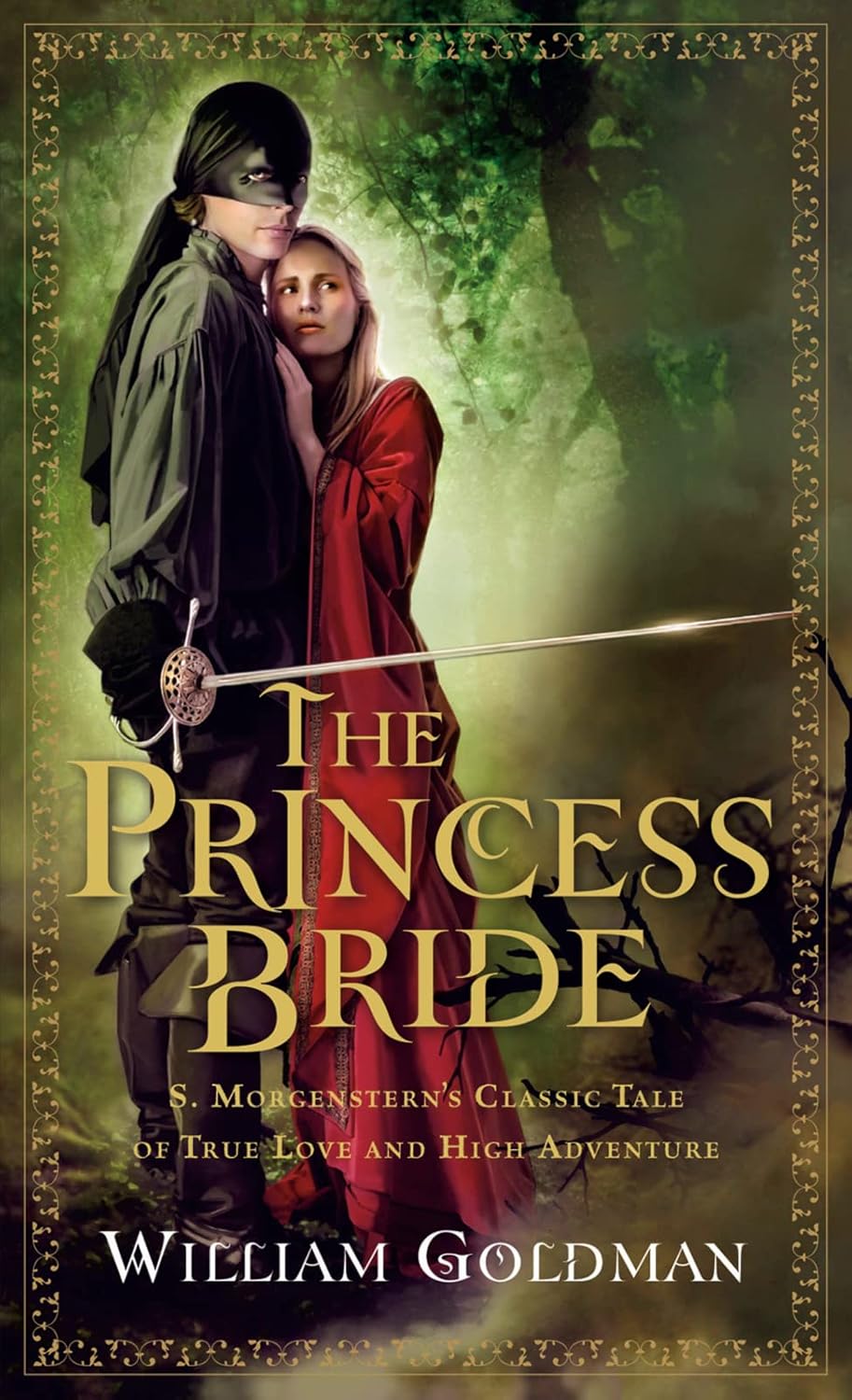
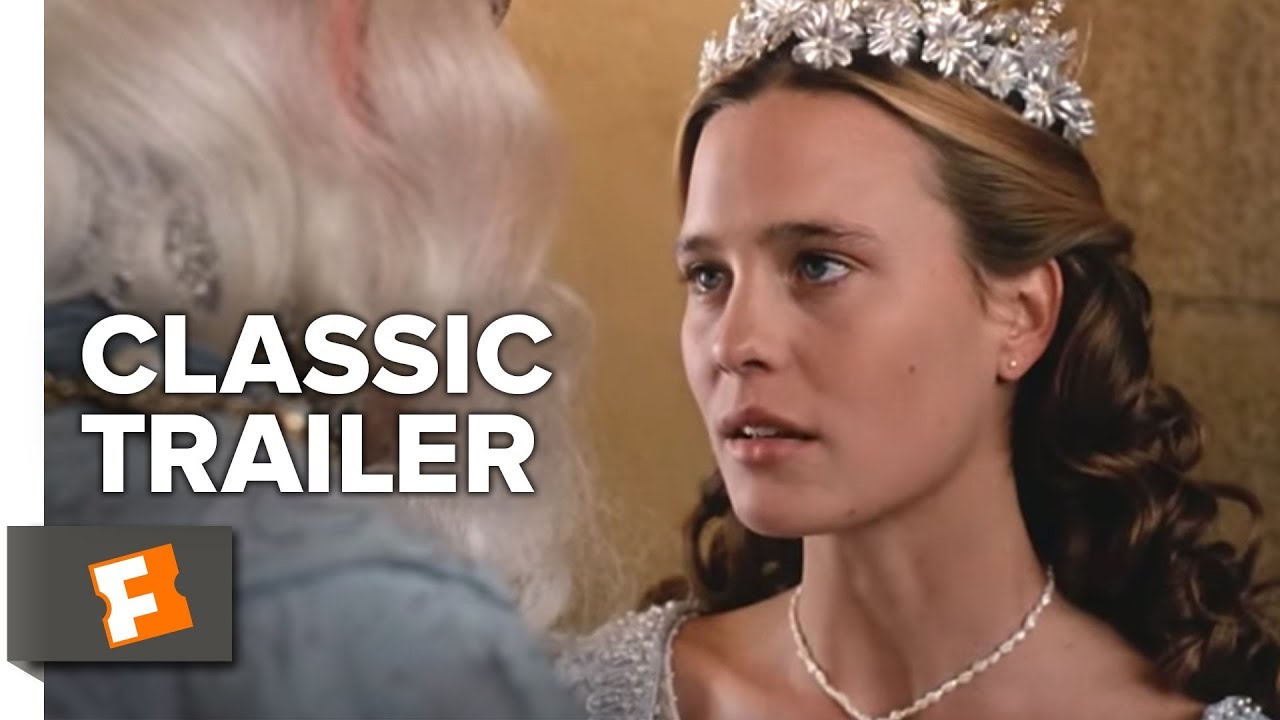
William Goldman published the novel in 1973, framing it as his abridgement of S. Morgenstern's fictional Florinese classic — a meta-fictional conceit he maintained with elaborate footnotes about cutting the boring parts. Fourteen years later, Goldman wrote the screenplay himself for Rob Reiner's film. The 1987 adaptation was a modest box office performer that became a cultural phenomenon through home video and cable television. It is now one of the most quoted and beloved films in the English-speaking world, with lines like "Hello. My name is Inigo Montoya. You killed my father. Prepare to die" and "As you wish" embedded in the language.
This is the site's most unusual case: the same writer created both versions, understanding exactly what each medium required. The result is two works of equal merit that honour each other while serving their forms.
| Character | In the Book | In the The Movie |
|---|---|---|
| Westley Cary Elwes |
The farm boy turned Dread Pirate Roberts, defined by his devotion to Buttercup and his wit under pressure. | Elwes brings swashbuckling charm and genuine romantic intensity, making Westley both heroic and vulnerable. |
| Buttercup Robin Wright |
Goldman's Buttercup is beautiful but not particularly clever — a deliberate subversion of fairy tale heroines. | Wright plays her with more agency and warmth than the novel allows, softening Goldman's satirical edge. |
| Inigo Montoya Mandy Patinkin |
A master swordsman consumed by his quest for vengeance, given depth through Goldman's prose. | Patinkin's performance adds operatic grief beneath the comedy, making Inigo one of cinema's great supporting characters. |
| Fezzik André the Giant |
A gentle giant who hates violence despite his strength, loyal and kind-hearted. | André's real-world size and natural gentleness make Fezzik iconic — a real giant playing a fictional one with perfect warmth. |
| Vizzini Wallace Shawn |
A Sicilian criminal mastermind who believes himself the smartest man alive. | Shawn's manic energy and delivery of "Inconceivable!" turned a supporting villain into a memorable comic presence. |
| Prince Humperdinck Chris Sarandon |
A cruel hunter and coward who plans to murder Buttercup to start a war. | Sarandon plays him with aristocratic menace, though the film softens some of his cruelty from the novel. |
| Count Rugen Christopher Guest |
The six-fingered man who killed Inigo's father, a torturer who studies pain scientifically. | Guest brings cold intellectualism to the role, making Rugen's final confrontation with Inigo devastating. |
Key Differences
The framing device is completely different
Goldman's novel presents itself as his abridgement of S. Morgenstern's classic Florinese tale — a fictional source that never existed. This elaborate meta-fictional conceit runs throughout the book with footnotes and editorial asides about cutting boring Florinese history and keeping "the good parts." Goldman the editor commenting on Morgenstern's choices is one of the novel's great pleasures.
Reiner's film replaces this with a simpler frame: Peter Falk's grandfather reads the story to Fred Savage's sick grandson, who is initially resistant ("Is this a kissing book?") and gradually won over. The frame serves the same purpose — reminding us that stories are acts of love passed between generations — but is more immediately accessible than Goldman's elaborate literary joke.
Both frames work perfectly for their medium. The novel's meta-fiction is a pleasure that cannot survive adaptation. The film's grandfather is a warmth the novel's ironic distance cannot match.
Mandy Patinkin makes Inigo Montoya transcendent
This is one of the rare cases where a performance surpasses the source material. Goldman's novel gives Inigo the same arc, the same backstory, the same great lines. But Patinkin's performance adds a layer of operatic grief beneath the comedy that the prose can only describe.
His delivery of "Hello. My name is Inigo Montoya. You killed my father. Prepare to die" is one of cinema's most quoted lines, but it's the way Patinkin plays the final confrontation with Count Rugen — the tears, the rage, the twenty years of grief released in one moment — that elevates the character. Goldman wrote a great supporting role. Patinkin made it immortal.
André the Giant as Fezzik is inspired casting
André the Giant was a real giant playing a fictional giant, which gave the role an authenticity no special effects could match. His natural gentleness and warmth — he was genuinely beloved by the cast and crew — perfectly matched Goldman's characterization of Fezzik as a gentle soul who hates fighting despite his size.
The novel's Fezzik is well-drawn and sympathetic. The film's Fezzik is iconic because André brought his real self to the role. When Fezzik says "I just want you to feel you're doing well," it's André's kindness as much as Goldman's dialogue. The casting turned a supporting character into one of the film's emotional anchors.
The novel has darker edges the film softens
Goldman's novel is slightly darker than Reiner's film. The torture sequences in the Pit of Despair are more extended and graphic. Prince Humperdinck's cruelty is more elaborately detailed. The satire of romance conventions is more pointed — Goldman's Buttercup is deliberately not very bright, a subversion of fairy tale heroines that the film softens by giving Robin Wright more agency and warmth.
The film's tone is warmer and more purely celebratory of the genre it's playing with. Both tones work for the material. The novel's occasional darkness makes the comedy land differently — more satirical, less affectionate. The film's warmth makes it more rewatchable and more beloved.
The Zoo of Death is reduced in the film
Goldman's novel features an elaborate sequence in Prince Humperdinck's Zoo of Death — five levels of increasingly dangerous creatures that Westley, Inigo, and Fezzik must navigate. The film reduces this to a brief mention and focuses instead on the sword fight with Count Rugen.
This is a smart adaptation choice. The Zoo of Death works on the page as part of Goldman's satirical excess, but would have required extensive special effects and slowed the film's momentum. By cutting it, Reiner keeps the focus on character and dialogue, which is where both versions excel.
Either order works — and this is the most genuine either-order recommendation on the site. Goldman wrote both versions and understood what each medium required. The novel's meta-fictional framing device is a pleasure the film cannot replicate. The film's cast — particularly Patinkin, André, and Wallace Shawn — creates performances the novel cannot anticipate. Neither version spoils the other because both are telling you the same story with full awareness of what they're doing.
Read the novel first to experience Goldman's editorial voice and the elaborate Morgenstern conceit. Watch the film first to let the cast define the characters in your imagination. Read after watching to see how Goldman adapted his own work. Watch after reading to see how Reiner and the cast brought it to life. All paths lead to the same place: two versions of equal merit that honour each other. As you wish.
Should You Read First?
Either order works — and this is the most genuine either-order recommendation on the site. Goldman wrote both versions and understood what each medium required. The novel's meta-fictional framing device is a pleasure the film cannot replicate. The film's cast — particularly Patinkin, André, and Wallace Shawn — creates performances the novel cannot anticipate. Neither version spoils the other because both are telling you the same story with full awareness of what they're doing.
Read the novel first to experience Goldman's editorial voice and the elaborate Morgenstern conceit. Watch the film first to let the cast define the characters in your imagination. Read after watching to see how Goldman adapted his own work. Watch after reading to see how Reiner and the cast brought it to life. All paths lead to the same place: two versions of equal merit that honour each other. As you wish.
Goldman wrote the novel and then wrote the screenplay and knew exactly what each medium required. The film is as good as the book — different in its pleasures, faithful in spirit, and in the case of Inigo Montoya genuinely better. The novel gives you Goldman's meta-fictional wit and editorial voice. The film gives you Mandy Patinkin, André the Giant, and one of the most perfectly cast ensembles in cinema history. This is a genuine tie made possible by the unusual fact of a single author understanding both forms equally well. As you wish.