The Story in Brief
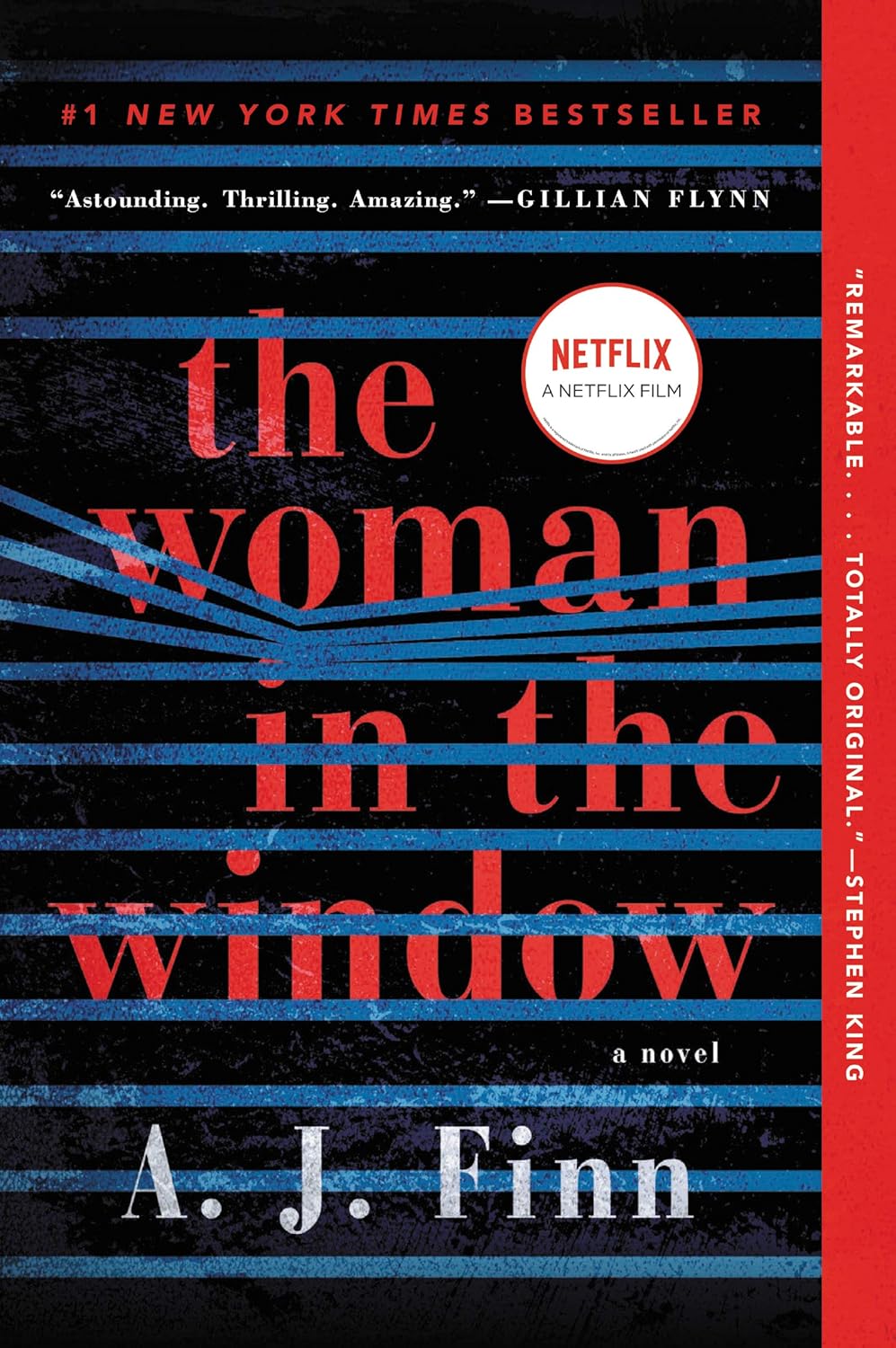
Anna Fox is an agoraphobic child psychologist who has not left her Manhattan townhouse in ten months. She spends her days drinking wine, watching old films, and observing her neighbours through her camera. When the Russell family moves in across the park — Alistair, Jane, and their teenage son Ethan — Anna befriends Jane during a chance visit. Days later, Anna believes she witnesses Jane being stabbed through her window. But when she reports the crime, a different woman appears claiming to be Jane Russell, and no one believes Anna saw anything at all.
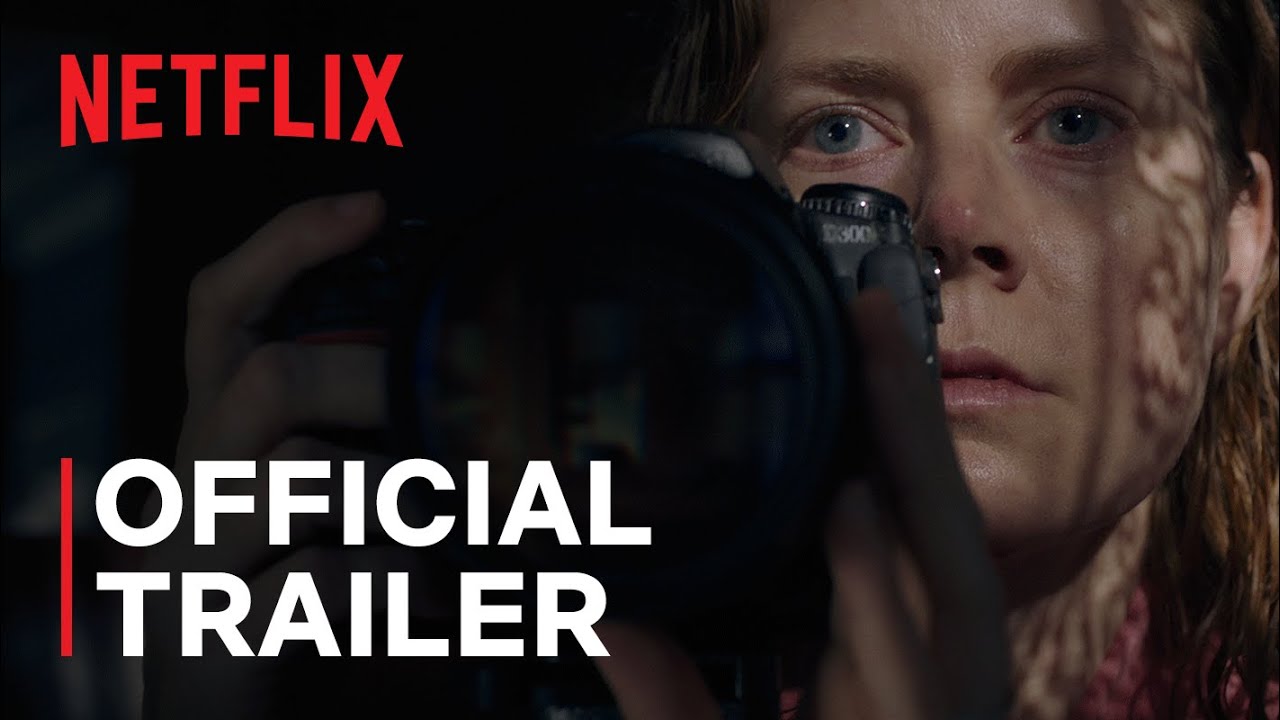
A.J. Finn's debut novel became one of the biggest thriller successes of 2018, selling millions of copies and drawing comparisons to Gone Girl and The Girl on the Train. It is an unapologetic homage to Alfred Hitchcock — particularly Rear Window — with Anna watching classic films while living inside one herself. Joe Wright's film adaptation was shot in 2018 but underwent extensive reshoots after poor test screenings. It was delayed twice before Netflix acquired it from Fox 2000 and released it in May 2021 to mixed reviews.
The novel spent 28 weeks on the New York Times bestseller list and was praised for its tight plotting and effective use of the unreliable narrator device, though some critics noted its derivative nature. The film, despite a cast including Amy Adams, Gary Oldman, Julianne Moore, and Anthony Mackie, struggled to translate the book's interior psychological tension to the screen.
| Character | In the Book | In the The Movie |
|---|---|---|
| Anna Fox Amy Adams |
A first-person narrator whose unreliability is felt gradually through gaps and inconsistencies in her account. | Adams externalizes Anna's fragility and paranoia through performance, making her unreliability more visible but less immersive. |
| Alistair Russell Gary Oldman |
The patriarch of the family across the park, controlling and menacing in ways Anna perceives but cannot prove. | Oldman plays him with quiet menace, though the film's compressed timeline gives him less room to establish his threat. |
| Jane Russell Julianne Moore |
The woman Anna befriends, whose identity becomes the novel's central mystery and source of Anna's unraveling. | Moore appears briefly but memorably, though the film's structure makes the identity switch feel more mechanical. |
| Ethan Russell Fred Hechinger |
The teenage son who visits Anna and becomes a key figure in unraveling what actually happened. | Hechinger captures Ethan's vulnerability and strangeness, one of the film's more successful adaptations. |
| David Anthony Mackie |
Anna's tenant in the basement, whose role in Anna's past is revealed through the novel's central twist. | Mackie has less screen time but delivers the same revelation, though with less of the careful groundwork. |
Key Differences
The unreliable narration is the novel's engine, and the film cannot replicate it
Finn's novel is told entirely in Anna's first person, which means the reader experiences her distorted perception from the inside. She sounds credible even when she isn't, and the gaps in her account accumulate naturally — you feel them before you understand them. The novel's structure makes you complicit in Anna's unreliability.
The film has to externalise what the novel internalises. Wright uses visual distortion, unreliable framing, and Adams' performance to communicate Anna's state, but these techniques make her unreliability visible rather than felt. You watch Anna being unreliable; in the book you are unreliable alongside her. The difference is fundamental.
The Hitchcock references work differently on the page than on screen
The novel is saturated with Hitchcock. Anna watches Rear Window, Vertigo, Spellbound, and Gaslight constantly, and Finn structures his plot to rhyme deliberately with these films. The meta-layer is part of the experience — a woman living inside the films she watches while a Hitchcock thriller happens to her. The novel earns this by making Anna's cinephilia part of her character and her isolation.
Wright's film nods to Hitchcock through production design, camera angles, and Bruno Delbonnel's cinematography, which evokes the saturated colours and deep shadows of Technicolor melodrama. But the meta-layer is harder to sustain cinematically. The film cannot show Anna watching films while also being a film without becoming too self-conscious. The homage becomes visual rather than structural.
Amy Adams is the film's strongest argument for its own existence
Adams commits fully to Anna's fragility, paranoia, and desperation. She communicates the interior distress that the novel renders through prose — not identically, but genuinely. Her performance is physical and precise: the way she moves through the house, the tremor in her hands, the effort it takes to approach the front door. She makes Anna's agoraphobia feel real rather than symbolic.
The film is worth watching largely because of what Adams does with material the script does not fully support. She carries scenes that the novel earns through accumulated unreliability but the film has to deliver more quickly. If you value performance over structure, Adams makes the case for the adaptation.
The troubled production shows in the finished film's structure
The film was shot in 2018, then underwent extensive reshoots after poor test screenings. The script was revised by Tony Gilroy, and the release was delayed twice before Netflix acquired it. The finished film has a slightly disjointed quality — tonal inconsistencies, scenes that feel inserted rather than organic, and a climax that accelerates too quickly.
The novel's plotting is tighter. Finn controls the pacing carefully, withholding and revealing information in a way that feels earned. The film's problems are structural rather than performative. You can feel the revisions, the attempts to fix something that may not have worked from the script stage. The novel does not have this problem.
The central twist lands differently because of how each version earns it
Both versions pivot on the same revelation: Anna's husband and daughter are dead, killed in a car accident Anna caused while driving drunk, and the man she believes is her estranged husband is actually her therapist. The woman claiming to be Jane Russell is the real Jane; the woman Anna befriended was someone else entirely. The novel earns this through the slow accumulation of Anna's unreliable narration — by the time it arrives, the reader has been carefully prepared without knowing it.
The film delivers the same information but with less groundwork. The twist feels slightly mechanical rather than devastating because the film has not had the time or the narrative structure to make Anna's distortion feel natural. The novel's first-person narration hides the truth in plain sight; the film has to announce it more directly. The difference is in the preparation, not the revelation itself.
Yes. The novel's unreliable first-person narration is the experience, and the film cannot replicate it. Read first and Anna's distorted perception pulls you in completely — you are inside her head, complicit in her unreliability, and the twist arrives with the force of recognition rather than surprise. The novel is a tightly constructed psychological thriller that knows exactly what it is doing with its Hitchcock homage and its unreliable narrator.
Watch the film afterward for Amy Adams, who does everything the script allows and then some. Her performance is the film's best element, and it is worth seeing for that alone. But the film is a handsome production that loses the mechanism that makes the story work. The novel is the tighter, more satisfying version of the same story, and it is the version that earns its ending.
Should You Read First?
Yes. The novel's unreliable first-person narration is the experience, and the film cannot replicate it. Read first and Anna's distorted perception pulls you in completely — you are inside her head, complicit in her unreliability, and the twist arrives with the force of recognition rather than surprise. The novel is a tightly constructed psychological thriller that knows exactly what it is doing with its Hitchcock homage and its unreliable narrator.
Watch the film afterward for Amy Adams, who does everything the script allows and then some. Her performance is the film's best element, and it is worth seeing for that alone. But the film is a handsome production that loses the mechanism that makes the story work. The novel is the tighter, more satisfying version of the same story, and it is the version that earns its ending.
Finn wrote a knowing, well-constructed homage to Hitchcock that works because the unreliable narrator is doing real work. Wright's film has Amy Adams and a troubled production history. Read the book for the experience. See the film if Adams is sufficient reason — she usually is.