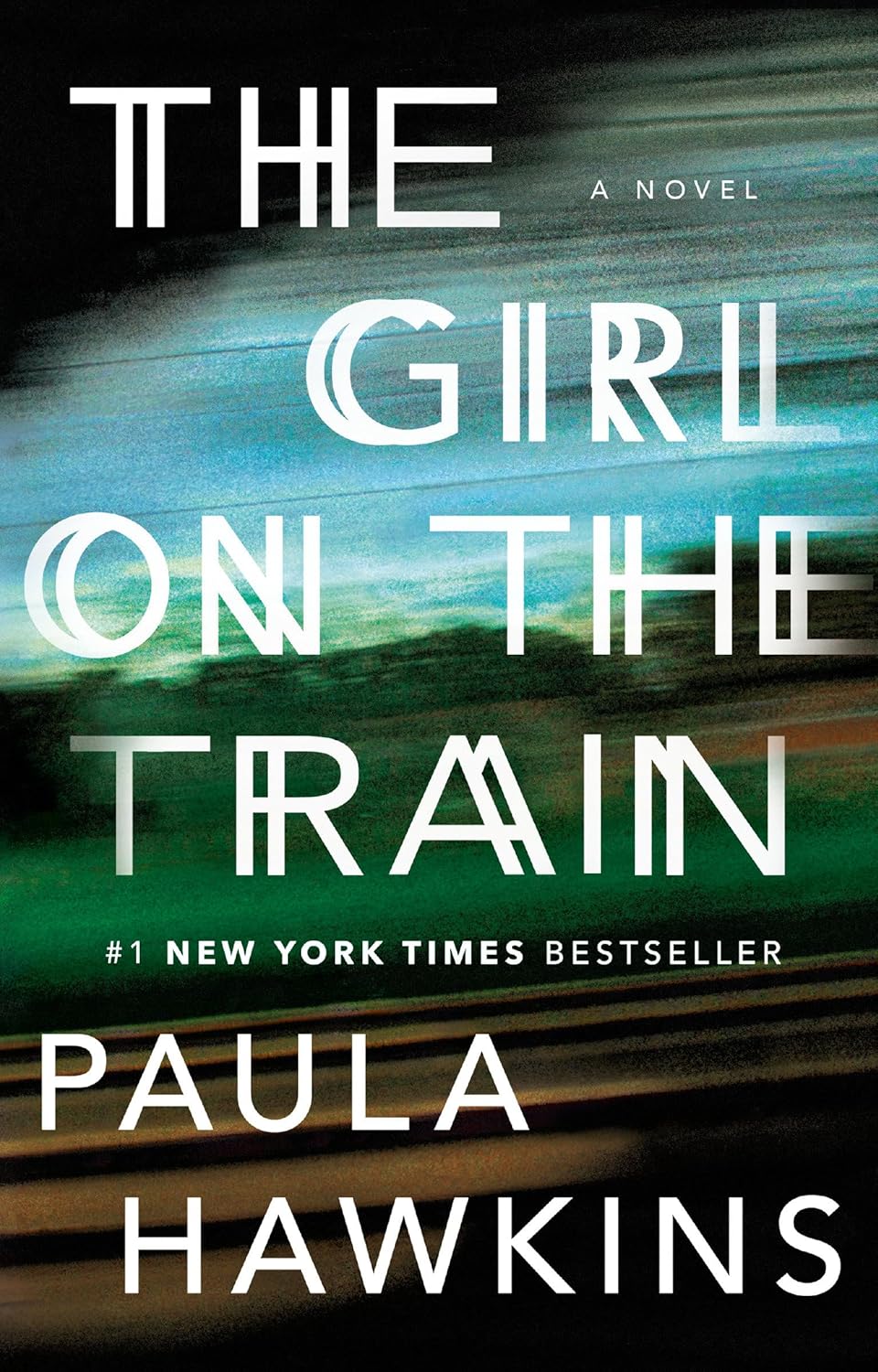
The Story in Brief
Every day Rachel Watson rides the commuter train past the house where she used to live with her ex-husband Tom, now remarried to Anna and with a baby. She fixates on a couple she can see from the window — Megan and Scott Hipwell — projecting a perfect life onto them. Then Megan goes missing, Rachel thinks she saw something the morning it happened, and she inserts herself into the investigation despite being an unreliable witness to everything, including her own memory.
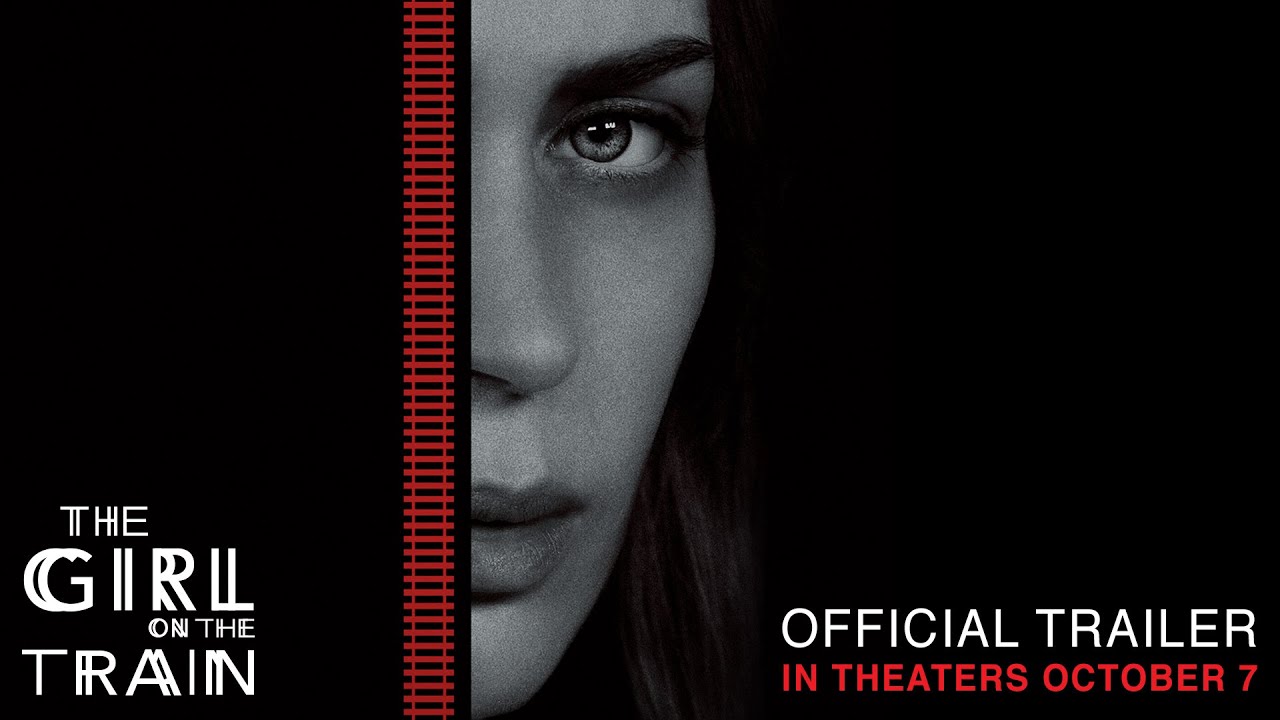
Paula Hawkins' debut novel was a publishing phenomenon in 2015, compared endlessly to Gone Girl and selling over 20 million copies worldwide. It spent months on the New York Times bestseller list and became one of the defining psychological thrillers of the decade. Tate Taylor's 2016 film adaptation stars Emily Blunt in a performance that earned her a BAFTA nomination, alongside Haley Bennett as Megan and Rebecca Ferguson as Anna. The film grossed $173 million worldwide but received mixed reviews, with critics praising Blunt while noting the adaptation's struggle to capture the novel's interior complexity.
The story became a cultural touchstone for its exploration of female rage, alcoholism, and the unreliability of memory — themes that resonated particularly in the mid-2010s moment of domestic noir dominance.
| Character | In the Book | In the The Movie |
|---|---|---|
| Rachel Watson Emily Blunt |
A deeply unreliable first-person narrator whose alcoholic blackouts and self-loathing create a fractured, looping narrative voice that is the novel's greatest achievement. | Blunt captures Rachel's desperation and fragility with commitment, but the visual medium makes her more sympathetic and less genuinely unreliable than Hawkins' prose version. |
| Megan Hipwell Haley Bennett |
Given equal narrative weight through her own chapters, revealing a complex history of grief and guilt that reframes her apparent perfection and makes her disappearance deeply personal. | Bennett's Megan is more compressed, with her backstory touched on but not fully explored — she remains slightly more of a mystery to be solved than a fully realized person. |
| Anna Watson Rebecca Ferguson |
The third narrator, Tom's new wife, whose chapters gradually reveal her own anxieties and the cracks in her seemingly perfect life with the man Rachel lost. | Ferguson's Anna is competent but thinner than on the page, where her first-person chapters carry equal narrative authority and complexity to Rachel's and Megan's. |
| Tom Watson Justin Theroux |
Rachel's ex-husband, whose charm and manipulation are filtered through Rachel's unreliable memory until the novel's climactic reveal recontextualizes everything. | Theroux plays Tom with appropriate surface charm, but the film's visual storytelling makes his true nature slightly more apparent earlier than the novel's prose allows. |
| Scott Hipwell Luke Evans |
Megan's husband, volatile and grieving, who becomes both a suspect and a mirror for Rachel's own obsessive tendencies and inability to let go. | Evans captures Scott's anger and pain, though the film compresses his arc and his relationship with Rachel feels slightly less developed than in the novel. |
Key Differences
The London to New York relocation strips away the novel's essential dreariness
The novel is rooted in the specific geography of the London commuter belt — the particular dreariness of the suburban train from Ashbury to Euston, the terraced houses glimpsed at speed, the English social textures that give Rachel's decline a specific flavour. Hawkins uses the grey ordinariness of commuter London as Rachel's emotional landscape.
The film moves everything to New York's Hudson Valley, presumably for commercial reasons. It's a significant loss. Westchester County is too glossy, too spacious, too American-suburban to carry the same claustrophobic weight. The train becomes a Metro-North commuter line, the houses become larger and more spread out, and the entire atmosphere shifts from grey English misery to something more generically affluent.
Rachel's unreliability works better on the page than on screen
The novel's engine is Rachel's alcoholic blackouts — she genuinely cannot trust her own memory, and neither can the reader. Hawkins builds this through first-person narration that is deliberately fragmentary, looping, and self-contradicting. Rachel's voice is desperate, self-aware, and trapped in a fog of her own making. She tells us things that turn out to be false, not because she's lying but because she doesn't know what's true.
Emily Blunt gives a committed and sympathetic performance, but film is a fundamentally more reliable medium than first-person prose. What we see on screen feels more authoritative than what Rachel tells us on the page. The camera doesn't lie the way Rachel's narration does, which slightly defangs the novel's central trick. We trust our eyes more than we trust Rachel's words.
The three-narrator structure loses depth in adaptation
The novel rotates between three first-person narrators — Rachel, Megan, and Anna — each with a distinct voice and timeline. This structure keeps the reader perpetually off-balance, withholding and revealing information across the three perspectives in carefully controlled sequence. Megan's chapters are set in the months before her disappearance, Anna's in the present alongside Rachel's, and the interweaving creates a puzzle the reader assembles piece by piece.
The film preserves the three-narrator structure but necessarily externalises what the novel keeps internal. The result is that Megan and Anna feel thinner on screen than on the page, where their chapters carry equal narrative weight to Rachel's. Megan's backstory — her grief over a lost child, her affair with her therapist Kamal Abdic — is compressed. Anna's anxieties about Tom and her own complicity are sketched rather than fully explored.
Megan's chapters do more work in the novel than the film allows
One of the novel's more affecting threads is Megan's history — a grief and guilt she carries over the death of her infant daughter years earlier, a trauma that reframes her apparent perfection and makes her disappearance feel like more than a plot mechanism. Her sessions with Kamal, her restlessness in her marriage to Scott, her affair with Tom — all of it is given space and interiority in the novel.
The film touches on this but compresses it, which means Megan remains slightly more of a cipher than Hawkins intended. Haley Bennett is good in the role, but the film's Megan is primarily a mystery to be solved rather than a fully realized person whose disappearance carries emotional weight independent of the plot mechanics.
The reveal lands harder when you've lived inside Rachel's fractured consciousness
The novel's climax works because Hawkins has spent the entire book earning Rachel's unreliability — when the truth emerges that Tom has been gaslighting her, that he killed Megan when she threatened to expose their affair and his lies to Anna, it recontextualizes everything, including things Rachel told us directly. The reader has been inside Rachel's head for 300 pages, experiencing her self-doubt and confusion as lived reality.
The film's reveal hits the same plot beats but with less accumulated weight behind it. You haven't lived inside Rachel's fractured consciousness long enough for the resolution to land with the full force it carries on the page. It's still satisfying as a thriller — the final confrontation where Rachel and Anna kill Tom together is visceral and well-executed — but it's a shorter distance to travel.
Yes — the novel's unreliable narration is the whole point, and it works better on the page than on screen. Read it first and the film becomes a competent thriller adaptation with a strong lead performance. Watch it first and the book will feel like the fuller, richer version of a story you already know the ending to. The twist is the same either way, but arriving at it through Rachel's fractured prose is the experience Hawkins designed.
The novel also gives you the London setting, which is integral to the atmosphere, and the full depth of Megan's and Anna's perspectives. If you're going to experience this story only once, make it the book. If you're doing both, read first and then watch Blunt's performance as a skilled interpretation of a character the page renders more fully.
Should You Read First?
Yes — the novel's unreliable narration is the whole point, and it works better on the page than on screen. Read it first and the film becomes a competent thriller adaptation with a strong lead performance. Watch it first and the book will feel like the fuller, richer version of a story you already know the ending to. The twist is the same either way, but arriving at it through Rachel's fractured prose is the experience Hawkins designed.
The novel also gives you the London setting, which is integral to the atmosphere, and the full depth of Megan's and Anna's perspectives. If you're going to experience this story only once, make it the book. If you're doing both, read first and then watch Blunt's performance as a skilled interpretation of a character the page renders more fully.
Emily Blunt is excellent and the film is a perfectly serviceable thriller, but it loses the two things that made the novel a phenomenon: the specific grimness of the London commuter landscape and the full claustrophobic intimacy of Rachel's unreliable first-person voice. The book is the better version of this story. Read it first, see the film after, and appreciate what Blunt does with a character the page renders more fully than the screen can.