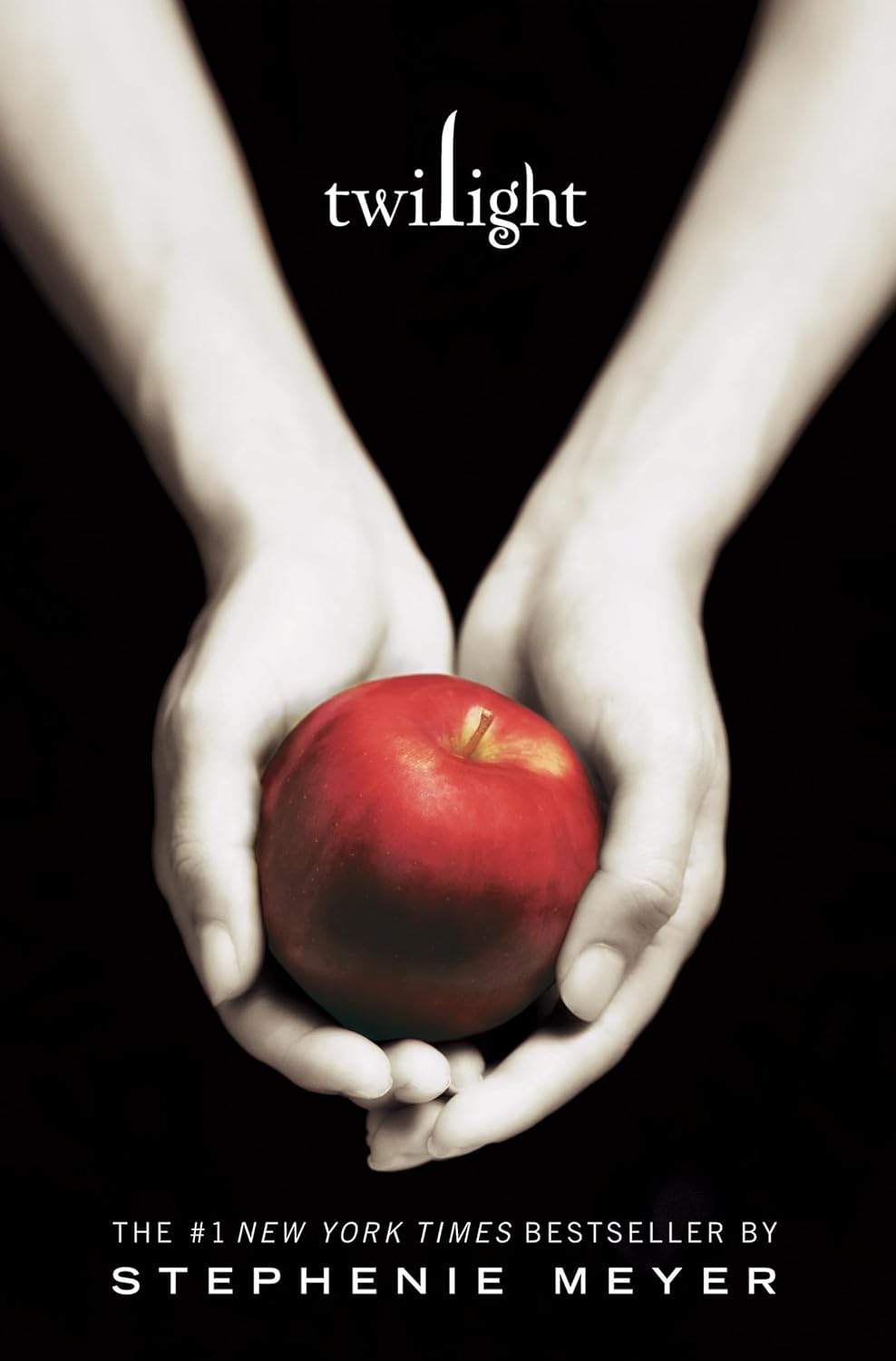

The Story in Brief
Bella Swan moves to Forks, Washington to live with her father and meets Edward Cullen — pale, beautiful, and inexplicably drawn to her. He is, as Bella eventually discovers, a vampire. Stephenie Meyer's debut novel sold over 160 million copies worldwide and launched one of the most commercially successful franchises in publishing history. The novel lives almost entirely inside Bella's obsessive first-person narration — her fixation on Edward, her cataloguing of his qualities, her growing understating of what he is. Catherine Hardwicke's 2008 film launched Kristen Stewart and Robert Pattinson into stardom and grossed nearly $400 million on a $37 million budget. It is a film of considerable chemistry and limited interiority.
Key Differences
Bella's obsessive voice
The novel is narrated entirely in Bella's first person and the experience of reading it is the experience of being inside an all-consuming fixation. Meyer sustains this with remarkable consistency — Bella's attention to Edward's physical presence, her cataloguing of his expressions, her awareness of him in every room. This quality of obsessive interiority is what made the novel a phenomenon among its readers and what the film, by definition, cannot replicate. You cannot film a fixation from inside it.
Kristen Stewart and Robert Pattinson
The casting is the film's defining achievement and its most lasting legacy. Stewart plays Bella's self-consciousness and guarded intelligence with precision. Pattinson's Edward — brooding, slightly amused by his own predicament, genuinely dangerous beneath the romance — is more complex than the novel's version, which exists primarily as an object of Bella's perception. Pattinson found something in Edward that Meyer describes but does not fully inhabit.
The vampire mythology
Meyer builds her vampire world in considerable detail — the Cullen family's lifestyle, the history of vampire covens, the specific rules of her mythology. The novel has space for this world-building in a way the film's two-hour runtime does not. The Cullens are more fully realised as a family in the novel; the film's Cullens are primarily atmosphere.
Hardwicke's visual style
Hardwicke shoots Forks in a desaturated blue-green palette that matches the novel's damp, overcast atmosphere. The baseball scene — the Cullens playing in a thunderstorm — is the film's most exhilarating sequence, with no equivalent in the novel's more interior approach. This is an instance where the film found something purely cinematic that the source does not have.
The romance's pacing
Meyer builds the attraction between Bella and Edward across hundreds of pages of accumulating tension — small moments, near-touches, Edward's increasingly tortured restraint. The film compresses this into a conventional romantic arc. The slow build is the point; the film delivers the destination without the journey that makes the destination matter to readers.
Should You Read First?
Read first if you want to understand why the books inspired the devotion they did — the experience of Bella's voice is the experience the films cannot provide. If you have already seen the films and are curious whether the books add anything, the answer is yes: the interiority that Stewart communicates through expression alone is spelled out in full, and it is a different thing entirely to be inside it rather than observe it.
Meyer wrote a novel whose power is entirely in Bella's obsessive first-person voice — a quality the film can only approximate through performance. Hardwicke's film has Stewart and Pattinson, which is its own argument. Read the novel to understand why 160 million people loved it. See the film for the cast, who did something remarkable with material the critics underestimated.