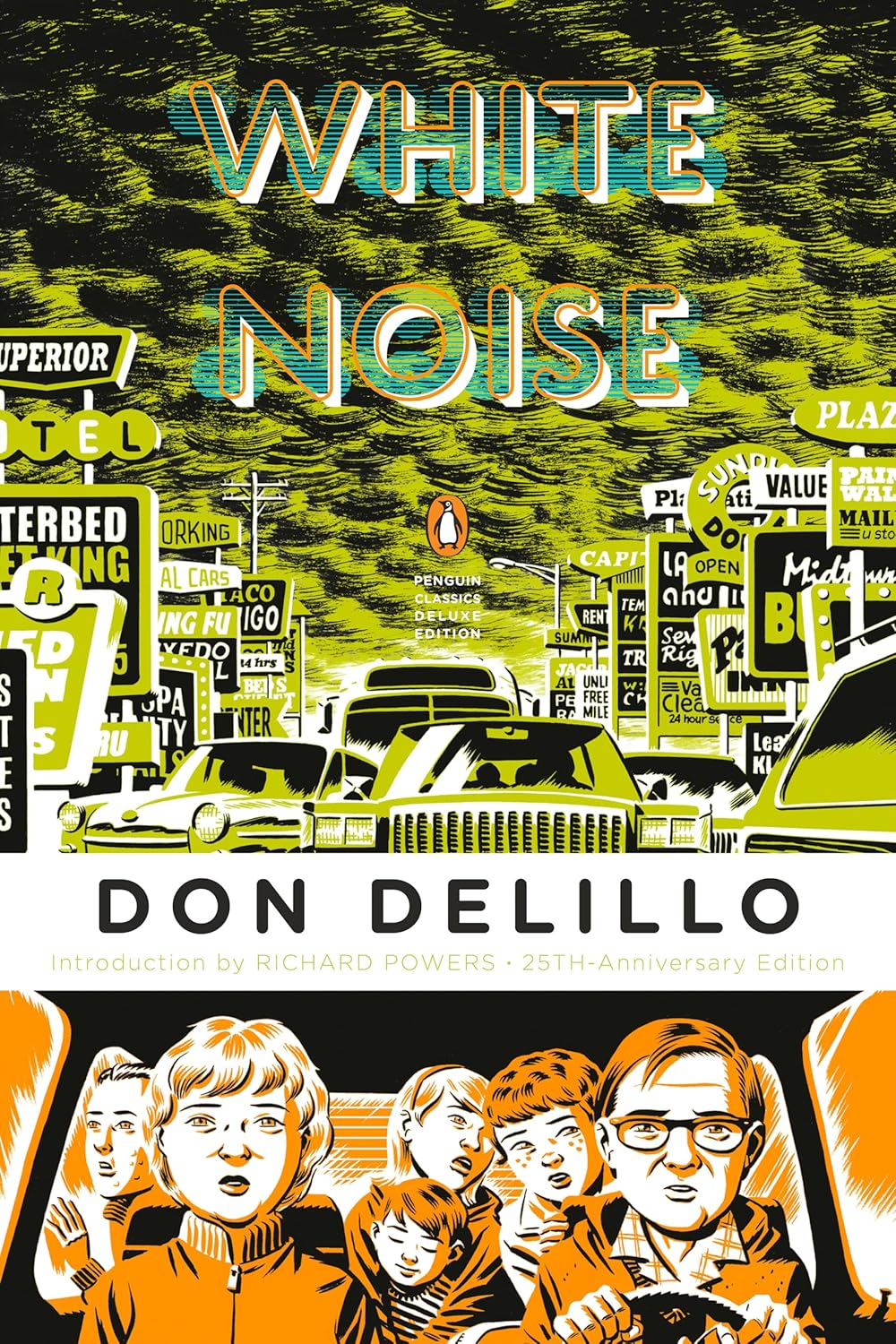

The Story in Brief
Don DeLillo's White Noise is a satirical novel that follows the Gladney family as they navigate the anxieties of modern American life. At the center is Jack Gladney, a professor of "Hitler studies" who becomes obsessed with his own mortality after a chemical spill exposes his town to a toxic airborne event. The film adaptation, directed by Noah Baumbach, brings DeLillo's postmodern themes to the screen, exploring consumerism, media, and the human need for certainty in the face of an increasingly uncertain world.
Key Differences
Tone and Style
The book's postmodern, experimental style is more prominent, with DeLillo's precise, fragmented prose capturing the disjointed nature of modern experience. Baumbach's film, while retaining the book's satirical edge, has a more linear narrative structure and a more conventional visual style. The book's absurdist humor and philosophical ruminations are partially sacrificed in the adaptation.
Character Development
The book delves deeper into the intricacies of the Gladney family, exploring the complex relationships and inner lives of the characters. The film condenses these elements, focusing more on the central plot points and losing some of the nuanced character studies present in the novel. For example, the book provides more insight into Jack's academic work and his relationship with his wife Babette.
Themes and Subtext
The book's exploration of themes like consumerism, mortality, and the media's influence on modern life is more expansive and layered. The film adaptation, while touching on these themes, lacks the book's depth and intellectual rigor. The book's postmodern deconstruction of the American experience is less pronounced in the more straightforward cinematic interpretation.
Ending and Resolution
The book's conclusion is more ambiguous and open-ended, leaving the reader to grapple with the unresolved questions and anxieties presented throughout the narrative. The film, in contrast, offers a more definitive and satisfying resolution, tying up the plot points in a more conventional manner.
Comedic Tone
The book's dark, absurdist humor is a central component of its satirical approach. While the film maintains some of this comedic sensibility, it feels more muted compared to the book's sharp, acerbic wit. The novel's ability to blend the comical and the profound is not fully captured in the adaptation.
Should You Read First?
If you're a fan of Don DeLillo's work or appreciate literary fiction that delves into the complexities of modern life, it's highly recommended to read the book first. The novel offers a richer, more nuanced exploration of the themes and a more distinctive narrative style that the film adaptation struggles to fully capture. That said, the movie can still be enjoyed on its own merits, particularly for those who appreciate Noah Baumbach's directorial style and the performances of the talented cast.
The book wins, offering a richer, more nuanced exploration of DeLillo's themes.