The Story in Brief
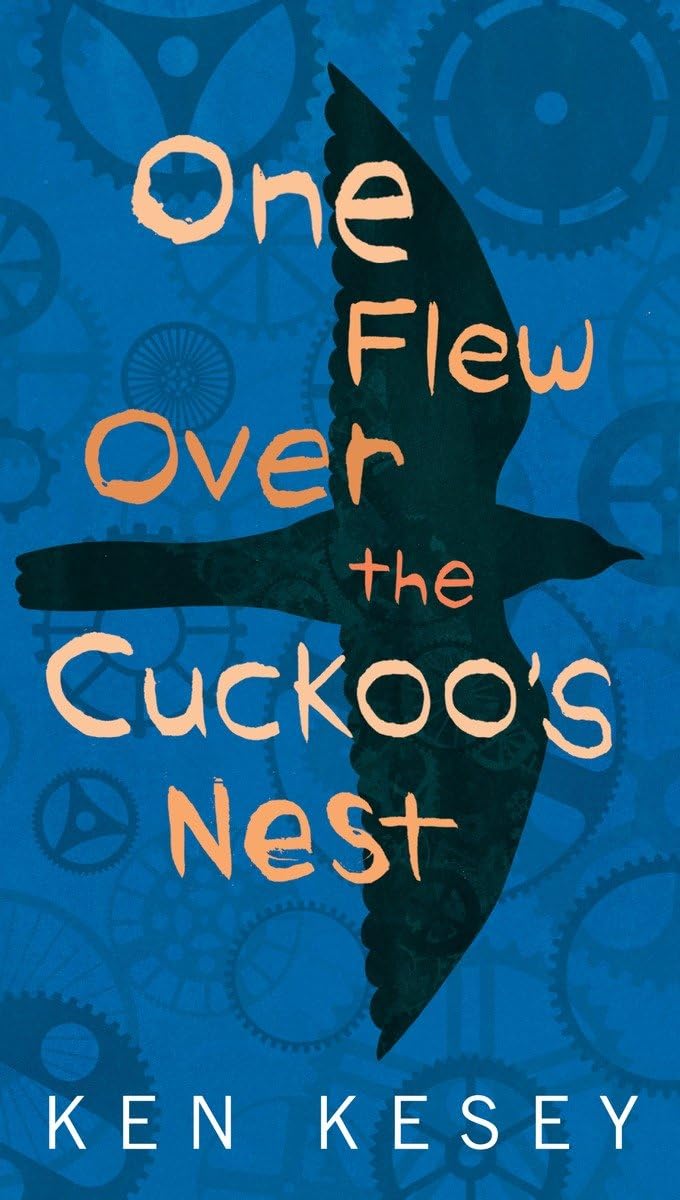
Randle Patrick McMurphy fakes insanity to serve his prison sentence in a psychiatric ward rather than on a work farm, and immediately begins disrupting the rigid order maintained by Nurse Ratched. Ken Kesey's 1962 novel is narrated by Chief Bromden, a half-Native American patient who pretends to be deaf and mute and sees the ward as a metaphor for the oppressive machinery of American society — what he calls the Combine. McMurphy's rebellion against Ratched's control becomes the catalyst for Bromden's return to consciousness and eventual escape.
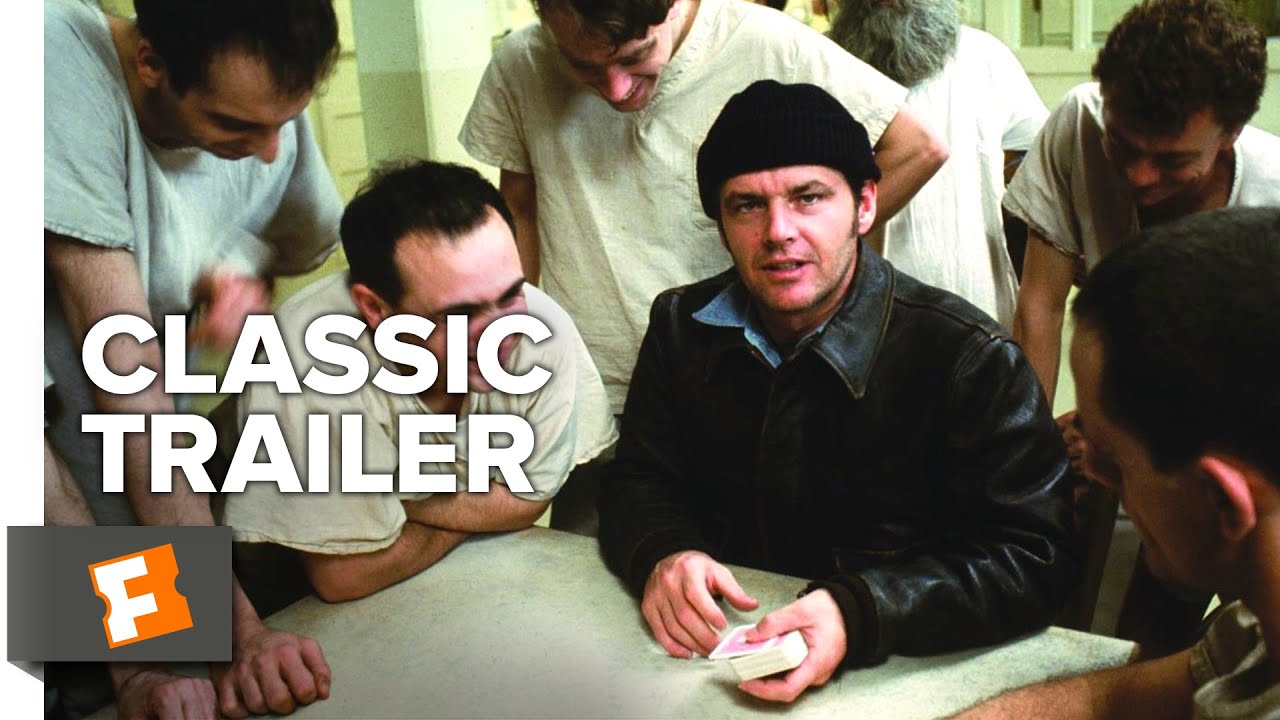
Miloš Forman's 1975 film adaptation won all five major Academy Awards — Best Picture, Director, Actor (Jack Nicholson), Actress (Louise Fletcher), and Screenplay. It was only the second film in history to achieve this sweep. The adaptation shifted the narration away from Chief Bromden entirely, making McMurphy the clear protagonist and transforming Kesey's hallucinatory counter-culture manifesto into a more conventional institutional drama.
Both versions became cultural touchstones. The novel helped define 1960s anti-establishment literature. The film became one of the defining works of 1970s American cinema and made Nurse Ratched a permanent entry in the lexicon of cinematic villains. The debate about which version is superior has been running for fifty years with no resolution in sight.
| Character | In the Book | In the The Movie |
|---|---|---|
| Randle Patrick McMurphy Jack Nicholson |
A con man and gambler seen through Bromden's mythologizing perspective — part trickster, part savior, filtered through paranoia and hero-worship. | Nicholson's definitive performance grounds McMurphy as a charismatic hustler with genuine warmth and recklessness, more human and less symbolic than Kesey's version. |
| Nurse Ratched Louise Fletcher |
An overtly sexualized villain in Kesey's text, representing emasculation and institutional control, described through Bromden's hallucinatory hatred. | Fletcher's Oscar-winning portrayal is colder and more bureaucratic — terrifying precisely because she seems so reasonable and professional in her cruelty. |
| Chief Bromden Will Sampson |
The novel's narrator and moral center, whose slow awakening from fog and pretended deafness structures the entire story. | A supporting character who remains silent for most of the film, his interior life and perspective entirely absent until the final act. |
| Billy Bibbit Brad Dourif |
A stuttering young patient dominated by his mother and Ratched, whose suicide becomes the novel's moral turning point. | Dourif's film debut captures Billy's vulnerability and his brief moment of confidence before Ratched destroys him — the performance earned him an Oscar nomination. |
| Harding William Redfield |
An educated patient tormented by questions about his sexuality and masculinity, serving as McMurphy's intellectual foil. | Redfield plays Harding with similar anxiety but less of the novel's explicit focus on sexual inadequacy and emasculation. |
Key Differences
Chief Bromden's Narration Is Removed Entirely
This is the adaptation's most significant and most controversial change. Kesey's novel is narrated entirely by Bromden — his hallucinations, his fog, his slow return to himself through McMurphy's influence are the novel's moral and structural center. The Combine, the machinery, the sense of institutional power as a metaphysical force — all of this comes through Bromden's consciousness.
The film shifts to conventional third-person perspective, which makes it a story about McMurphy rather than about what McMurphy does to Bromden. Forman believed Bromden's hallucinatory narration would be too difficult to translate cinematically without becoming heavy-handed. He was probably right about the practical challenge, but the loss is enormous.
Kesey hated the adaptation partly for this reason, and he has a point. The novel is about witnessing and awakening. The film is about rebellion and punishment. Both are powerful, but they're fundamentally different stories.
Nurse Ratched Becomes More Subtly Terrifying
Louise Fletcher won the Oscar and created one of cinema's great villains — cold, controlled, institutional. Her Ratched is terrifying because she never raises her voice, never loses composure, and operates entirely within the rules. She's a bureaucrat who weaponizes procedure.
Kesey's Nurse Ratched is more overtly sexual in her menace, her power over the ward more explicitly tied to emasculation and conformity. Bromden describes her as having enormous breasts that she straps down, and much of the novel's imagery connects her control to sexual domination. The film strips away this Freudian dimension almost entirely.
Both versions are terrifying. Fletcher's is more plausibly real. Kesey's is more mythically monstrous. The film's choice makes Ratched a character; the novel's makes her a symbol.
McMurphy's Motivations and Arc Are Clarified
Jack Nicholson is so definitive in the role that it's difficult to read the novel without hearing his voice. But Kesey's McMurphy is filtered through Bromden's perception — he's partly a projection, a mythic figure as much as a man. We never fully know if McMurphy is genuinely committed to helping the other patients or just playing another con.
The film's McMurphy is more literal and therefore more human. Nicholson gives us a clear arc from selfish hustler to genuine martyr. The moment when McMurphy realizes he's committed rather than sentenced — that he can't just leave when he wants — becomes the film's turning point. The novel keeps McMurphy's interior life more ambiguous.
This is both the film's strength and its loss. We get a more emotionally accessible protagonist, but we lose the novel's unsettling question about whether McMurphy is savior or just another manipulator.
The Ward as Metaphor Is Literalized
Kesey wrote the novel as a counter-culture critique of conformity and institutional power — the Combine, as Bromden calls it, is America itself. The ward is a machine for producing compliance, and Bromden's hallucinations of fog and machinery are the novel's way of making that metaphor visceral. The book is about systems of control, not just one bad nurse.
The film preserves the critique but strips the metaphysical dimension. Forman's ward is a specific place with specific people. The conflict is between McMurphy and Ratched, not between individuality and the machinery of society. This makes the film more dramatically focused but less philosophically ambitious.
The novel is psychedelic and paranoid. The film is naturalistic and observational. Both approaches work, but they're aimed at different targets.
The Ending Lands Differently
Both versions end the same way in terms of plot — McMurphy lobotomized after attacking Ratched, Bromden suffocating him as an act of mercy and then lifting the hydrotherapy console through the window to escape. But the emotional weight is distributed differently.
The film earns its ending through performance. Nicholson's McMurphy has become fully human to us, and his lobotomy is a straightforward tragedy. Bromden's escape is triumphant — Will Sampson's run toward freedom is one of cinema's great final images.
The novel earns its ending through a hundred pages of Bromden's slowly clearing fog. We've been inside his consciousness the entire time, so his escape isn't just physical freedom — it's the completion of his psychological resurrection. The novel's ending is more hard-won because we've done the work of awakening alongside him.
Yes — read first specifically to get Bromden's narration before the film takes it away from you. Once you've seen Nicholson you'll struggle to hear any other McMurphy, and once you've seen Fletcher you'll never imagine Ratched any other way. Reading first gives you Kesey's version before the film's performances overwrite it permanently.
The novel also requires more patience and willingness to sit with Bromden's unreliable, hallucinatory perspective. If you watch the film first, the novel's narrative approach can feel frustratingly oblique. But if you read first, the film's clarity feels like both a relief and a loss. Both are essential. The sequence matters.
Should You Read First?
Yes — read first specifically to get Bromden's narration before the film takes it away from you. Once you've seen Nicholson you'll struggle to hear any other McMurphy, and once you've seen Fletcher you'll never imagine Ratched any other way. Reading first gives you Kesey's version before the film's performances overwrite it permanently.
The novel also requires more patience and willingness to sit with Bromden's unreliable, hallucinatory perspective. If you watch the film first, the novel's narrative approach can feel frustratingly oblique. But if you read first, the film's clarity feels like both a relief and a loss. Both are essential. The sequence matters.
One of the genuinely great book-to-film debates. Forman made a masterpiece by removing the thing that makes Kesey's novel a masterpiece — Chief Bromden's narrating consciousness. Both versions are required reading and viewing. Start with the novel. Bromden deserves to be heard first.