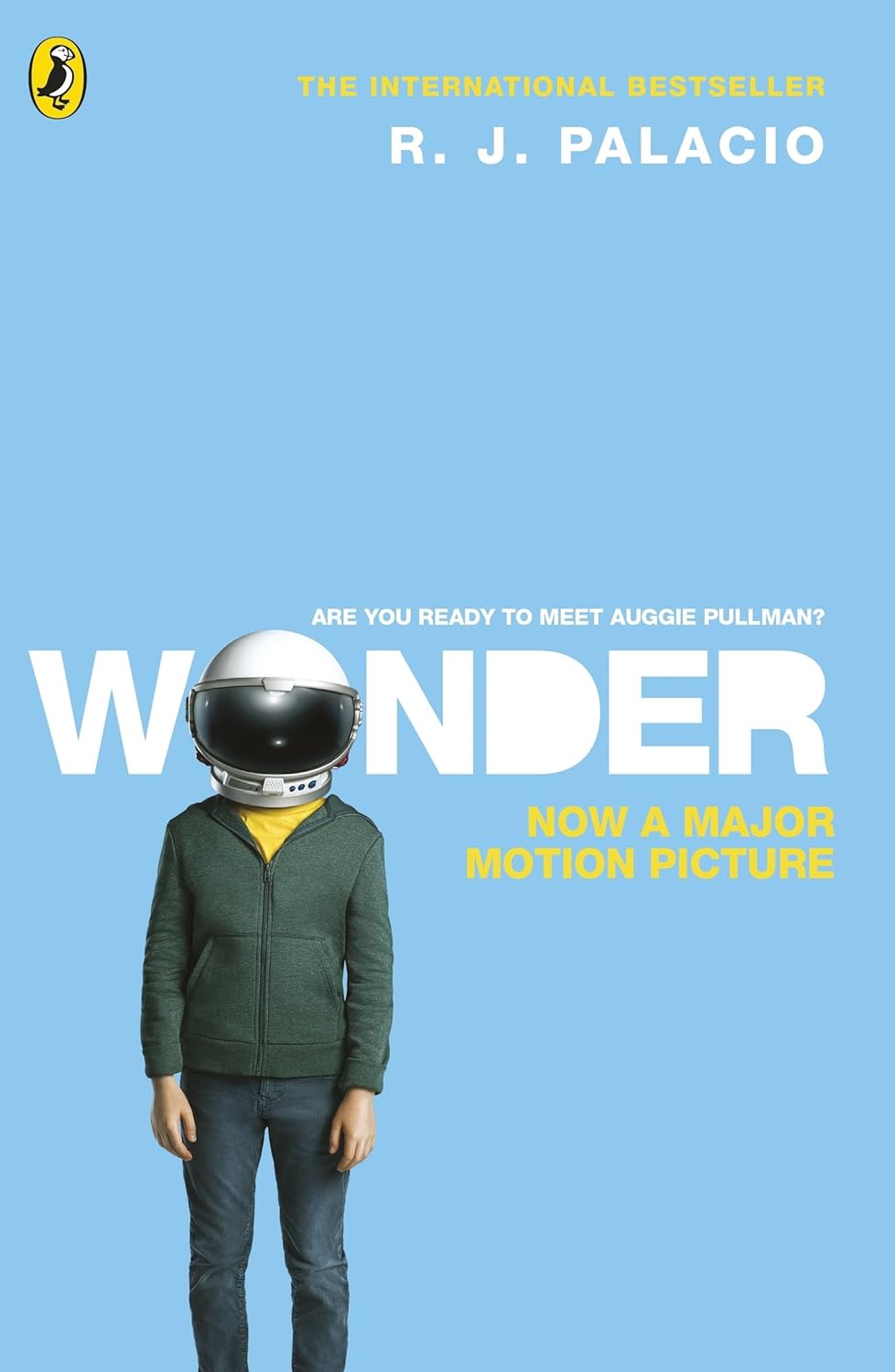
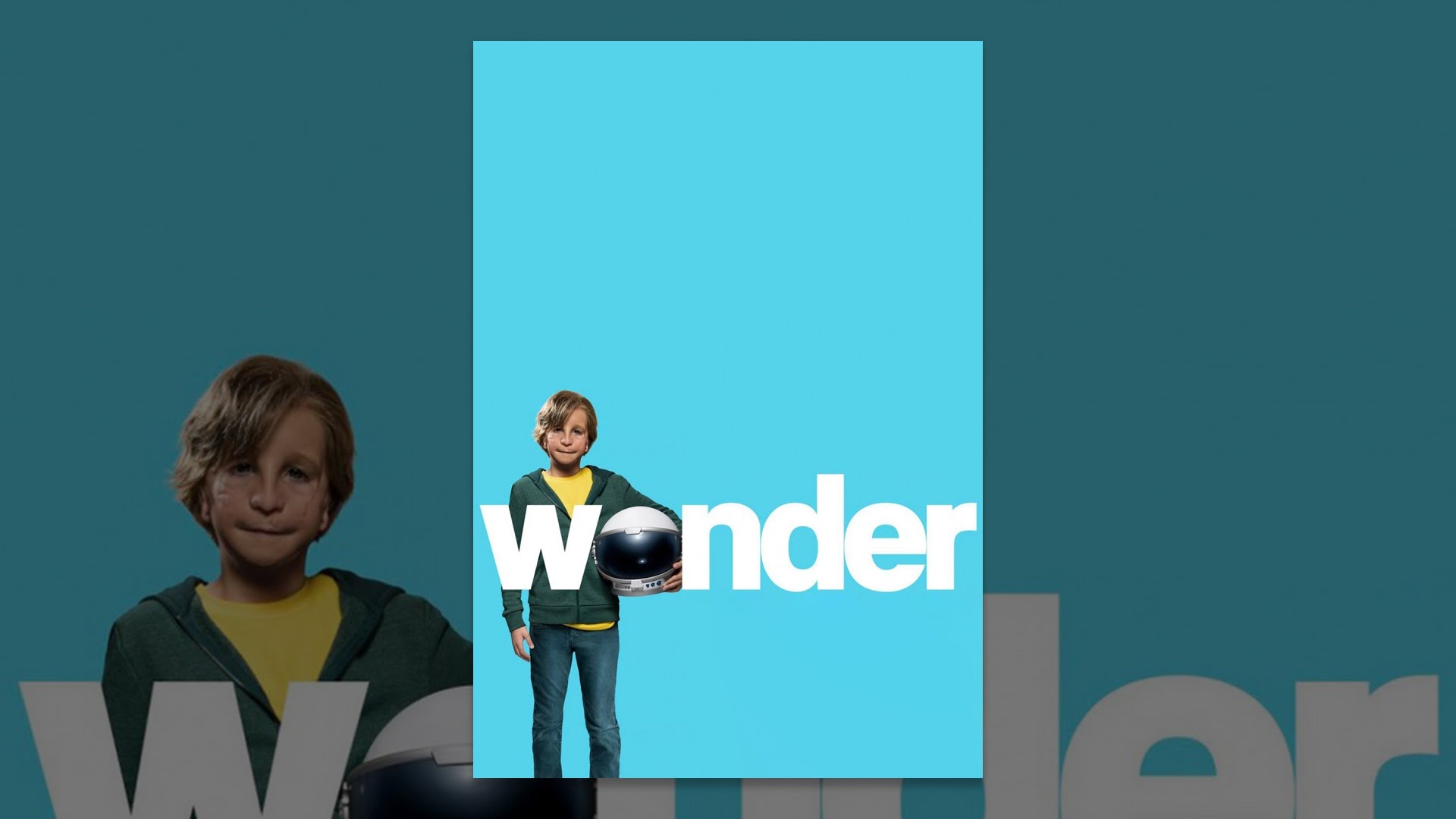
The Story in Brief
Auggie Pullman is a ten-year-old boy with a rare craniofacial condition who enters mainstream school for the first time after years of homeschooling. R.J. Palacio's 2012 novel became a cultural phenomenon by centering disability not as tragedy but as one facet of a full, complicated life. The story unfolds through multiple perspectives—Auggie's, his sister Via's, his friend Jack's—creating a kaleidoscopic portrait of how one person's difference ripples through an entire community.
Stephen Chbosky's 2017 film adaptation faced the challenge of translating a deliberately literary, introspective narrative into visual storytelling. The novel's power comes partly from Auggie's internal monologue and the shifting viewpoints that reveal how others perceive him. The film had to decide what to preserve and what to streamline, ultimately choosing to emphasize emotional authenticity over narrative complexity. This comparison matters because Wonder represents a rare mainstream success for disability representation—and how that representation changes between page and screen reveals fundamental differences in how literature and film handle difference itself.
| Character | In the Book | In the The Film |
|---|---|---|
| Auggie Pullman Jacob Tremblay |
Auggie is witty, pop-culture-obsessed, and deeply self-aware about his appearance. Palacio gives him a sharp internal voice that deflects pain with humor and Star Wars references. He's anxious about school but also resilient, capable of both vulnerability and surprising emotional maturity for his age. | Tremblay's Auggie is gentler and more visibly vulnerable than his literary counterpart. The film softens some of Auggie's defensive humor, emphasizing his loneliness and need for connection. His performance is remarkably naturalistic, making his moments of joy feel earned rather than performed. |
| Via Pullman Izabela Vidovic |
Via is a complex, often resentful teenager who feels invisible in her family's orbit. Palacio devotes an entire section to her perspective, revealing her anger at being sidelined, her struggles with friendship, and her own identity crisis. She's not simply the supportive sister—she's furious and lonely. | The film reduces Via's narrative arc significantly. Vidovic plays her as sympathetic and ultimately supportive, but much of her anger and alienation is muted. Her subplot with Justin feels rushed, and her emotional journey lacks the weight it carries in the novel. |
| Julia Roberts as Isabel Pullman Julia Roberts |
Auggie's mother is protective and loving but also somewhat idealized in his narration. The novel shows her anxiety about his integration into school and her fierce advocacy for him, but she remains somewhat peripheral to the larger story. | Roberts brings unexpected depth to Isabel, making her protective instinct feel both genuine and occasionally suffocating. The film gives her moments of real parental struggle—her conversation with Auggie about his appearance is quietly devastating. Roberts' star power could have made this saccharine; instead, she grounds it in specificity. |
| Jack Will Noah Jupe |
Jack is Auggie's first real friend at school, but their friendship is complicated by guilt and social pressure. Palacio reveals that Jack initially befriended Auggie out of obligation, creating genuine tension and moral ambiguity about their bond. | The film simplifies Jack's character arc. Jupe plays him as fundamentally good-hearted, and while his moment of betrayal still lands, the film doesn't fully explore the shame and confusion that makes the book's version so psychologically complex. |
| Owen Wilson as Nate Pullman Owen Wilson |
Auggie's father is a steady, somewhat distant presence—loving but not particularly emotionally engaged with his son's struggles. He represents a certain kind of parental love that's present but not always attuned. | Wilson's Nate is warmer and more actively involved than the novel's version. The film gives him a touching scene where he confronts Auggie's bullies, turning him into more of an active protector. It's a softening that makes the family unit feel more cohesive. |
Key Differences
The novel's multiple perspectives become the film's singular emotional focus
Palacio's structural innovation is the shifting point of view. Each section is narrated by a different character—Auggie, Via, Jack, Justin, Daisy—allowing readers to understand how Auggie's presence affects everyone around him. This creates a democratic narrative where no single perspective dominates. The novel asks: What does it mean to be seen? And it answers by showing how Auggie is perceived differently by each person in his orbit.
Chbosky's film collapses this multiplicity into a more conventional narrative centered on Auggie's experience. While there are brief moments from other perspectives, the film is fundamentally Auggie's story. This isn't a failure—it's a practical adaptation choice. Film's visual language can show what the novel had to tell through interior monologue. But something is lost: the novel's insistence that Auggie's difference affects everyone equally, that his sister's invisibility is as real as his facial difference, that even the antagonists have legitimate emotional lives.
The book earns its sentiment through moral complexity; the film through visual tenderness
Palacio's novel is unafraid of moral ambiguity. Jack's betrayal of Auggie isn't quickly forgiven—it creates genuine rupture. Via's resentment isn't presented as something she needs to overcome; it's validated as a legitimate response to being neglected. Even Auggie's bullies are given moments of humanity that complicate easy villainy. The book's sentimentality is earned through this refusal to simplify.
The film is more conventionally heartwarming. Chbosky uses cinematography, score, and performance to create emotional resonance. A scene of Auggie at the school fair, surrounded by friends, is visually beautiful in a way the book couldn't be. But the film occasionally substitutes visual warmth for moral complexity. Conflicts resolve more quickly. Characters are more readily redeemed. The film doesn't ask difficult questions about complicity and invisibility—it asks us to feel good about acceptance and inclusion. Both approaches work, but they're working toward different ends.
Auggie's internal monologue becomes Jacob Tremblay's face
The novel's greatest asset is Auggie's voice. His humor, his pop-culture obsession, his defensive wit—these are conveyed through his narration. Readers experience his anxiety and his resilience through his thoughts. When he makes a joke, we understand it's a coping mechanism. When he's vulnerable, we feel the cost of that vulnerability because we're inside his head.
The film must translate this interiority into performance. Tremblay does this remarkably well—his face communicates what Auggie's narration tells us in the book. But something shifts. The film's Auggie is more sympathetic and less complicated. His humor reads as charm rather than defense. His vulnerability feels more immediate and less hard-won. This isn't a criticism of Tremblay's performance; it's an observation about how film's visual immediacy changes character. We see Auggie's pain directly rather than understanding it through his attempts to hide it.
The film excises Via's narrative entirely, diminishing the novel's thematic core
Via's section in the novel is crucial. It reveals that Auggie's integration into school comes at a cost to his sister, who has been invisible for years. Via's anger—at her parents, at the world's focus on Auggie, at her own loneliness—is not presented as something she needs to overcome but as a legitimate response to genuine neglect. The novel suggests that acceptance and inclusion aren't simple goods; they involve trade-offs and sacrifices.
The film reduces Via to a supporting character in her own story. Her subplot with Justin is compressed into a few scenes. Her alienation from her parents is acknowledged but not explored. Most significantly, the film doesn't ask the question the novel poses: What does it cost the people around Auggie to include him? By removing Via's perspective, the film loses the novel's moral sophistication. It becomes a story about acceptance rather than a story about what acceptance requires.
The book's ending is ambiguous; the film's is triumphant
Palacio's novel ends with Auggie receiving a standing ovation at his school's graduation ceremony. But the novel has earned the right to this moment through pages of struggle, setback, and genuine social friction. The standing ovation isn't presented as a solution to Auggie's problems—it's a moment of recognition that doesn't erase the difficulty of his life. The novel's final pages suggest that acceptance is ongoing, fragile, and incomplete.
Chbosky's film also ends with a standing ovation, but it feels more definitively triumphant. The film has smoothed over conflicts and accelerated reconciliations. The final moment reads as a happy ending rather than a complicated recognition. This reflects a fundamental difference in tone: the novel is about learning to live with difference; the film is about celebrating difference. Both are valid, but they're different stories. The book suggests that Auggie will always be different, always face challenges, always navigate a world not built for him. The film suggests that kindness and acceptance can overcome these barriers.
Should You Read First?
The novel is the richer experience if you want to understand how Auggie's presence affects everyone around him—particularly his sister Via, whose perspective the film largely abandons. Palacio's multiple viewpoints create a more complex moral landscape where acceptance isn't simple and inclusion involves real sacrifice. However, if you're watching the film first, you won't be disappointed. Chbosky's adaptation is genuinely moving and doesn't rely on cheap sentimentality. The film's visual language—particularly Jacob Tremblay's performance and the cinematography—creates its own kind of power.
The ideal approach is to read the book first, then watch the film as a different artistic interpretation rather than a direct translation. The novel asks you to think; the film asks you to feel. Both are worthwhile, but they're asking different questions about what it means to be different, to be seen, and to belong.
The film wins because it understands something the novel sometimes forgets: visual storytelling can communicate acceptance more powerfully than words. Chbosky's direction, Tremblay's performance, and the cinematography create genuine warmth without manipulation. The film loses some of the novel's moral complexity—particularly Via's crucial perspective—but it gains emotional immediacy and visual poetry. Where the novel occasionally tips into sentimentality through its earnestness, the film earns its sentiment through restraint and specificity. This is a rare adaptation that doesn't diminish its source material; it simply tells a different, equally valid story.