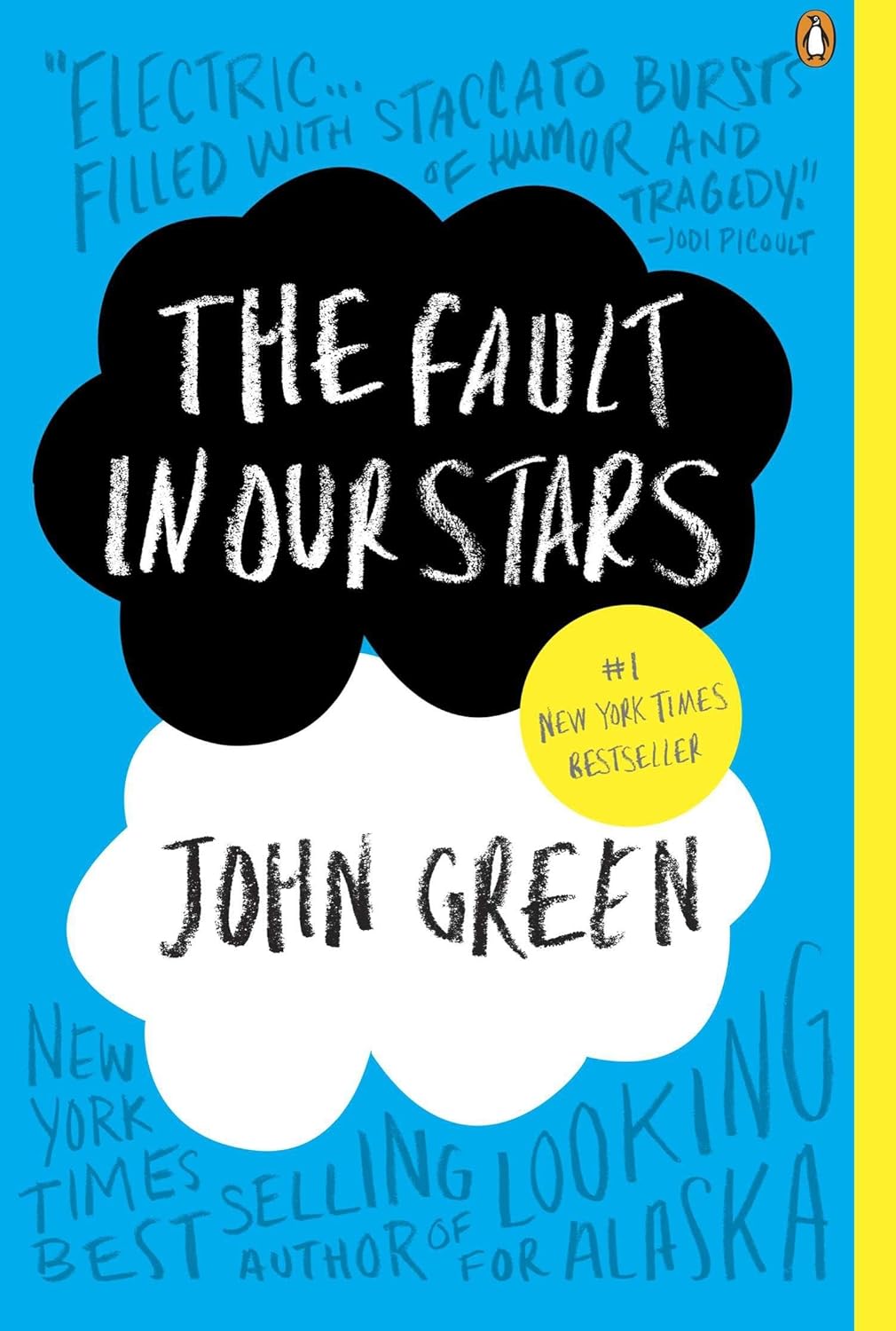

The Story in Brief
Hazel Grace Lancaster is sixteen, has terminal thyroid cancer with metastases in her lungs, and has been dragged by her mother to a support group she finds pointless. There she meets Augustus Waters — charming, philosophical, an osteosarcoma survivor with one prosthetic leg — and what follows is a love story that is also an argument about mortality, meaning, and what it means to leave a mark on the world when you won't be around to see it.
John Green's 2012 novel became the defining YA phenomenon of its decade, selling over 23 million copies and spending more than seven years on the New York Times bestseller list. Josh Boone's 2014 adaptation, starring Shailene Woodley and Ansel Elgort, opened at number one and earned $307 million worldwide. The film is faithful, well-made, and genuinely moving — Woodley and Elgort were cast fresh off Divergent, and their chemistry anchors the production.
Both versions center on Hazel's obsession with a fictional novel called An Imperial Affliction by the reclusive Peter Van Houten, which ends mid-sentence and leaves her desperate for answers about what happens to the characters after the narrator dies. Augustus uses his cancer wish to take Hazel to Amsterdam to meet Van Houten, who turns out to be a cruel drunk rather than a sage. The trip becomes the backdrop for their deepening relationship, and for Augustus's confession that his cancer has returned. The story is about love, yes, but more fundamentally about what we owe each other when time is short and grief is guaranteed.
| Character | In the Book | In the The Movie |
|---|---|---|
| Hazel Grace Lancaster Shailene Woodley |
Sardonic, precise first-person narrator whose intelligence and wit are her defining traits; unsentimental about her illness and suspicious of sentimentality in others. | Warm, intelligent, and appealing; Woodley captures Hazel's warmth and vulnerability but the film softens her edge and cannot replicate the voice that makes the book work. |
| Augustus Waters Ansel Elgort |
Charming and self-mythologizing; Green lets us see both why Hazel loves him and where his philosophical posturing tips into performance and insecurity. | Elgort is charming and earnest; the film needs him to function as a romantic lead and smooths away the novel's more critical view of his need to be remembered. |
| Peter Van Houten Willem Dafoe |
The reclusive author of Hazel's favorite novel; cruel, drunk, and bitter when they meet him in Amsterdam, later revealed to be grieving his own daughter's death from cancer. | Dafoe is perfectly cast and the Amsterdam confrontation works; his later appearance at Augustus's funeral is present but carries less weight because the film has less time to establish Hazel's obsession. |
| Isaac Nat Wolff |
Augustus's best friend, losing his sight to cancer; his girlfriend Monica dumps him before his surgery, leading to the egg-throwing scene that bonds him with Hazel. | Wolff plays Isaac with humor and vulnerability; the character functions as comic relief and emotional support, and his pre-funeral speech is one of the film's best moments. |
| Frannie & Michael Lancaster Laura Dern, Sam Trammell |
Hazel's parents, loving and terrified; her mother is studying to become a social worker so she'll have purpose after Hazel dies, which Hazel discovers late in the book. | Dern is excellent as Frannie, capturing both the hovering anxiety and the determination to let Hazel live; the social worker subplot is included and lands well. |
Key Differences
Hazel's voice is the novel's greatest asset and cannot be filmed
The book is narrated by Hazel in first person, and her voice — sardonic, precise, occasionally furious, always intelligent — is its greatest achievement. Green writes a teenager who is genuinely smart and genuinely dying, and who uses wit as both armor and honest expression. She describes her cancer support group as "a circle of trust for people who can't be trusted with their own bodies" and calls her oxygen tank "Philip" because it's always with her. This is not quirk for quirk's sake; it's how she survives.
Woodley is excellent and brings warmth and intelligence to the role, but voiceover can only carry so much of what exists in sentences. The film gives us Hazel's face where the book gives us her mind, and the mind is richer company. Woodley's performance is moving, but it cannot replicate the experience of spending 300 pages inside Hazel's head.
Augustus is more complicated and less perfect in the book
Elgort's Augustus is charming and appealing in the way the character needs to be for the film to work. What the adaptation can't quite reproduce is the novel's careful management of Augustus — Green lets us see, through Hazel's narration, both why she loves him and where his self-mythology tips into performance. Augustus wants desperately to be remembered, to do something heroic, to matter. The book is more honest about this as both endearing and slightly exhausting.
The film, needing its romantic lead to function as one, smooths Augustus into something simpler and more conventionally heroic. We lose the moments where Hazel gently mocks his pretensions, and we lose the sense that his philosophical pronouncements are partly a defense mechanism. Elgort is good, but the character is less interesting than the one on the page.
The treatment of illness is more physically honest in the book
Green is notably unsentimental about what cancer actually does — the oxygen tank Hazel drags everywhere, the fatigue that makes stairs an ordeal, the indignity of vomiting in public, the bureaucracy of insurance and clinical trials. The novel includes a scene where Hazel's lungs fill with fluid and she nearly dies in the ICU, which is terrifying and unglamorous. The film includes this scene but softens it, and generally treats illness with more care and less ugliness.
This is understandable for a studio production aimed at a wide audience, and the film is not dishonest about cancer. But the book is more willing to be ugly about it, which makes the love story feel harder-won and more honest. When Augustus tells Hazel he loves her in the book, we have spent more time with what it costs them both to be together.
Peter Van Houten's role is diminished in the adaptation
The reclusive author at the center of Hazel's obsession is played by Willem Dafoe, which is inspired casting. The Amsterdam sequence — where Hazel and Augustus finally meet their literary hero and find him monstrous — is the novel's most formally interesting section, and the film handles it reasonably well. Dafoe is cruel and drunk and pathetic in exactly the right proportions.
But Van Houten's later reappearance at Augustus's funeral, and the explanation offered for his bitterness (his own daughter died of cancer, and An Imperial Affliction was written for her), lands more heavily in the book because we have spent more time with Hazel's attachment to his work. The film includes this scene but moves through it quickly, and the emotional payoff is smaller as a result.
The pre-funeral scene deserves more space than the film gives it
One of the novel's most quietly devastating sequences — Augustus, dying, asks Hazel and Isaac to speak at a pre-funeral so he can hear his own eulogies — is in the film but receives less time than it deserves. In the book, this scene carries enormous weight because Green has spent more time establishing what each of these people means to the others. Isaac's speech is funny and heartbreaking; Hazel's is one of the most honest declarations of love in recent fiction.
The film hits the emotional beats and both Wolff and Woodley are excellent, but it moves through the scene faster than it merits. The book lets the moment breathe, and the result is more devastating. This is a structural problem: the film has two hours, and the book has as long as it needs.
Yes — and not because the film is bad, but because Hazel's voice is the experience and no performance can replicate it. The novel is funny in ways the film cannot be, because humor on the page can coexist with grief in ways that are harder to manage on screen. Green's sentences do work that images cannot, and the book's intelligence is inseparable from its narrator's intelligence. Read first and the film becomes a handsome, faithful companion that lets you see Hazel and Augustus as people rather than voices.
Watch first and the book will still expand what the film gave you — you'll hear Hazel's narration in Woodley's voice, which is not a bad thing, and you'll understand why certain scenes in the film feel compressed. Either order works, but the book is the better version. It's sharper, funnier, and more honest about what it means to love someone who is dying, and to be someone who is dying and still want to be loved.
Should You Read First?
Yes — and not because the film is bad, but because Hazel's voice is the experience and no performance can replicate it. The novel is funny in ways the film cannot be, because humor on the page can coexist with grief in ways that are harder to manage on screen. Green's sentences do work that images cannot, and the book's intelligence is inseparable from its narrator's intelligence. Read first and the film becomes a handsome, faithful companion that lets you see Hazel and Augustus as people rather than voices.
Watch first and the book will still expand what the film gave you — you'll hear Hazel's narration in Woodley's voice, which is not a bad thing, and you'll understand why certain scenes in the film feel compressed. Either order works, but the book is the better version. It's sharper, funnier, and more honest about what it means to love someone who is dying, and to be someone who is dying and still want to be loved.
Green's novel is sharper, funnier, and more honest about death than the film has room to be. Boone's adaptation is faithful and well-acted — Woodley in particular earns every scene, and Elgort is appealing even when the script simplifies his character. But the film trades the book's wit and precision for a more conventionally moving experience. Both will make you cry. The book gives you more reason to, and better sentences to remember afterward.