The Story in Brief
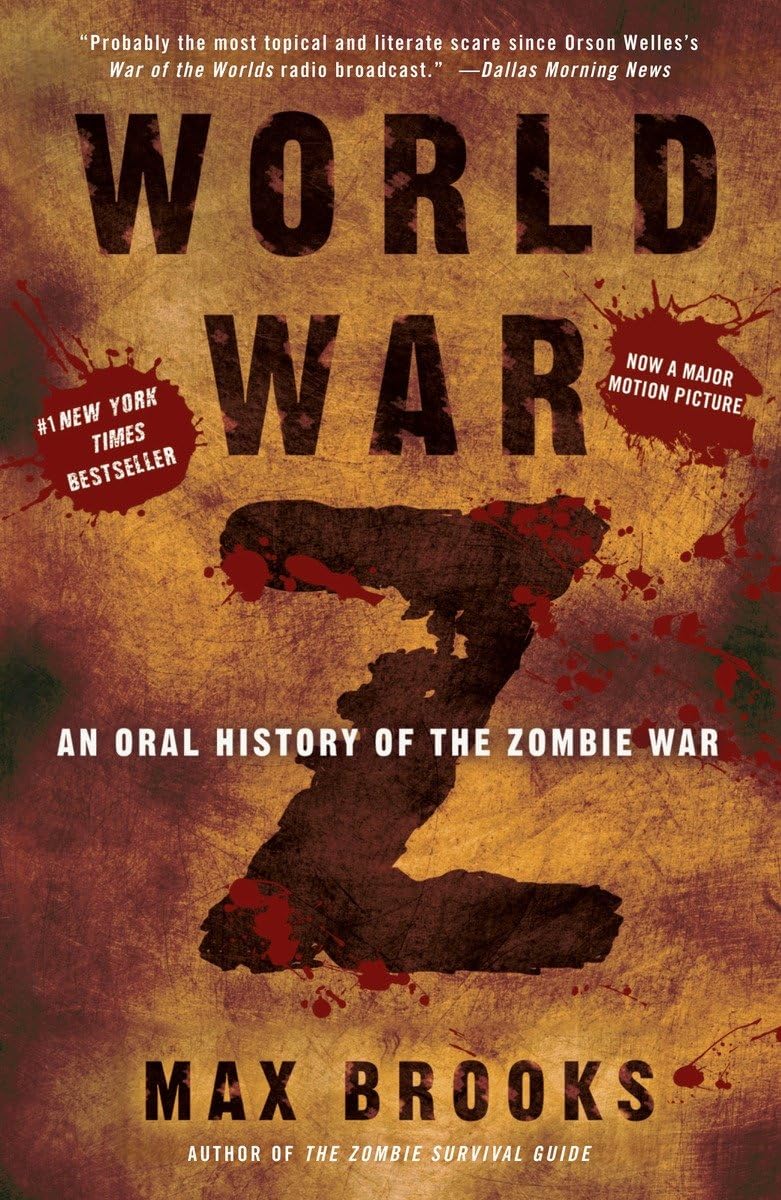
Max Brooks's World War Z is structured as an oral history compiled by a United Nations investigator ten years after humanity's near-extinction at the hands of a zombie pandemic. The novel contains no single protagonist — instead, it presents dozens of first-person testimonies from survivors across the globe: a Chinese doctor who witnessed the outbreak's origin, a South African military planner who devised the Redeker Plan, a Japanese otaku who survived through meticulous preparation, an American soldier who fought in the Battle of Yonkers, a Russian priest who endured the decimation of his country. Each interview reveals not just personal survival but the collapse of institutions, governments, and social orders under pandemic pressure.
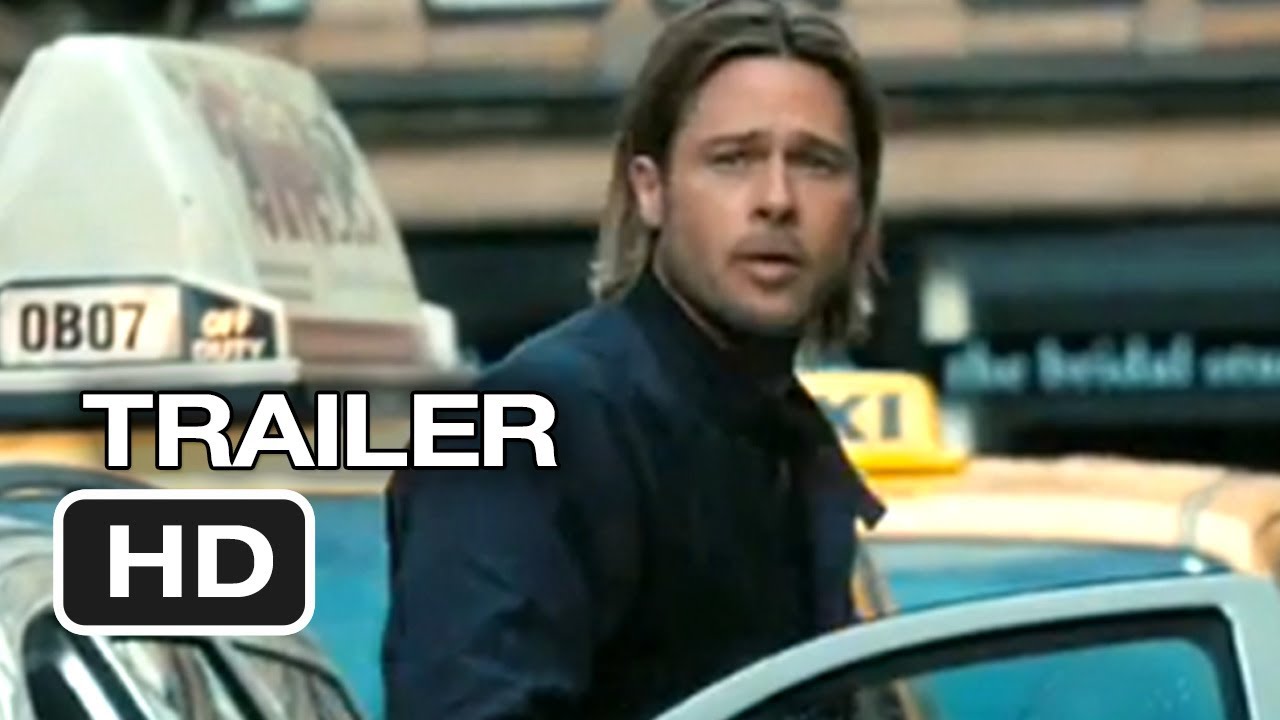
Marc Forster's 2013 film adaptation takes the title, the zombie premise, and constructs an entirely different narrative. Brad Pitt stars as Gerry Lane, a former UN investigator pulled back into service when the zombie outbreak threatens his family and the world. Lane travels from Philadelphia to South Korea to Israel to Wales, racing to identify the pandemic's source and find a cure. The film's production was notoriously troubled — the entire third act was rewritten and reshot after poor test screenings, with Damon Lindelof brought in to salvage the ending. The result is a competent, globe-trotting action thriller that bears almost no resemblance to Brooks's novel beyond the shared premise of a zombie war.
The novel became a bestseller and is widely regarded as one of the most intelligent works of zombie fiction, praised for its political sophistication and formal innovation. The film grossed over $540 million worldwide despite mixed critical reception and became one of the highest-grossing zombie films ever made.
| Character | In the Book | In the The Movie |
|---|---|---|
| Gerry Lane Brad Pitt |
Does not exist — the novel has no central protagonist, only an unnamed UN interviewer who never appears as a character. | A former UN investigator and devoted family man who becomes humanity's best hope for finding a cure to the zombie pandemic. |
| Karin Lane Mireille Enos |
Does not exist — the novel contains no family drama or domestic storyline. | Gerry's wife, who remains on a UN ship with their two daughters while Gerry travels the world seeking answers. |
| Jurgen Warmbrunn Ludi Boeken |
An Israeli intelligence official interviewed in the novel who explains how Israel predicted the outbreak and built protective walls. | A Mossad agent who briefs Gerry on Israel's defensive strategy and the Tenth Man doctrine that saved the country. |
| Captain Speke James Badge Dale |
Does not exist in the novel. | A U.S. Navy SEAL who accompanies Gerry to South Korea in search of the outbreak's origin. |
| Segen Daniella Kertesz |
Does not exist in the novel. | An Israeli soldier who loses her hand to infection and becomes Gerry's companion in the film's second half. |
Key Differences
The oral history format is abandoned entirely
Brooks's formal conceit — presenting the zombie war through survivor testimony gathered after the fact — is the novel's defining quality and the source of everything interesting about it. By structuring the book as a series of interviews conducted ten years post-war, Brooks can show the conflict from dozens of perspectives simultaneously: the Chinese submarine crew trapped underwater for months, the South African military strategist who devised a brutal triage plan, the American soldier who witnessed the catastrophic failure at the Battle of Yonkers, the Japanese otaku who survived through obsessive preparation.
No single character could access this range of experience, and the format allows Brooks to examine how the pandemic affected different cultures, governments, and social classes in radically different ways. The film replaces this with a conventional single-protagonist narrative following Brad Pitt's Gerry Lane on a globe-trotting quest. The format is the novel — it cannot be filmed without destroying what makes it distinctive.
Political and social satire is replaced by action spectacle
Brooks is less interested in zombies as horror than as a stress-test for human institutions. His novel examines how governments fail under pandemic pressure, how economic systems collapse when supply chains break, how class and race determine who gets rescued and who gets abandoned, how military doctrine proves catastrophically inadequate when facing an enemy that doesn't follow conventional rules. The Battle of Yonkers sequence — in which the U.S. military deploys overwhelming firepower against zombies in a televised show of force, only to be routed because their tactics assume an enemy that fears death — is a savage critique of American military hubris.
These arguments are built into the interview format: each witness reveals not just their survival story but the institutional failure that surrounded them. The film has none of this. It is interested in spectacle — the swarming zombie attack on Jerusalem, the plane crash sequence, the tense finale in a Welsh research facility — but not in systems or politics. It is not interested in how societies fail, only in whether its protagonist succeeds.
Brad Pitt's Gerry Lane is a conventional action hero the novel deliberately avoids
The film's Gerry Lane — a former UN investigator called back into service to save his family and humanity — is a conventional action hero given the most famous face in the production. Pitt is competent and likeable, playing Lane as a devoted father and resourceful problem-solver, but the role requires nothing that challenges him. He is the calm, capable center of every scene, the man who notices what others miss, who makes the right call under pressure, who survives when others don't.
The novel has no protagonist because Brooks understood that a protagonist would localise what should be global, would turn a pandemic into one man's story. The film's decision to centre a single character is commercially understandable — studios need a star, audiences need someone to root for — and thematically a betrayal of the source. Brooks's point is that no single person wins a war like this; the film's point is that Brad Pitt can save the world if he's clever enough.
The zombie behaviour changes the type of story being told
Brooks's zombies are slow — shambling, relentless, accumulating in numbers that eventually overwhelm any defense. His novel is partly a deliberate corrective to the fast zombie trend of the early 2000s (popularised by 28 Days Later and Zack Snyder's Dawn of the Dead remake), and his slower infected allow for the kind of sustained strategic thinking that drives the military testimony sections. The Battle of Yonkers fails not because the zombies are fast but because they are inexorable and the military's tactics assume an enemy that can be intimidated.
The film's zombies are fast — very fast — and move in the swarming, digitally fluid patterns that make for spectacular action sequences. They climb over each other to scale the walls of Jerusalem, they sprint after victims, they turn within seconds of being bitten. The two zombie types produce entirely different stories: Brooks's slow zombies create a war of attrition and logistics; Forster's fast zombies create a race against time.
Global scope becomes backdrop for a single quest narrative
The novel spans every continent and a dozen languages and cultures — its global scope is essential to its argument about how a pandemic would actually unfold differently in different political and geographic contexts. Brooks shows how China's authoritarian government initially suppressed information about the outbreak, how Cuba became a thriving democracy after the collapse of larger nations, how Russia reverted to brutal totalitarianism, how South Africa's Redeker Plan — a coldly rational triage strategy that abandoned millions to save a defendable core — became the template for global survival.
The film moves through several countries — the United States, South Korea, Israel, Wales — but always in service of Gerry Lane's single quest narrative. The world in the film is backdrop, a series of exotic locations for action set pieces. In the novel, the world is the subject, and the differences between locations matter as much as the zombies themselves.
Read the novel and see the film as entirely separate experiences — they share a title and a premise and almost nothing else. The novel will not prepare you for the film's action sequences or Brad Pitt's performance; the film will not give you the novel's political intelligence or formal innovation. If you read the book expecting the film, you will be confused by the absence of a protagonist. If you see the film expecting the book, you will wonder where the oral history went.
Both are worth your time and neither enriches or diminishes the other. Start with the book because it is the more ambitious and original work, and because Brooks's formal experiment deserves to be experienced on its own terms before you see what Hollywood did with the title.
Should You Read First?
Read the novel and see the film as entirely separate experiences — they share a title and a premise and almost nothing else. The novel will not prepare you for the film's action sequences or Brad Pitt's performance; the film will not give you the novel's political intelligence or formal innovation. If you read the book expecting the film, you will be confused by the absence of a protagonist. If you see the film expecting the book, you will wonder where the oral history went.
Both are worth your time and neither enriches or diminishes the other. Start with the book because it is the more ambitious and original work, and because Brooks's formal experiment deserves to be experienced on its own terms before you see what Hollywood did with the title.
Brooks wrote a genuinely original novel — a political oral history in genre clothing that uses zombies to examine how human institutions fail under pandemic pressure. Forster made a competent, exciting action film that uses the same premise to follow one man around the world. They are different works. The book is more ambitious, more intelligent, and more formally daring. The film is more immediately entertaining and delivers spectacular action sequences. Read the novel. See the film. Do not expect either to resemble the other, and you will appreciate both for what they are rather than resent them for what they are not.