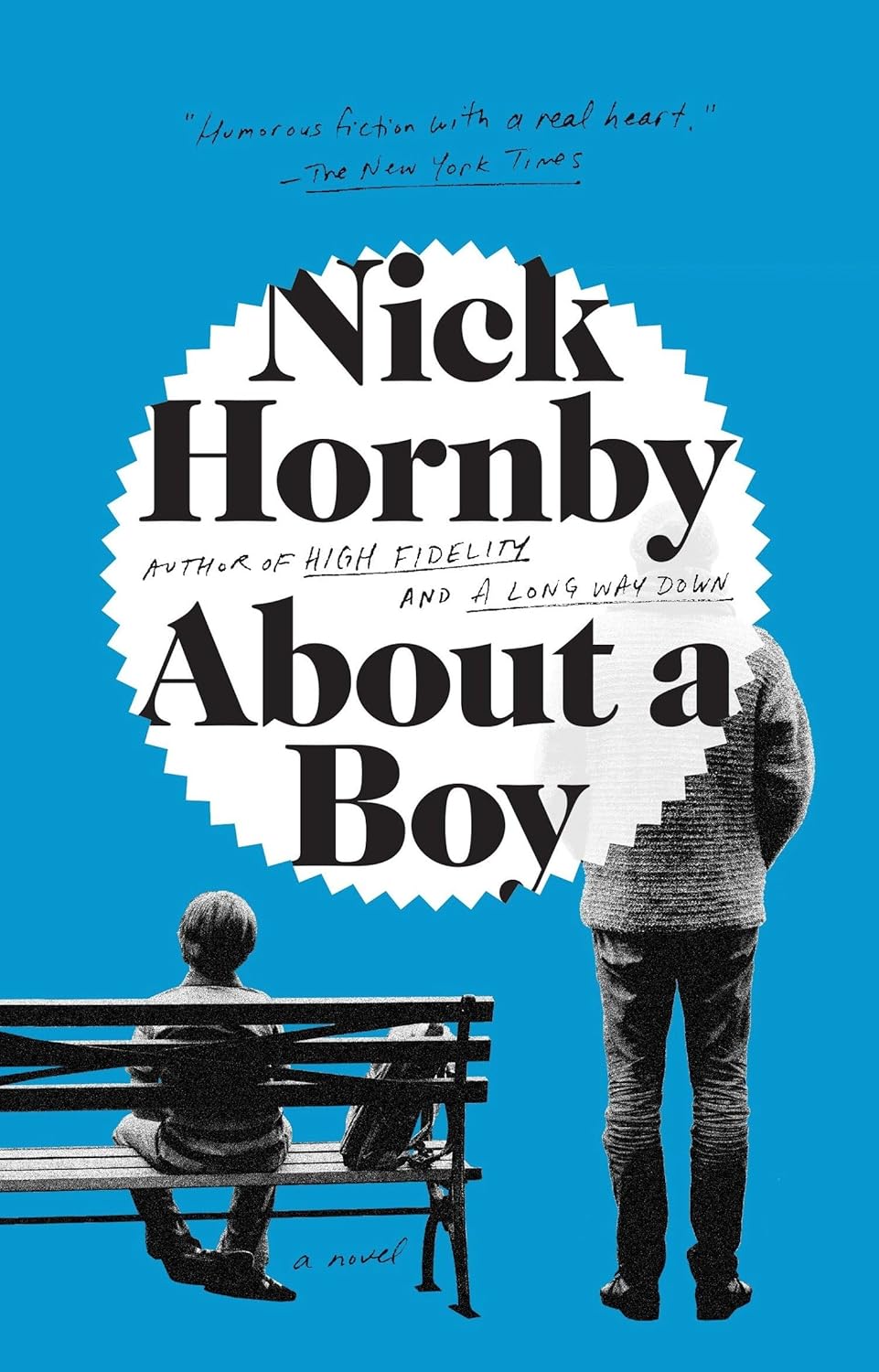

The Story in Brief
Will Freeman is thirty-six years old, financially comfortable thanks to royalties from 'Santa's Super Sleigh' — a Christmas novelty song his father wrote decades ago — and entirely committed to doing nothing that matters. He is charming, shallow, and perfectly happy. Then he meets Marcus Brewer, a strange, earnest twelve-year-old with a suicidal mother named Fiona and no sense of how to navigate childhood. The two of them slowly, reluctantly become necessary to each other.
Nick Hornby's 1998 novel is a comedy about maturity and connection told in alternating chapters from Will and Marcus's perspectives. The Weitz brothers' 2002 film, with Hugh Grant giving one of his finest performances and Nicholas Hoult making his debut at age twelve, is one of the most affectionate and faithful literary adaptations of the early 2000s. It earned Grant a Golden Globe nomination and became a critical and commercial success, grossing over $130 million worldwide.
The story remains culturally significant as one of the few mainstream comedies to treat depression, loneliness, and emotional growth with genuine seriousness while never losing its sense of humor. Both versions understand that growing up is something that happens to adults, too.
| Character | In the Book | In the The Movie |
|---|---|---|
| Will Freeman Hugh Grant |
A thirty-six-year-old man who has refined pleasantness into a defense system so effective he has never had to feel anything difficult. | Grant plays Will with self-awareness the character himself lacks, using his trademark charm as armor rather than appeal. |
| Marcus Brewer Nicholas Hoult |
A genuinely peculiar twelve-year-old raised outside mainstream culture who has no idea how to be normal and is completely unself-conscious about his abnormality. | Hoult captures Marcus's strangeness with remarkable precision, though the film makes him slightly more conventionally sympathetic than Hornby's version. |
| Fiona Brewer Toni Collette |
Marcus's mother, genuinely depressed, oblivious to his struggles at school, and invested in New Age spirituality that doesn't help her. | Collette plays Fiona's depression with careful restraint, though the film gives her less texture and fewer complications than the novel. |
| Rachel Rachel Weisz |
A single mother Will dates who becomes the catalyst for his genuine emotional growth. | Weisz brings warmth and intelligence to Rachel, making her more than a plot device for Will's transformation. |
| Ellie Natalia Tena |
Marcus's friend, a teenage Kurt Cobain obsessive who is fierce, loyal, and completely uninterested in being likable. | Tena plays Ellie with the right amount of teenage intensity, though the film softens her edges slightly. |
Key Differences
The dual first-person narration is preserved through voiceover
Hornby alternates between Will and Marcus's first-person perspectives — a structural choice that gives both characters equal interiority and equal comedy. The reader inhabits Will's determined superficiality and Marcus's bewildered earnestness with equal intimacy.
The film uses voiceover narration from both characters, which preserves more of this dual perspective than most adaptations manage. Grant's voiceover captures Will's self-satisfied detachment, while Hoult's captures Marcus's confusion. It is one of the film's most faithful structural choices and it works.
Hugh Grant plays Will Freeman as a man who has weaponized charm
Grant had spent the 1990s playing variations on charming diffidence, and Will Freeman is the apotheosis of that persona — a man who has refined pleasantness into a defense system so effective he has never had to feel anything difficult. Grant understood this completely and plays it with a self-awareness that the character himself lacks.
The novel's Will is funny because Hornby lets you see the calculation behind the charm. The film's Will is funny because Grant lets you see it too, in the flicker of his eyes before he says something designed to deflect. It is his best performance and one that the novel's Will recognizes completely.
Marcus's strangeness is slightly softened for the screen
Hornby's Marcus is genuinely peculiar — a child raised outside mainstream culture who has no idea how to be normal and is completely unself-conscious about his abnormality. He sings Joni Mitchell songs in public, wears the wrong clothes, and doesn't understand why any of this matters. Nicholas Hoult captures this with remarkable precision for a twelve-year-old debut performance.
The film's Marcus is slightly more conventionally sympathetic than the novel's. He's still strange, but the film gives him more moments of self-awareness and vulnerability. Hornby's version is funnier because his strangeness is more total — he genuinely doesn't know he's weird, which makes his obliviousness both comic and heartbreaking.
Fiona's depression gets careful treatment but less complexity
Marcus's mother Fiona — played by Toni Collette — is genuinely depressed in both versions, and her attempted suicide is the novel's most serious moment. The film handles this carefully and Collette is excellent, playing Fiona's depression as exhaustion rather than melodrama.
The novel gives Fiona's depression more space and more texture. Her relationship with New Age spirituality, her obliviousness to Marcus's struggles at school, her inability to see that her honesty with Marcus about her feelings is a burden he can't carry — all of this makes her more complicated and less purely a plot device. The film's Fiona is sympathetic; the novel's is sympathetic and frustrating, which is more honest.
The ending is warmer in the film, more ambiguous in the novel
Both versions resolve with Will genuinely changed — connected, responsible, willing to be needed. The film's ending is slightly warmer and more conclusive, with Will hosting Christmas dinner for his assembled makeshift family and Marcus performing at the school concert with Will's support.
The novel's ending is more ambiguous about the nature of Will's transformation. Hornby leaves you with the feeling that Will has changed enough, rather than that he has changed completely, which is the more honest conclusion. Will is still Will — he's just Will with people he cares about now, which is all the growth Hornby thinks anyone can reasonably manage.
Either order works genuinely well — this is one of the site's most comfortable either-order recommendations. The film is faithful enough that watching first loses very little, and the novel's dual voiceover adds texture rather than revelation. If you watch first, you'll get Hugh Grant's performance in your head while reading, which is not a bad thing. If you read first, you'll appreciate how well the Weitz brothers understood Hornby's tonal balance.
If you have to choose: read first for the full warmth of Hornby's prose and the sharper edges of Marcus's strangeness, then watch Grant do something with Will that the novel describes but cannot perform. But honestly, flip a coin. Both versions are good enough that the order doesn't matter as much as the fact that you experience both.
Should You Read First?
Either order works genuinely well — this is one of the site's most comfortable either-order recommendations. The film is faithful enough that watching first loses very little, and the novel's dual voiceover adds texture rather than revelation. If you watch first, you'll get Hugh Grant's performance in your head while reading, which is not a bad thing. If you read first, you'll appreciate how well the Weitz brothers understood Hornby's tonal balance.
If you have to choose: read first for the full warmth of Hornby's prose and the sharper edges of Marcus's strangeness, then watch Grant do something with Will that the novel describes but cannot perform. But honestly, flip a coin. Both versions are good enough that the order doesn't matter as much as the fact that you experience both.
Hornby wrote a novel of considerable warmth and comic precision about two people who save each other without intending to. The Weitz brothers made a film that is almost as good — faithful to the spirit, well-cast, and genuinely funny. Hugh Grant has never been better used, and Nicholas Hoult announced himself as an actor to watch. This is one of the closer calls on the site. Read the novel for Hornby's prose and Marcus's full strangeness. Watch the film for Grant's performance and the Weitz brothers' affection for the source. Both versions understand that no man is an island — but some of us need a twelve-year-old to point that out.