The Story in Brief
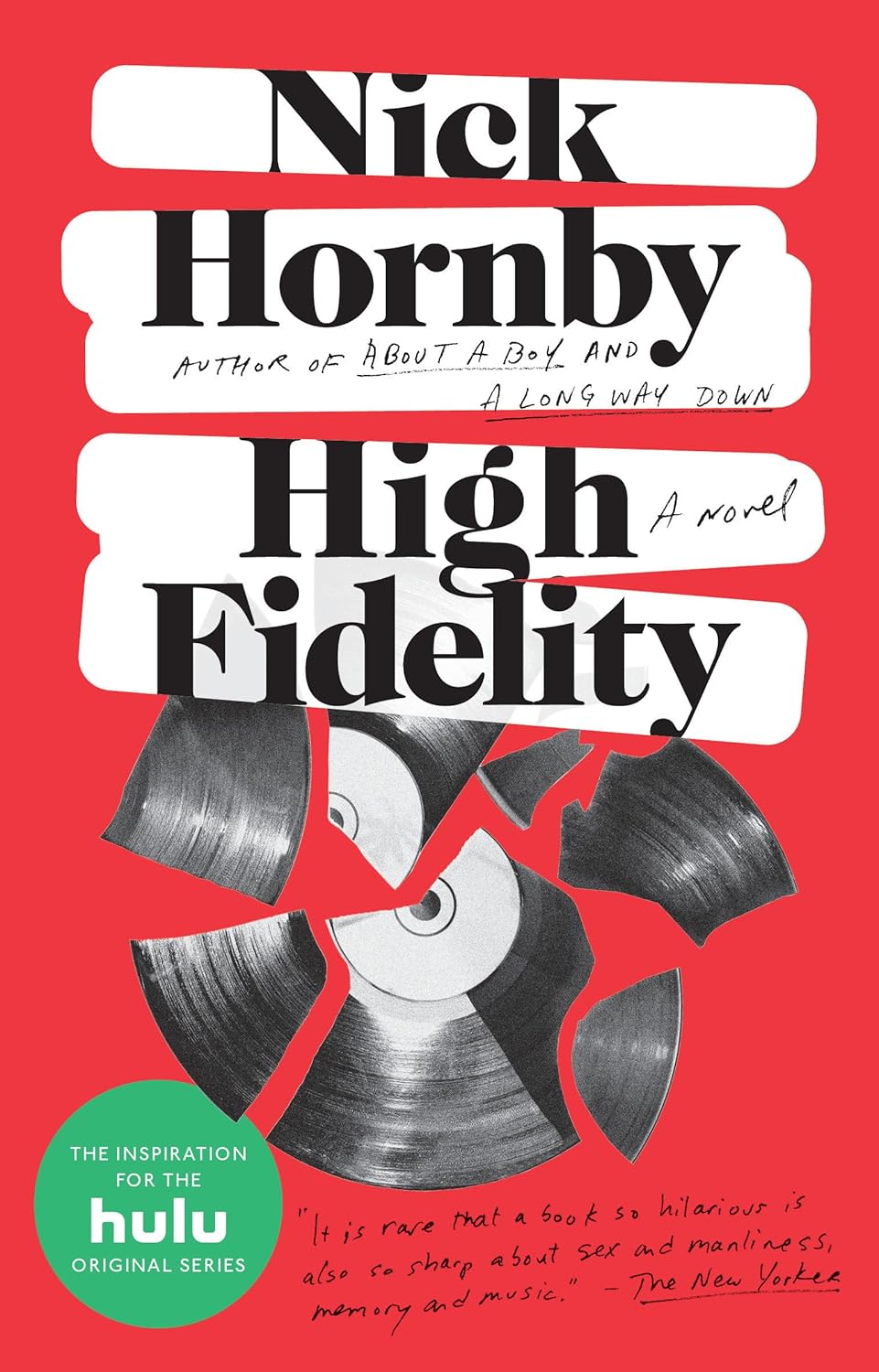
Rob Fleming runs Championship Vinyl, a failing record shop in North London, and has just been dumped by his girlfriend Laura. He responds by compiling a top five list of his worst break-ups, tracking down his exes — Alison Ashworth, Charlie Nicholson, Sarah Kendrew — to find out where he went wrong, and spending a great deal of time thinking about music instead of his own emotional life. His shop assistants, Barry and Dick, are equally obsessed with music and equally useless at human connection.
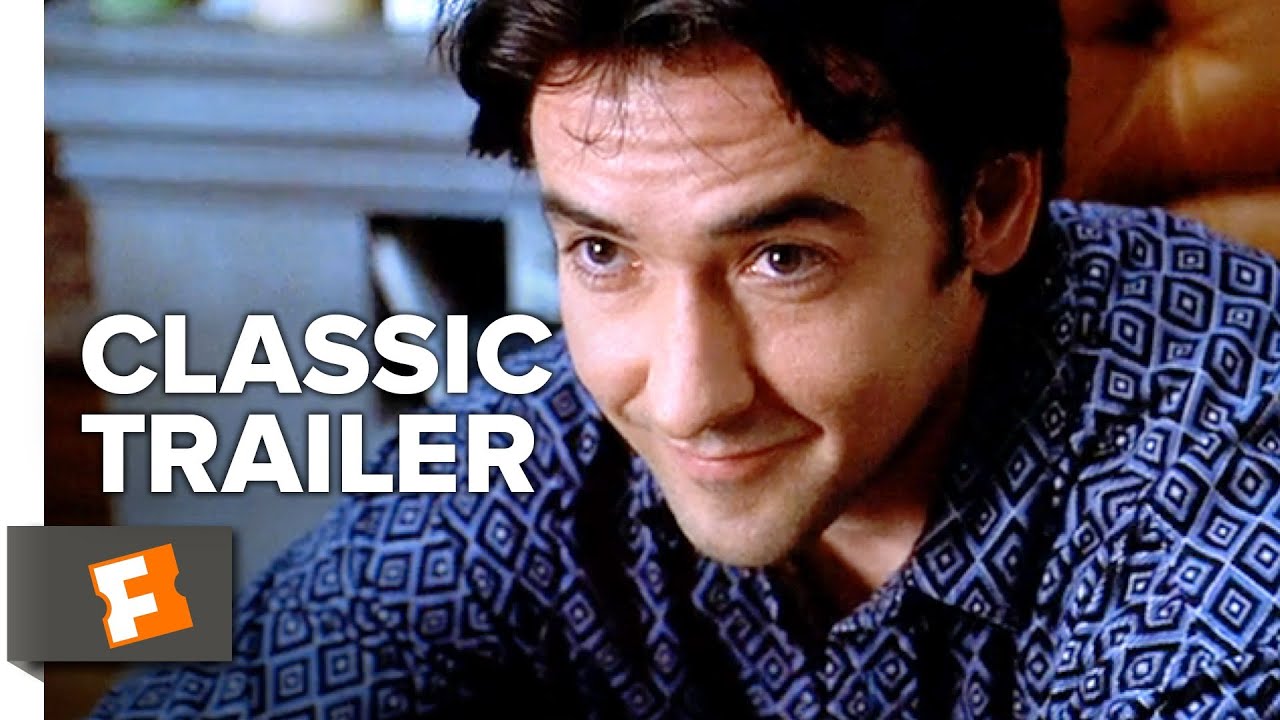
Nick Hornby's 1995 novel is a first-person comedy about a particular kind of man — intelligent, self-aware enough to diagnose his own problems but not quite enough to solve them — and one of the defining works of 1990s literary fiction. Stephen Frears's 2000 film moves the story from London to Chicago, replaces Rob Fleming with Rob Gordon, and casts John Cusack in one of his best performances. The screenplay, co-written by Cusack, D.V. DeVincentis, Steve Pink, and Scott Rosenberg, preserves Hornby's confessional voice through direct-address monologues.
The film was a critical and commercial success, earning praise for its faithful adaptation and Cusack's performance. It has since become a touchstone for discussions of male emotional avoidance and the relationship between popular culture and personal identity. It remains one of the most successful transatlantic literary adaptations in cinema history.
| Character | In the Book | In the The Movie |
|---|---|---|
| Rob Fleming / Rob Gordon John Cusack |
A North London record shop owner in his mid-thirties, self-aware but emotionally stuck, who narrates his own failures with wit and evasion. | A Chicago record shop owner with the same emotional architecture, brought to life by Cusack's direct-address monologues that capture Hornby's confessional voice perfectly. |
| Laura Iben Hjejle |
Rob's girlfriend, rendered through his partial and self-serving account — intelligent, patient, and finally exhausted by his inability to grow up. | More fully present than in the novel, played by Hjejle with weary intelligence and a quality of knowing exactly what Rob is doing and loving him anyway, for too long. |
| Barry Jack Black |
One of Rob's two shop assistants — overbearing, music-obsessed, and vivid but not central to the plot. | Elevated by Jack Black's performance into one of the film's most memorable characters, funnier and more immediately likeable, with significantly more screen time. |
| Dick Todd Louiso |
The quieter, more anxious shop assistant, equally obsessed with music but less aggressive about it. | Played by Louiso with perfect nervous energy, preserving the character's gentle awkwardness and his role as Barry's foil. |
| Ian Raymond / Ian Tim Robbins |
Laura's new boyfriend, a ponytailed New Age therapist whom Rob despises on sight. | Played by Tim Robbins as an insufferably earnest self-help guru, amplifying the comic contrast with Rob's cynicism. |
Key Differences
London vs Chicago — The Transatlantic Shift
The novel is specifically set in North London — Hornby names streets, pubs, and neighborhoods that anchor Rob's world in a particular geography and class texture.
Frears and Cusack moved the story to Chicago, which has its own music culture — blues, house, independent record shops — and its own specific flavour of self-aware urban cool. Championship Vinyl becomes a Wicker Park fixture. The transposition works because Hornby's subject, a certain kind of emotionally avoidant man who uses culture as a shield, is not specifically British. He is universal enough to survive the crossing.
The film loses some of the novel's class-consciousness — the British relationship between education, aspiration, and record shop ownership — but gains Chicago's authentic music history. Remarkably, almost nothing essential is lost.
Rob's Direct Address to Camera
The novel is written in Rob's first person — a confessional, self-deprecating voice that is aware of its own evasions and uses humor to deflect genuine feeling.
The film gives Cusack extended direct address to the camera. Rob talks to the audience as he talks to himself in the novel, explaining his situation, making his lists, rationalising his behaviour. He breaks the fourth wall constantly, turning the viewer into his confidant and accomplice.
This is exactly the right adaptation of the prose voice into cinematic terms. Cusack's delivery of these monologues — wry, self-aware, occasionally desperate — is the film's greatest achievement. It preserves Hornby's tone without resorting to voiceover narration.
Jack Black's Barry — From Supporting to Scene-Stealing
Barry is a supporting character in the novel, vivid but not central. He argues about music, insults customers, and represents one version of what Rob might become if he never grows up.
Jack Black's performance made Barry one of the most memorable supporting characters in the film's era. Black's Barry is funnier, more physically expressive, and more immediately likeable than Hornby's. He gets extended comic sequences — the argument about whether to sell a record to a customer, his karaoke performance of Marvin Gaye's "Let's Get It On" — that shift the story's balance slightly toward ensemble comedy.
This is a slight distortion of the novel's emotional architecture, which keeps Rob at the center, but an undeniable pleasure. Black earned the role a prominence that influenced how audiences remember the story.
The Music — Soundtrack as Argument
Hornby's novel is saturated with specific musical references. Rob stocks obscure singles, compiles top five lists of songs for every occasion, and uses music as a way of organizing his emotional history. The novel names dozens of artists — The Clash, Aretha Franklin, The Velvet Underground — and treats musical taste as a form of identity.
The film uses licensed music throughout and includes a genuinely brilliant sequence in which Rob, Barry, and Dick debate the merits of various songs while processing Rob's grief. The soundtrack — curated by Cusack and featuring The Kinks, Bob Dylan, Stevie Wonder, and others — is impeccable. The film adds a subplot in which Rob produces a single for a local musician, giving the music a narrative function beyond decoration.
Both versions understand that the music is not decoration but argument — evidence of how Rob thinks and what he uses thinking for. The film's soundtrack became iconic in its own right.
Laura — From Partial Account to Full Presence
Hornby's Laura is rendered through Rob's partial and self-serving account of her. We see her only as Rob sees her, which makes her both more mysterious and more sympathetic than his version admits. The novel's structure — Rob's first-person narration — means we never fully escape his perspective.
Iben Hjejle plays Laura with a quality of weary intelligence. The film gives her scenes without Rob, moments where we see her making decisions independent of his narrative. She is more fully present, which is warmer and slightly reduces the gap between Rob's version of events and the truth.
This is a necessary adaptation choice — film requires characters to exist outside the narrator's gaze — but it changes the novel's epistemological game. Hornby's Laura is unknowable because Rob is an unreliable narrator. The film's Laura is knowable, which makes her more human but less enigmatic.
Either order works — this is one of the most comfortable either-order recommendations on the site, alongside About a Boy. The film is so faithful in spirit that watching first loses almost nothing. You will still experience the novel's wit, its specific observations about music and masculinity, and Hornby's prose style, which is sharper and more interior than the film can be. Read first for the full texture of Rob's London voice and the novel's class-consciousness.
Watch first for Cusack's monologues, Jack Black's Barry, and the impeccable soundtrack. The film is a complete experience on its own terms, and knowing the plot does not diminish the novel's pleasures. Both versions are essential. This is one of the rare cases where you can genuinely choose based on mood rather than strategy.
Should You Read First?
Either order works — this is one of the most comfortable either-order recommendations on the site, alongside About a Boy. The film is so faithful in spirit that watching first loses almost nothing. You will still experience the novel's wit, its specific observations about music and masculinity, and Hornby's prose style, which is sharper and more interior than the film can be. Read first for the full texture of Rob's London voice and the novel's class-consciousness.
Watch first for Cusack's monologues, Jack Black's Barry, and the impeccable soundtrack. The film is a complete experience on its own terms, and knowing the plot does not diminish the novel's pleasures. Both versions are essential. This is one of the rare cases where you can genuinely choose based on mood rather than strategy.
Hornby wrote a novel about a man who uses music and lists to avoid feeling anything genuinely difficult. Frears and Cusack made a film that is as good — moving the story from London to Chicago without losing anything essential and finding the perfect visual equivalent for Rob's confessional first-person voice. One of the most successful transatlantic literary adaptations in cinema. A genuine tie. Read the novel. See the film. Make your own top five list of which you prefer.