The Story in Brief
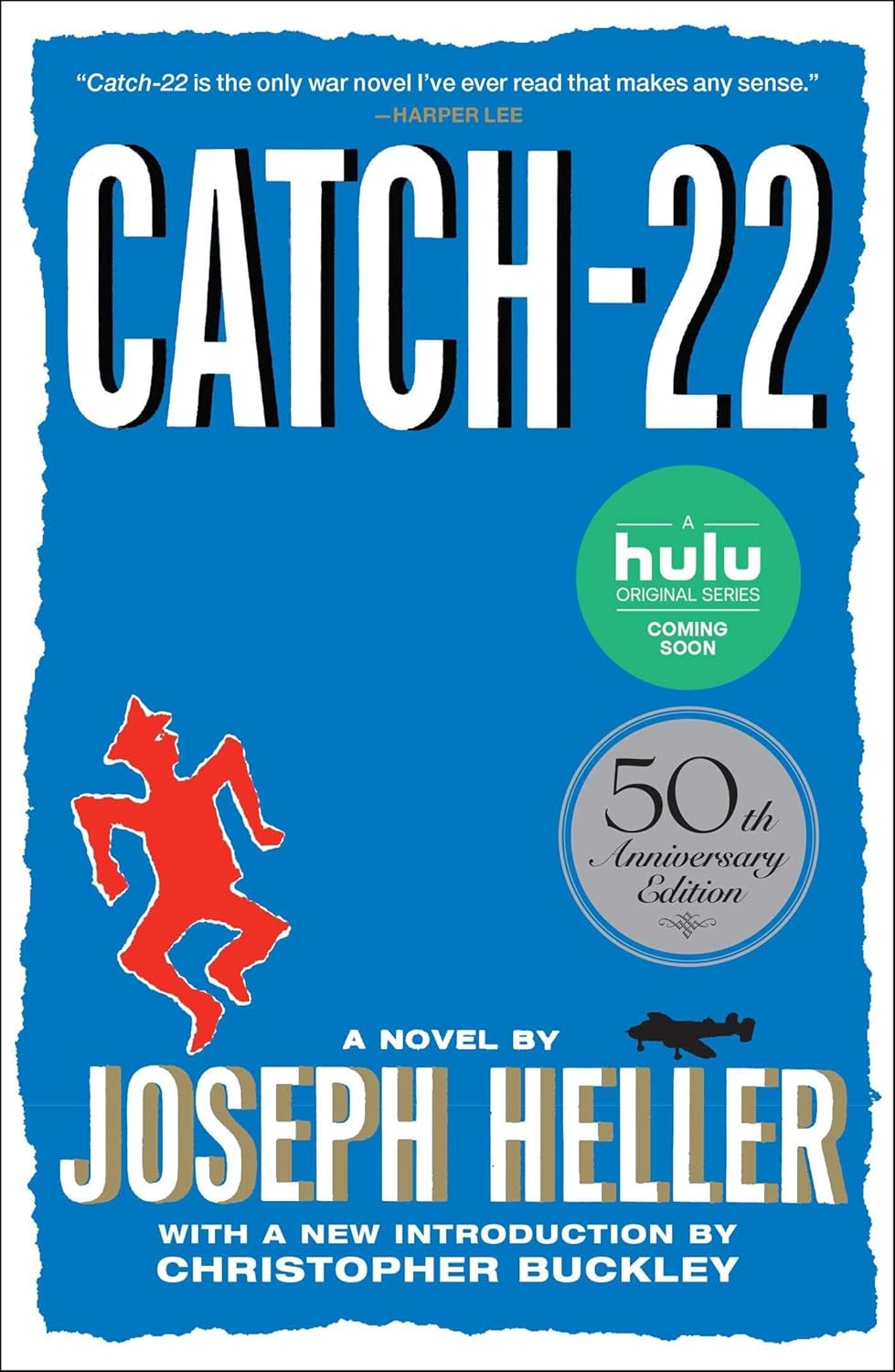
Captain John Yossarian is a US Army Air Forces bombardier stationed on the fictional island of Pianosa during World War II. He is perfectly sane and desperately wants to stop flying combat missions. The catch — Catch-22 — is the rule that says any man who wants to be grounded must be crazy, but asking to be grounded proves he is sane, and therefore he must keep flying.
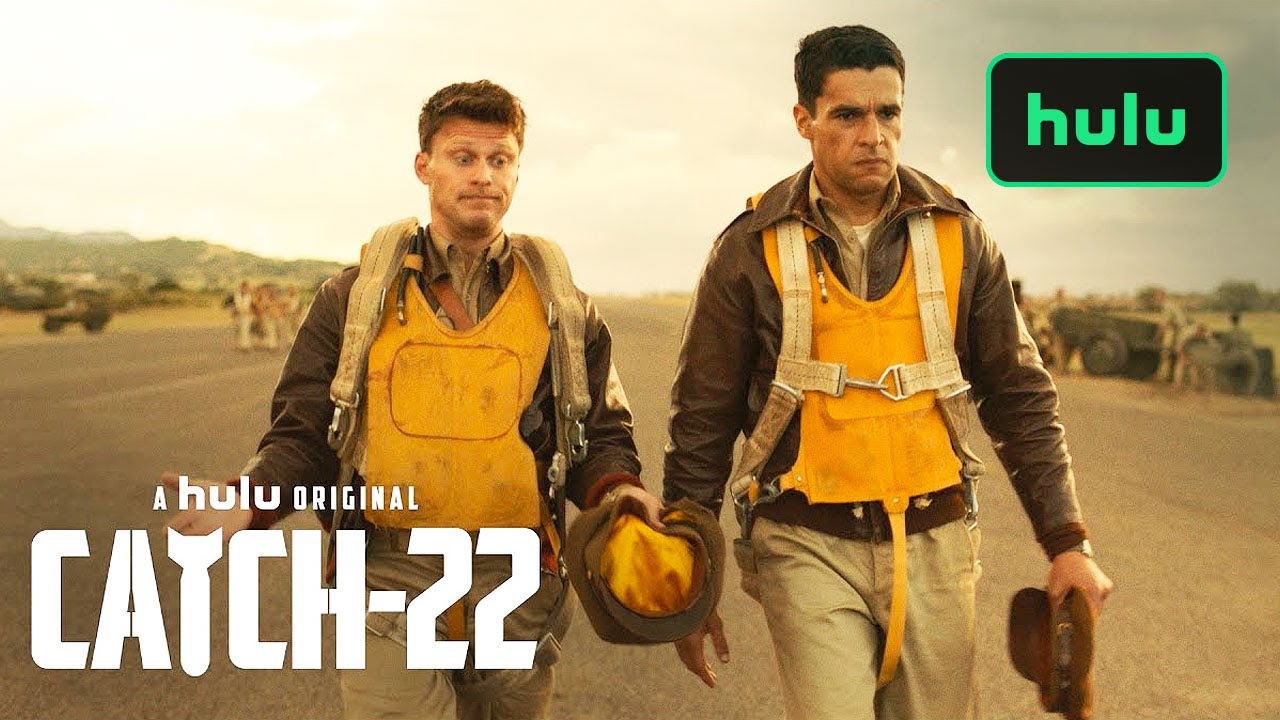
Joseph Heller's 1961 novel is one of the great American satirical novels, a fractured, circular, darkly funny indictment of military bureaucracy, capitalism, and the organised insanity of war. Mike Nichols's 1970 film, made at the height of Vietnam-era anti-war sentiment, assembles an extraordinary cast — Alan Arkin, Jon Voight, Orson Welles, Martin Balsam, Bob Newhart, Anthony Perkins — and is faithful to the novel's scenes without capturing its cumulative logic. The 2019 Hulu series, with George Clooney directing several episodes and Christopher Abbott as Yossarian, gets considerably closer to the novel's tonal range and narrative structure.
The novel became a cultural phenomenon, adding "Catch-22" to the language as shorthand for absurd bureaucratic logic. It was initially met with mixed reviews but found its audience during the Vietnam War, when its anti-authoritarian satire resonated with a generation questioning military intervention.
| Character | In the Book | In the The Movie |
|---|---|---|
| Captain John Yossarian Alan Arkin (1970) / Christopher Abbott (2019) |
A bombardier who recognizes the insanity around him and desperately seeks escape through any loophole he can find. | Arkin plays him with weary exasperation; Abbott brings more vulnerability and terror to the role across six episodes. |
| Milo Minderbinder Jon Voight (1970) / Daniel David Stewart (2019) |
The mess officer whose private trading syndicate grows into a war-profiteering empire that contracts with both sides. | Voight plays him with cheerful, amoral conviction; the series gives his arc more development but less screen time. |
| Major Major Major Major Bob Newhart (1970) / Lewis Pullman (2019) |
A man promoted to major because of his unfortunate name, who hides in his office to avoid responsibility. | Newhart's deadpan delivery is perfect for the absurdity; Pullman plays him with more pathos in the series. |
| Colonel Cathcart Martin Balsam (1970) / Kyle Chandler (2019) |
The commanding officer who keeps raising the number of required missions to impress his superiors. | Balsam captures his petty ambition; Chandler brings more menace and desperation to the role. |
| Doc Daneeka Jack Gilford (1970) / Grant Heslov (2019) |
The flight surgeon who explains Catch-22 to Yossarian and is later declared dead due to bureaucratic error. | Gilford plays him with hangdog resignation; Heslov emphasizes his self-pity and moral cowardice. |
Key Differences
The novel's circular structure is the argument itself
Heller's novel is deliberately non-linear and self-referential — it circles back to the same events from different angles, withholds information until it can be deployed for maximum impact, and builds its satire through repetition and variation rather than conventional plot progression. The experience of reading it is the experience of being caught in the same illogic as Yossarian.
Both the film and the series impose more conventional narrative order, which makes them comprehensible and loses the formal enactment of the novel's argument. The 1970 film presents events as a series of set pieces. The 2019 series uses flashbacks and some structural play, but still moves forward chronologically in ways the novel refuses to do.
The 1970 film has a perfect cast trapped in an imperfect structure
Nichols assembled one of the great ensemble casts in American cinema. Alan Arkin as Yossarian, Jon Voight as Milo Minderbinder, Orson Welles as General Dreedle, Martin Balsam as Colonel Cathcart, Bob Newhart as Major Major, Anthony Perkins as Chaplain Tappman — every performance is right. The film's problem is not its cast but its structure.
Presented as a series of set pieces rather than an accumulating argument, it plays as a collection of excellent scenes from a better source. Individual moments land — Milo's explanation of his syndicate, Major Major's office evasions, Yossarian's hospital scenes — but they don't build the way they do in the novel.
The 2019 Hulu series is the better adaptation
George Clooney's six-episode series has more time and uses it intelligently. It can develop characters that the film reduces to cameos — Nately, Dunbar, Hungry Joe — and sustain the novel's tonal range across episodes rather than compressing it into two hours. Christopher Abbott's Yossarian is more fully inhabited than Arkin's, showing the character's progression from cynical survivor to genuinely traumatized witness.
The series' darker final episodes approach the horror beneath the comedy that Heller builds to in the novel's last hundred pages. The Rome sequence, where Yossarian wanders through a nightmarish city, is more effectively realized here than in the film. It is the better screen adaptation of the two, though still not a replacement for the novel.
Milo Minderbinder's escalating capitalism
Milo — the mess officer who builds a private trading empire that eventually contracts with both sides of the war to bomb his own squadron — is Heller's most savage satirical creation, a pure embodiment of capitalism's amorality. In the novel, his logic escalates across hundreds of pages, each new deal more absurd and more horrifying than the last, until he is literally profiting from killing his own men.
Jon Voight plays him with cheerful conviction in the film, and the bombing of the squadron is included, but without the novel's sustained escalation the moment arrives without full impact. The series gives him more space to develop but less screen time overall. Neither version fully captures the accumulating horror of Milo's logic in the novel.
Snowden's secret and the novel's withheld revelation
The novel withholds the full account of what happened to Snowden — the dying gunner whose fate Yossarian witnessed over Avignon — until the final pages, where the revelation reframes everything that came before. Heller deploys this with extraordinary precision: we know something happened, we get fragments, and then in the final chapter we get the full horror.
Both screen versions handle Snowden's story, but without the novel's sustained withholding across 400 pages the moment cannot carry the same weight. The 2019 series comes closer, using flashbacks to build toward the full scene, but it still arrives too early and without the novel's devastating context. Snowden's secret — "Man was matter" — is the novel's final statement, and it needs the full weight of everything before it.
Yes — emphatically. The novel's circular structure is the argument, and reading it is the only way to experience Heller's formal achievement. The early chapters can be disorienting because Heller introduces characters and events without context, circling back to them later. The novel requires patience, but the accumulation is worth it. By the final third, the structure's purpose becomes clear and the payoff is devastating.
Watch the 2019 Hulu series after rather than the 1970 film — it is the more faithful and more satisfying adaptation, with stronger performances and a better grasp of the novel's tonal range. But read the novel first. The screen versions are commentaries on a text that cannot be replaced.
Should You Read First?
Yes — emphatically. The novel's circular structure is the argument, and reading it is the only way to experience Heller's formal achievement. The early chapters can be disorienting because Heller introduces characters and events without context, circling back to them later. The novel requires patience, but the accumulation is worth it. By the final third, the structure's purpose becomes clear and the payoff is devastating.
Watch the 2019 Hulu series after rather than the 1970 film — it is the more faithful and more satisfying adaptation, with stronger performances and a better grasp of the novel's tonal range. But read the novel first. The screen versions are commentaries on a text that cannot be replaced.
Heller wrote a novel whose anti-logic is the anti-logic of war itself — circular, self-defeating, darkly funny, and finally devastating. Nichols's film is a faithful collection of the novel's scenes without its accumulative effect. The 2019 Hulu series gets considerably closer, with more time to develop characters and a better grasp of the novel's horror. The novel remains irreplaceable. Read it. Then watch Clooney's series. The 1970 film is for completists and Orson Welles completists.