The Story in Brief
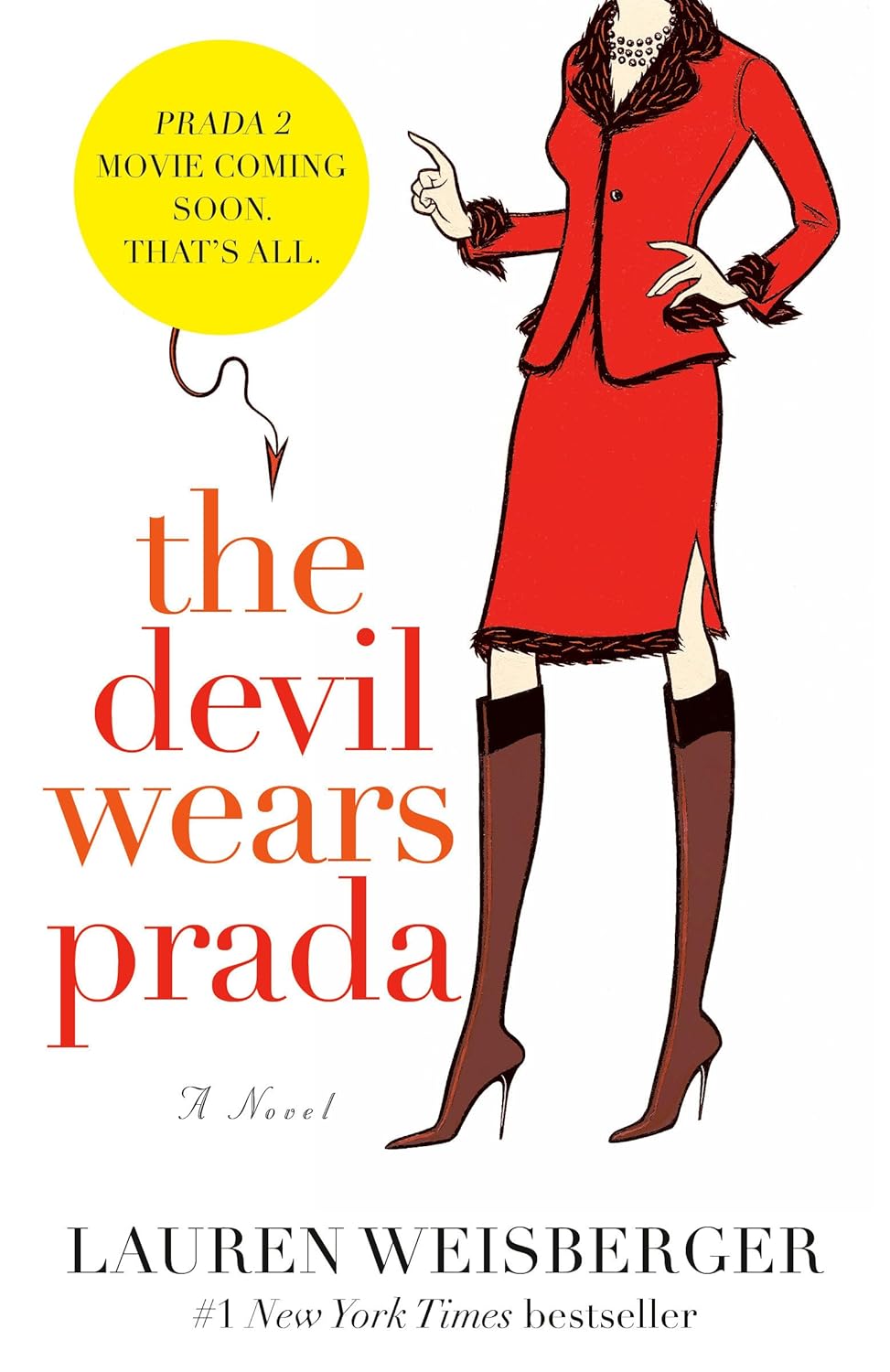
Lauren Weisberger's 2003 debut novel follows Andy Sachs, an aspiring journalist who lands a job as assistant to Miranda Priestly, the glacial editor-in-chief of Runway magazine. What begins as a temporary gig to fund her real career becomes a descent into the high-stakes, aesthetically brutal world of high fashion, where a misplaced comma or unflattering handbag can trigger professional catastrophe. The novel is a thinly veiled roman à clef about Weisberger's own time as an assistant to Vogue's Anna Wintour—a detail that gave the book immediate cultural currency and tabloid intrigue.
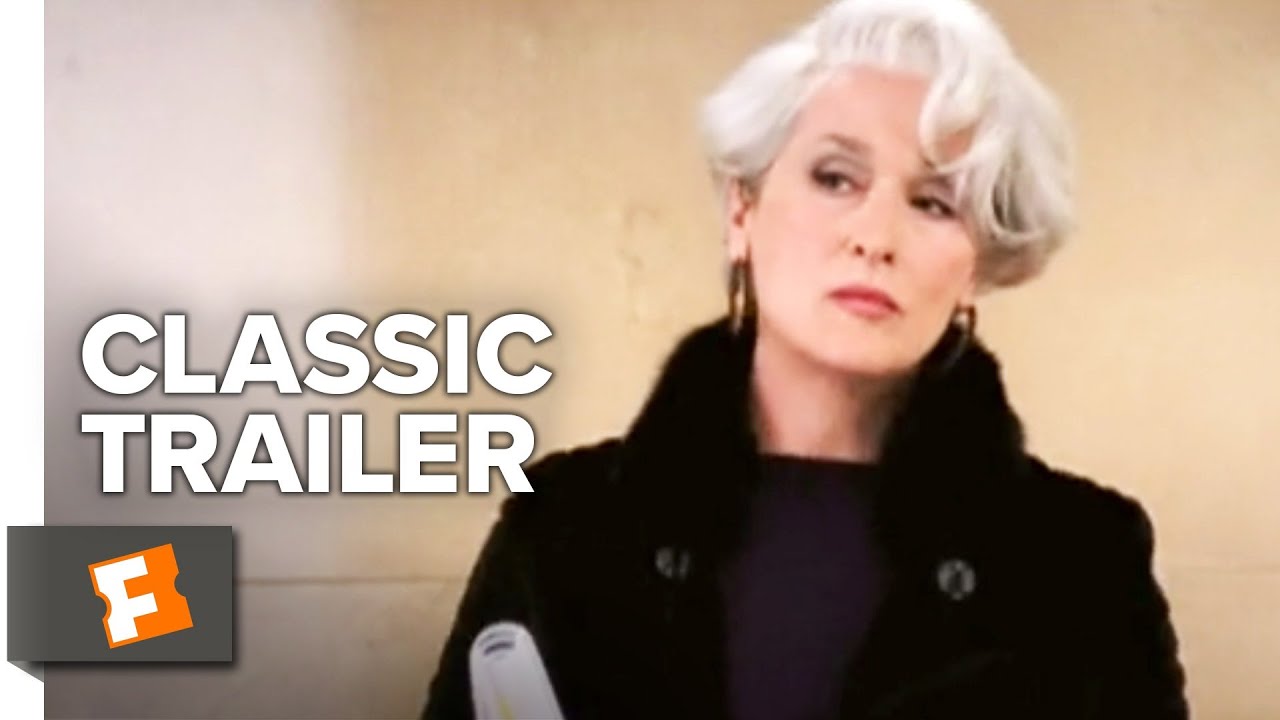
David Frankel's 2006 film adaptation, starring Meryl Streep as Miranda and Anne Hathaway as Andy, transforms Weisberger's workplace satire into something more generous and cinematically elegant. The film softens the novel's cynicism without losing its bite, turning what could have been a simple cautionary tale into a more nuanced exploration of ambition, mentorship, and the seductive danger of professional compromise. Both versions ask the same essential question: what are you willing to sacrifice for success? But they arrive at surprisingly different answers.
| Character | In the Book | In the The Film |
|---|---|---|
| Miranda Priestly Meryl Streep |
A terrifying, almost supernatural figure of pure professional will—described through Andy's fear and awe. Weisberger's Miranda is primarily a force of nature, a woman whose power derives from her inscrutability and the chaos she generates. She's rarely given interiority; she exists as a test Andy must pass. | Streep's Miranda is a fully realized human being beneath the armor—a woman of genuine taste, intelligence, and loneliness. The film grants her moments of vulnerability and even warmth, suggesting that her cruelty is not sadism but a defense mechanism. Streep's performance transforms Miranda from a caricature into a tragic figure. |
| Andy Sachs Anne Hathaway |
A more passive, resentful protagonist who narrates her own victimization. Weisberger's Andy is frequently self-pitying and judgmental, viewing the fashion world as inherently shallow and corrupt. She maintains moral superiority even as she's compromised by the job, creating a protagonist who is sympathetic but not particularly likable. | Hathaway's Andy is more active and self-aware, capable of genuine growth and complicity. The film version shows Andy actively choosing the job, actively learning, and actively becoming someone different—not a victim of circumstance but an agent of her own transformation. She's more vulnerable and more ambitious simultaneously. |
| Emily Charlton Emily Blunt |
A one-dimensional mean girl—the embodiment of fashion-world toxicity. Weisberger's Emily exists primarily to make Andy look good by comparison, a cautionary tale of someone who has fully surrendered to the industry's demands. She's brittle, competitive, and ultimately pathetic. | Blunt's Emily is a complex portrait of ambition and insecurity. The film shows her as someone genuinely talented at her job, genuinely hurt by Andy's ascent, and genuinely trapped by her own choices. She becomes a mirror to Andy rather than a foil, suggesting that both women are caught in the same system. |
| Nate Archibald Adrian Grenier |
Andy's boyfriend represents the 'real world' and authentic values that the fashion industry supposedly corrupts. He's positioned as morally superior to Andy's new world, a voice of reason and stability. The novel uses him to reinforce Andy's guilt about her professional ambitions. | The film treats Nate with more complexity and less sentimentality. He's not wrong to feel abandoned, but the film doesn't position his values as inherently superior to Andy's ambitions. His breakup with Andy feels like a genuine incompatibility rather than a moral judgment. |
| Donatella Versace Donatella Versace (cameo) |
Mentioned only as a distant celebrity figure, part of the glamorous world Andy is entering. She exists as a name, not a character—a symbol of the industry's untouchable elite. | Appears as herself in a brief but significant scene, grounding the film's world in actual fashion-industry reality. The cameo suggests that the film's satire is not mean-spirited but affectionate, acknowledging the real talent and artistry within the industry that the novel dismisses. |
Key Differences
The novel is a revenge fantasy; the film is a love story
Weisberger's book is structured as a confessional—Andy telling us how she was wronged, how the fashion industry corrupted her, how she ultimately escaped with her values intact. The narrative arc is fundamentally about vindication: Andy proves she's better than this world by rejecting it. Miranda is the villain, the fashion industry is the villain, and Andy's redemption comes through returning to 'real' journalism and 'real' relationships.
Frankel's film reframes the entire dynamic as a mentorship story. Yes, Miranda is demanding and cold, but the film suggests she's also teaching Andy something valuable about excellence, commitment, and the cost of ambition. The film's ending—where Andy chooses to leave but does so with gratitude and understanding rather than bitterness—transforms the narrative from revenge into something closer to a love story between two women who fundamentally changed each other.
The book treats fashion as inherently corrupt; the film respects the craft
Weisberger's novel is built on a fundamental contempt for the fashion industry. Every detail about Runway magazine, every fashion choice, every industry conversation is presented as ridiculous, superficial, and morally bankrupt. Andy's disgust is the novel's moral center. The book's satire works by positioning fashion as objectively silly—a world of people obsessing over things that don't matter.
The film, by contrast, takes fashion seriously as a craft and an art form. The montages of clothes, the discussions of design, the visual language of the film itself—all treat fashion as genuinely beautiful and skillfully made. When Andy learns to appreciate fashion, the film suggests she's not being corrupted but educated. This is a fundamentally different moral stance: the film argues that excellence in any field—even fashion—deserves respect.
The novel emphasizes Andy's victimization; the film emphasizes her agency
In Weisberger's book, Andy is repeatedly positioned as a passive victim of circumstance. She takes the job because she needs money. She stays because she's trapped. She becomes someone else because the system demands it. The novel's emotional core is Andy's helplessness—she's a good person caught in a bad situation, and the situation corrupts her despite her best intentions. Her complicity is presented as inevitable and tragic.
Frankel's film shows Andy actively choosing, learning, and becoming. She takes the job knowing what it will demand. She stays because she's genuinely interested. She transforms herself because she wants to succeed. The film doesn't absolve her of responsibility for her choices—it actually makes her more culpable and therefore more interesting. By showing Andy as an agent rather than a victim, the film makes her arc more complex and her final decision more meaningful.
The book's ending is escape; the film's ending is integration
Weisberger's novel concludes with Andy quitting Runway and returning to her 'real' life—journalism, her boyfriend, her authentic self. The ending is presented as a triumph: she's escaped the corruption, reclaimed her values, and proven that she's better than the fashion world. There's a clear before-and-after structure, with the implication that her time at Runway was a detour from her true path.
The film's ending is more ambiguous and mature. Andy leaves Runway, but she's not returning to who she was. She's integrated what she learned, taken the skills and perspective Miranda taught her, and moved forward as a changed person. She doesn't reject fashion or Miranda; she simply moves on to the next chapter. The film suggests that growth isn't about returning to your starting point but about carrying forward what you've learned.
The novel is told entirely from Andy's perspective; the film gives Miranda interiority
Because Weisberger's novel is a first-person narrative, we never see Miranda except through Andy's fear and misunderstanding. We don't know what Miranda thinks, feels, or wants beyond her professional demands. This narrative structure makes Miranda a mystery—powerful precisely because she's unknowable. The novel's satire depends on this: Miranda is funny because she's incomprehensible, because her priorities seem alien and absurd.
The film, working in a visual medium, can show us Miranda's face, her reactions, her moments alone. Streep's performance—particularly in scenes where she's not performing for anyone—reveals a woman who is lonely, intelligent, and shaped by the same system that shapes Andy. The film doesn't explain Miranda away or make her sympathetic in a sentimental way, but it does grant her the complexity of a full human being. This is a more generous approach to satire: you can mock the system without denying the humanity of the people trapped in it.
Should You Read First?
The film is the better entry point. Frankel's adaptation is more generous and more cinematically sophisticated than Weisberger's novel, and it works perfectly well as a standalone experience. If you watch the film first, you'll appreciate the novel's sharper satirical edge and Andy's more acidic narration. If you read the novel first, you might find the film's warmth and complexity feel like a betrayal of the book's cynicism—which would be a shame, because the film is actually the more interesting work. The novel is a solid roman à clef with genuine insider details about the fashion world, but it's also somewhat one-note in its contempt. The film trusts the audience to understand the satire without needing Andy to explain how much she dislikes everything.
The film wins because it understands something the novel doesn't: that satire works better when you respect your subject. Weisberger's book is a revenge fantasy dressed up as satire, built on the assumption that fashion is inherently ridiculous and that anyone who cares about it is shallow. Frankel's film is actually satirical—it mocks the industry's excesses while acknowledging the genuine artistry and intelligence within it. More importantly, the film transforms Miranda Priestly from a caricature into a fully realized human being, which makes the story infinitely more interesting. Streep's performance alone—the way she conveys Miranda's loneliness, her intelligence, her capacity for cruelty born from perfectionism—elevates the entire enterprise. The film also trusts its audience in a way the novel doesn't, allowing us to draw our own conclusions about Andy's transformation rather than having her narrate her own victimization. It's a rare case where the adaptation is not just better than the source material but actually smarter about what the story is really about.