
The Story in Brief
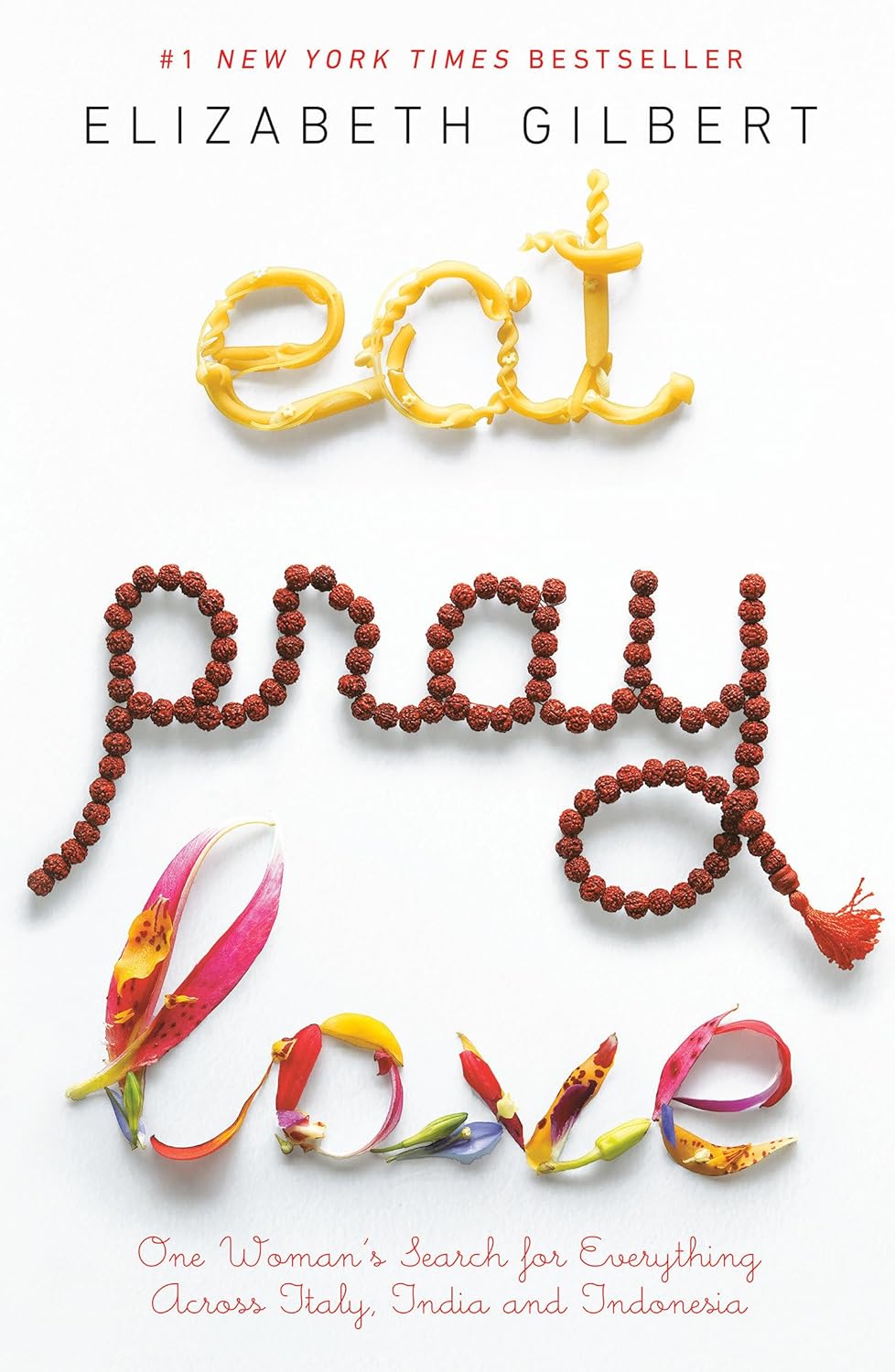
After a painful divorce from her husband and a devastating affair with a younger man named David, Elizabeth Gilbert spends a year travelling — four months eating in Italy, four months praying at an ashram in India, and four months in Bali, where she falls in love with Felipe, a Brazilian businessman. Gilbert's 2006 memoir is a first-person account of spiritual and emotional recovery, written with wit, self-deprecation, and genuine intellectual engagement with meditation, yoga philosophy, and Balinese spirituality.
Ryan Murphy's 2010 film, with Julia Roberts as Gilbert, follows the same geographical journey and hits the major narrative beats — the pizza in Naples, the meditation struggles at the ashram, the romance with Felipe (Javier Bardem). The film is lush, sympathetic, and visually gorgeous. It was a commercial success, grossing over $200 million worldwide, and introduced Gilbert's story to millions who never read the memoir.
The book became a cultural phenomenon, spending 199 weeks on the New York Times bestseller list and inspiring a wave of self-discovery travel narratives. The film solidified its place in popular culture but could not replicate the voice that made the memoir so compelling.
Cast & Characters
| Character | In the Book | In the Film |
|---|---|---|
| Elizabeth Gilbert Julia Roberts |
A writer in her early thirties, genuinely frightened and lost, with a voice that is funny, self-aware, and intellectually curious. | Roberts brings warmth and charm but is visibly a movie star on vacation — less vulnerable, more glamorous than the memoir's Gilbert. |
| Felipe Javier Bardem |
A Brazilian businessman living in Bali, older and divorced, who becomes Gilbert's romantic partner — described with affection and specificity. | Bardem plays Felipe with gentle charm and warmth, though the character is less developed than in the memoir. |
| Richard from Texas Richard Jenkins |
A fellow ashram resident who becomes Gilbert's friend and spiritual mentor, offering blunt wisdom and humor. | Jenkins delivers the film's best performance — grounded, funny, and emotionally honest in a way that matches the book's tone. |
| Ketut Liyer Hadi Subiyanto |
A Balinese medicine man Gilbert visits for spiritual guidance — portrayed with respect and genuine curiosity about his practice. | The film treats Ketut as a wise, mystical figure but simplifies his role into a narrative device rather than a fully realized person. |
| Wayan Christine Hakim |
A Balinese healer and single mother whom Gilbert helps buy a house — their friendship is given substantial attention and emotional weight. | Wayan's story is condensed in the film, losing much of the complexity and urgency that Gilbert describes in the memoir. |
Key Differences
Gilbert's Voice Is the Book's Primary Pleasure
The memoir is written in a voice of considerable charm and self-awareness — Gilbert is funny about herself, rigorous about her own failures, and genuinely curious about the spiritual traditions she encounters. She describes her divorce as "sobbing so hard that a great lake of tears and snot was spreading before me on the bathroom tiles," and her meditation practice as "like trying to nail a blob of mercury to the wall."
This voice is the book's primary pleasure. Julia Roberts is one of cinema's most charming performers, and she brings warmth and intelligence to the role. But she cannot replicate a voice that exists in sentences, in the rhythm of Gilbert's self-deprecation and intellectual engagement.
The film gives us Roberts looking thoughtful in beautiful locations. The book gives us Gilbert thinking on the page.
The Spiritual Dimension Is Rendered as Atmosphere
Gilbert's engagement with meditation, yoga philosophy, and Balinese spirituality is given real intellectual weight in the memoir. She reads the Bhagavad Gita, studies Sanskrit, and writes seriously about the difficulty of sitting still with your own mind. She describes her breakthrough meditation experience in India with precision: "I witnessed the first movement of what Yogis call Kundalini Shakti — the energy of the universe that lives within each of us."
The film renders the spiritual dimension as atmosphere and feeling. Roberts sits cross-legged, looks serene, and has a single breakthrough moment that is visually beautiful but intellectually shallow. The film shows meditation; the book explains what it feels like to fail at meditation for weeks before something shifts.
Julia Roberts Is Both Asset and Obstacle
Roberts's presence works both for and against the film. She is warm and luminous and makes Gilbert immediately sympathetic. Her performance is generous and committed, and she carries the film with ease.
But she is also visibly Julia Roberts in Italy, which makes it difficult to believe in the vulnerability and lostness that the memoir's Gilbert actually experienced. The memoir's Gilbert is broke, frightened, and genuinely uncertain about her future. Roberts, even in her most vulnerable moments, radiates movie-star confidence.
The film's Gilbert is sad; the book's Gilbert is terrified. That difference matters.
Italy Works Because the Pleasures Are Visual
Both versions make Italy glorious — the food, the light, the language lessons with Luca Spaghetti (yes, that's his real name), the pleasure of doing nothing important very slowly. Gilbert eats pizza in Naples, learns Italian in Rome, and befriends a Swedish woman named Sofie. The film captures all of this beautifully.
The film's Italy is the most effective section because the pleasures are visual and don't require interiority. Eat is the easiest third to adapt. You can film someone eating pasta and speaking broken Italian. You cannot film someone thinking about why she's eating pasta and what it means to choose pleasure after years of self-denial.
The Memoir's Formal Structure Is Lost
Gilbert structures the memoir around 108 sections — one for each bead on a japa mala, the prayer beads used in meditation. This gives the book a formal shape that mirrors the spiritual practice she's learning. Each section is short, focused, and builds toward a larger understanding.
The film follows the geographical structure (Italy, India, Bali) but loses the precise formal architecture underneath it. The result is a more conventional three-act structure that feels less intentional, less shaped by the spiritual journey it's depicting.
Should You Read First?
Yes — the memoir's voice is the experience, and no film can render it. Gilbert's wit, self-awareness, and intellectual curiosity are what make the book worth reading. The film is a beautiful tourist companion to a story you'll remember better if you've read it first.
Watch first and you'll have pretty pictures of Italy, India, and Bali with Julia Roberts. Read first and the film becomes a pleasant visual supplement to a memoir that is funnier, richer, and more honest than anything Murphy could put on screen.
Gilbert wrote a memoir of genuine wit and intellectual engagement. Murphy made a handsome film of the prettiest parts of it. The book is richer, funnier, and more honest; the film is a pleasant way to spend two hours in Italy, India, and Bali with Julia Roberts. Read the book first — it's the voice you'll remember.