The Story in Brief
A badly burned man lies dying in a ruined Italian villa at the end of World War II. Hana, a Canadian nurse, stays behind to care for him while the rest of her field hospital moves north. The patient — later revealed to be Count László de Almásy, a Hungarian cartographer mistaken for English — drifts in and out of consciousness, recounting his memories of the North African desert, his work mapping the Sahara with a team of explorers, and his doomed affair with Katharine Clifton, the wife of a fellow expedition member.
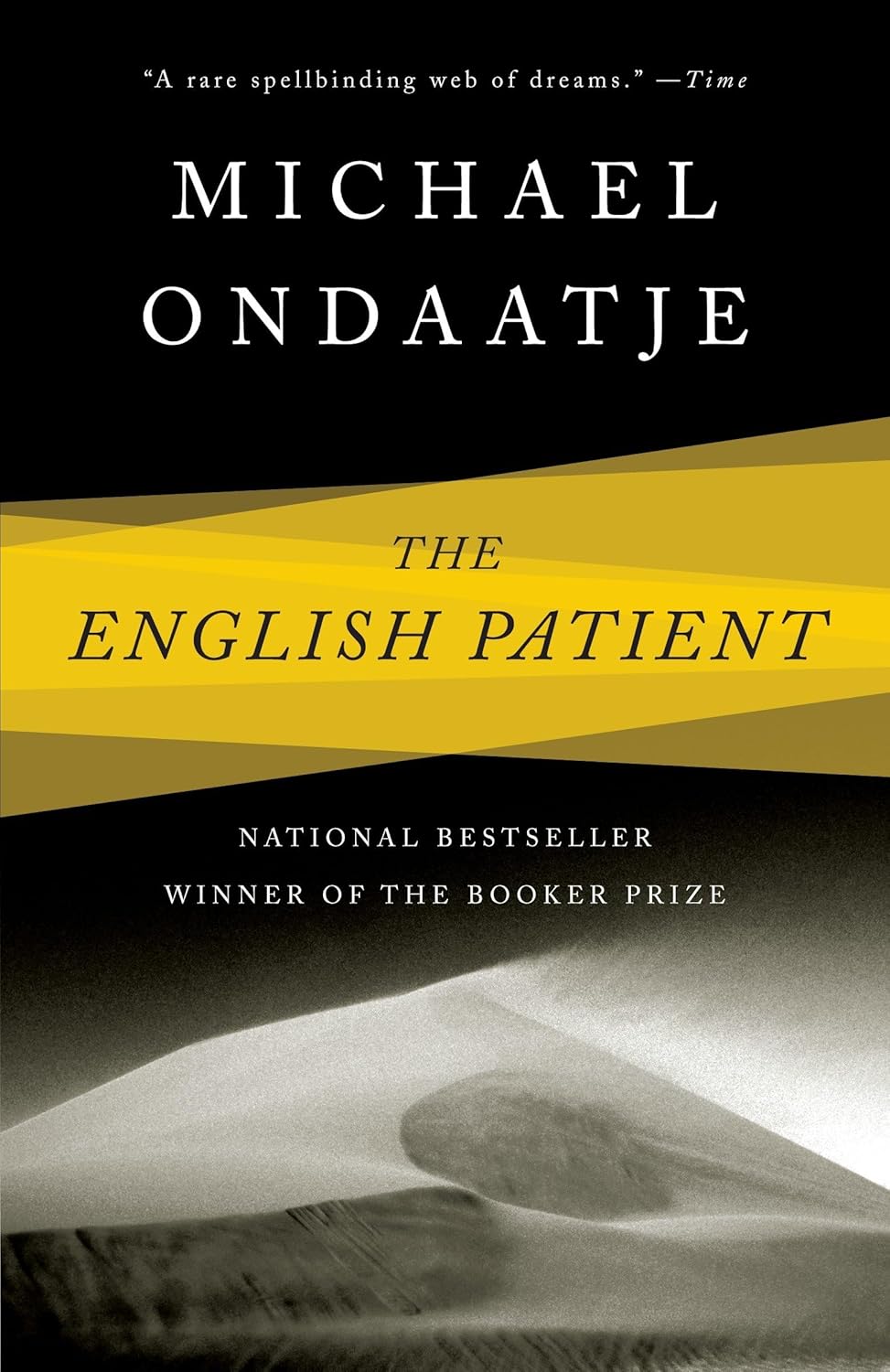
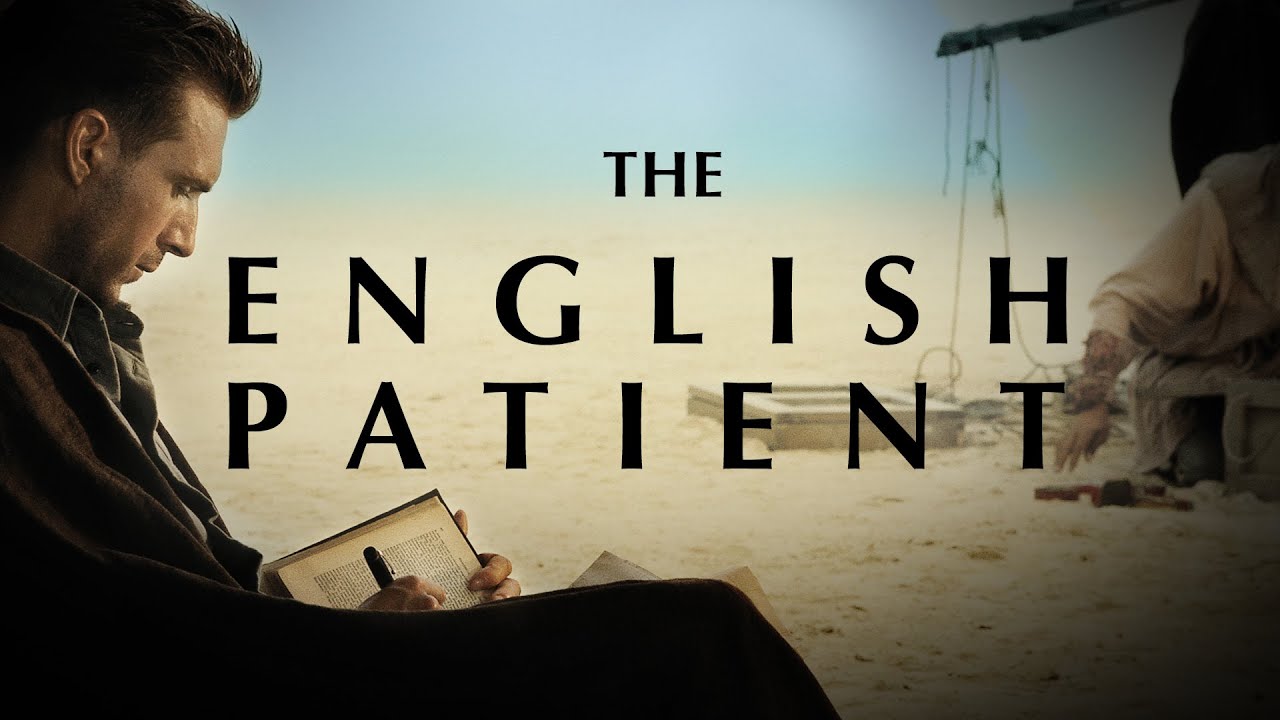
Two other figures enter the villa: Kip, a Sikh sapper in the British Army who defuses unexploded bombs, and Caravaggio, a Canadian thief turned intelligence operative who has his own reasons for finding Almásy. Michael Ondaatje's 1992 novel won the Booker Prize and was praised for its poetic, non-linear structure. Anthony Minghella's 1996 adaptation won nine Academy Awards including Best Picture, with Ralph Fiennes as Almásy, Kristin Scott Thomas as Katharine, Juliette Binoche as Hana, and Naveen Andrews as Kip.
The film became one of the most celebrated literary adaptations of the 1990s, though it sparked debate about what was gained and lost in translation. Ondaatje himself praised the film while noting that Kip's diminished role represented a significant departure from his novel's intentions.
| Character | In the Book | In the The Movie |
|---|---|---|
| Count László de Almásy Ralph Fiennes |
A Hungarian cartographer whose identity is revealed gradually through fragmented memories; his betrayal and guilt are more ambiguous. | Fiennes plays him with devastating intensity, making the love affair and final betrayal the emotional center of the film. |
| Katharine Clifton Kristin Scott Thomas |
Portrayed through Almásy's memories as intelligent and passionate, but less fully developed as an independent character. | Scott Thomas gives her agency and complexity, making the affair feel like a meeting of equals rather than an obsession. |
| Hana Juliette Binoche |
A war-traumatized nurse who finds temporary peace caring for Almásy; her relationship with Kip is central to her arc. | Binoche won the Oscar for a performance that emphasizes Hana's grief and fragility; her romance with Kip is simplified. |
| Kip Naveen Andrews |
A major character whose bomb disposal work and eventual disillusionment with the British Empire form a crucial counterpoint to Almásy's story. | Reduced to a supporting role as Hana's love interest; his political awakening after Hiroshima is entirely cut. |
| Caravaggio Willem Dafoe |
A thief who knew Hana's father and has been tortured by the Germans; his confrontation with Almásy is less central. | Dafoe makes him more menacing and gives him a stronger revenge motive, creating dramatic tension in the villa scenes. |
Key Differences
Kip's Story Is Gutted
The novel gives Kip — Kirpal Singh, a Sikh bomb disposal expert — equal weight with Almásy. His chapters detail the terrifying work of defusing German bombs in Italian churches and villas, his complicated relationship with his British mentor Lord Suffolk, and his growing awareness of colonial power dynamics.
The novel's most shattering moment comes when Kip hears about Hiroshima on the radio. He realizes the atomic bomb would never have been dropped on a white European city, and his faith in the Allied cause collapses. He nearly kills Almásy in rage before leaving the villa forever. Ondaatje uses Kip's story to interrogate the moral certainties of the "good war."
Minghella cuts all of this. Naveen Andrews plays Kip as a charming romantic interest for Hana, defusing one bomb in a tense sequence, but the character's political dimension vanishes. Ondaatje has said this is the adaptation's greatest loss, and he's right — the film becomes a love story where the novel was a meditation on empire, war, and who gets to be called civilized.
The Love Affair Becomes the Whole Story
Minghella makes Almásy and Katharine's affair the film's emotional and narrative center, and it works magnificently. Ralph Fiennes and Kristin Scott Thomas deliver two of the finest performances of the decade — their chemistry is palpable, their scenes together charged with longing and danger.
The film adds scenes not in the book: Katharine dancing with Almásy at a Christmas party, the two of them caught in a desert sandstorm, their final reunion in the Cave of Swimmers where she dies in his arms. These inventions deepen the romance and give it tragic grandeur. John Seale's cinematography makes the desert itself a character — vast, beautiful, indifferent.
The novel treats the affair more obliquely, filtering it through Almásy's morphine-hazed memories. Ondaatje is more interested in how desire and betrayal echo across time than in the affair itself. The film chooses emotional immediacy over poetic distance, and for once, the choice pays off. This is the rare case where the adaptation's love story genuinely rivals the source.
Structure: Poetry Versus Clarity
Ondaatje's novel moves like memory — fragmented, non-linear, jumping between past and present without transition. You might be in the villa with Hana, then suddenly in the desert with Almásy in 1938, then back to Kip defusing a bomb in 1945, all within a few pages. The effect is disorienting and beautiful, like watching someone try to piece together a shattered mirror.
Minghella straightens the timeline into clear flashbacks, using visual cues and Gabriel Yared's score to signal shifts between past and present. The film cuts between the villa and the desert in a conventional parallel structure. This makes the story easier to follow but removes the hallucinatory quality that makes Ondaatje's prose distinctive. The novel works the way trauma works; the film works the way films work.
Geoffrey Clifton's Death
In the novel, Geoffrey Clifton — Katharine's husband — discovers the affair and attempts a murder-suicide by crashing his plane into Almásy with Katharine aboard. Katharine is badly injured; Geoffrey dies. Almásy carries Katharine to the Cave of Swimmers, promises to return with help, but is arrested by the British as a spy. By the time he returns, she's dead.
The film keeps this sequence but adds a crucial detail: Katharine writes a final letter to Almásy in the cave, which he reads aloud to Hana in the villa. The letter — "We die containing a richness of lovers and tribes, tastes we have swallowed, bodies we have plunged into" — is taken from Ondaatje's prose but recontextualized as Katharine's voice. It's a brilliant adaptation choice that gives Kristin Scott Thomas a final moment and makes the tragedy more immediate.
The Ending: Morphine and Mercy
Both versions end with Hana giving Almásy a fatal dose of morphine at his request. In the novel, this happens quietly, almost as an afterthought — Kip has already left, Caravaggio is gone, and Hana is alone with her patient. The focus is on Hana's exhaustion and her need to move forward.
The film makes it a deliberate act of mercy. Binoche plays the scene with tears streaming down her face, and Fiennes delivers Almásy's final words — "I wanted to die in a holy place" — with quiet dignity. The film gives the death ceremony and weight. The novel treats it as one more casualty of a war that has already taken too much. Both approaches are valid; neither is wrong.
Yes, because the film will erase the novel's version of Kip from your imagination, and you should know what Ondaatje intended before Minghella's choices replace it. The novel's Kip is essential to understanding what the book is arguing about war, empire, and whose suffering gets centered in historical narratives. Once you've seen Naveen Andrews in the role, it's hard to recover the character's full weight.
Reading first also lets you experience Ondaatje's prose style before the film's images take over. The novel is written in a language closer to poetry than conventional fiction — sentences that work through rhythm and image rather than exposition. Minghella's film is a masterpiece, but it necessarily translates that language into something more direct. If you watch first, you may find the novel frustratingly oblique. If you read first, you'll appreciate what each version does differently.
Should You Read First?
Yes, because the film will erase the novel's version of Kip from your imagination, and you should know what Ondaatje intended before Minghella's choices replace it. The novel's Kip is essential to understanding what the book is arguing about war, empire, and whose suffering gets centered in historical narratives. Once you've seen Naveen Andrews in the role, it's hard to recover the character's full weight.
Reading first also lets you experience Ondaatje's prose style before the film's images take over. The novel is written in a language closer to poetry than conventional fiction — sentences that work through rhythm and image rather than exposition. Minghella's film is a masterpiece, but it necessarily translates that language into something more direct. If you watch first, you may find the novel frustratingly oblique. If you read first, you'll appreciate what each version does differently.
One of the genuine ties. Minghella's film is a masterpiece of literary adaptation — the love story is perfected, the desert is glorious, and the performances are career-defining. But Ondaatje's novel is richer, stranger, and more ambitious, especially in its treatment of Kip and its refusal of easy narrative. Read both. Watch both. The argument between them is the point.