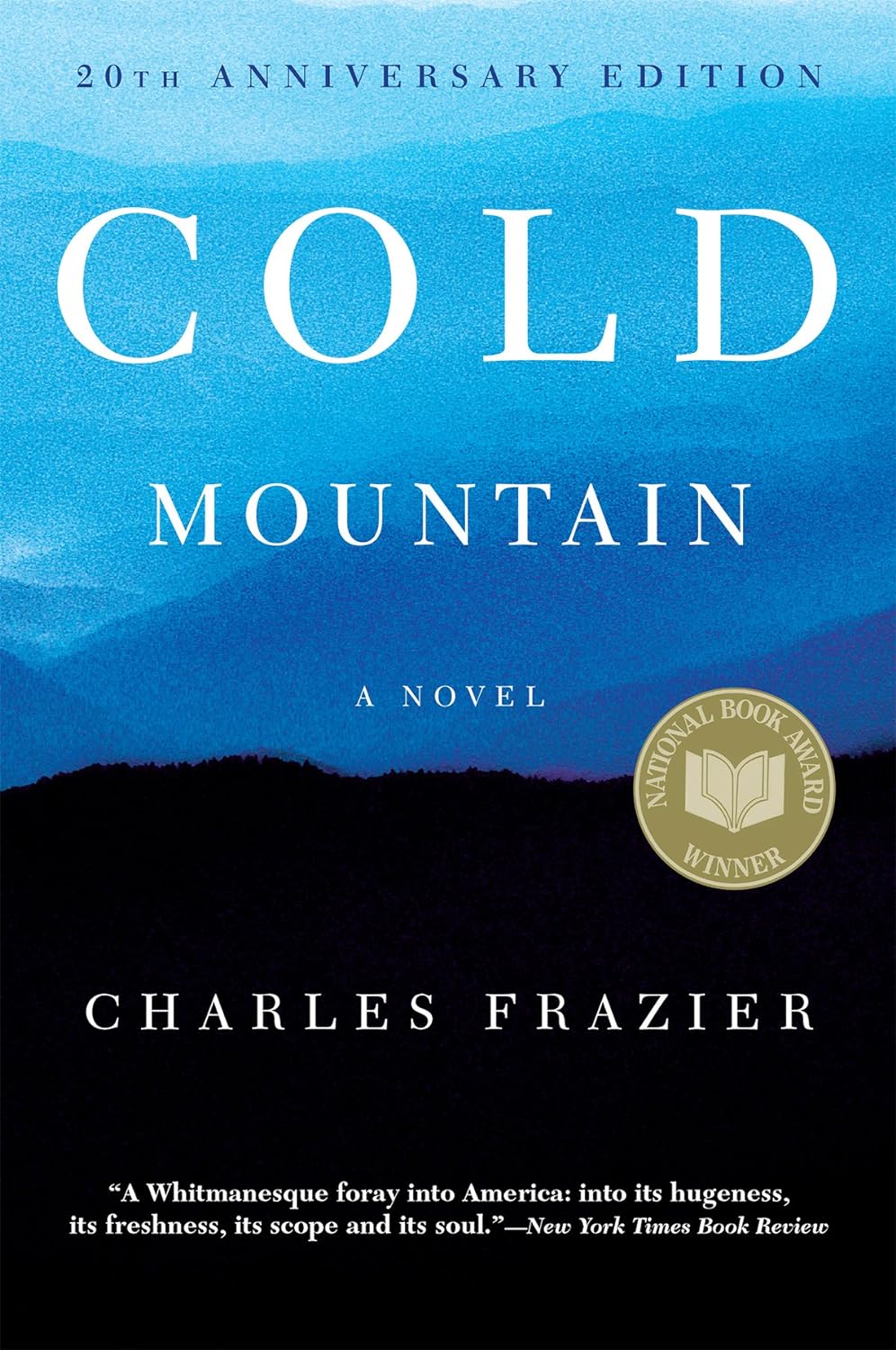
The Story in Brief
W.P. Inman, a Confederate soldier wounded at the Battle of Petersburg, deserts the hospital and begins walking home through the war-ravaged South to Cold Mountain, North Carolina, where Ada Monroe waits. Charles Frazier's 1997 debut novel won the National Book Award and spent 45 weeks on the bestseller list. The book is structured as a modern Odyssey—Inman encounters a series of strangers, some helpful and some murderous, while Ada learns to survive on her failing farm with the help of Ruby Thewes, a fierce young woman who teaches her to work the land.
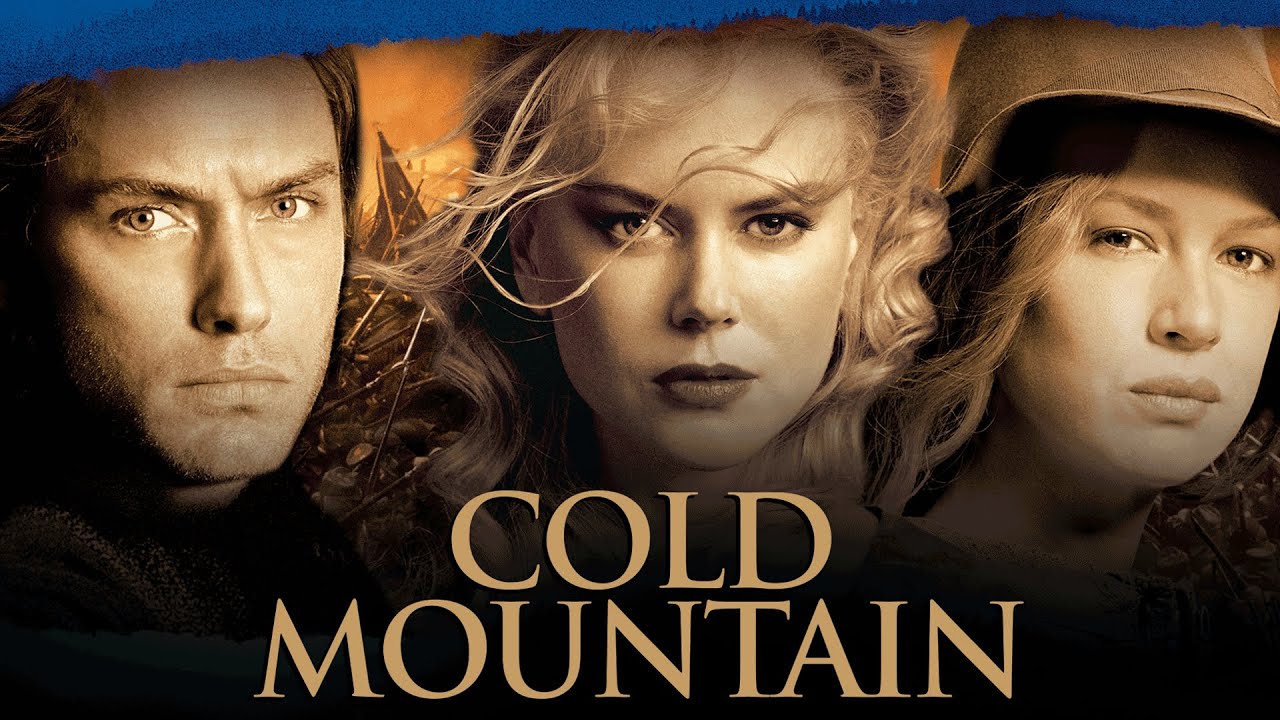
Anthony Minghella, fresh from his Oscar-winning adaptation of The English Patient, directed the 2003 film with Jude Law as Inman, Nicole Kidman as Ada, and Renée Zellweger as Ruby. The film earned seven Academy Award nominations and won Zellweger a Best Supporting Actress Oscar. Shot in Romania's Carpathian Mountains rather than the North Carolina Appalachians, the film is visually lush but emotionally cooler than Frazier's prose.
The novel became a cultural touchstone for literary historical fiction, proving a first-time novelist could write an epic that felt both classical and contemporary. The film, while respectful and beautifully made, never quite captured the interior weight that made the book resonate.
| Character | In the Book | In the The Movie |
|---|---|---|
| W.P. Inman Jude Law |
A philosophical deserter whose interior monologues reveal a man wrestling with violence, faith, and the meaning of home. | Law plays Inman as stoic and quietly heroic, but the film cannot access the character's rich interiority. |
| Ada Monroe Nicole Kidman |
A Charleston-raised minister's daughter who transforms from helpless gentlewoman to capable farmer through sheer will and Ruby's teaching. | Kidman captures Ada's fragility and determination, though the film compresses her transformation into a montage. |
| Ruby Thewes Renée Zellweger |
A hardscrabble mountain woman raised by an alcoholic father, practical and unsentimental, who becomes Ada's partner and friend. | Zellweger's Oscar-winning performance is the film's most vivid element, capturing Ruby's humor and toughness exactly as written. |
| Teague Ray Winstone |
The brutal leader of the Home Guard who hunts deserters with sadistic pleasure. | Winstone plays Teague as a straightforward villain, effective but less complex than Frazier's portrait of petty tyranny. |
| Stobrod Thewes Brendan Gleeson |
Ruby's neglectful father, a fiddler and deserter who reappears late in the novel seeking redemption through music. | Gleeson brings warmth to Stobrod, and his fiddle scenes provide the film's most emotionally direct moments. |
Key Differences
Inman's philosophical interiority is lost in translation
Frazier's Inman is a reader and thinker who carries a copy of Bartram's Travels and reflects constantly on violence, nature, and the war's meaning. His journey is as much through his own mind as through the Southern landscape. The novel gives us pages of his thoughts on killing, on the Cherokee removal, on whether home can ever be recovered.
Jude Law plays Inman as quietly heroic and physically capable, but the film has no access to this interior life. The walk becomes a series of episodes—some beautiful, some brutal—rather than the accumulation of a philosophy. Law is excellent within the film's constraints, but those constraints are severe.
The episodic structure is compressed and simplified
The novel is structured as a picaresque—Inman meets Veasey the disgraced preacher, the goat woman who feeds him and offers wisdom, Sara the young widow with a baby, and Junior who betrays him to the Home Guard. Each encounter is its own small story with thematic weight. The length of the road is the whole point.
The film preserves the episodic structure but compresses several encounters significantly. Veasey (played by Philip Seymour Hoffman) gets less screen time, and some episodes are cut entirely. The accumulation of experience that defines the novel becomes a highlight reel. Minghella keeps the shape but loses the texture.
Ruby and Ada's partnership is the film's strongest thread
Renée Zellweger won an Academy Award for Ruby and deserved it—her performance is the film's most fully alive element. She captures Ruby's dark humor, her unsentimental practicality, and her fierce loyalty exactly as Frazier wrote her. The scenes of Ruby teaching Ada to slaughter hogs, plant crops, and read the natural world are the film's best.
The novel's Ruby is equally vivid on the page, and the female friendship between Ruby and Ada is the book's emotional heart. This thread the film handles well, perhaps because it requires less interiority and more action. Zellweger and Kidman have real chemistry, and their scenes together feel earned.
The landscape loses its Appalachian specificity
Minghella filmed in Romania's Carpathian Mountains rather than the North Carolina Appalachians, and the difference matters. The film's landscape is generically beautiful—rolling hills, dramatic peaks, golden light. Frazier's landscape is deeply particular: Cold Mountain itself, the Pigeon River, the specific flora and fauna of the Southern highlands.
The novel's landscape is not just setting but character. Inman's longing for Cold Mountain is longing for a specific place with specific contours. The film's European grandeur is lovely but wrong. It's the difference between a postcard and a map.
The ending arrives but doesn't fully land
Both versions reach the same destination—Inman makes it home, spends one night with Ada, and is killed the next day by Teague's men. Ada survives, raises Inman's daughter, and builds a life on the farm with Ruby's extended family. The epilogue jumps forward years to show Ada's daughter as a young woman.
The novel earns its ending more fully because the journey has been longer and harder. We've spent hundreds of pages inside Inman's head, so his death feels like the loss of a consciousness, not just a character. The film's ending is moving but more conventional—a tragic romance rather than a philosophical conclusion. Minghella shoots it beautifully, but beauty isn't the same as weight.
Yes. The novel's journey is the experience, and the film can only sketch what Frazier renders in full. If you watch the film first, you'll get the plot and the performances, but you'll miss the prose style that makes Cold Mountain more than a Civil War romance. Frazier writes in long, rolling sentences that mimic the rhythm of walking, and that rhythm is inseparable from the story's meaning.
Watch the film for Zellweger's Ruby, which is the truest translation of Frazier's achievement. Watch it for Brendan Gleeson's Stobrod and the fiddle music. But read the novel for Inman's interior life, for the specific texture of the Appalachian landscape, and for the philosophical weight that makes the journey matter beyond its outcome.
Should You Read First?
Yes. The novel's journey is the experience, and the film can only sketch what Frazier renders in full. If you watch the film first, you'll get the plot and the performances, but you'll miss the prose style that makes Cold Mountain more than a Civil War romance. Frazier writes in long, rolling sentences that mimic the rhythm of walking, and that rhythm is inseparable from the story's meaning.
Watch the film for Zellweger's Ruby, which is the truest translation of Frazier's achievement. Watch it for Brendan Gleeson's Stobrod and the fiddle music. But read the novel for Inman's interior life, for the specific texture of the Appalachian landscape, and for the philosophical weight that makes the journey matter beyond its outcome.
Minghella made a beautiful, well-intentioned adaptation that the novel substantially outweighs. The book offers philosophical depth and linguistic richness the film cannot match. The film offers Zellweger's Ruby and Gleeson's fiddle. Read the novel for the journey, see the film for the performances, and understand that some books resist adaptation not because they're badly written but because the prose itself is the point.