
The Story in Brief
Madeline Whittier is eighteen and has never left her house. Diagnosed with severe combined immunodeficiency (SCID), she lives in a hermetically sealed Los Angeles home with her physician mother, Pauline, and her nurse, Carla. Her world consists of white furniture, air filtration systems, and online architecture courses—until Olly Bright moves in next door.
Olly, a parkour enthusiast with an abusive father, catches Madeline's attention through her bedroom window. They begin texting, then emailing, then meeting in Madeline's airlock with Carla's reluctant permission. As their relationship intensifies, Madeline makes an impulsive decision to fly to Hawaii with Olly, risking her life for a single day of freedom. The trip ends with her hospitalized and her mother devastated—but also leads to a revelation that reframes everything.
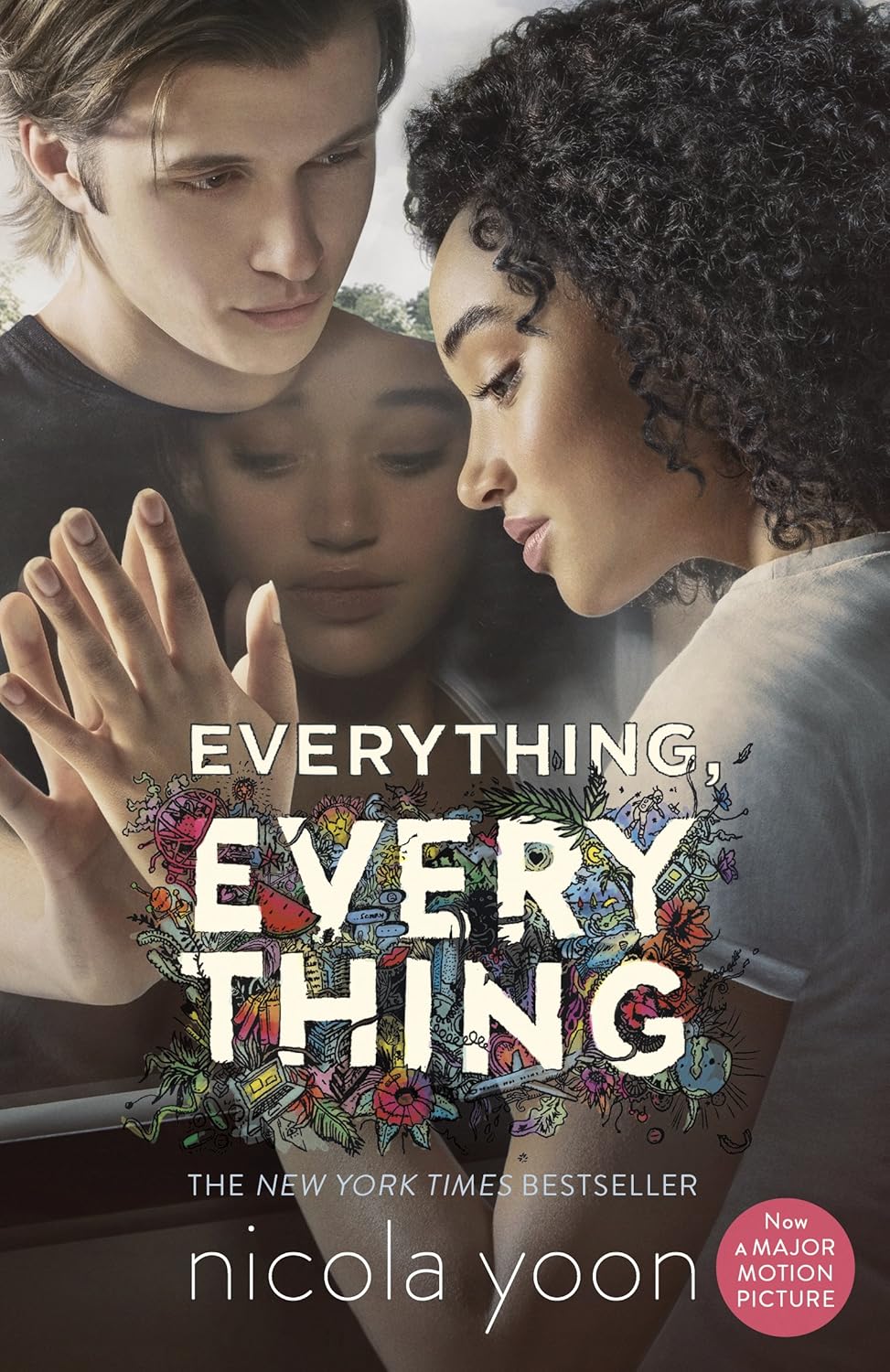
Nicola Yoon's 2015 debut became a New York Times bestseller, praised for its innovative format mixing prose, illustrations, and IM transcripts. Stella Meghie's 2017 adaptation, produced by MGM and starring Amandla Stenberg fresh off The Hunger Games, earned $61 million worldwide but received mixed reviews. Critics noted Stenberg's charisma but found the film's glossy aesthetic at odds with the story's darker psychological undercurrents.
| Character | In the Book | In the Film |
|---|---|---|
| Madeline Whittier Amandla Stenberg |
An architecture obsessive who builds intricate models and narrates with dry humor and intellectual curiosity about a world she's never touched. | A more conventionally wistful romantic lead whose specific interests and sardonic voice are softened into generic teenage longing. |
| Olly Bright Nick Robinson |
A parkour practitioner escaping his father's violence, with a protective relationship with his sister Kara and a self-deprecating sense of humor. | A charming but less textured love interest whose family trauma and physicality are present but underexplored. |
| Pauline Whittier Anika Noni Rose |
A grieving mother whose overprotection is revealed as pathological control rooted in unprocessed trauma from losing her husband and son. | A more sympathetic figure whose mental illness is treated with less psychological complexity and more melodramatic confrontation. |
| Carla Ana de la Reguera |
Madeline's nurse and confidante who enables the relationship with Olly, eventually losing her job when Pauline discovers the breach of protocol. | Serves the same function but with less screen time and emotional weight given to her sacrifice. |
Key Differences
The Medical Twist Lands Differently
Yoon's novel builds to the revelation that Madeline never had SCID—her mother fabricated the diagnosis after losing her husband and son in a car accident years earlier. The book devotes significant space to Madeline processing this betrayal, recognizing her mother's Munchausen syndrome by proxy, and grappling with rage, grief, and complicated love for the woman who imprisoned her.
Meghie's film includes the same twist but rushes through its aftermath. The confrontation between Madeline and Pauline feels abbreviated, and the psychological horror of eighteen years of unnecessary medical isolation gets glossed over in favor of reuniting Madeline with Olly. The book treats this as a trauma that will take years to unpack; the movie treats it as an obstacle cleared on the way to a happy ending.
Madeline's Interior World Gets Flattened
Book-Madeline is a specific person: she loves Tadao Ando's architecture, reads constantly, and has a sharp wit about her situation. Yoon's mixed-media format—including Madeline's illustrated dictionary definitions, IM conversations, and diary entries—creates intimacy with her thought process. Her voice is intelligent and self-aware, never self-pitying.
Film-Madeline loses much of this specificity. Stenberg is appealing, but the screenplay by J. Mills Goodloe gives her less to work with. The movie replaces Yoon's multimedia approach with fantasy sequences where Madeline and Olly interact in imagined locations—a beach, outer space—that feel more like music video interludes than genuine expressions of her creativity. Her architecture passion becomes set dressing rather than character definition.
Olly's Family Crisis Loses Urgency
In Yoon's novel, Olly's father is violently abusive, and Olly's parkour isn't just a hobby—it's an escape mechanism and a way to protect his younger sister Kara. The tension in his home life parallels Madeline's captivity, making them both prisoners of different kinds. When Olly's family eventually moves away, it's a crisis that threatens the relationship and forces Madeline's hand.
The film includes Olly's troubled home but doesn't give it the same weight. His father's abuse is shown but not deeply explored, and Kara barely registers as a character. The urgency that drives Madeline's decision to leave for Hawaii feels more like romantic impulsiveness than a response to compounding pressures. Robinson plays Olly as likable but not haunted.
Carla's Sacrifice Gets Shortchanged
Carla, Madeline's nurse, is the adult who enables the relationship by allowing Olly into the house and eventually helping Madeline book the Hawaii trip. When Pauline discovers the breach, Carla loses her job and her relationship with Madeline—a devastating consequence for someone who treated Madeline as more than a patient. Yoon gives this betrayal and loss significant emotional space.
The film includes Carla's firing but doesn't linger on it. Ana de la Reguera brings warmth to the role, but the screenplay treats Carla more as a plot device than a fully realized person making an enormous professional and personal sacrifice. The book makes clear that Carla's decision to help Madeline was both generous and reckless; the movie just needs her to move the plot forward.
The Aesthetic Contradicts the Story
Yoon's prose is clean and direct, and the book's design—lots of white space, simple illustrations—reflects Madeline's sterile environment while also suggesting the blankness of a life unlived. The tone is intimate and occasionally claustrophobic, matching Madeline's physical reality.
Meghie's film is sun-drenched and gorgeous, shot by cinematographer Igor Jadue-Lillo with a warm, romantic glow. Madeline's house looks like a luxury showroom, all white curves and designer furniture. The fantasy sequences are lush and colorful. It's a beautiful film, but the beauty undercuts the story's darkness. The book feels like a cage; the movie feels like an aspirational lifestyle magazine.
Should You Read First?
Read the book first if you want the full impact of the medical revelation. Yoon structures the novel so that clues are present but easy to miss, and the twist recontextualizes everything that came before—Pauline's overprotectiveness, Carla's guilt, even Madeline's own narration. Discovering the truth alongside Madeline creates a gut-punch the film can't replicate because it's too rushed to let the horror sink in.
The film works as a standalone romantic drama if you don't know the source material, but it's a lesser version of the story. Watching it first won't ruin the book—Yoon's voice and format are different enough that the novel still feels fresh—but you'll spend the movie wishing it had the book's psychological depth and Madeline's narrative sharpness. The book earns its emotional beats; the film borrows them.
Yoon's novel is a smart, unsettling story about maternal trauma disguised as a YA romance. Meghie's film is a pretty romance that doesn't trust the unsettling parts. The book understands that love isn't enough to fix what Pauline did to Madeline—but it's a start.