
The Story in Brief
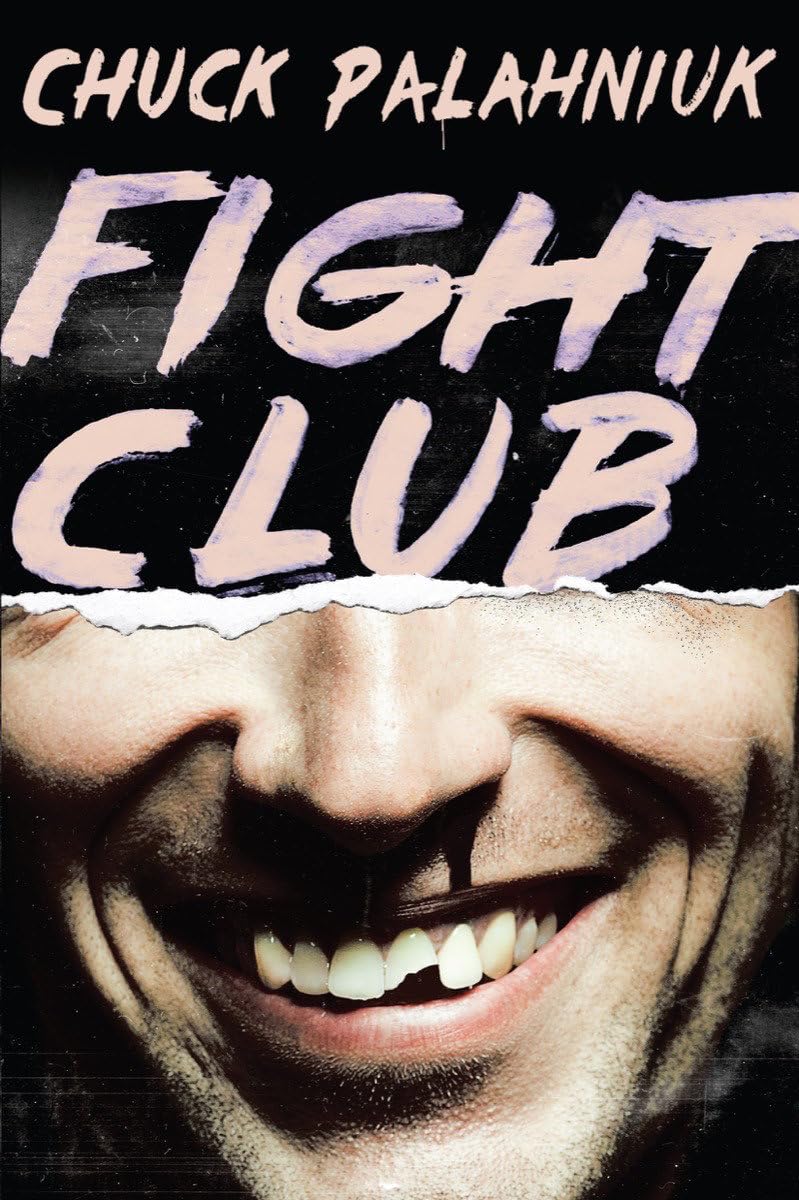
An unnamed insomniac narrator, suffocated by his IKEA-furnished life and corporate job, meets Tyler Durden — charismatic, anarchic, magnificently free — on a plane. They form a friendship that becomes a fight club, which becomes Project Mayhem, an anarchist organization aimed at destroying consumer culture. The narrator eventually discovers that Tyler is his own dissociative projection, a manifestation of everything he wishes he could be.
Chuck Palahniuk's 1996 novel is a raw, confrontational satire of consumerism, masculinity, and late-capitalist alienation, written in an aggressive, staccato prose that bulldozes toward its revelation. David Fincher's 1999 film, adapted by Jim Uhls, flopped on release — Fox executives were horrified, critics were divided, and it earned only $37 million domestically against a $63 million budget. It became one of the defining cult classics of the 2000s through DVD sales and word-of-mouth, eventually grossing over $100 million worldwide.
The film is now considered one of the most formally innovative American films of the 1990s, and it remains one of the very few entries on this site where the adaptation makes a serious case for surpassing its source.
| Character | In the Book | In the Film |
|---|---|---|
| The Narrator Edward Norton |
An unnamed insomniac whose voice is exhausted, repetitive, and deliberately unreliable — Palahniuk's prose mirrors his fractured mental state. | Norton's voiceover gives the narrator a specific deadpan wit and self-aware exhaustion that translates Palahniuk's prose into one of cinema's great narration performances. |
| Tyler Durden Brad Pitt |
Described through the narrator's awed perception but deliberately kept abstract — a projection more than a person. | Pitt makes Tyler physically real in a way the novel withholds: tanned, muscular, effortlessly stylish, the embodied fantasy of 1999 masculinity. |
| Marla Singer Helena Bonham Carter |
A function of the narrator's guilt and Tyler's desire, narratively marginalized by design. | Bonham Carter's Marla receives more development and screen time, given more independent presence and complexity in her relationship with the narrator. |
| Robert Paulson Meat Loaf |
A testicular cancer survivor the narrator meets at support groups, later killed in Project Mayhem. | Meat Loaf's physical presence makes Bob's death more emotionally devastating — "His name was Robert Paulson" becomes the film's most quoted line. |
| Angel Face Jared Leto |
A beautiful young recruit whose face the narrator destroys in a fit of jealous rage. | Leto's pretty-boy looks make the beating more viscerally disturbing — Fincher holds on the aftermath longer than comfortable. |
Key Differences
The film's formal invention surpasses the novel's prose innovation
Fincher uses every tool in cinema's arsenal — frame-rate manipulation, subliminal images, direct address, fourth-wall breaks, self-aware editing — to create a film that is formally as anarchic as its subject. The narrator comments on the film's own production ("When people think you're dying, they really listen to you instead of just..."). Tyler Durden appears as a subliminal single-frame flash four times before he's introduced as a character. The fight sequences use editing rhythms that mirror the disorientation of being hit.
The novel is innovative in its prose — Palahniuk's repetitive, staccato sentences create a hypnotic, exhausting rhythm. But the film is innovative in its cinema, using techniques that were radical for 1999 mainstream filmmaking. Both forms are being pushed to their limits. The film pushes harder and with more precision.
Brad Pitt's Tyler Durden is a specific cultural artifact
Palahniuk's Tyler is described in the novel but he remains the narrator's projection — we understand him through awed perception rather than physical presence. Pitt makes Tyler physically real in a way the novel deliberately withholds: the tanned skin, the perfect body, the red leather jacket and Hawaiian shirts that look effortlessly assembled. This embodiment is both the film's commercial masterstroke and its interpretive act.
Pitt's Tyler is the specific fantasy of a specific cultural moment — 1999's version of everything the narrator envied and wanted to become. The novel's Tyler could be anyone's projection. The film's Tyler is unmistakably late-'90s, which makes the satire sharper and more dated simultaneously.
Edward Norton's narration carries the novel's voice into film
Norton's voiceover gives the narrator a specific deadpan wit that Palahniuk's prose has but delivered at the pace of film rather than reading. Lines like "This is your life, and it's ending one minute at a time" and "I am Jack's complete lack of surprise" translate the novel's repetitive, self-aware style into one of the most precisely calibrated voiceover performances in American cinema.
The film's version of the narrator's voice — self-aware, exhausted, quietly furious — carries the novel's satirical register into a medium that usually flattens such things. Norton's performance is the bridge between Palahniuk's prose and Fincher's images.
The ending is more definitive and more romantic
Palahniuk's novel ends with the narrator in a psychiatric hospital, uncertain whether he has survived and uncertain whether Tyler is truly gone. Patients and staff call him Mr. Durden and tell him they're waiting for his return. It's ambiguous, unsettling, and offers no resolution.
Fincher's film ends with the narrator and Marla holding hands while watching credit card company buildings collapse, the Pixies' "Where Is My Mind?" playing over the destruction. It's more definitive, more romantic, and more visually spectacular. Palahniuk has said he prefers Fincher's ending — he wished he'd thought of it himself. This is one of those rare cases where the adaptation's change is genuinely defensible, even by the author's own admission.
Marla Singer receives more development in the film
Helena Bonham Carter's Marla is more fully developed than the novel's version — her relationship with the narrator given more complexity and more screen time. The novel's Marla is primarily a function of the narrator's guilt and Tyler's desire, narratively marginalized by the story's design. The film gives her more independent presence, more agency, and more emotional weight.
This is one of the film's improvements on the source, though Palahniuk's novel makes a deliberate virtue of Marla's narrative marginality — she's as much a projection as Tyler, just a different kind. The film's choice to develop her more fully is commercially and emotionally satisfying, even if it softens the novel's more radical narrative structure.
Should You Read First?
This is the site's most genuinely contested read-first question. The novel is the original and Palahniuk's prose has a specific quality — abrasive, repetitive, deliberately exhausting — that the film translates into different terms but cannot fully replicate. Read first to encounter the source in its raw form, to experience the twist as Palahniuk designed it, and to understand why this novel became a cult phenomenon before the film existed.
Watch first if you want one of cinema's great formal achievements as your entry point. The twist works effectively in both versions, and knowing it doesn't diminish either experience — the story is designed to reward re-reading and re-watching. Either order works. The film may be the better version, which is something this site almost never says.
Palahniuk wrote a raw, anarchic novel that was formally innovative for its moment, using prose as a weapon against consumer culture. Fincher made a film that is formally extraordinary — using cinema's tools as aggressively as Palahniuk uses prose, and with more precision. This is one of the very few entries on this site where the film makes a serious claim to surpassing the book. Read the novel, see the film, and argue about which is better — that argument is part of the point.