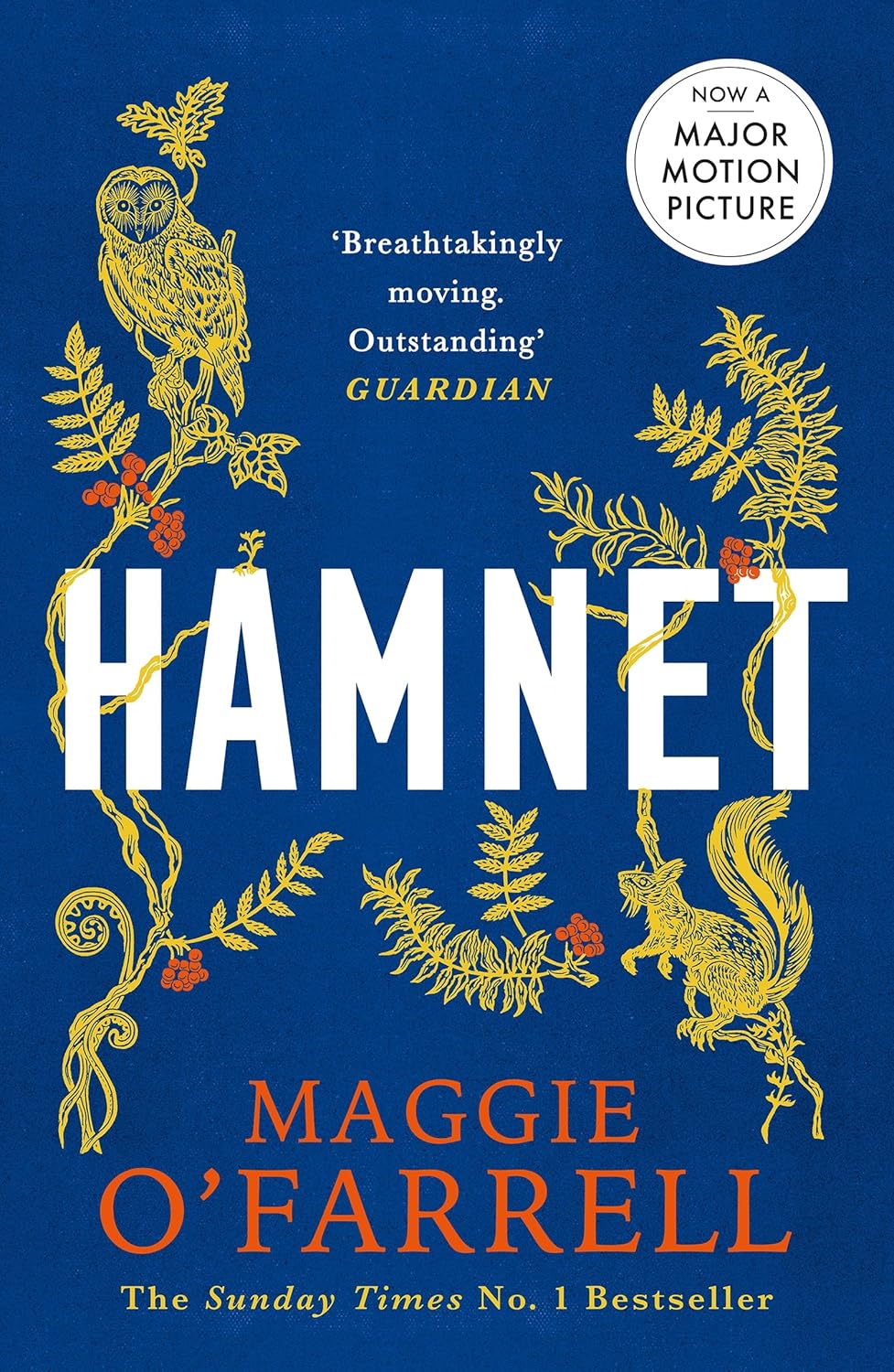

The Story in Brief
Maggie O'Farrell's Hamnet imagines the life of Agnes Hathaway — the woman who married William Shakespeare — and the death of their eleven-year-old son Hamnet from bubonic plague in 1596. O'Farrell never names her protagonist "Shakespeare," keeping focus relentlessly on Agnes, her strange intuitive gifts, and the devastation of losing a child. The novel won the Women's Prize for Fiction and the National Book Critics Circle Award, establishing O'Farrell as one of the most accomplished historical novelists working today.
Chloé Zhao's 2026 film adaptation stars Jessie Buckley as Agnes and Paul Mescal as the unnamed playwright, with Emily Watson as Mary Arden, the playwright's formidable mother. Zhao — coming off her Best Director Oscar for Nomadland — brings her signature naturalistic style to 16th-century Stratford-upon-Avon. The film premiered at Cannes to strong reviews, with particular praise for Buckley's performance and cinematographer Joshua James Richards's use of natural light.
Both versions center Agnes rather than her famous husband, treating the most celebrated writer in English history as a peripheral figure in his own family's tragedy. The story moves between Agnes's courtship, her marriage, and the summer of 1596 when plague arrives in Stratford and takes her son.
| Character | In the Book | In the Film |
|---|---|---|
| Agnes Jessie Buckley |
A woman with strange gifts of intuition and healing, fierce and half-wild, who sees things others cannot and married the Latin tutor against her stepmother's wishes. | Buckley plays her as physically restless and watchful, finding gestural equivalents for the novel's interior strangeness — a woman always slightly out of step with her surroundings. |
| The Playwright Paul Mescal |
Never named, always half-absent, a man who escapes to London and leaves his family behind — present in the novel primarily through Agnes's longing and resentment. | Mescal's screen presence makes him more central than O'Farrell intended, but he plays the role with deliberate opacity, a man who cannot quite be reached. |
| Hamnet Cillian Longley |
The eleven-year-old son, sensitive and watchful, who tries desperately to save his twin sister Judith when she falls ill, only to contract plague himself. | Longley captures Hamnet's quiet intensity and the terrible irony of his fate — the wrong twin dies, and everyone knows it. |
| Judith Erin Kellyman |
Hamnet's twin, the one who was supposed to die, who survives and must live with that knowledge for the rest of her life. | Kellyman plays both the child Judith and, in flash-forwards, the adult woman still haunted by her brother's sacrifice. |
| Mary Arden Emily Watson |
The playwright's mother, a woman of higher birth who married down and never lets anyone forget it, who resents Agnes and competes for control of the household. | Watson makes Mary formidable and brittle, a woman whose cruelty comes from her own thwarted ambitions and disappointed life. |
Key Differences
Agnes's Interiority Is the Novel's Entire Architecture
O'Farrell's greatest achievement is giving us complete access to Agnes's consciousness — her strange gifts of intuition, her ability to read people and animals, her fury at a husband who is always elsewhere. The prose moves between past and present with the logic of grief rather than chronology, circling obsessively around certain moments the way memory actually works.
The film necessarily makes Agnes more externally legible. Buckley is extraordinary, finding physical equivalents for the novel's interiority — the way Agnes touches things, watches people, moves through space. But film cannot replicate the experience of being inside a consciousness for 300 pages. The novel's Agnes is strange because of how she thinks; the film's Agnes is strange because of how she behaves, which is a different and lesser thing.
The Plague Chapter Becomes Distributed Rather Than Concentrated
The novel contains a five-page tour de force that follows the plague from a flea on a piece of Venetian silk across Europe, through trade routes and market stalls, to arrive at a glassmaker's workshop in Stratford where a child picks up the contaminated fabric. It's one of the most controlled and devastating passages in contemporary fiction, arriving as a single unbroken blow.
Zhao distributes this material across the film's structure rather than presenting it as one setpiece. We see the silk purchased in Venice, glimpse it in transit, watch it arrive in Stratford. The approach works — the film's plague sequence is visually striking and thematically coherent — but it lands differently. The novel's version is more devastating because it arrives all at once, an inexorable chain of causation that no one could have prevented.
Shakespeare's Deliberate Absence Cannot Survive Paul Mescal's Face
O'Farrell's structural choice to never name her playwright character is a formal argument: this is Agnes's story, and the most famous writer in English history is a peripheral figure in his own family. He's in London. He's always in London. He comes home occasionally, gets his wife pregnant, leaves again. The novel makes him genuinely marginal.
The film honours this intention — Mescal has relatively little screen time, and the script never names him — but his presence inevitably draws attention in ways the novel's unnamed husband does not. Mescal's face is too famous, too magnetic. He cannot be as absent on film as the character is on the page, even when Zhao deliberately keeps him in shadow or off-center in the frame.
Non-Linear Time Becomes More Conventional Structure
The novel moves fluidly between Agnes's girlhood, her courtship, her marriage, and the days surrounding Hamnet's death. The structure mirrors how grief actually works — returning obsessively to certain moments, finding unexpected connections between past and present, refusing chronological order because chronology is a lie we tell ourselves about how time works.
Zhao's film uses flashbacks but handles the non-linearity with more restraint. The timeline is clearer, the connections more explicitly drawn. This makes the film easier to follow but also more conventional in its emotional accumulation. The novel's structure is itself an argument about grief; the film's structure is more traditional storytelling, even when the filmmaking is excellent.
The Ending's Restraint Translates, But Differently
O'Farrell's final movement — Agnes traveling to London, watching the first performance of Hamlet, understanding what her husband has done with their son's name — is handled with extraordinary restraint. The novel never explains or underlines. Agnes watches the play. She understands. That's all.
The film's version is similarly restrained, with Buckley's face doing all the work as she sits in the Globe and hears "Hamnet" become "Hamlet." Both versions earn their ending, but the novel's is quieter and more devastating because we've spent 300 pages inside Agnes's head. The film's ending is powerful, but it's the ending of a different kind of story — one that's been showing us Agnes from the outside all along.
Should You Read First?
Yes, absolutely. Hamnet is O'Farrell at her peak, and it requires no prior knowledge of Shakespeare or his plays. It's simply one of the best novels of the past decade — a book about marriage, parenthood, and grief that happens to be set in the 16th century. It reads quickly despite its emotional density, and the prose is so controlled that you don't realize how devastated you are until the final pages.
The film is made with real intelligence and care, and Buckley's performance is extraordinary. But the novel is doing something only a novel can do — giving you complete access to a consciousness, moving through time the way memory moves, building grief through accumulation rather than event. Read it first. Then watch Zhao and Buckley show you what survived the translation and what had to be left behind.
The novel is a masterpiece of interiority that no film can fully replicate. Zhao's adaptation is made with real intelligence and care, and Buckley is extraordinary — but the book is doing something only a book can do, building grief through prose rhythm and access to consciousness. Read it first, then let the film show you what survived the translation. O'Farrell's Agnes lives in your head; Buckley's lives on screen, and both are worth your time.