
The Story in Brief
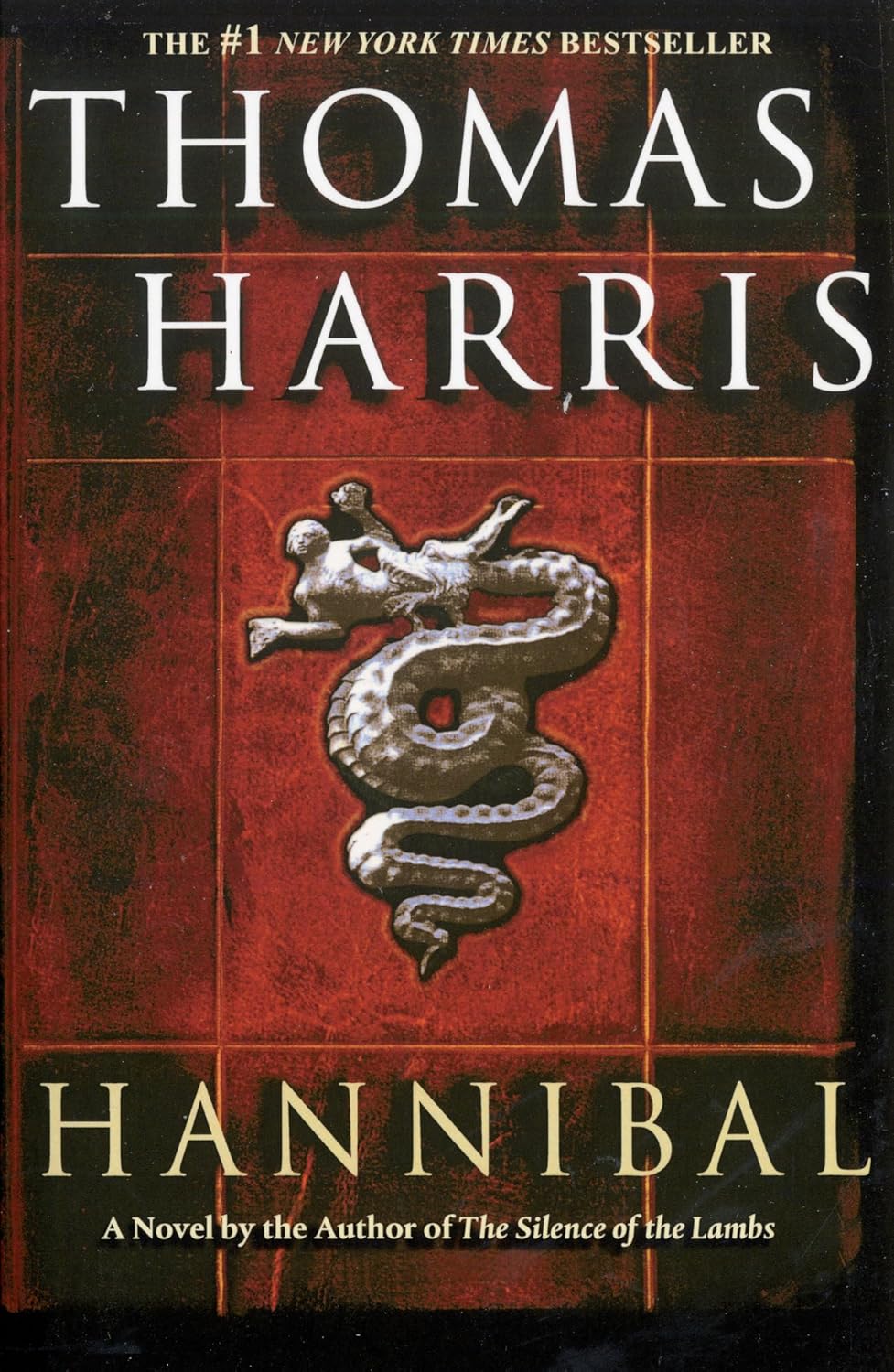
Thomas Harris introduced Hannibal Lecter in Red Dragon (1981), a supporting character in a serial killer investigation — brilliant, caged, useful to the FBI as a consultant while being the most dangerous person in any room. Will Graham, a retired profiler with an uncanny ability to reconstruct crimes from the killer's perspective, reluctantly seeks Hannibal's help to catch Francis Dolarhyde, the "Tooth Fairy" killer. The Silence of the Lambs (1988) made Hannibal a cultural phenomenon, pairing him with FBI trainee Clarice Starling in a cat-and-mouse game that helped her catch Buffalo Bill. The novels that followed — Hannibal (1999) and Hannibal Rising (2006) — expanded his backstory and freed him from incarceration.
Bryan Fuller's NBC series, running from 2013 to 2015, takes the pre-incarceration relationship between Hannibal and Will Graham and reimagines it as a gothic psychological study of two minds in dangerous sympathy. Mads Mikkelsen plays Hannibal as a Baltimore psychiatrist who consults for the FBI while secretly being a serial killer and cannibal. Hugh Dancy's Will Graham is an FBI profiler whose empathic ability makes him psychologically fragile. Jack Crawford (Laurence Fishburne) recruits Hannibal to help stabilise Will, not knowing he is placing his best investigator in the care of the man they are hunting. The series dramatises their friendship, Hannibal's manipulation, Will's deterioration, and the tragic codependency that develops between them across three seasons of formally audacious television.
The series was cancelled after its third season but has since been recognised as one of the most visually distinctive and thematically ambitious dramas in American television history, earning a devoted cult following and critical reassessment as a landmark of 2010s prestige TV.
| Character | In the Book | In the The Series |
|---|---|---|
| Hannibal Lecter Mads Mikkelsen |
A caged psychiatrist and serial killer, already imprisoned when Will Graham consults him in Red Dragon; theatrical, reptilian, a resource and a threat. | A practicing psychiatrist in Baltimore, free and social, who befriends Will Graham while secretly being the Chesapeake Ripper; European, formal, genuinely attached to Will. |
| Will Graham Hugh Dancy |
A damaged but stable FBI profiler who retired after catching Hannibal; reluctantly returns to catch Francis Dolarhyde in Red Dragon. | A fragile FBI profiler whose empathic ability constitutes psychic instability; manipulated and destabilised by Hannibal across three seasons, eventually becoming his dark mirror. |
| Jack Crawford Laurence Fishburne |
Head of the FBI's Behavioral Science Unit; recruits Will Graham and Clarice Starling for investigations; pragmatic and driven. | Head of the FBI's Behavioral Analysis Unit; recruits Hannibal to help stabilise Will, unknowingly enabling Hannibal's manipulation; morally compromised by his use of Will. |
| Alana Bloom Caroline Dhavernas |
Does not appear in the novels. | A psychiatrist and colleague of Hannibal's, romantically involved with Will and later Hannibal; becomes one of the few characters to survive Hannibal's manipulations with her agency intact. |
| Bedelia Du Maurier Gillian Anderson |
Does not appear in the novels. | Hannibal's own psychiatrist, who understands what he is and becomes complicit in his escape; accompanies him to Florence in Season 3 in a relationship of mutual manipulation. |
| Francis Dolarhyde Richard Armitage |
The "Tooth Fairy" killer in Red Dragon, a man transforming himself into William Blake's Red Dragon through ritualistic murders of families. | Adapted faithfully in Season 3, with his relationship to Reba McClane (Rutina Wesley) and his correspondence with the imprisoned Hannibal forming the season's emotional core. |
Key Differences
The relationship as the story
Fuller's series makes the Hannibal-Will relationship the entire subject, dramatising a pre-incarceration friendship that the novels barely sketch.
Harris's novels use Hannibal as a supporting presence — a resource and a threat, but rarely the primary focus. The Hannibal of Red Dragon is glimpsed through Will Graham's uneasy consultations; the Hannibal of Silence of the Lambs is a caged intelligence who helps Clarice Starling catch Buffalo Bill. Will and Hannibal are never friends in the novels. Their relationship is professional, adversarial, and concluded before the first book begins.
Fuller asked what it would look like if these two minds had been close before the revelation, and built three seasons around the answer. The series dramatises their initial friendship, Hannibal's manipulation of Will's mental state, Will's realisation and retaliation, and the tragic codependency that survives even Hannibal's imprisonment. This is not adaptation but invention — Fuller uses Harris's characters to explore a relationship the novels never depicted.
Mads Mikkelsen as Hannibal
Mikkelsen's Hannibal is European, formal, genuinely social — a man who has chosen to live among humans as an aesthetic experience rather than a predatory one.
Anthony Hopkins's Hannibal in The Silence of the Lambs (1991) is the most famous version — theatrical, reptilian, contained, a caged predator who speaks in riddles and hisses. Mikkelsen's interpretation is something different. His Hannibal is a practicing psychiatrist in Baltimore, a man who hosts dinner parties, appreciates opera, and forms real attachments. He is not pretending to be human; he is choosing to live as one, with murder and cannibalism as private aesthetic practices.
Mikkelsen makes Hannibal's friendship with Will feel real and his pleasure in concealment feel like a form of love. When he manipulates Will into a mental breakdown, it is not cruelty but a kind of courtship — he is reshaping Will into someone who can understand him. This is one of the great villain performances in television history, and it adds a dimension to the character that Harris's novels approach but never quite achieve: the idea that Hannibal might be capable of genuine attachment.
The visual language
Fuller's series is among the most visually distinctive things made for American television in the 2010s — it does not look like television; it looks like a film by a director who has decided that beauty and horror should be indistinguishable.
The food preparation sequences, shot like haute cuisine pornography, are revealed to contain human flesh. The murder tableaux — bodies arranged as angels, mushroom gardens, human cellos — are photographed with the formal beauty of Renaissance paintings. Will's empathy sequences use dream logic and time manipulation to show him reconstructing crimes from the inside. The production design is deliberately theatrical, with Hannibal's office and home resembling a European museum more than a Baltimore psychiatrist's practice.
The novels are well-written thrillers with precise prose and effective suspense. The series is a formal experiment in what network drama could be, pushing NBC's standards and practices to their limit with graphic violence rendered as art. These are incommensurable achievements — Harris's novels work through narrative and character; Fuller's series works through image and design.
Will Graham's mental state
Hugh Dancy's Will is a man whose empathic ability constitutes a form of psychic fragility — he reconstructs crimes from the inside, which means he is always partially inside a killer's mind.
Harris's Will Graham in Red Dragon is damaged but relatively stable. He caught Hannibal years before the novel begins, retired, and lives quietly in Florida with his wife Molly and stepson. He is reluctant to return to profiling but capable of doing so without psychological collapse. His empathy is a skill, not a curse.
Dancy's Will is unstable from the beginning. He suffers from encephalitis that Hannibal deliberately fails to diagnose, causing hallucinations that Hannibal uses to gaslight him into believing he is a killer. Dancy makes Will's deterioration across three seasons feel gradual and earned — by Season 3, Will has become Hannibal's dark mirror, capable of murder and manipulation himself. The series' Will is the more interesting character; the novels' Will is the more believable investigator.
The source material used
The series draws primarily on Red Dragon but interprets Harris freely throughout, changing character relationships, outcomes, and moral dynamics.
Season 1 invents original serial killers and dramatises the Hannibal-Will friendship. Season 2 adapts elements of Hannibal (1999), including Mason Verger (Michael Pitt, later Joe Anderson) and the Italian setting, but changes the outcomes — Verger survives, and Hannibal's relationship with Will remains the focus. Season 3 adapts the Francis Dolarhyde storyline from Red Dragon, with Richard Armitage delivering a faithful and devastating performance, but frames it as the final act of the Hannibal-Will tragedy rather than a standalone investigation.
The series is best understood as a meditation on the Lecter mythology rather than a faithful adaptation of any single novel. Readers of all four Harris novels will recognise elements and departures throughout; none of the novels' plots are followed closely enough to constitute spoilers for the series.
Read Red Dragon and The Silence of the Lambs first — they are excellent thriller novels and provide the source mythology that Fuller is reimagining. Red Dragon introduces Will Graham and the Francis Dolarhyde case that the series adapts in Season 3. The Silence of the Lambs made Hannibal a cultural phenomenon and established the caged-Hannibal dynamic that the series eventually reaches. Both novels are tightly plotted, psychologically precise, and worth reading on their own terms.
Then watch the series as a creative response to that mythology rather than an adaptation of it. The series does not spoil the novels — it changes too much — and the novels do not prepare you for what Fuller has made. The series assumes you know who Hannibal Lecter is and uses that knowledge to build suspense around when, not if, Will will discover the truth. Reading first enriches the experience but is not required.
Should You Read First?
Read Red Dragon and The Silence of the Lambs first — they are excellent thriller novels and provide the source mythology that Fuller is reimagining. Red Dragon introduces Will Graham and the Francis Dolarhyde case that the series adapts in Season 3. The Silence of the Lambs made Hannibal a cultural phenomenon and established the caged-Hannibal dynamic that the series eventually reaches. Both novels are tightly plotted, psychologically precise, and worth reading on their own terms.
Then watch the series as a creative response to that mythology rather than an adaptation of it. The series does not spoil the novels — it changes too much — and the novels do not prepare you for what Fuller has made. The series assumes you know who Hannibal Lecter is and uses that knowledge to build suspense around when, not if, Will will discover the truth. Reading first enriches the experience but is not required.
Harris's novels created one of fiction's great monsters and two excellent thrillers. Fuller's series took that mythology and built something formally extraordinary around it — a gothic psychological study of two brilliant minds, rendered in images of unprecedented beauty for network television, anchored by Mikkelsen's Hannibal and Dancy's Will. The books are the source and they are worth reading. The series is a reinvention that stands entirely on its own terms. Both essential; neither a substitute for the other.