The Story in Brief
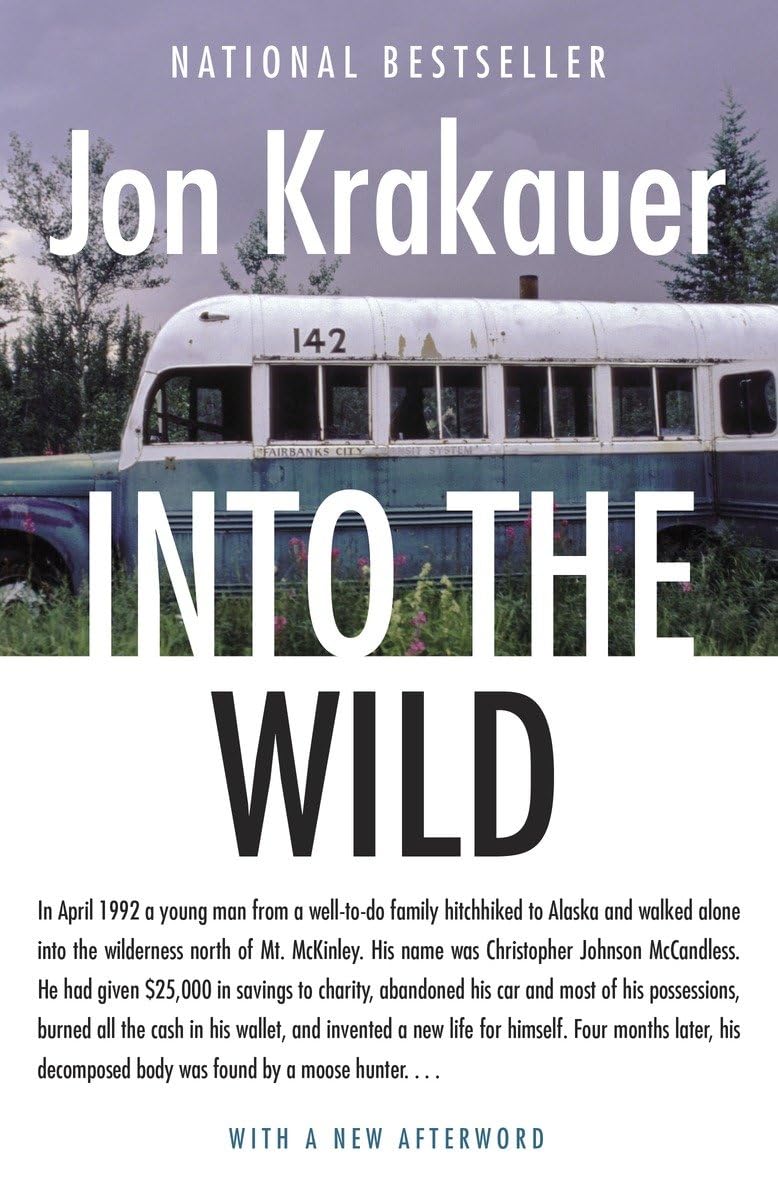
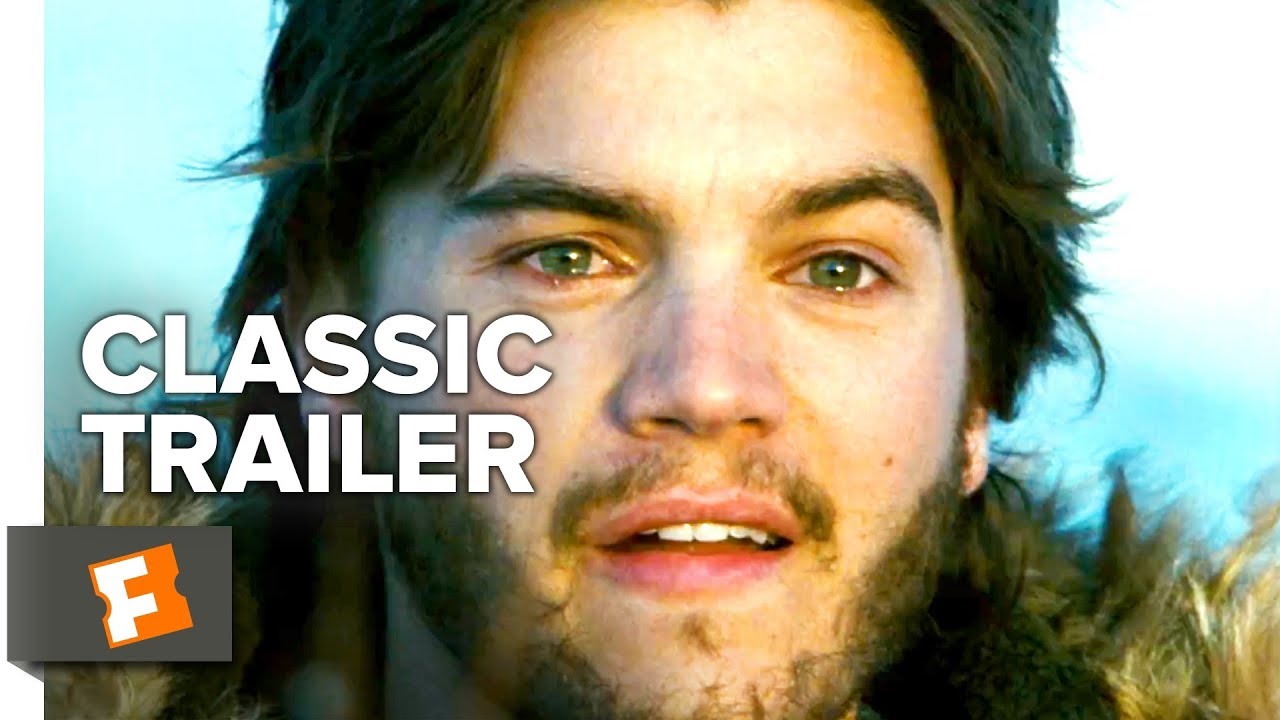
In April 1992, Christopher McCandless — twenty-four years old, recently graduated, having given his savings to charity and abandoned his car — hitchhiked to Alaska and walked alone into the wilderness. Four months later his decomposed body was found in an abandoned bus. Jon Krakauer's book, expanded from a magazine article he wrote for Outside, reconstructs McCandless's journey through his journals, the accounts of people he met along the way, and Krakauer's own investigation into the circumstances of his death. It is a work of journalism that is also a meditation on a particular kind of American idealism and its limits. Sean Penn's 2007 film, with Emile Hirsch as McCandless and Eddie Vedder's score, is beautiful, elegiac, and somewhat less honest than the source about who McCandless actually was.
Key Differences
Krakauer's ambivalence
The book's most important quality is Krakauer's honesty about his own complicated response to McCandless — the recognition in the young man's idealism of something in himself, and the simultaneous awareness that McCandless's death was at least partly the result of arrogance and inadequate preparation. Krakauer admires and critiques in equal measure, and the book holds this tension throughout. Penn's film tilts the balance toward elegy — McCandless is presented as a noble seeker and his death as a tragedy rather than as one possible consequence of a philosophy that underestimated difficulty.
The parallel stories
Krakauer intercuts McCandless's story with accounts of other young men who were drawn to extreme solitude and wilderness — some who survived, some who did not. This context is the book's most important structural decision: it places McCandless within a tradition of a particular kind of American idealism, showing that his journey was not unique and that its dangers were not unpredictable. The film focuses almost entirely on McCandless alone, which makes his story feel singular rather than representative.
Emile Hirsch's performance
Hirsch lost significant weight for the role and gives a committed, physically demanding performance. His McCandless is intelligent, warm, and genuinely compelling in his certainty — you understand why people were drawn to him. This is the film's great achievement: making McCandless's appeal felt rather than explained. The book renders his appeal through the accounts of those who met him; Hirsch renders it directly, and the directness is more immediately persuasive.
The supporting characters
The people McCandless met on his journey — Wayne Westerberg, Jan Burres and Bob, the octogenarian Ron Franz — are rendered with particular care in the film, and Hal Holbrook's Franz is quietly devastating. The book gives these characters more space and more reflection; the film gives them more emotional immediacy. Both approaches illuminate the loneliness of a man who was loved by everyone he met briefly and could not sustain connection with anyone permanently.
The cause of death
Krakauer investigates the cause of McCandless's death with journalistic rigour — his theory, involving the toxic seeds of wild potato plants, has been both supported and contested by subsequent research. The book's engagement with this question gives McCandless's death a specific cause and thus a slightly different moral valence than Penn's film, which is somewhat more ambiguous about what exactly killed him and more interested in the symbolic dimensions of his end.
Should You Read First?
Yes — Krakauer's ambivalence is the book's essential quality and the film's comparative romanticism means watching first will give you a version of the story that the book then complicates. Read first for the full picture — the journalism, the parallel stories, Krakauer's honest self-implication — and the film becomes a beautiful, elegiac companion that chooses feeling over scrutiny. Both choices are defensible. Krakauer's is more honest.
Krakauer wrote a work of journalism that holds McCandless's idealism and its consequences in honest tension — admiring and critical simultaneously. Penn made a beautiful film that tips toward elegy and away from scrutiny. The book is the more complete account of what happened and why it matters. The film is more immediately moving and less intellectually honest. Read the book for the truth. See the film for Hirsch and the Alaskan light. The book wins because it is braver.