The Story in Brief
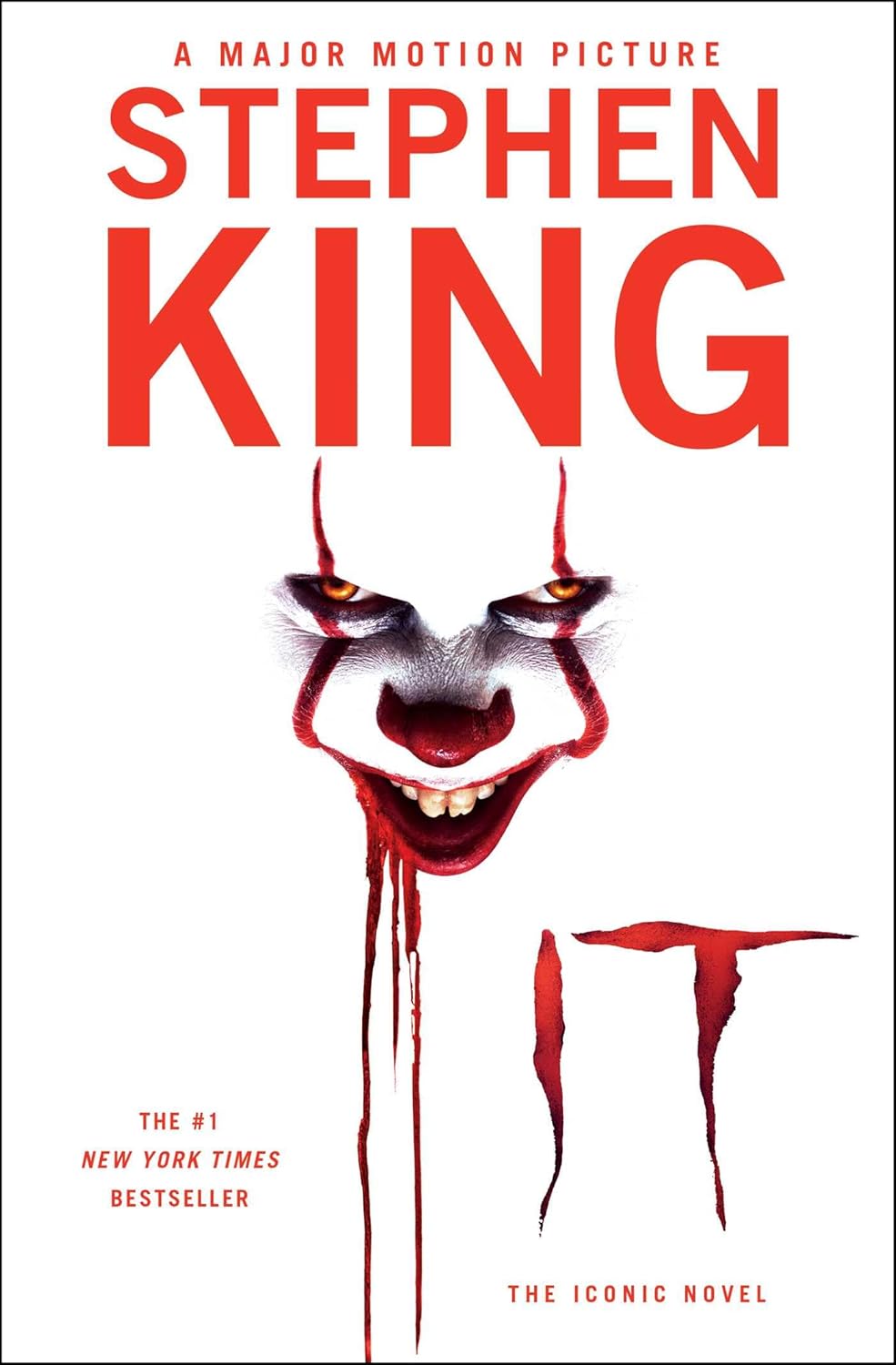
In Derry, Maine, something ancient and malevolent surfaces every twenty-seven years to feed on children, preferring to take the form of Pennywise the Dancing Clown. In 1958, seven outcasts — the Losers Club — encounter It and drive It underground through the power of their friendship and belief. In 1985, It resurfaces, and the Losers must return to Derry to finish what they started as children. Stephen King's 1986 novel is one of the great American horror epics — over a thousand pages, structurally ambitious, alternating between the Losers' childhoods and their adult returns, and concerned as much with the nature of memory, friendship, and the specific texture of small-city American life as with horror. Andy Muschietti's 2017 film takes only the childhood half of the story, moves it from 1958 to 1989, and delivers one of the finest King adaptations of recent decades.
Key Differences
Scale and structure
King's novel alternates between 1958 and 1985, building both timelines simultaneously so that the adult Losers' return is haunted by the specific weight of what we already know about their childhoods. This dual structure — and the thousand pages required to sustain it — gives the story a scope no single film can match. Muschietti splits the story across two films (Chapter Two covers the adult timeline), which is the right call, but the compression still loses the novel's specific rhythm of moving between past and present, where each timeline illuminates the other.
Bill Skarsgård as Pennywise
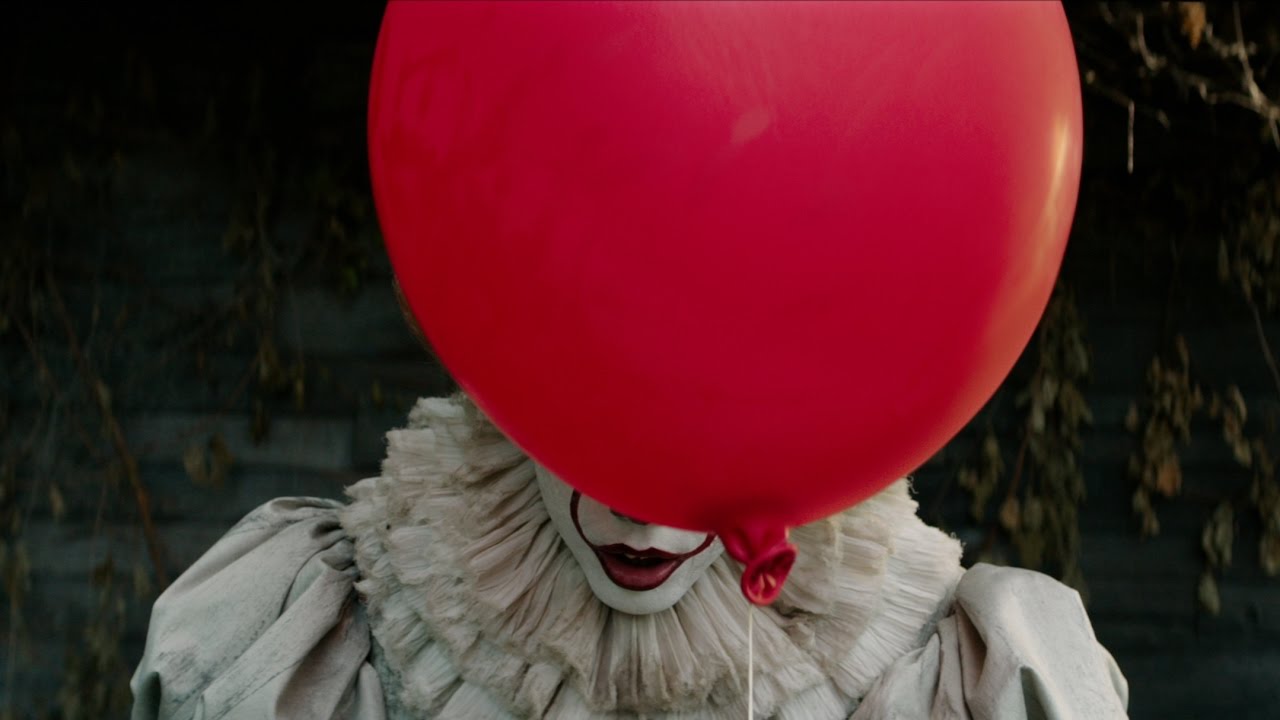
Skarsgård's Pennywise is a genuine creative achievement — physically strange, genuinely disturbing, and unlike Tim Curry's beloved 1990 television version in ways that feel deliberate rather than imitative. Where Curry played Pennywise as theatrical and seductive, Skarsgård plays him as something that has learned to imitate a clown without fully understanding what humans find funny about clowns. The uncanny wrongness of his performance is the film's horror engine, and it is more consistently frightening than the novel's Pennywise, which King sometimes overexplains.
The Losers Club
The child cast is the film's greatest achievement — Jaeden Martell, Sophia Lillis, Finn Wolfhard, Jeremy Ray Taylor, Chosen Jacobs, Jack Dylan Grazer, and Wyatt Oleff create a group whose friendship feels lived-in and genuine. The novel's Losers are equally well-drawn but benefit from King's thousand pages of interiority — we know each of them deeply by the time the first confrontation arrives. The film gives us less time but uses it extraordinarily well. Both versions of the Losers Club are among horror's finest ensemble creations.
Derry as a character
King's Derry is one of his most fully realised fictional towns — a place with a specific history of violence and complicity, where the townspeople's willingness to ignore what happens to children is as much a horror as Pennywise itself. The novel's Derry chapters, which trace the town's history of atrocity across centuries, give It a context and a mythological weight that the film can only gesture toward. The film's Derry is a well-designed small town; the novel's Derry is a character.
The cosmic mythology
King's novel eventually explains what It actually is — a creature from outside the universe, ancient beyond comprehension, with a specific metaphysical enemy called the Turtle. This cosmic mythology is King at his most ambitious and most divisive; readers either find it thrillingly strange or frustratingly inexplicable. Both films largely omit the cosmic framework, keeping Pennywise as a local mystery rather than a universal one. The films are more focused horrors; the novel is a more unwieldy and more interesting one.
Should You Read First?
Read the book if you have the stamina for a thousand pages of King at his most expansive — it is the fuller, richer, more mythologically ambitious experience. Watch the film if you want one of the finest horror films of its decade and the definitive screen Pennywise. Both are worth your time; the novel rewards the commitment it demands.
King's novel earns its thousand pages — Derry, the Losers, the dual timelines, the cosmic mythology — in ways that no two-hour film can replicate. Muschietti's adaptation is one of the best King films ever made: a concentrated, brilliantly cast horror that delivers Skarsgård's Pennywise and a young ensemble of genuine quality. The book is the fuller experience. The film is the more frightening one. Both are essential.