
The Story in Brief
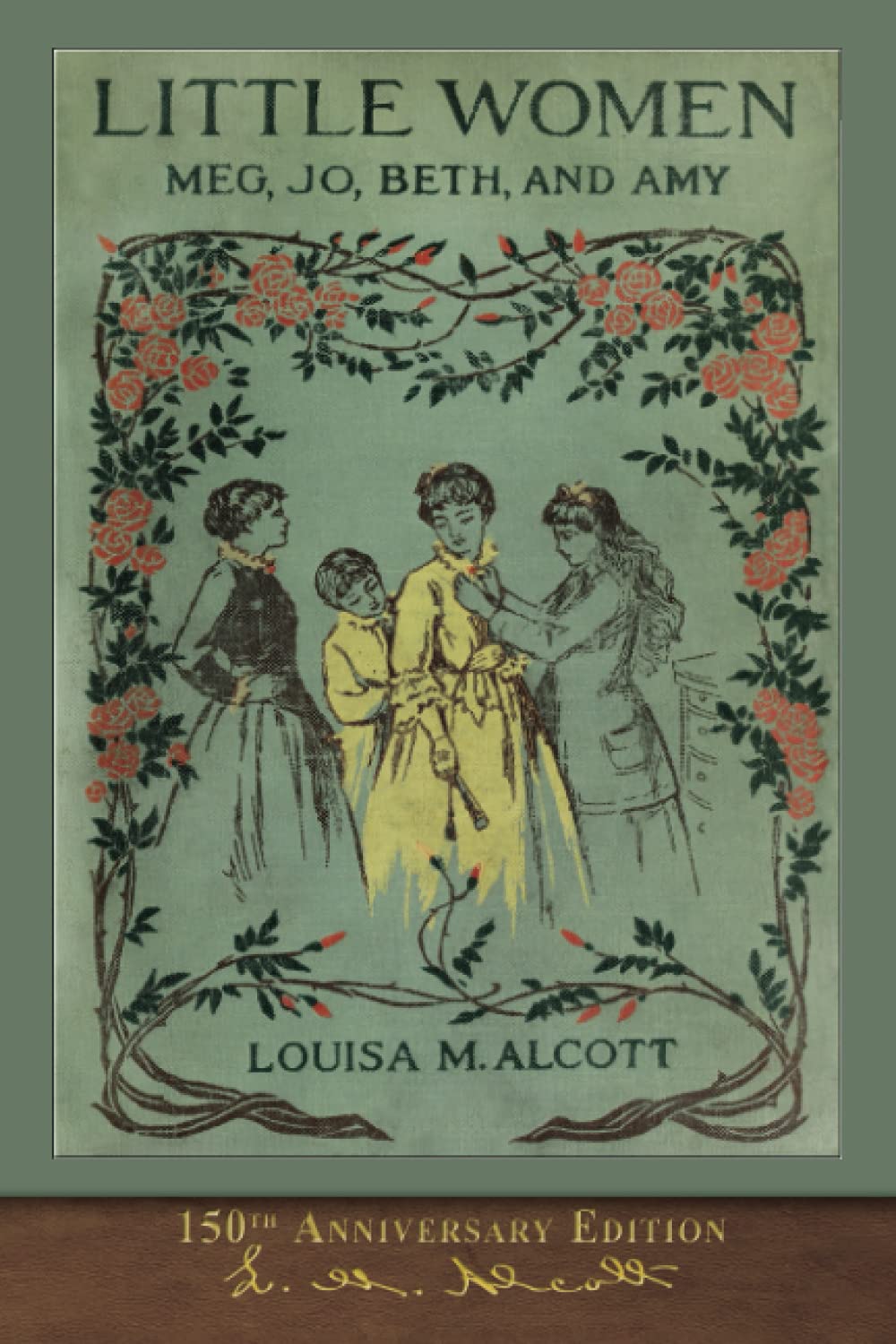
The March sisters — Meg, Jo, Beth, and Amy — come of age in Concord, Massachusetts during and after the Civil War, with their mother Marmee and their absent father, while navigating poverty, ambition, illness, love, and the particular constraints placed on women's lives in the 1860s. Louisa May Alcott's novel, first published in two volumes in 1868 and 1869, is one of the most widely read works in American literature. Greta Gerwig's 2019 adaptation — her second film as director, following Lady Bird — earned six Academy Award nominations including Best Picture and won for Best Costume Design. It is the finest screen adaptation of the novel and one of the very few on this site that genuinely rivals its source.
Key Differences
Gerwig's non-linear structure
Alcott's novel moves chronologically through the sisters' adolescence and early adulthood. Gerwig restructures the story across two intercut timelines — the warmth and poverty of the girls' youth, and the harder, more dispersed present of their adult lives — using shifts in colour temperature to distinguish them. This structure is entirely Gerwig's invention and it works: the contrast between the golden warmth of childhood memory and the cooler light of adult reality gives the film an emotional argument that the novel makes more gradually. It is a genuine formal achievement.
Jo's ambivalence about marriage
Alcott was herself unmarried and wrote Jo partly as a self-portrait — a woman who wants to write, not to marry, in a world that expects the opposite. The novel's Jo ultimately finds a compromise that Alcott herself described as unsatisfying. Gerwig foregrounds this tension explicitly: the film's final sequence presents Jo's romantic conclusion as potentially a fiction within the film, a concession to her publisher's demands. This meta-layer — Jo writing Little Women as the film ends — is Gerwig's sharpest addition and a genuine interpretive act.
Florence Pugh's Amy
Amy is the novel's most complicated sister — selfish, ambitious, and ultimately the one who gets what she wants — and she has traditionally been the least loved character on screen. Pugh's Amy is a revelation: she makes Amy's self-awareness visible, her ambition sympathetic, and her eventual choice of Laurie genuinely earned. This is the film's most significant improvement on any previous adaptation and arguably on the novel itself, which is less interested in Amy's interiority than Pugh makes the character demand.
Alcott's moral world
The novel's Marmee is a figure of moral instruction — her guidance of her daughters toward self-improvement and selflessness is central to the book's didactic dimension, which reflects Alcott's own upbringing in the transcendentalist tradition. The film keeps Marmee's warmth (Laura Dern is excellent) while quietly removing the more overtly instructional passages. This makes the film feel more contemporary and the novel feel more rooted in its historical moment.
Beth's illness
The novel gives Beth's slow decline considerable space — her illness and death are the emotional centre of the second volume, and Alcott handles them with great care and sorrow. The film's Beth arc is somewhat compressed, though Eliza Scanlen's performance makes every scene register fully. The novel's reader spends more time with Beth before losing her, which makes the loss more devastating.
Should You Read First?
Either order works — this is one of the very few entries on this site where watching first is a genuine option. Gerwig's film is faithful enough in spirit that it will not spoil the novel's pleasures, and the novel will deepen your appreciation of Gerwig's choices. If reading first, the film becomes a brilliant interpretation of a book you love. If watching first, the novel fills in everything the film could only gesture toward.
Alcott wrote one of the great American novels about female ambition and the cost of compromise. Gerwig made one of the great American films from it — formally inventive, emotionally precise, and genuinely competitive with the source. This is a rare tie. Read the book. See the film. Regard them as a conversation across 150 years about what women are allowed to want.