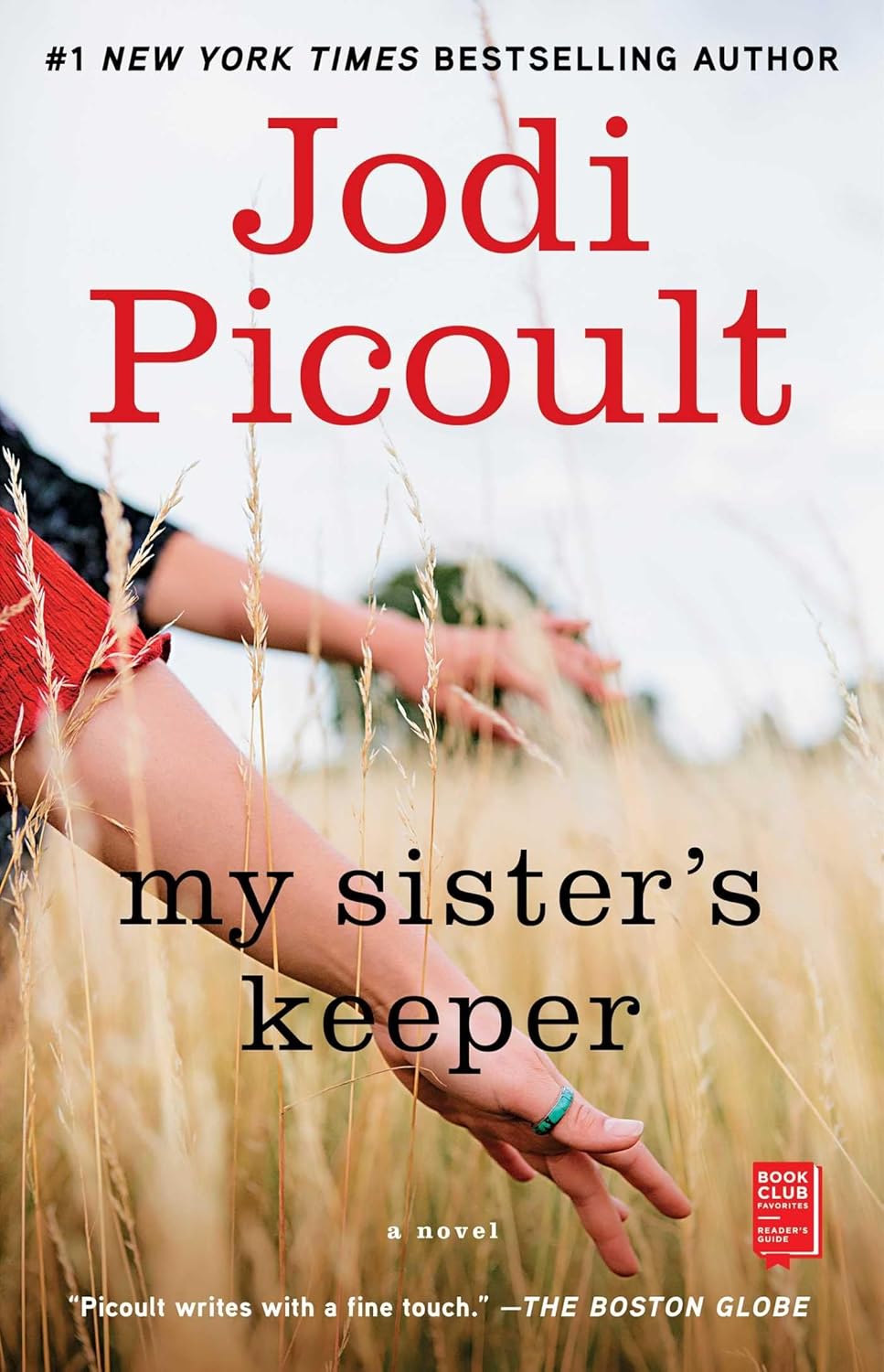
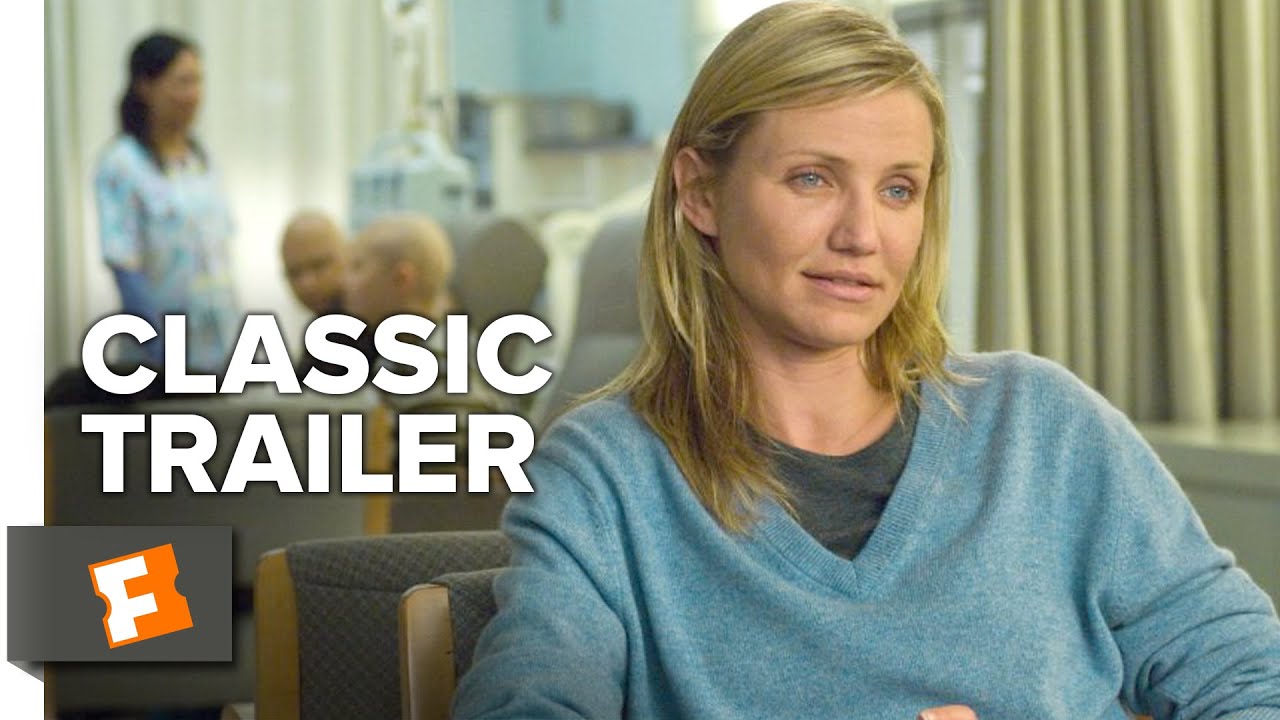
The Story in Brief
Thirteen-year-old Anna Fitzgerald was conceived through in vitro fertilization to be a genetic match for her older sister Kate, who has acute promyelocytic leukemia. For her entire life, Anna has donated blood, bone marrow, and stem cells to keep Kate alive. When her parents, Sara and Brian, ask her to donate a kidney, Anna hires attorney Campbell Alexander to sue for medical emancipation—the right to control her own body.
Jodi Picoult's 2004 novel tells the story through rotating first-person chapters from Anna, Sara, Campbell, Kate, their firefighter father Brian, Campbell's ex-girlfriend and guardian ad litem Julia Romano, and their troubled older brother Jesse. The book became a bestseller and sparked widespread debate about designer babies, parental rights, and bodily autonomy. Nick Cassavetes directed the 2009 film adaptation, starring Abigail Breslin as Anna, Cameron Diaz as Sara, and Sofia Vassilieva as Kate. The movie earned $95 million worldwide but drew criticism from Picoult and readers for drastically altering the ending.
The story remains a touchstone in discussions of medical ethics and remains one of Picoult's most widely read novels, taught in bioethics courses and book clubs alike.
| Character | In the Book | In the Film |
|---|---|---|
| Anna Fitzgerald Abigail Breslin |
A conflicted thirteen-year-old who narrates much of the story, revealing late that Kate asked her to file the lawsuit. | More straightforwardly rebellious, with less internal conflict and a simplified motivation for the lawsuit. |
| Kate Fitzgerald Sofia Vassilieva |
Narrates several chapters from the hospital, revealing her wish to die and her secret request that Anna refuse to donate. | A saintly, passive figure who accepts her fate; her agency in orchestrating the lawsuit is downplayed. |
| Sara Fitzgerald Cameron Diaz |
A former attorney whose chapters reveal her guilt, desperation, and the moral compromises she's made to save Kate. | A more one-dimensional obsessive mother who lacks the book's introspective guilt and legal background. |
| Campbell Alexander Alec Baldwin |
A cynical attorney with epilepsy who uses a service dog and reconnects with his ex-girlfriend Julia during the case. | Baldwin plays him as more straightforwardly heroic, with his medical condition and relationship with Julia simplified. |
| Jesse Fitzgerald Evan Ellingson |
The ignored older brother who narrates chapters about his arson habit and feelings of worthlessness as the genetically useless child. | Reduced to a background character with no narration and minimal screen time; his fire-setting is barely mentioned. |
| Brian Fitzgerald Jason Patric |
A firefighter and amateur astronomer who narrates chapters exploring his helplessness and his role as the family's emotional anchor. | A supportive but largely passive presence who loses his narrative voice and much of his complexity. |
Key Differences
The Ending Is Completely Different
The film's most controversial change is its ending. In Picoult's novel, Anna wins her case—Judge DeSalvo grants her medical emancipation and Campbell is appointed her medical power of attorney. On the drive home from court, Campbell's car is hit by a truck. Anna suffers catastrophic brain damage and is declared brain dead. Campbell, as her medical proxy, authorizes the kidney donation. Kate receives Anna's kidney and survives. The irony is devastating: Anna fought for bodily autonomy and died just after winning it, and her kidney saves Kate anyway.
The movie reverses this entirely. Anna survives, Kate dies peacefully in the hospital surrounded by her family, and the lawsuit becomes moot. This ending is emotionally satisfying in a conventional way but eliminates the book's central tragedy—that Anna's fight for autonomy becomes meaningless, and that Sara gets what she wanted through the cruelest possible means. Picoult has said publicly she was "disappointed" by the change, which strips away the moral ambiguity that defines the novel.
Multiple Narrators Become Single Voiceover
Picoult structures the novel with rotating first-person chapters from seven characters: Anna, Sara, Campbell, Brian, Jesse, Julia, and Kate. Each narrator reveals information the others don't have, and the shifting perspectives create a mosaic of competing truths. Sara's chapters expose her guilt and desperation. Jesse's reveal his pain at being invisible. Campbell's explain his epilepsy and why he carries a service dog. Kate's late-novel chapters deliver the revelation that she asked Anna to file the lawsuit because she wants to die.
The film reduces this to Anna's voiceover with occasional scenes from Sara's perspective. Jesse loses his voice entirely. Campbell's epilepsy is mentioned but not explored. Kate's agency in orchestrating the lawsuit is minimized. The result is a more linear, less morally complex story that loses the book's central insight: everyone in this family is right, and everyone is wrong, depending on whose chapter you're reading.
Jesse's Storyline Is Gutted
In the book, Jesse is a fully realized character with his own narrative arc. His chapters reveal that he sets fires—small ones at first, then larger—because he's the genetically useless child, the one who can't save Kate. He's been ignored his entire life while his parents focused on his sisters. His relationship with his father, who suspects but can't prove Jesse's arson, is one of the novel's most painful subplots. Jesse's invisibility mirrors Anna's objectification: both children exist in Kate's shadow.
The movie reduces Jesse to a handful of scenes. Evan Ellingson appears in the background, says a few lines, and vanishes. His fire-setting is mentioned once in passing. His chapters, his pain, and his role as the family's forgotten child are gone. It's a significant loss—Jesse's story is the book's clearest illustration of how Kate's illness has damaged all three children, not just Anna.
Campbell and Julia's Romance Is Simplified
The novel devotes substantial space to Campbell and Julia's history. They were high school sweethearts. Campbell disappeared without explanation after graduation, breaking Julia's heart. Years later, she's assigned as Anna's guardian ad litem, forcing them to work together. Their chapters reveal that Campbell left because he'd just been diagnosed with epilepsy and didn't want Julia to feel obligated to stay with him. The service dog he claims is for companionship is actually a seizure alert dog. Their reconciliation is hard-won and emotionally earned.
The film compresses this into a few scenes. Alec Baldwin and Viola Davis (who plays Julia in a race-swapped casting choice) have minimal chemistry, and their backstory is sketched in broad strokes. Campbell's epilepsy is mentioned but never shown. The service dog becomes a quirky detail rather than a plot point. Their romance feels like an obligation rather than an integral part of the story, which is a shame—in the book, their relationship parallels Anna's fight for autonomy, as both involve the right to make choices about your own body and future.
The Ethical Complexity Is Flattened
Picoult's novel refuses easy answers. Sara is both a loving mother and someone who has treated Anna as a spare parts repository since birth. Anna wants autonomy but also loves Kate and feels guilty. Kate wants to die but can't tell her mother. Brian sees the damage but feels powerless to stop it. The book presents the lawsuit as a genuine moral dilemma with no clear right answer—even after the ending, readers debate whether Sara was a monster or a desperate mother, whether Anna's death was tragic or grimly appropriate.
The film simplifies this into a more conventional story of a girl standing up to her overbearing mother. Cameron Diaz's Sara is more villain than complex character. The ethical questions about designer babies, bodily autonomy, and parental rights are raised but not deeply explored. The changed ending eliminates the book's most provocative question: if Anna had lived, would the kidney donation have been ethical? By letting Kate die instead, the movie sidesteps the dilemma entirely.
Should You Read First?
Read the book first—the film's ending will spoil nothing because it's entirely different, and you'll want to experience Picoult's devastating final twist without foreknowledge. The novel's structure, with its seven narrators and rotating perspectives, creates a reading experience the film can't replicate. You'll understand each character's motivations in a way the movie's streamlined narrative doesn't allow. Sara's chapters, in particular, make her sympathetic despite her actions—something Diaz's performance can't quite achieve.
If you watch the film first, you'll expect a conventional tearjerker about a sick girl and her brave sister. You'll be unprepared for the book's moral complexity, its refusal to offer easy answers, and its gutting final chapters. The novel is a genuine ethical puzzle; the movie is a well-acted melodrama. Experience the puzzle first, then see what Hollywood did to it.
The book wins decisively. Picoult's rotating narrators create moral complexity the film can't match, and her ending—controversial, devastating, thematically perfect—exposes the movie's sanitized conclusion as the cowardice it is. Read the novel for the story Cassavetes didn't have the courage to film.