
The Story in Brief
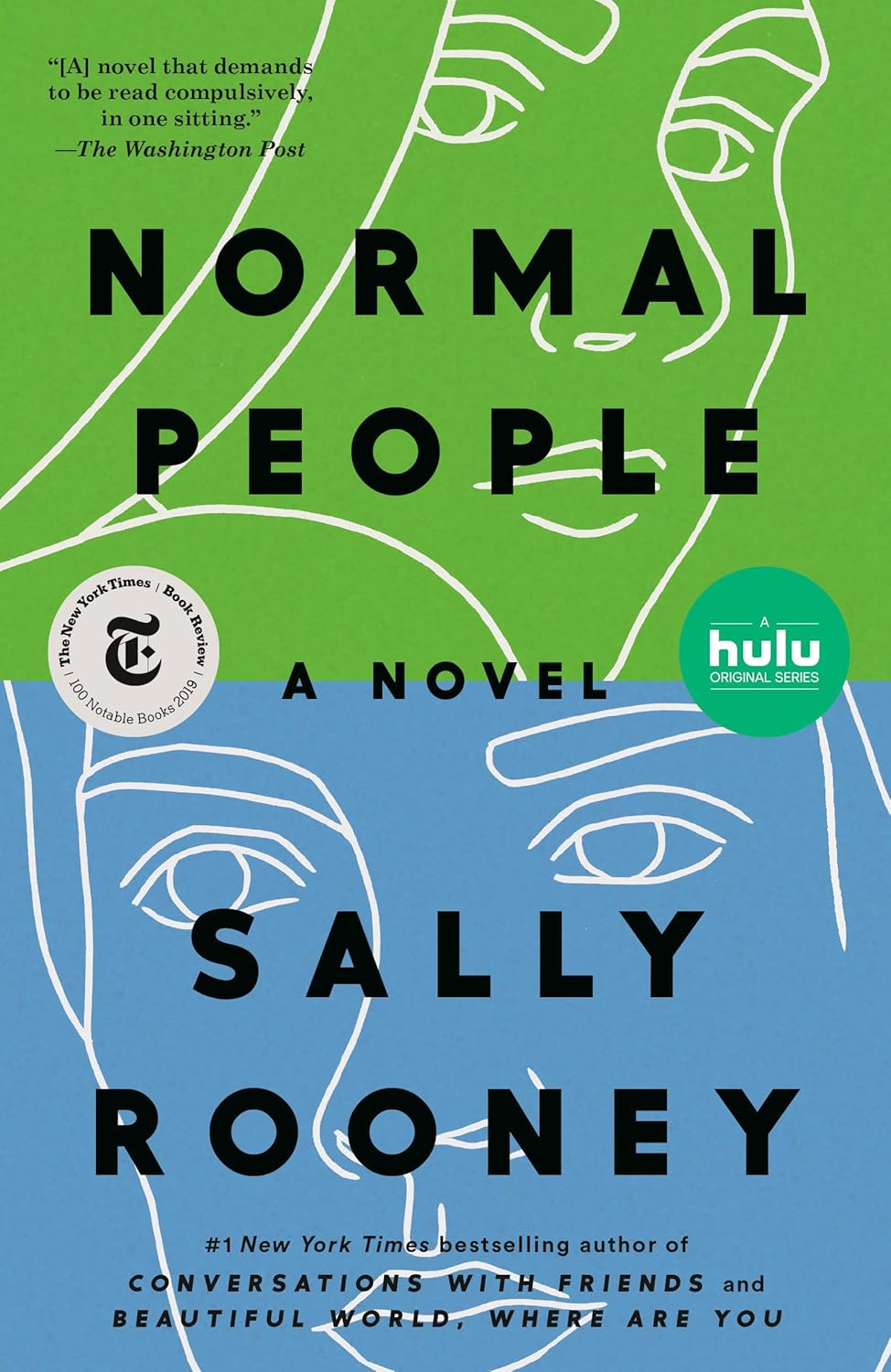
Connell and Marianne grow up in the same small town in Ireland — he's popular, she's an outsider — and fall into a relationship they can't quite name or sustain across the years of their education. Sally Rooney's second novel traces their connection across university, love affairs, illness, and the slow work of becoming adults. The Hulu/BBC series, directed partly by Lenny Abrahamson, stars Paul Mescal and Daisy Edgar-Jones in performances that made both of them stars. This is one of the rare cases where both versions are genuinely essential.
Key Differences
Rooney's free indirect style
Rooney writes in free indirect discourse — moving fluidly between characters' perspectives without signalling the shift — which creates an unusual intimacy. You're inside Connell and Marianne's heads simultaneously, understanding both sides of every misunderstanding as it happens. The series uses close-up photography and restrained performance to achieve something similar, but the experience is different: watching two people fail to communicate is painful in a way that understanding why they're failing is not.
The performances
Paul Mescal and Daisy Edgar-Jones give two of the finest performances in recent television. Mescal's Connell is physically present in a way the novel can only gesture at — his discomfort in his own popularity, his gentleness, his inability to say what he means — all rendered through body language and expression in ways that exceed what prose can do. This is the area where the series most clearly surpasses its source.
The sex scenes
Rooney writes about sex frankly and specifically, using physical intimacy as a way to show what Connell and Marianne cannot say to each other. The series handles this with equal frankness, which was controversial but is narratively correct. The intimacy coordinator approach — making the scenes feel genuinely collaborative rather than observed — is one of the series' most significant achievements.
Marianne's family
The novel spends more time establishing the specific dynamics of Marianne's abusive home life and how they shape her relationship to pain and intimacy. The series compresses this, which means some of Marianne's behaviour in later episodes is slightly less grounded than it is on the page.
The ending
Both versions end in the same place — Connell leaving for New York, Marianne telling him to go — but the accumulation of the novel means the ending carries more weight. The series builds toward the same moment in twelve episodes; the novel does it in fewer pages but with more interior access. Both endings are devastating. The novel's is slightly more earned.
Should You Read First?
Either order works — this is genuinely unusual. If you read first, the series gives you Mescal's performance, which adds something the novel cannot provide. If you watch first, the novel gives you the interior dimension that the series, excellent as it is, cannot fully reach. Read the novel. Watch the series. It doesn't much matter which comes first.
One of the very few cases where both versions are essential and neither is definitively better. Rooney's prose does things Abrahamson's camera cannot, and Abrahamson's camera — specifically trained on Mescal and Edgar-Jones — does things Rooney's prose cannot. Read both. Watch both. Start with whichever you prefer.