The Story in Brief
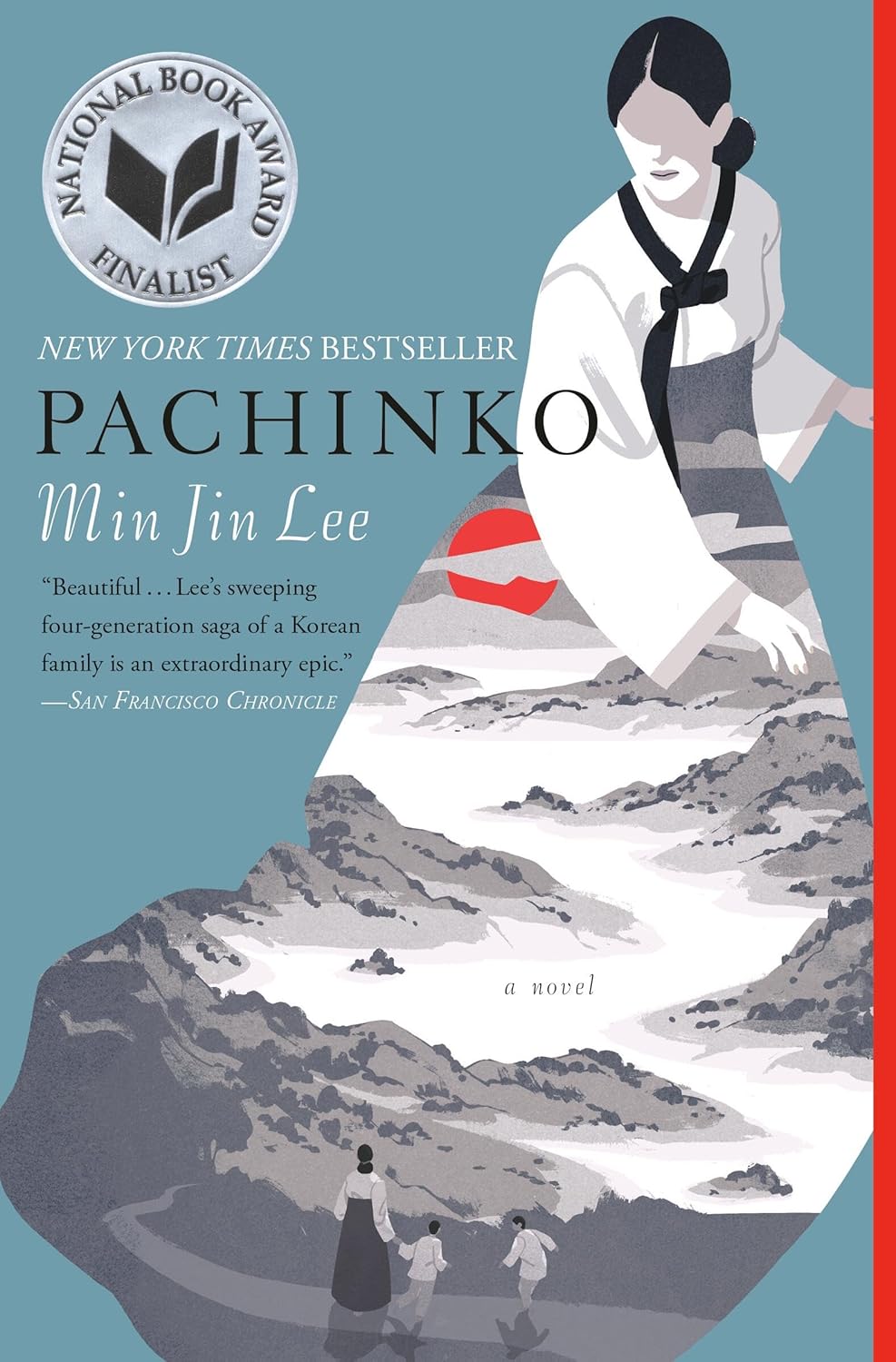
Beginning in 1910s Korea under Japanese occupation, Pachinko follows Sunja, a young woman impregnated by Hansu, a wealthy married Korean fish broker. To save her from shame, Isak, a tubercular Christian minister, marries her and takes her to Osaka, Japan, where she raises two sons — Noa and Mozasu — amid brutal discrimination against Koreans. Min Jin Lee spent nearly thirty years researching and writing the novel, which traces four generations through World War II, the Korean War, and Japan's economic boom.
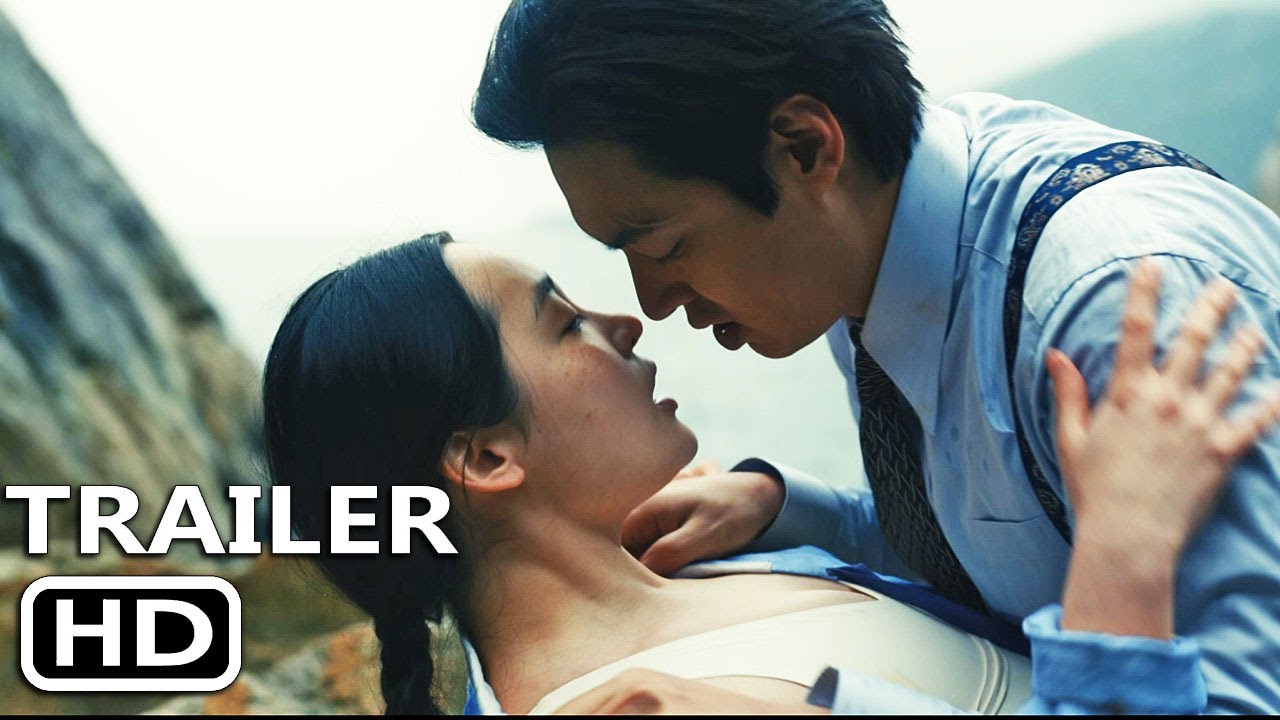
The Apple TV+ adaptation, directed by Kogonada and Justin Chon, premiered in 2022 to near-universal acclaim. It uses a dual timeline structure, intercutting between young Sunja's story in the 1910s-1940s (played by Kim Min-ha) and her grandson Solomon's 1989 corporate career in Tokyo (Jin Ha). Youn Yuh-jung, fresh from her Oscar win for Minari, plays elderly Sunja with devastating restraint. The series was nominated for multiple Emmys and renewed for a second season.
The novel became a National Book Award finalist and was named to Barack Obama's favorite books list. It's widely considered one of the defining works of 21st-century American literature, a sweeping examination of identity, survival, and the cost of assimilation.
| Character | In the Book | In the The TV Series |
|---|---|---|
| Sunja Kim Min-ha / Youn Yuh-jung |
The novel's moral center, whose early pregnancy shapes four generations; we follow her from age sixteen to her death in old age. | Split between young Sunja (Kim Min-ha) in the past timeline and elderly Sunja (Youn Yuh-jung) in 1989, with middle-aged years largely compressed. |
| Hansu Lee Min-ho |
Sunja's first love and biological father of Noa; a morally complex figure who reappears throughout the novel to help the family while pursuing his own interests. | Lee Min-ho brings charisma and menace to the role, though Season One gives him less screen time than the novel's sustained presence across decades. |
| Noa Kaho Minami (young) / Eunchae Jung (teen) |
Sunja's eldest son, who passes as Japanese and ultimately commits suicide when his Korean identity is exposed; one of the novel's most devastating arcs. | Season One introduces young Noa but has not yet reached his tragic adult storyline, which is the novel's emotional climax. |
| Mozasu Soji Arai |
Sunja's second son, who embraces his Korean identity and builds a pachinko empire; Solomon's father and a bridge between generations. | Appears primarily in the 1989 timeline as Solomon's father, with his own rise in the pachinko industry shown in flashbacks. |
| Solomon Jin Ha |
Sunja's grandson, a Columbia-educated banker trying to close a real estate deal in Tokyo while navigating his Korean-American identity. | Given equal narrative weight to young Sunja in Season One, making the series feel like a two-character story rather than a four-generation saga. |
| Isak Steve Sang-Hyun Noh |
The gentle Christian minister who marries pregnant Sunja and raises Noa as his own; dies in prison after being arrested for his faith. | Steve Sang-Hyun Noh captures Isak's quiet dignity, and his arrest and death are among the series' most powerful scenes. |
Key Differences
The series compresses the middle generations into supporting roles
The novel gives equal narrative weight to Sunja, Noa, Mozasu, and Solomon — each generation gets hundreds of pages to develop as complete characters with their own arcs, failures, and triumphs. The series focuses primarily on young Sunja and Solomon, with Noa and Mozasu appearing as supporting figures rather than protagonists.
This is the adaptation's most significant loss. In the novel, watching Noa's assimilation and eventual suicide, then seeing Mozasu choose the opposite path by embracing his Korean identity through the pachinko industry, creates a devastating contrast. The series has not yet given Noa's story the space it needs, and Mozasu's rise feels like backstory rather than lived experience.
Noa's tragic arc is the novel's emotional climax but remains unfinished in the series
In Lee's novel, Noa is one of the most heartbreaking characters in contemporary fiction. He attends Waseda University, passes as Japanese, becomes a professor, marries a Japanese woman, and builds an entire life on the lie of his identity. When Hansu reveals himself as Noa's biological father — and Noa learns his success was funded by yakuza money — he disappears, changes his name, and eventually commits suicide.
Season One introduces young Noa as a studious child but hasn't reached his adult storyline. This is the novel's devastating center — the cost of assimilation, the impossibility of escape from identity — and its absence makes the series feel incomplete. Season Two begins to address this, but the novel's sustained focus on Noa's interior life is what makes his fate unbearable.
The dual timeline structure creates dramatic irony but sacrifices chronological sweep
The series intercutting between 1910s-1940s Sunja and 1989 Solomon creates immediate dramatic tension — we see the consequences of Sunja's choices before understanding their origins. This works as television craft. Kogonada's direction makes the parallel editing visually elegant, with distinct color palettes for each era.
But the novel's largely chronological structure allows you to experience history as the characters do — you live through the decades with them, feeling the weight of time and the accumulation of choices. The series' structure makes it feel like a two-character story with historical context, while the novel is a genuine multigenerational saga where each generation's story is equally important.
The series' visual achievement is extraordinary and does things the novel cannot
Kogonada shoots the series with painterly precision — the muted earth tones of the past timeline, the cold corporate blues of 1989, the way light falls through shoji screens in Sunja's Osaka home. The recreation of early 20th-century Korea and wartime Japan is meticulous. Youn Yuh-jung's performance as elderly Sunja is one of the great achievements in recent television — she conveys a lifetime of endurance in a glance.
The novel gives you the interior experience of discrimination through Sunja's thoughts and observations. The series shows you the physical reality — the Korean ghetto in Osaka, the way Japanese characters recoil from Korean speech, the visual markers of otherness. Both approaches are powerful, but they're fundamentally different experiences.
The novel's historical texture is denser and more specific
Lee's research is extraordinary. The novel includes specific details about the pachinko industry's mechanics, the social hierarchies within the zainichi Korean community, the way Korean women were conscripted as comfort women, the black market economy during the American occupation. This texture permeates every page — you learn how this world worked while living inside it.
The series captures the visual dimension beautifully but necessarily simplifies the historical context. The novel makes you understand why Koreans could only succeed in pachinko, taxi driving, and other marginal industries. The series shows you pachinko parlors but doesn't have time to explain the economic system that made them the only option. Read the novel for the education; watch the series for the immersion.
Yes, and this is one of the clearest cases for reading first. The novel's four-generation scope is what makes Pachinko extraordinary — it's not just Sunja's story but the story of how one woman's choices echo through a century. The series assumes you understand the weight each generation carries, and watching it without that context means missing the full impact of scenes like elderly Sunja visiting Noa's grave or Solomon's corporate humiliation.
Reading first will also deepen your appreciation for what the series does well. Youn Yuh-jung's performance becomes even more powerful when you've lived through the novel's version of Sunja's entire life. The series' visual beauty gains meaning when you understand the historical specifics Lee researched. This is a rare case where the adaptation is excellent and still a fraction of the source material. Read the novel first. It's one of the best books of the decade.
Should You Read First?
Yes, and this is one of the clearest cases for reading first. The novel's four-generation scope is what makes Pachinko extraordinary — it's not just Sunja's story but the story of how one woman's choices echo through a century. The series assumes you understand the weight each generation carries, and watching it without that context means missing the full impact of scenes like elderly Sunja visiting Noa's grave or Solomon's corporate humiliation.
Reading first will also deepen your appreciation for what the series does well. Youn Yuh-jung's performance becomes even more powerful when you've lived through the novel's version of Sunja's entire life. The series' visual beauty gains meaning when you understand the historical specifics Lee researched. This is a rare case where the adaptation is excellent and still a fraction of the source material. Read the novel first. It's one of the best books of the decade.
The Apple TV+ series is one of the finest literary adaptations in recent streaming history — Kogonada's direction is painterly, Youn Yuh-jung's performance is career-defining, and the series captures the novel's emotional core with rare fidelity. And it's still a fraction of what Min Jin Lee built. The novel's four-generation scope, its sustained focus on Noa's tragedy, and its historical density make it irreplaceable. Read the book first, then watch the series as a companion piece. The book's scope is irreplaceable. The series' visuals are unmatchable. Both belong in your life.