
The Story in Brief
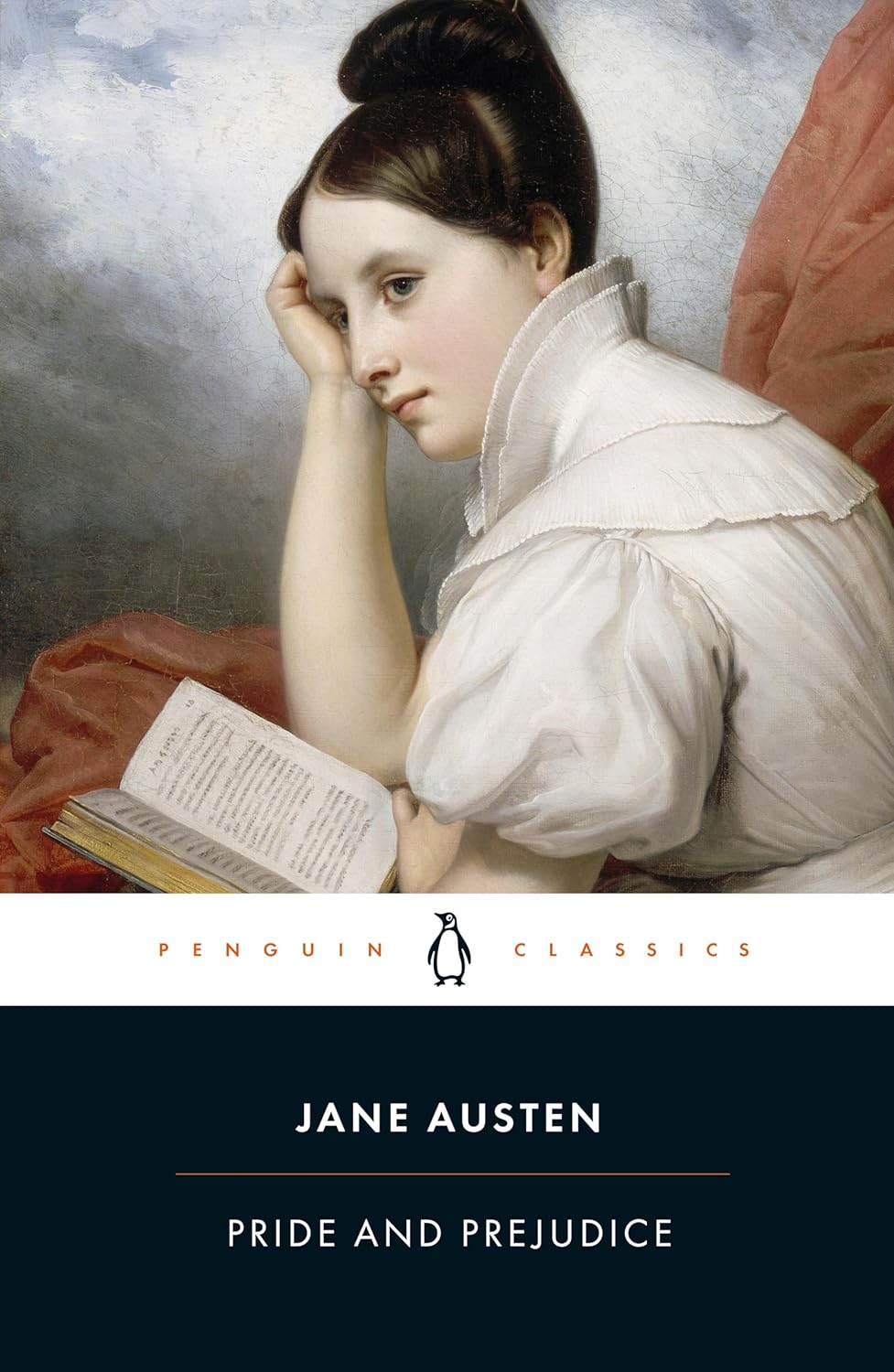
Elizabeth Bennet is the second of five daughters in a genteel but financially precarious English family. When the wealthy Mr Darcy arrives in the neighbourhood, their mutual antagonism gradually becomes something else entirely. Jane Austen's novel, published in 1813, is one of the most beloved works in the English language — sharp, funny, and formally precise. Joe Wright's 2005 film, with Keira Knightley and Matthew Macfadyen, is one of the finest screen adaptations in recent memory. It is still not the novel.
Key Differences
Austen's irony
The novel's opening sentence — it is a truth universally acknowledged that a single man in possession of a good fortune must be in want of a wife — establishes the ironic register that Austen sustains for the entire book. This irony is directed simultaneously at the marriage market, at the women who participate in it, and at the men who benefit from it. Film cannot render sustained free indirect irony; it can suggest it through performance and direction, which Wright does skilfully but incompletely.
Elizabeth's wit
Keira Knightley plays Elizabeth with intelligence and energy — her sparring with Darcy is the film's great pleasure. The novel's Elizabeth is funnier and more precisely observant. Her interior commentary on the social world around her is the novel's finest quality and it belongs entirely to the page.
Matthew Macfadyen's Darcy
Macfadyen's Darcy is romantic and wounded — his pride rendered as shyness rather than contempt. This is a legitimate interpretation that makes Darcy immediately sympathetic. Austen's Darcy is more genuinely difficult — his first proposal is an act of condescension as much as declaration — and the film softens this. Both interpretations are defensible.
Joe Wright's cinematography
Seamus McGarvey shoots the English countryside and country houses with extraordinary beauty — dawn light over Pemberley, the Bennet house in the blue hour before morning. The film's visual world is a genuine artistic achievement that adds something the novel cannot have: the specific physical beauty of the world Austen described.
The Bennet family
The film compresses the Bennet family's dynamics significantly. Jane, Lydia, and Mrs Bennet are vivid in Wright's film but less fully characterised than in the novel. The novel's Mrs Bennet is funnier and more pathetic and more sympathetically drawn than the film's version, which tends toward caricature.
Should You Read First?
Yes — Austen's prose is the experience. The novel's irony, Elizabeth's interiority, and the specific quality of Austen's observation of social behaviour are what make it one of the great works in English literature. Read first and the film becomes a beautiful companion. The 2005 Wright film is among the very best adaptations; it is still considerably less than the novel.
Austen wrote one of the great English novels and Wright made one of the great English literary films. The novel's wit and formal precision are irreplaceable. The film's beauty and performances are genuine achievements. Read the novel — all of it, at least twice. See the film for Macfadyen's Darcy walking across the morning field. Both are essential. The book is the thing.