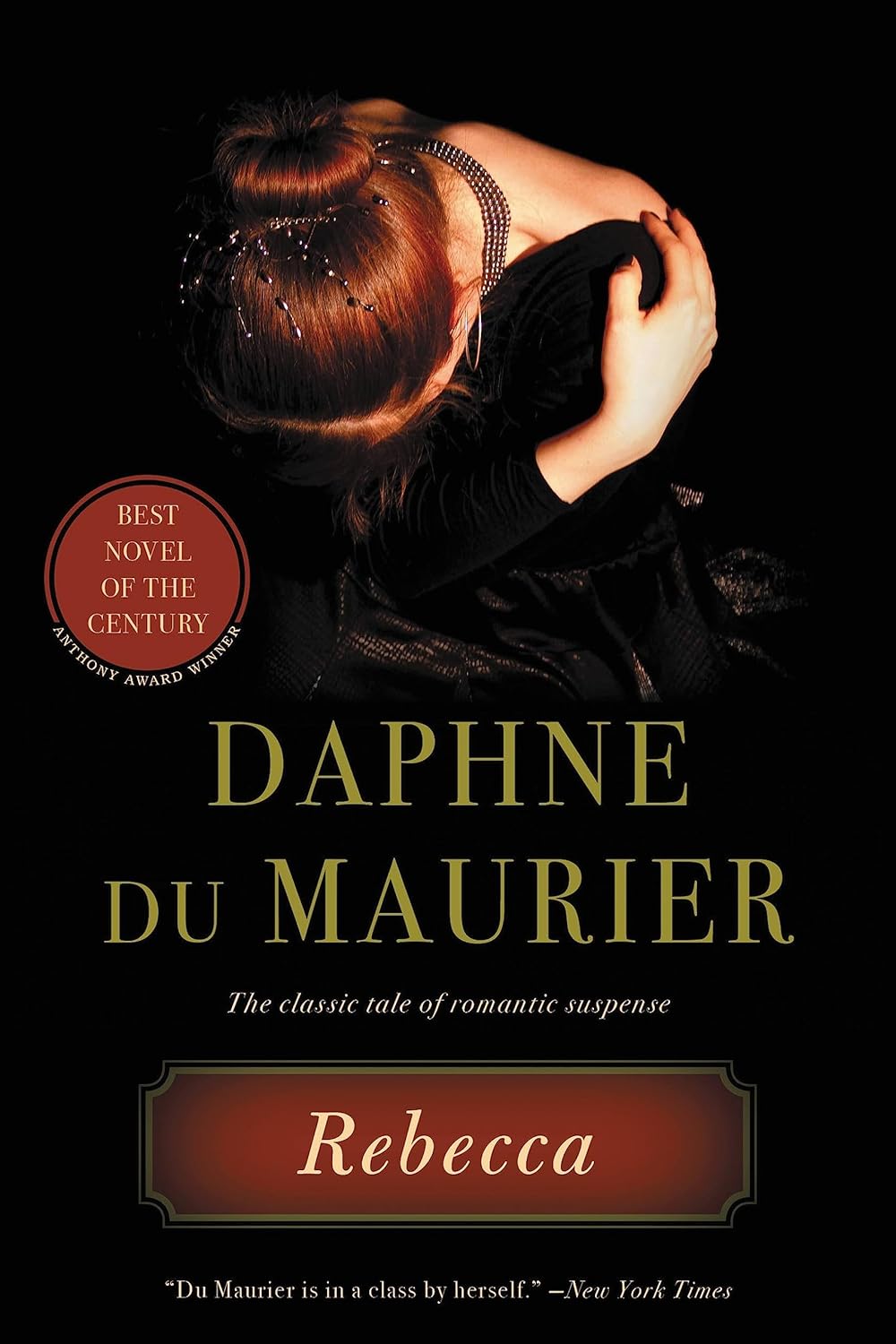

The Story in Brief
A young, unnamed woman marries the wealthy widower Maxim de Winter and comes to live at Manderley, his grand Cornish estate. The house is haunted by the presence of Rebecca, Maxim's first wife, who died the previous year — and by Mrs Danvers, the housekeeper devoted to her memory. Daphne du Maurier's 1938 novel is one of the great Gothic mysteries, as much about female insecurity and identity as about secrets and death. Alfred Hitchcock's 1940 adaptation was his first American film and won the Academy Award for Best Picture. There is also Ben Wheatley's 2020 Netflix adaptation, which is largely unnecessary.
Key Differences
The Narrator's Namelessness
Du Maurier's narrator is never named — she is defined entirely by her relationship to others, particularly to the memory of Rebecca. This formal choice is the novel's most radical element: the woman at the centre of the story has no name, no history, no identity that isn't borrowed or imposed. Hitchcock's Joan Fontaine communicates this anxiety through performance, but the formal dimension is lost on screen.
Mrs Danvers
Judith Anderson's Mrs Danvers is one of Hitchcock's great screen creations — spectral, devoted, frightening. Du Maurier's Mrs Danvers is rendered through the narrator's fear and awe, which makes her simultaneously more and less than what Anderson shows. Both are extraordinary. Anderson's is more immediately iconic.
Hitchcock's Hays Code Constraints
The novel's ending involves Maxim having murdered Rebecca — an act the Production Code prevented Hitchcock from presenting as the narrator accepts and forgives. Hitchcock changed Rebecca's death to an accident, which significantly alters the moral stakes of the ending and the narrator's complicity. Readers of the novel will find the film's resolution considerably cleaner than du Maurier intended.
Manderley
The novel opens with the narrator dreaming of Manderley — "Last night I dreamt I went to Manderley again" — and the house is the novel's central character, as present and as threatening as any person in it. Hitchcock renders Manderley with appropriate grandeur, but the film's house is a set; du Maurier's is a living organism.
The 2020 Netflix Version
Ben Wheatley's Netflix adaptation, with Lily James and Armie Hammer, modernizes the aesthetic without modernizing the material. It was met with negative reviews and largely forgotten. The 1940 Hitchcock remains definitively the screen version.
Should You Read First?
Yes — specifically to experience the narrator's nameless anxiety in full before Hitchcock necessarily gives her a face and a performance. Also to understand the novel's ending before the Hays Code changes it. Read first, then watch Hitchcock's version as a masterful adaptation of a different story.
Du Maurier wrote a Gothic masterpiece of female anxiety and identity. Hitchcock made a brilliant film of a sanitised version of it. The novel is the greater work and the more disturbing one. The film is among Hitchcock's finest. Read the book for the real ending. See the film for Mrs Danvers.