The Story in Brief
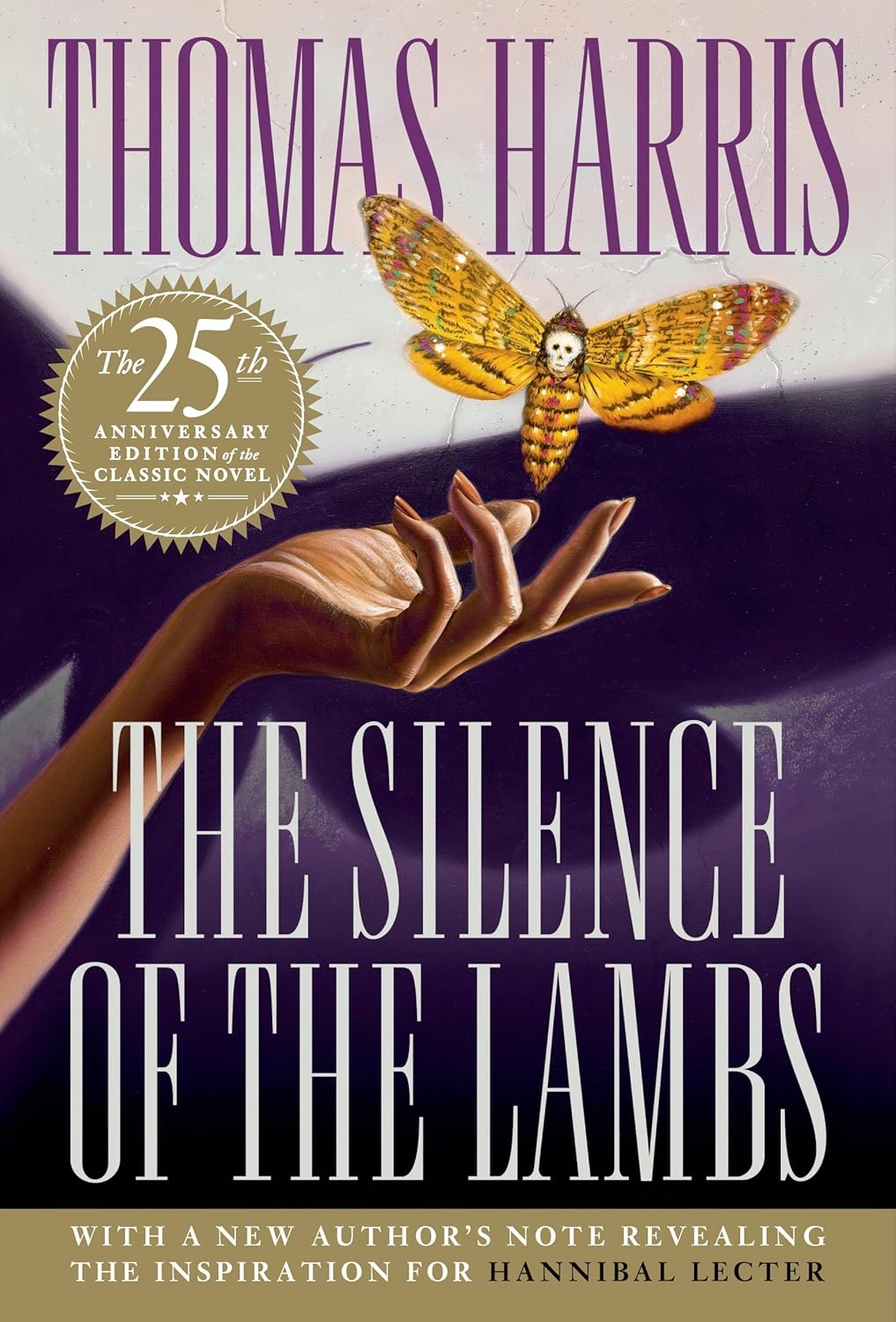
FBI trainee Clarice Starling is pulled from her classes at Quantico and sent to interview Dr. Hannibal Lecter, a brilliant psychiatrist imprisoned for murder and cannibalism. Her assignment: extract insight that might help catch Buffalo Bill, a serial killer who skins his female victims. What follows is a psychological chess match between Starling and Lecter, with Clarice trading fragments of her traumatic childhood for clues that lead her deeper into Bill's twisted pathology.
Thomas Harris published the novel in 1988, his second featuring Hannibal Lecter after Red Dragon. Jonathan Demme's 1991 film adaptation, starring Jodie Foster and Anthony Hopkins, became only the third film in history to win all five major Academy Awards: Best Picture, Director, Actor, Actress, and Adapted Screenplay. Ted Tally's screenplay hews remarkably close to Harris's structure, preserving entire exchanges of dialogue verbatim.
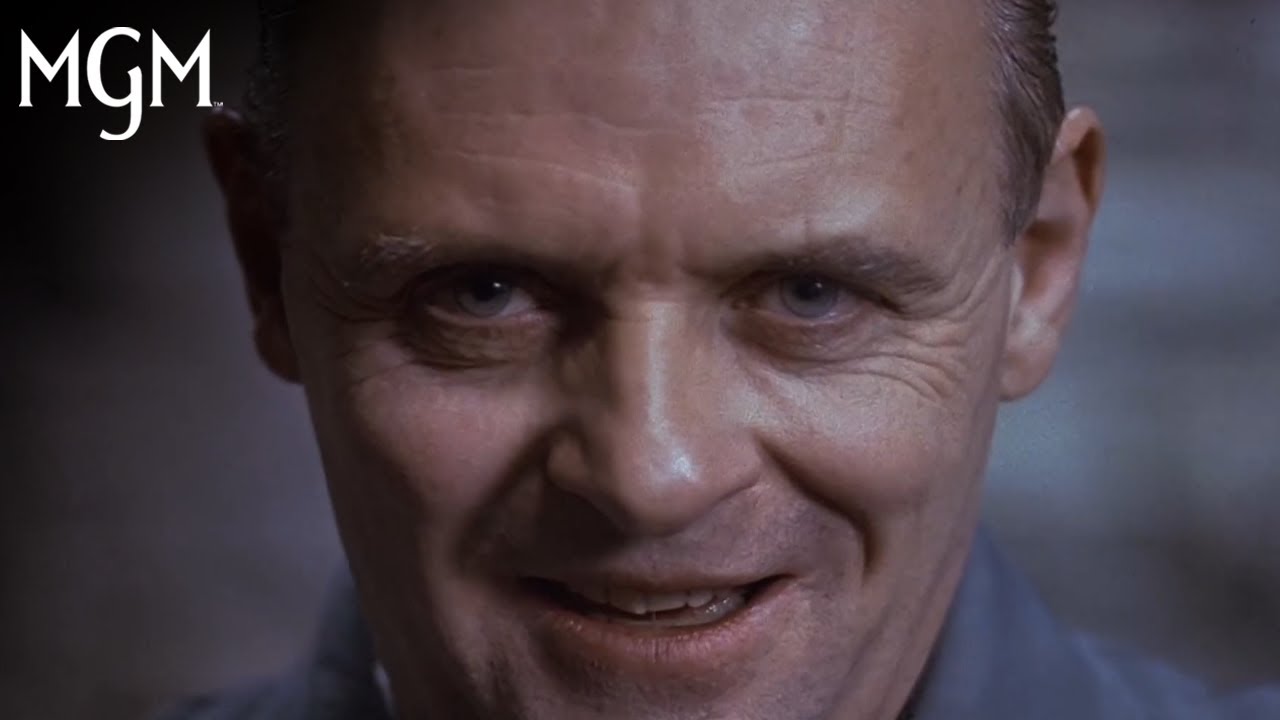
The film's cultural impact was immediate and enduring. Hopkins's Lecter became an instant icon despite appearing for only sixteen minutes of screen time. Foster's Clarice established a template for complex female protagonists in Hollywood thrillers. The film grossed $272 million worldwide and remains one of the most critically acclaimed thrillers ever made, sitting alongside Harris's novel as twin masterworks that refuse to be ranked.
| Character | In the Book | In the Film |
|---|---|---|
| Clarice Starling Jodie Foster |
Harris renders her from inside her own consciousness, revealing the poverty and trauma that drive her ambition and her need to save Catherine Martin. | Foster plays her with controlled intensity, using physical stillness and vocal precision to convey both vulnerability and determination in every scene. |
| Dr. Hannibal Lecter Anthony Hopkins |
More psychologically detailed, with elaborate descriptions of his memory palace technique and his aesthetic philosophy; frightening through accumulated intelligence. | Hopkins creates instant menace through stillness, sudden movements, and a voice that shifts from courtly to predatory in a single syllable. |
| Jame Gumb / Buffalo Bill Ted Levine |
Given extensive backstory about his childhood abuse, failed gender reassignment attempts, and psychological formation as a killer seeking transformation. | Levine emphasizes the character's delusion and menace, making him purely frightening rather than psychologically comprehensible. |
| Jack Crawford Scott Glenn |
More conflicted about using Clarice, with deeper exploration of his dying wife Bella and his guilt about manipulating a trainee. | Glenn plays him as a pragmatic FBI veteran who recognizes Clarice's talent but remains emotionally distant and professionally focused. |
| Dr. Frederick Chilton Anthony Heald |
Petty, vindictive, and sexually predatory toward Clarice, with more scenes establishing his incompetence and cruelty toward Lecter. | Heald makes him buffoonish and sleazy, a perfect foil for both Lecter's intelligence and Clarice's professionalism. |
Key Differences
Clarice's Interiority
Harris writes from inside Clarice's perspective, giving readers access to her memories of poverty, her father's death, and the screaming lambs she tried to save on a Montana ranch. We experience her shame about her Appalachian accent, her awareness of being patronized by male colleagues, and her complex feelings about Crawford's manipulation.
Foster conveys much of this through performance—the way Clarice straightens her posture when entering a room of men, the flicker of pain when Lecter probes her past—but the film necessarily loses some psychological depth. The novel's first-person passages create an intimacy that even Foster's extraordinary performance can't fully replicate.
The trade-off is that Foster makes Clarice immediately iconic in a way that takes longer to develop on the page. Her physical presence—small, determined, visibly working to project authority—communicates character instantly.
Lecter's Sixteen Minutes
Hopkins won the Academy Award for Best Actor despite appearing in roughly sixteen minutes of the film's 118-minute runtime. His Lecter is all stillness and sudden violence: the way he stands centered in his cell, the hiss on "census taker," the grotesque smile after describing eating a liver with fava beans and a nice Chianti.
Harris's Lecter is more elaborately drawn, with detailed descriptions of his memory palace technique, his aesthetic philosophy, and his manipulation of other prisoners. The novel gives him more scenes and more psychological complexity, making him both more comprehensible and more disturbing over time.
Hopkins's performance is more immediately iconic. Harris's Lecter is more frightening in aggregate. Both are extraordinary achievements, and neither diminishes the other.
Demme's Direct-Address Camera
Demme's most distinctive directorial choice is filming Lecter's scenes with the camera positioned as Clarice's eyes. When Lecter speaks to Clarice, he speaks directly into the lens, creating an intimacy and discomfort that mirrors Harris's first-person prose.
This technique translates a literary device into purely cinematic terms. Harris achieves intimacy by writing from Clarice's perspective; Demme achieves it by making the audience occupy her position. The effect is that Hopkins appears to be addressing each viewer personally, which is why his performance feels so commanding despite its brevity.
The novel can't replicate this visual technique, but it doesn't need to—Harris's prose creates its own form of uncomfortable intimacy through Clarice's observations of Lecter's eyes, his stillness, and the way he seems to see through her defenses.
Buffalo Bill's Backstory
Harris devotes significant space to Jame Gumb's history: his childhood abuse, his failed attempts to qualify for gender reassignment surgery, and his psychological formation as a killer seeking transformation through his victims' skin. The novel makes him comprehensible without excusing him.
The film streamlines this to a few lines of dialogue and focuses on making Gumb immediately frightening. Ted Levine's performance emphasizes delusion and menace—the "It rubs the lotion on its skin" scene is more purely horrifying in the film because we understand less about Gumb's psychology.
This is one of the film's few clear improvements. The novel's psychological detail is fascinating but slows the narrative momentum. The film correctly recognizes that Gumb works better as a monster than as a case study, keeping the focus on Clarice's hunt rather than the killer's pathology.
The Climax in Buffalo Bill's Basement
Both versions end with Clarice alone in Gumb's basement, fumbling in darkness while he watches through night-vision goggles. The film makes this sequence almost unbearably tense through sound design—Clarice's breathing, the click of Gumb's revolver hammer, the sudden gunshots.
Harris's version is equally effective but achieves tension through Clarice's internal monologue. We're inside her head as she tries to control her panic, remembers her training, and forces herself to act. The novel gives us her thoughts in the moment; the film gives us only her actions and the sounds in the dark.
Both approaches work perfectly for their respective mediums. The film's climax is more viscerally frightening. The novel's is more psychologically complex. Neither is definitively superior.
Should You Read First?
This is one of the rare cases where the viewing order genuinely doesn't matter. The film is so skillfully made that it doesn't spoil the reading experience—Harris's prose creates its own pleasures independent of plot surprise. And the novel is so tightly constructed that knowing the story doesn't diminish the film's power.
If you read first, you'll appreciate how faithfully Tally adapted Harris's dialogue and structure. If you watch first, you'll discover psychological depth and character detail that even Foster and Hopkins couldn't fully convey. Either way, you should experience both. This is one of the handful of adaptations where the book and film stand as equals.
Harris wrote a masterwork of psychological thriller fiction. Demme made a masterwork of psychological thriller cinema. Foster and Hopkins delivered career-defining performances that somehow don't overshadow the source material. Read both. Watch both. Don't waste time trying to rank them.