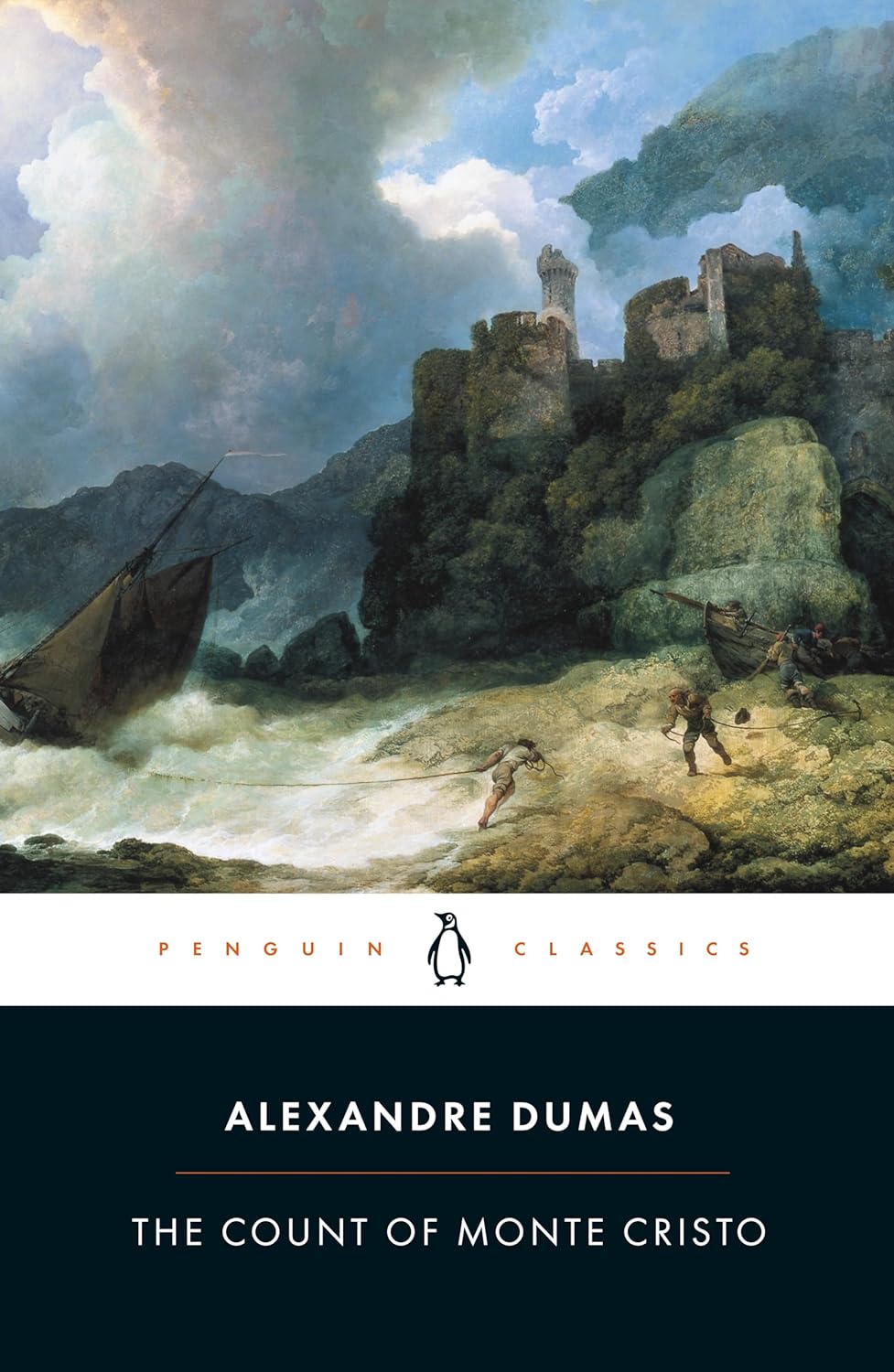
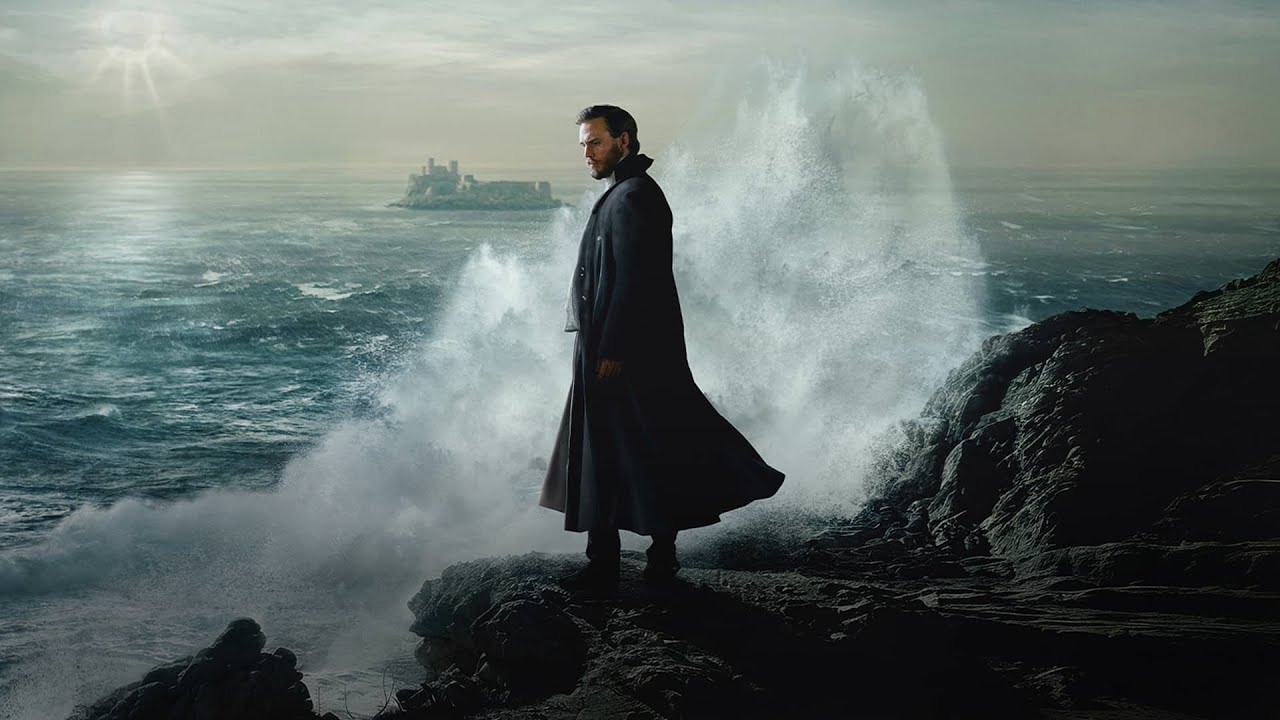
The Story in Brief
Edmond Dantès, a nineteen-year-old sailor about to become captain of the Pharaon and marry his beloved Mercédès, is betrayed on his wedding day by three men: Fernand Mondego, who covets Mercédès; Danglars, who wants Dantès' captaincy; and Caderousse, a jealous neighbor. They falsely accuse him of Bonapartist conspiracy, and the ambitious prosecutor Villefort—protecting his own father's political ties—condemns Dantès to the island prison Château d'If without trial.
After fourteen years of imprisonment, Dantès befriends the Abbé Faria, an elderly Italian priest who educates him in languages, science, and history while revealing the location of a vast treasure on the island of Monte Cristo. When Faria dies, Dantès escapes by taking his place in the burial sack, is thrown into the sea, and eventually recovers the treasure. Reinventing himself as the fabulously wealthy Count of Monte Cristo, he returns to Paris to methodically destroy the lives of his betrayers through elaborate schemes that exploit their greed, ambition, and moral weakness.
Alexandre de la Patellière's 2025 adaptation condenses Dumas' 1,200-page serialized novel into a visually sumptuous but narratively compressed two-hour film. The production received mixed reviews, with critics praising the cinematography and period detail while noting the inevitable loss of the novel's intricate plotting and moral complexity. The film represents the latest in a long line of adaptations stretching back to the silent era, each grappling with how to distill Dumas' sprawling revenge epic into cinematic form.
| Character | In the Book | In the The Movie |
|---|---|---|
| Edmond Dantès / The Count Pierre Niney |
Transforms from innocent sailor to calculating avenger over decades, his moral certainty gradually eroding as he witnesses the collateral damage of his revenge. | Niney captures the Count's aristocratic menace but lacks screen time to convey the full arc from naïve youth to world-weary manipulator. |
| Mercédès Herrera Anaïs Demoustier |
Dantès' fiancée who marries his betrayer Fernand after believing Edmond dead, later recognizing the Count and confronting him about the cost of vengeance. | Demoustier's Mercédès is given more agency in the film's climax, actively intervening rather than serving primarily as a symbol of Dantès' lost innocence. |
| Abbé Faria Pierfrancesco Favino |
The imprisoned priest who becomes Dantès' mentor, teaching him everything from languages to the location of the treasure over years of patient instruction. | Favino's Faria appears in compressed flashbacks, his role as moral compass and educator reduced to exposition about the treasure's location. |
| Fernand Mondego / Count de Morcerf Laurent Lafitte |
The Catalan fisherman who betrays Dantès out of jealousy, rises to become a count through military treachery, and ultimately faces public disgrace and suicide. | Lafitte plays Fernand as a more straightforwardly villainous figure, losing the book's nuance about how ambition and insecurity drove his betrayal. |
| Baron Danglars Patrick Mille |
The ship's supercargo whose greed motivates the conspiracy; the Count ruins him financially through elaborate banking schemes that exploit his avarice. | Danglars' downfall is simplified to a single dramatic financial collapse rather than the novel's methodical dismantling of his fortune. |
| Gérard de Villefort Vassili Schneider |
The ambitious prosecutor who condemns Dantès to protect his own father's Bonapartist connections; his family's dark secrets become the Count's most devastating weapon. | Schneider's Villefort receives the most complete arc of the betrayers, though the film omits the subplot involving his illegitimate son Benedetto. |
Key Differences
The Abbé Faria Mentorship Is Drastically Compressed
In Dumas' novel, Faria and Dantès spend years tunneling between their cells, during which the priest transforms the uneducated sailor into a polyglot scholar versed in economics, history, and philosophy. This education is essential—it's what allows Dantès to move convincingly in aristocratic circles as the Count. Faria also serves as Dantès' moral anchor, warning him that vengeance may consume him.
The film reduces this relationship to a handful of scenes focused primarily on the treasure's location. We see Faria teaching Dantès to fence and revealing the Monte Cristo secret, but the intellectual transformation that makes the Count's later manipulations plausible is largely absent. Favino brings gravitas to his limited screen time, but the loss of this extended mentorship weakens our understanding of how Dantès becomes the calculating mastermind we meet in Paris.
Multiple Revenge Plots Are Collapsed Into Simplified Schemes
The novel's revenge unfolds across three elaborate, interconnected plots targeting Fernand, Danglars, and Villefort. The Count exposes Fernand's military treachery in Greece through Haydée's testimony before the Chamber of Peers. He bankrupts Danglars through a series of fraudulent telegraphs and banking manipulations. He destroys Villefort by revealing that the prosecutor tried to murder his own illegitimate son, Benedetto, who resurfaces as the criminal Andrea Cavalcanti.
The film streamlines these schemes dramatically. Fernand's downfall still involves Haydée but occurs in a single dramatic confrontation rather than a public trial. Danglars loses his fortune in one catastrophic investment rather than through the Count's patient financial warfare. Most significantly, the entire Benedetto/Cavalcanti subplot is excised, which means Villefort's ruin lacks the poetic justice of being destroyed by the son he tried to kill. These simplifications make narrative sense for a two-hour film but sacrifice the intricate plotting that makes Dumas' revenge so satisfying.
Haydée's Role and Backstory Are Minimized
In the book, Haydée is the daughter of Ali Pasha of Janina, sold into slavery after Fernand betrayed and murdered her father. The Count purchases her freedom and brings her to Paris, where she eventually testifies against Fernand before the Chamber of Peers, publicly exposing his treachery. Her testimony destroys Fernand's reputation and drives him to suicide. Crucially, Haydée also represents the Count's path to redemption—in the novel's final chapters, she confesses her love for him, and they depart together, suggesting Dantès may find peace.
The film includes Haydée but reduces her to a more functional role. Her backstory is mentioned but not dramatized, and her testimony against Fernand is compressed into a brief scene. The romantic subplot between her and the Count is hinted at but never developed, which means the film loses the novel's suggestion that love might redeem Dantès from his obsession with vengeance. This is a significant thematic loss—Haydée represents the possibility of moving beyond the past, a counterpoint to Mercédès, who embodies what Dantès has lost.
The Count's Moral Crisis Is Muted
Dumas' novel builds to a devastating moral reckoning. When Villefort's wife poisons herself and her son Édouard to escape disgrace, the Count realizes his vengeance has killed an innocent child. He questions whether he had the right to play God, telling Mercédès, "I was wrong to feel myself entitled to do what I have done." This crisis of conscience is the novel's emotional climax—Dantès achieves his revenge but finds it hollow, recognizing too late that his schemes have caused suffering beyond his intended targets.
The film acknowledges this moral ambiguity but doesn't fully commit to it. We see the Count troubled by the consequences of his actions, but the screenplay doesn't give Niney the scenes necessary to convey Dantès' complete psychological unraveling. The death of Édouard is handled quickly, and the Count's subsequent crisis feels more like momentary doubt than existential despair. By softening this aspect, the film transforms the story from a tragedy about the cost of vengeance into a more conventional tale of justified retribution.
The Ending Shifts From Ambiguous to Triumphant
The novel concludes with Dantès departing for an uncertain future with Haydée, leaving Maximilien Morrel and Valentine Villefort with the famous advice: "Wait and hope." It's a bittersweet ending—the Count has achieved his revenge but lost years to obsession, and his final words suggest resignation rather than triumph. Dumas leaves us questioning whether Dantès' vengeance was worth the cost, both to himself and to the innocents caught in his schemes.
The film opts for a more uplifting conclusion. While it retains the "wait and hope" line, the overall tone is one of hard-won victory rather than melancholy reflection. The Count's departure feels more like a hero riding into the sunset than a broken man seeking redemption. This tonal shift is understandable—audiences expect catharsis—but it undercuts the novel's more sophisticated meditation on justice and revenge. Dumas understood that getting what you want doesn't always bring peace; the film is less interested in that uncomfortable truth.
Absolutely read the book before watching the film. Dumas' novel is a masterclass in narrative construction, with dozens of seemingly unrelated characters and subplots that converge in the final act with devastating precision. The Count's schemes unfold over hundreds of pages, each revelation building on information planted chapters earlier. Watching the film first will spoil these carefully orchestrated surprises while depriving you of the psychological depth that makes them meaningful—you'll know Fernand betrayed Dantès, but you won't understand the years of suffering that fuel the Count's methodical destruction of his enemy's life.
The novel also rewards patient readers with thematic richness the film can only gesture toward. Dumas explores how vengeance corrodes the soul, how wealth isolates, and how the line between justice and cruelty blurs when you appoint yourself judge and executioner. These ideas permeate every chapter, embedded in the Count's increasingly hollow victories. The film captures the plot's broad strokes but not its moral complexity. Read the book to experience the story as Dumas intended—as a cautionary tale about the cost of letting the past consume you.
Should You Read First?
Absolutely read the book before watching the film. Dumas' novel is a masterclass in narrative construction, with dozens of seemingly unrelated characters and subplots that converge in the final act with devastating precision. The Count's schemes unfold over hundreds of pages, each revelation building on information planted chapters earlier. Watching the film first will spoil these carefully orchestrated surprises while depriving you of the psychological depth that makes them meaningful—you'll know Fernand betrayed Dantès, but you won't understand the years of suffering that fuel the Count's methodical destruction of his enemy's life.
The novel also rewards patient readers with thematic richness the film can only gesture toward. Dumas explores how vengeance corrodes the soul, how wealth isolates, and how the line between justice and cruelty blurs when you appoint yourself judge and executioner. These ideas permeate every chapter, embedded in the Count's increasingly hollow victories. The film captures the plot's broad strokes but not its moral complexity. Read the book to experience the story as Dumas intended—as a cautionary tale about the cost of letting the past consume you.
The book delivers an intricate revenge plot that doubles as a meditation on justice and mercy, while the film offers a handsomely mounted but simplified adaptation. Dumas understood that the sweetest revenge often tastes bitter; the movie prefers its triumph uncut.