The Story in Brief
In the Republic of Gilead — a near-future theocratic America — fertile women are enslaved as Handmaids, forced to bear children for the ruling class. Offred is one such Handmaid, assigned to Commander Fred Waterford and his wife Serena Joy, narrating her situation with a controlled intelligence that is itself an act of resistance. She remembers her life before Gilead, her husband Luke, her daughter taken from her, and her friend Moira who attempted escape.
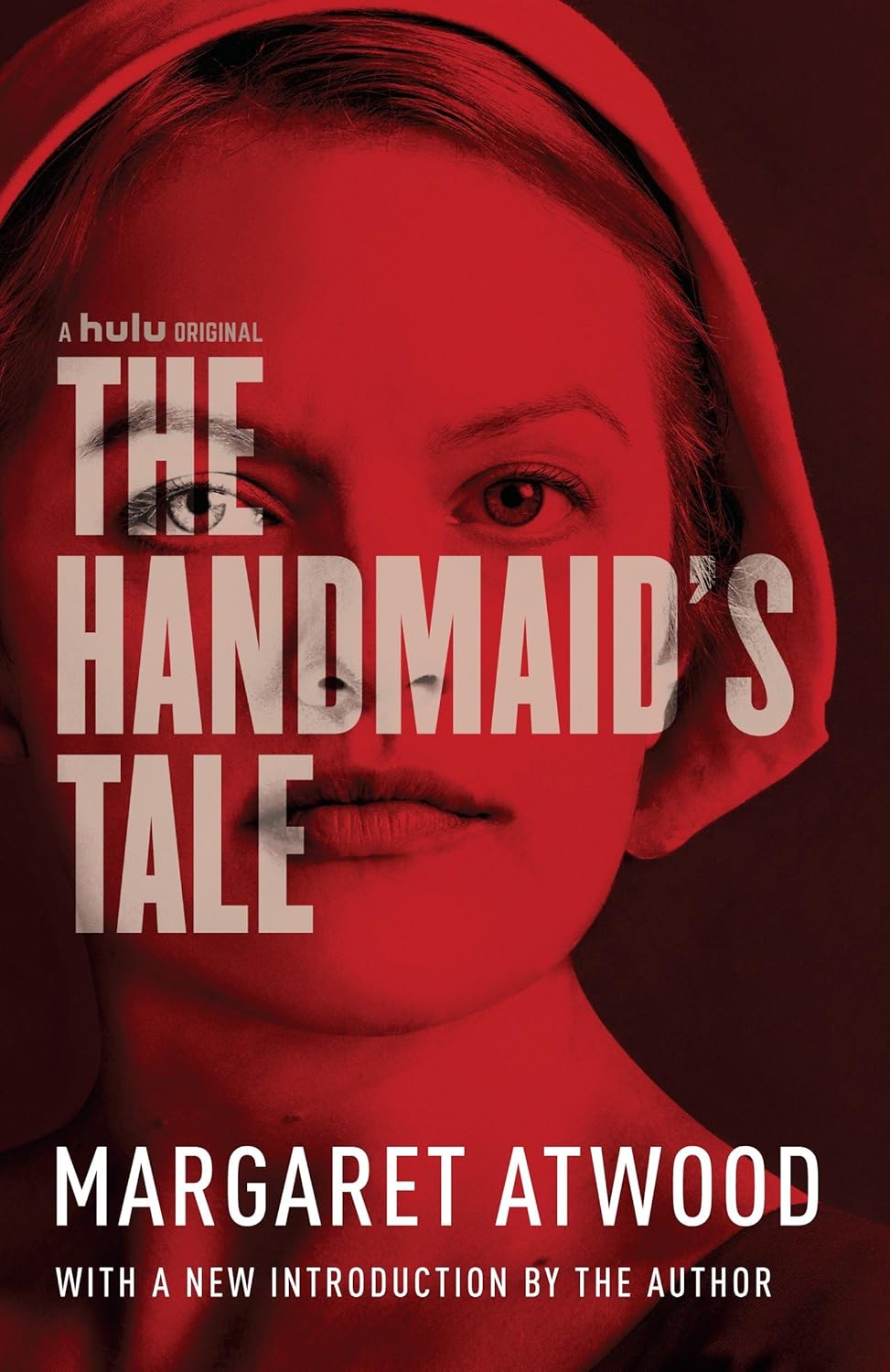
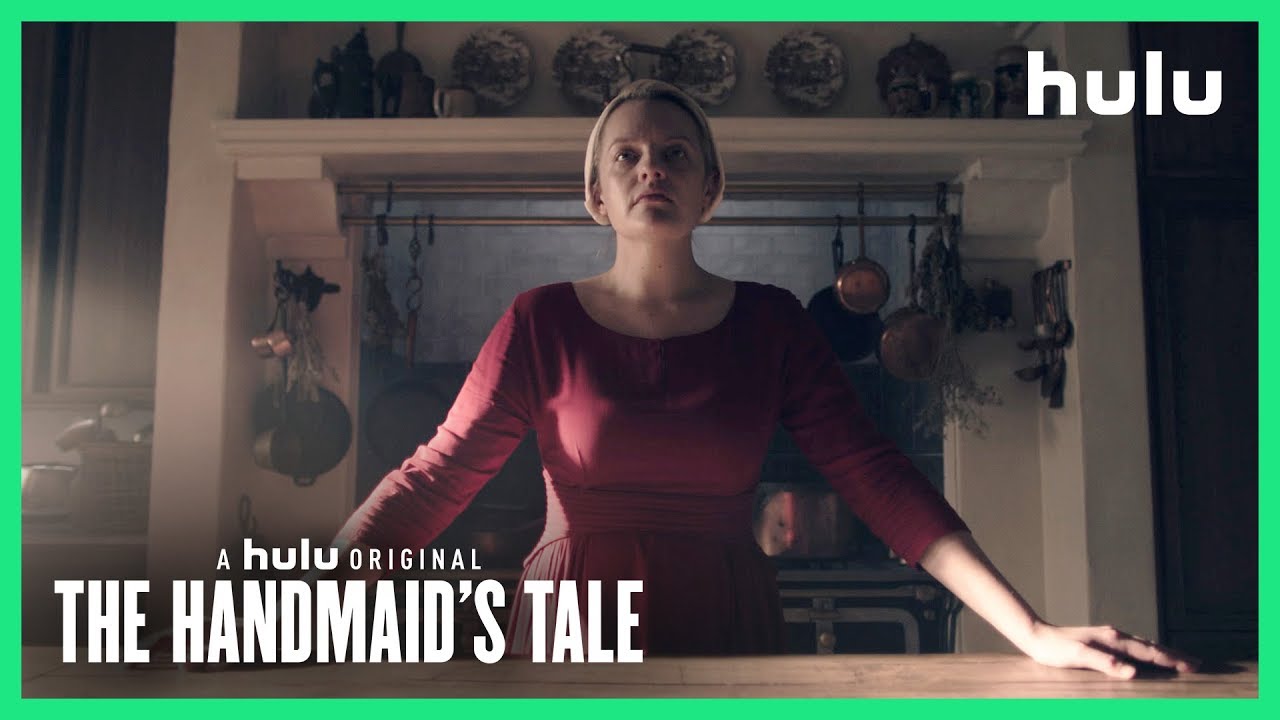
Margaret Atwood's novel, published in 1985, has become one of the defining political texts of our era. Volker Schlöndorff's 1990 film, with Natasha Richardson as Offred and Faye Dunaway as Serena Joy, received mixed reviews and is largely forgotten. The Hulu series, starring Elisabeth Moss and launched in 2017, extended Atwood's world across multiple seasons and created its own cultural moment, winning eight Emmy Awards in its first season alone.
The novel won the Arthur C. Clarke Award and was shortlisted for the Booker Prize. It has never been out of print and experienced renewed sales spikes in 2016 and 2017 as readers found contemporary resonance in Atwood's dystopian vision.
| Character | In the Book | In the Adaptations |
|---|---|---|
| Offred Natasha Richardson (1990) / Elisabeth Moss (Hulu) |
A narrator of extraordinary precision whose voice is ironic, controlled, and self-aware, resisting through language and memory. | Richardson is affecting but constrained by the film's inertness; Moss delivers one of television's defining performances, conveying interior resistance without extensive voiceover. |
| Serena Joy Faye Dunaway (1990) / Yvonne Strahovski (Hulu) |
A former televangelist and gospel singer, now bitter and complicit in her own oppression, tending her garden as her only remaining power. | Dunaway plays her as coldly aristocratic; Strahovski gives her complexity and occasional sympathy, making her both victim and perpetrator. |
| Commander Waterford Robert Duvall (1990) / Joseph Fiennes (Hulu) |
A high-ranking official who seeks illicit companionship with Offred, playing Scrabble and offering forbidden magazines, pathetic in his need for connection. | Duvall brings gravitas but limited screen time; Fiennes makes him more central, charming and dangerous, an architect of Gilead who wants credit for kindness. |
| Moira Elizabeth McGovern (1990) / Samira Wiley (Hulu) |
Offred's college friend and symbol of resistance who escapes the Red Center but is eventually captured and forced into prostitution at Jezebel's. | McGovern appears briefly; Wiley's Moira becomes a major character across seasons, eventually escaping to Canada and joining the resistance. |
| Nick Aidan Quinn (1990) / Max Minghella (Hulu) |
The Commander's driver and an Eye who becomes Offred's lover, possibly the father of her child, and possibly her rescuer at the novel's ambiguous end. | Quinn is conventionally romantic; Minghella plays him with more ambiguity and danger, and the series expands his role significantly as Offred's protector and co-parent. |
Key Differences
Offred's Narration Is the Novel's Irreplaceable Achievement
Atwood's Offred narrates in a voice of extraordinary precision — controlled, ironic, occasionally beautiful, always aware of its own limits. She interrupts herself, corrects herself, offers multiple versions of the same event. "I would like to believe this is a story I'm telling," she says, acknowledging the constructed nature of her account.
The novel's final section, the Historical Notes, reframes everything that came before. Set at an academic symposium in 2195, it reveals Offred's narrative as a discovered artifact — cassette tapes transcribed and edited by scholars who debate her identity and fate. This formal sophistication is the novel's greatest achievement and the element most difficult to translate to screen.
The Hulu series uses voiceover sparingly, relying instead on Elisabeth Moss's face to convey interior life. It's a different kind of achievement but cannot replicate Atwood's prose. The 1990 film abandons the narration almost entirely, losing the novel's voice completely.
The 1990 Film Never Found Its Visual Language
Schlöndorff's film, with a screenplay by Harold Pinter, is respectful but inert. Natasha Richardson is affecting, Robert Duvall brings authority to the Commander, and Faye Dunaway's Serena Joy is appropriately glacial. But the film cannot replicate Atwood's prose and doesn't find a cinematic equivalent.
Pinter's screenplay is faithful to plot but strips away the novel's narrative complexity. The film presents events linearly, losing the book's fragmented structure and temporal layering. Igor Luther's cinematography is competent but uninspired — Gilead looks like any period drama rather than a specific dystopian vision.
The film earned a single Razzie nomination and disappeared quickly from theaters. It's a curiosity for completists rather than a companion to the novel.
The Hulu Series Extends Atwood's World Beyond Her Intentions
Elisabeth Moss's Offred is one of television's defining performances — interior without constant narration, resistant without speech. The series extends Atwood's world into territory the novel deliberately left ambiguous, which is both its strength and its limitation.
Season one follows the novel closely and is excellent. It captures the Ceremony's horror, the casual violence of the Salvagings, the desperate boredom of Offred's daily life. Reed Morano's direction in the first three episodes establishes a visual language — long takes on Moss's face, sudden violence, the oppressive beauty of Gilead's architecture.
Subsequent seasons move beyond the novel. We see Gilead's founding, the Waterfords' backstory, the resistance in Canada, other Handmaids' experiences. This is original work of varying quality — sometimes powerful, sometimes repetitive, always less formally precise than Atwood's novel. The series chose narrative extension over narrative perfection.
Gilead's Visual Iconography Now Exceeds the Text
Atwood builds Gilead through implication and detail — the color-coded clothing (red for Handmaids, blue for Wives, green for Marthas, brown for Aunts), the patronymic names (Offred means "Of Fred"), the Ceremonies described in flat procedural language. The novel trusts readers to imagine the horror.
The Hulu series renders this visually with great care and occasional power. Costume designer Ane Crabtree's red cloaks and white wings are now more culturally present than the prose that invented them. The image of Handmaids in formation has become a symbol of resistance at political protests worldwide.
This is the adaptation's most significant cultural achievement and its most complicated one. The series made Gilead visible and iconic, but visibility was never Atwood's primary concern. The novel's power lies in its prose, not its imagery.
Political Resonance Versus Political Timeliness
Atwood wrote the novel as a response to the religious right in 1980s America and as a compendium of actual historical practices. Her rule was that nothing in the novel could be invented — everything had been done to women somewhere, at some time. This gives the book a documentary quality beneath its speculative surface.
The Hulu series arrived in April 2017, months after the 2016 U.S. presidential election, at a moment when the novel's politics felt urgently contemporary. The series absorbed this political moment, sometimes explicitly. Season two includes a scene where Emily, played by Alexis Bledel, mutilates a Commander — a moment of cathartic violence the novel would never permit.
The novel generated political discourse; the series responded to it. Both are valuable, but Atwood's restraint and formal control make the book the more enduring political statement.
Should You Read First?
Yes — read the novel before any screen version. Atwood's prose is the essential experience, and the novel's formal sophistication cannot be replicated on screen. The 1990 film can be skipped entirely unless you're a completist or a Pinter scholar. It adds nothing to your understanding of the novel and lacks the visual power to justify itself as cinema.
The Hulu series is worth watching after the novel, with the understanding that you're watching two different projects. Take season one as the best adaptation — faithful in spirit, powerful in execution, anchored by Moss's performance. Subsequent seasons are extended fanfiction in the world Atwood created, sometimes brilliant, sometimes indulgent, always less formally precise than the source. Watch them if you want more story, but know that more story was never Atwood's goal.
Atwood wrote one of the essential political novels of the twentieth century. The 1990 film did not do it justice. The Hulu series found a worthy visual language for it but replaced Atwood's formal precision with narrative extension. The novel is the source and remains the best version. Read it first and repeatedly.