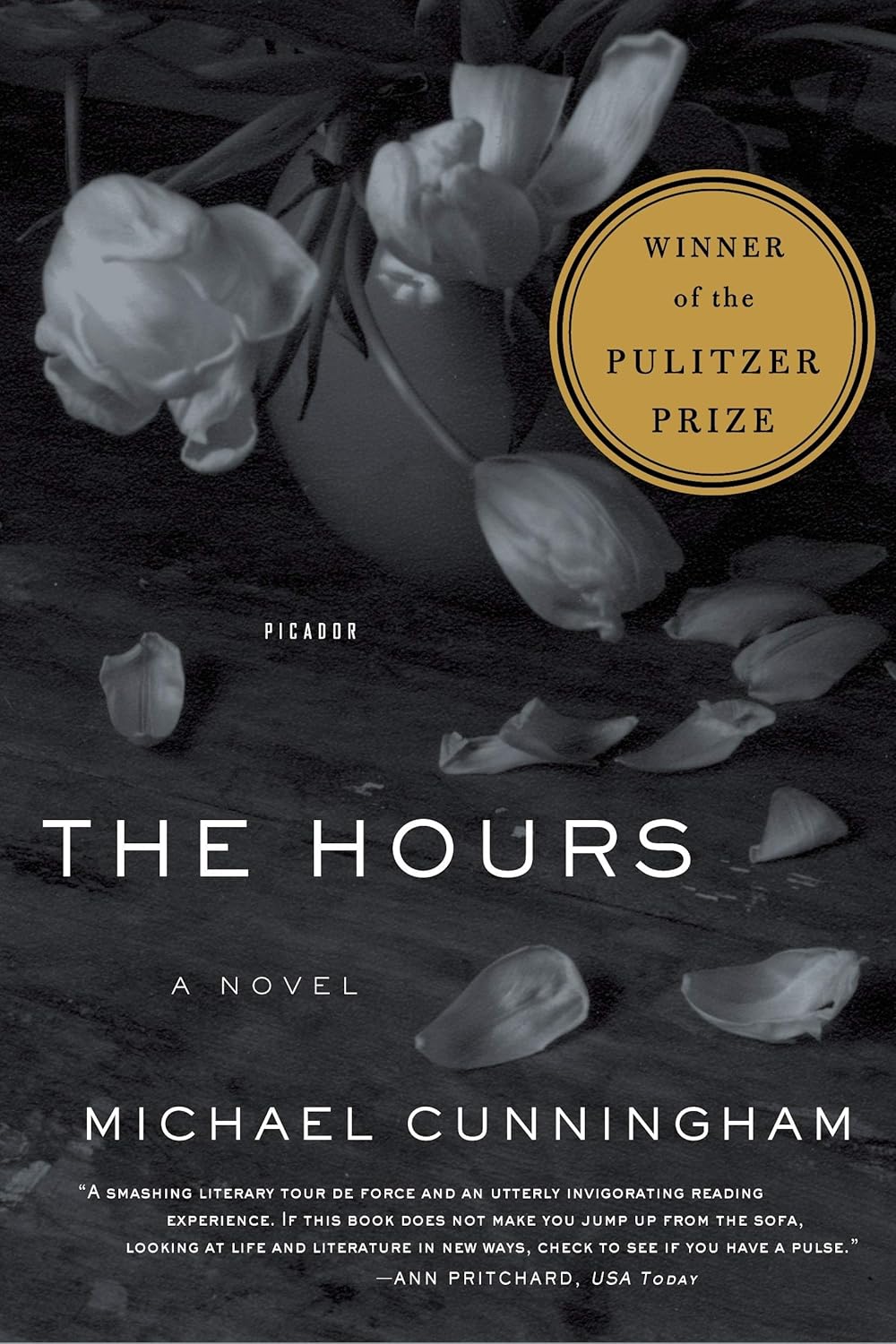
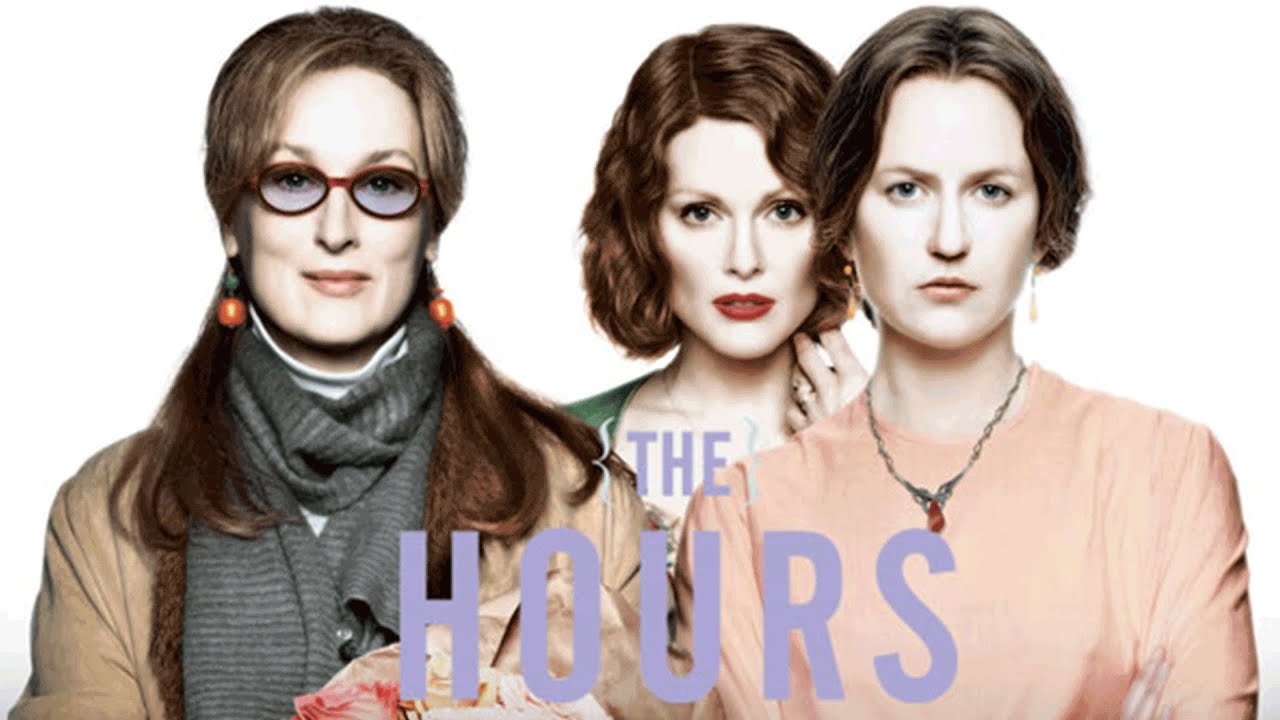
The Story in Brief
Three women on three different days across three different decades, each connected by Virginia Woolf's novel Mrs Dalloway. Virginia Woolf herself in Richmond in 1923, writing the opening of the novel while battling depression and the constraints imposed by her husband Leonard and her doctors. Laura Brown in suburban Los Angeles in 1951, reading Mrs Dalloway on her husband Dan's birthday while pregnant with her second child and contemplating an escape from a life that feels like suffocation. Clarissa Vaughan in contemporary New York, planning a party for her friend Richard — a poet dying of AIDS who calls her Mrs Dalloway and who, it's eventually revealed, is Laura's son.
Michael Cunningham's 1998 novel won the Pulitzer Prize and the PEN/Faulkner Award for its formally ambitious structure and prose that consciously echoes Woolf's own rhythms. Stephen Daldry's 2002 film adaptation, with a screenplay by David Hare, earned nine Academy Award nominations and won Best Actress for Nicole Kidman's performance as Woolf. The film also features Julianne Moore as Laura and Meryl Streep as Clarissa, with Ed Harris as Richard and a Philip Glass score that became inseparable from the film's identity.
The novel and film both explore depression, creativity, sexuality, and the costs of living consciously in a world that often demands conformity. It remains one of the most successful literary adaptations of the 2000s and a rare case where both versions are essential.
| Character | In the Book | In the The Movie |
|---|---|---|
| Virginia Woolf Nicole Kidman |
Rendered through interior monologue that approximates her own prose style — depression as a texture of consciousness, creativity as both salvation and torment. | Kidman's Oscar-winning performance uses silence and physical restraint to convey Woolf's interior weather; the prosthetic nose was controversial but the performance transcends it. |
| Laura Brown Julianne Moore |
A suburban housewife in 1951 who finds in Mrs Dalloway a mirror for her own entrapment; Cunningham writes her with devastating precision and empathy. | Moore's most emotionally precise performance — the hotel room scene where Laura contemplates suicide is the film's most difficult sequence, played with unbearable restraint. |
| Clarissa Vaughan Meryl Streep |
A contemporary New York editor planning a party for Richard, her former lover; Cunningham gives her Clarissa Dalloway's role but a fully distinct interior life. | Streep plays Clarissa with warmth and competence masking deep grief; her scenes with Harris are the film's emotional center alongside Moore's storyline. |
| Richard Brown Ed Harris |
The dying poet who connects Laura's and Clarissa's storylines; Cunningham reveals his identity as Laura's son in the novel's final section. | Harris plays Richard's final day with a raw vulnerability that makes his suicide both shocking and inevitable; his "I wanted to be a writer, that's all" speech is the film's most quoted line. |
| Leonard Woolf Stephen Dillane |
Virginia's husband, devoted but controlling in his attempts to manage her illness; Cunningham portrays him with sympathy and critique in equal measure. | Dillane plays Leonard as a man trying to save his wife from herself, loving but ultimately unable to reach her; the "someone has to die" argument is the film's most painful marital scene. |
Key Differences
Cunningham's prose echoes Woolf's own formal ambitions
The novel's most distinctive achievement is its prose style — long, sinuous sentences that consciously echo Woolf's own rhythms in Mrs Dalloway and To the Lighthouse. Cunningham writes interior monologue that approximates the texture of Woolf's consciousness, creating a reading experience that mirrors the act of reading Woolf herself. The novel asks to be read slowly, sentence by sentence, attending to the way ordinary perception opens into larger meaning.
This formal dimension is irreplicable on screen. Daldry and Hare capture the emotional architecture and the three-timeline structure, but the experience of reading Cunningham reading Woolf — the echo across time that happens in prose — cannot be translated into film language. The novel is about reading in a way the film cannot be.
Philip Glass's score does in music what Cunningham does in prose
Glass's minimalist score is the film's most significant addition to the source material. The repetitive, accumulative piano figures create a sense of time moving at a particular pace, of ordinary moments carrying unusual weight. The score connects the three timelines sonically in the way Cunningham's prose rhythms connect them on the page. It's not an illustration of the novel but a cinematic equivalent of its formal ambition.
The main theme — heard first over Woolf's walk to the river — became inseparable from the film's identity and won Glass an Oscar nomination. It does work that only music can do, creating emotional continuity across decades and storylines. This is the film's most successful formal innovation.
Laura Brown's hotel room scene is the film's devastating centerpiece
In both versions, Laura checks into a hotel to read and contemplate suicide while pregnant with her second child. Cunningham writes the scene with characteristic interior precision, showing Laura's thought process as she considers an exit from a life she cannot inhabit. Moore plays the scene with almost no dialogue, lying on the bed with Mrs Dalloway, the decision visible on her face.
The film adds a surreal image — water flooding the hotel room, rising around Laura as she lies still — that visualizes her interior state without dialogue. It's the film's most formally daring sequence and Moore's finest moment in a performance full of them. The scene works differently in each version but both are equally devastating.
Richard's suicide happens differently and means differently
In the novel, Richard's death is described after the fact — Clarissa finds him gone from the window. Cunningham gives Richard a long interior monologue before the act, showing his thought process and his exhaustion. In the film, Richard's suicide happens on screen — he tells Clarissa "I don't think two people could have been happier than we've been," kisses her hand, and falls backward out the window while she watches.
The film's version is more dramatically immediate and gives Harris a final scene of extraordinary emotional precision. The novel's version is more interior and allows Richard's consciousness to be the final word on his own life. Both approaches honor the character but the film's choice to show the act rather than describe it afterward changes the emotional impact significantly.
The three timelines intercut with different rhythms
Cunningham moves between the three storylines in chapters that vary in length but maintain a steady rhythm throughout the novel. Each woman gets roughly equal time and the structure emphasizes their simultaneity — the sense that they're living the same day across different decades. Daldry preserves this intercutting but uses shorter sequences, especially in the film's first half, creating a more rapid rhythm of connection.
The film's editing — by Peter Boyle — finds visual and thematic rhymes between the timelines: Virginia writing "Mrs Dalloway said she would buy the flowers herself" cuts to Laura reading that line cuts to Clarissa saying "Sally, I think I'll buy the flowers myself." These transitions are more explicit than Cunningham's chapter breaks but equally effective at building the sense of three lives echoing across time.
Either order works — this is one of the site's genuine ties where both versions are essential and neither diminishes the other. Read first for Cunningham's prose rhythms and the specific experience of encountering Woolf through his echo of her style. The novel is about reading in a way the film cannot be, and that formal dimension is worth experiencing on its own terms. Watch first if you want the three performances — particularly Moore's and Kidman's — as your mental images while reading, and if Glass's score as an entry point appeals to you.
If you've read Mrs Dalloway, read The Hours before seeing the film — the novel's echoes of Woolf are richer if you recognize them. If you haven't read Woolf, the film is the better entry point because it works as a self-contained story while the novel assumes some familiarity with modernist literary technique. Both are correct choices depending on your relationship to Woolf's work.
Should You Read First?
Either order works — this is one of the site's genuine ties where both versions are essential and neither diminishes the other. Read first for Cunningham's prose rhythms and the specific experience of encountering Woolf through his echo of her style. The novel is about reading in a way the film cannot be, and that formal dimension is worth experiencing on its own terms. Watch first if you want the three performances — particularly Moore's and Kidman's — as your mental images while reading, and if Glass's score as an entry point appeals to you.
If you've read Mrs Dalloway, read The Hours before seeing the film — the novel's echoes of Woolf are richer if you recognize them. If you haven't read Woolf, the film is the better entry point because it works as a self-contained story while the novel assumes some familiarity with modernist literary technique. Both are correct choices depending on your relationship to Woolf's work.
Cunningham wrote a novel of formal ambition and emotional precision — prose rhythms that echo Woolf across half a century and a structure that makes reading itself part of the subject. Daldry made one of the great ensemble films of the 2000s, with three performances that are collectively extraordinary and a Philip Glass score that does in music what Cunningham does in prose. Read the novel for the experience of reading. See the film for Moore's face in that hotel room and for Glass's piano figures connecting three women across time. A genuine tie between two essential versions of the same argument about what it costs to live consciously.